Studio Course Meaning & Benefits Explained (Student Guide 2026)
Imagine you are asked to learn how to play a musical instrument. You have two options. In the first option, you sit in a large hall with three hundred other people while a professor shows you pictures of violins and explains the history of wood types for an hour. In the second option, you are handed a violin, shown how to hold the bow, and told to make a sound while a teacher walks around the room to help you adjust your fingers. Which method do you think will actually help you play a song by the end of the year? This second approach is the foundation of a studio course.
What is a studio course?
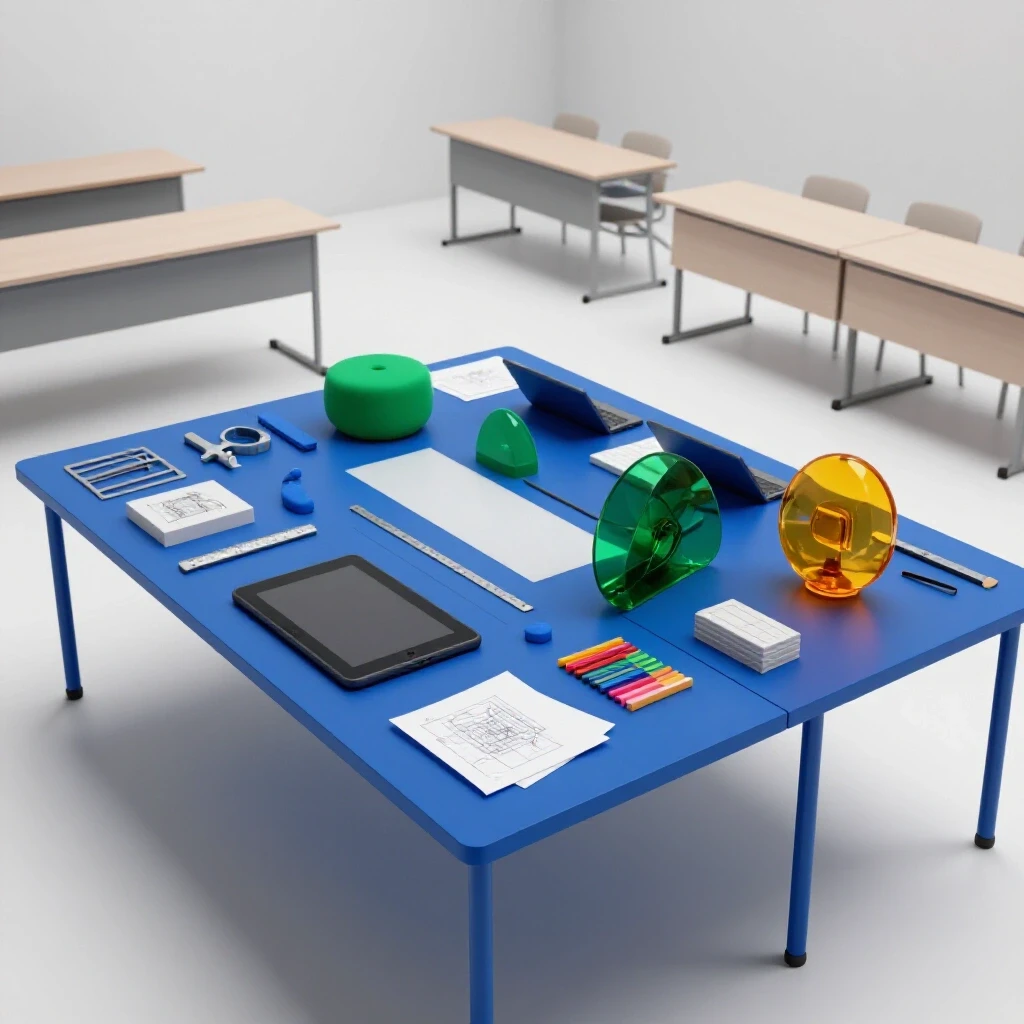
A studio course is a hands-on, project-based way of teaching where students spend their class time creating work rather than just listening to a teacher. It is a common format in fields like art, design, architecture, and even some computer science programs. In these classes, the classroom itself is often a workspace where students learn through direct practice and experimentation.
When I first started my career in education research, I spent a lot of time observing different types of classrooms. I noticed that while many students were good at memorizing facts for a test, they often felt lost when they had to actually build something. A studio course solves this problem. It moves the focus from “what you know” to “what you can do.” In a studio, you are not a passive observer; you are an active creator.
In my experience advising first-year college students, I often see them surprised by the schedule of a studio course. While a typical history lecture might meet for 50 minutes three times a week, a studio course might meet for three or four hours twice a week. This “long-form” learning is necessary because it takes time to get into a creative flow and to receive feedback on your progress.
How does a studio course differ from a traditional lecture?
A traditional lecture focuses on the delivery of information from an expert to a group, while a studio course focuses on the development of a student’s work through constant interaction. Lectures are often measured by how well you can repeat information on an exam. In contrast, studio courses are measured by the quality of your projects and your ability to improve over time.
To help you understand the differences, I have created a comparison below. This table highlights the key shifts in environment and expectations that you will encounter when moving between these two styles of learning.
| Feature | Traditional Lecture Course | Studio Course |
|---|---|---|
| Primary Activity | Listening and note-taking | Designing, building, and creating |
| Grading Focus | Exams, quizzes, and essays | Portfolios, projects, and growth |
| Role of Teacher | Information provider (The “Sage on the Stage”) | Mentor and coach (The “Guide on the Side”) |
| Classroom Layout | Rows of desks facing a podium | Open workstations and shared tables |
| Time Commitment | Shorter, frequent sessions | Longer, intensive sessions |
| Student Interaction | Mostly independent study | Frequent peer feedback and collaboration |
Interestingly, many international students I have worked with find the studio format to be the biggest “culture shock” in higher education. In many global education systems, the teacher is an unquestioned authority who speaks while students remain silent. In a studio, the teacher expects you to speak up, defend your ideas, and even disagree with them during the creative process.
The power of the “Critique” in a studio environment
A critique, often called a “crit” by students and faculty, is a formal session where you present your work to the class for feedback. During a crit, your peers and your instructor will look at what you have made and discuss what is working and what needs more attention. It is a core part of the studio experience designed to help you see your work from new perspectives.
I remember a student named Maria who was terrified of her first critique. She felt that if someone didn’t like her project, they didn’t like her as a person. This is a common hurdle for newcomers. However, the studio taught her that her work is not her identity. By listening to others, she learned how to spot flaws in her own designs that she was previously “blind” to.
- The goal of a critique is not to judge, but to improve.
- You learn as much from giving feedback to others as you do from receiving it.
- Critiques teach you to speak professionally about your creative choices.
For new academic advisors, it is important to explain to students that a “bad” critique is actually a good thing. It means the student has been given a roadmap for how to get better. In a lecture, if you fail a test, the unit is over. In a studio, if a project isn’t working, you have the chance to fix it based on the feedback you just received.
Managing self-directed project timelines
Self-directed project management is the ability to take a large, vague assignment and break it down into small steps without someone holding your hand. In a studio course, you won’t have homework due every night. Instead, you might have one massive project due in six weeks, and it is entirely up to you to manage your time effectively.
This is where many students struggle. Without the structure of daily quizzes, it is easy to procrastinate. I once worked with a student who tried to finish a three-week architecture model in a single night. The result was a mess, and he was exhausted. From that experience, he learned the “Studio Rule”: you cannot cram creativity.
- Week 1: Research and brainstorming (The “Discovery” phase).
- Week 2: Rough sketches or prototypes (The “Drafting” phase).
- Week 3: Initial feedback and major changes (The “Pivot” phase).
- Week 4: Focused production (The “Execution” phase).
- Week 5: Refinement and polishing (The “Finishing” phase).
- Week 6: Final presentation and critique.
By following a timeline like this, you learn a skill that is valuable in any career: how to manage a long-term project from start to finish. Whether you are a major or just taking a course for a concentration, these time-management skills are a primary benefit of the studio model.
Embracing iterative failure as a path to refinement
Iterative failure is the process of trying an idea, seeing it fail, and using that failure to make the next version better. In a studio course, your first attempt is almost never your final product. You are encouraged to “fail fast” so that you can spend more time refining the versions that actually work.
I often tell my students that a studio is like a laboratory. In a lab, a scientist doesn’t expect every experiment to succeed. They expect to learn from the ones that don’t. Similarly, in a studio, a “failed” sketch is just a lesson in what not to do next time. This mindset reduces the fear of making mistakes, which is often what holds students back in traditional academic settings.
Building on this idea, the concept of “iteration” is what separates a good project from a great one. * Version 1: Does it meet the basic requirements? * Version 2: Is it functional and sturdy? * Version 3: Is it aesthetically pleasing? * Version 4: Does it communicate a unique idea?
When you look at it this way, failure isn’t the opposite of success; it is a part of success. This is a vital lesson for parents to understand. If your student comes home frustrated because their project didn’t work, remind them that they are currently in the most important part of the learning process.
Why studio courses are valuable for every student
You might think that if you aren’t an artist or an architect, you don’t need to worry about studio courses. However, the skills you gain in a studio are highly transferable to almost any field. Employers today are looking for people who can think critically, handle feedback, and work through complex problems without a set of instructions.
For example, a student majoring in business might take a design studio to learn how to think about “User Experience.” A science student might take a studio to learn how to visualize data more clearly. The studio environment forces you to be a problem-solver rather than a rule-follower.
- Communication: You learn to explain your ideas to a group.
- Resilience: You learn to bounce back when an idea doesn’t work.
- Collaboration: You learn to work in a shared space with people who have different styles.
- Critical Thinking: You learn to analyze why something works or why it doesn’t.
As an advisor, I always encourage students to take at least one studio-style course during their first two years. It provides a necessary balance to the heavy reading and writing requirements of other classes. It engages a different part of the brain and provides a sense of accomplishment that is hard to find in a standard lecture hall.
Practical tips for succeeding in your first studio
Entering a studio for the first time can feel like walking into a foreign country. The rules are different, the language is different, and the expectations are different. To help you navigate this transition, I have gathered a few practical steps based on my years of observing successful students.
First, show up even when you aren’t “feeling creative.” In a studio, the work happens through the act of doing, not by waiting for inspiration to strike. If you sit at your desk and start moving your hands, the ideas will eventually follow. Consistency is more important than talent in a studio environment.
Second, get to know your neighbors. One of the best resources in a studio is the person sitting at the desk next to you. They are going through the same challenges you are. By sharing tips and looking at each other’s work, you create a small community of learners that makes the long hours much more enjoyable.
- Ask questions early: If you don’t understand a project prompt, don’t wait three weeks to ask for help.
- Keep a process journal: Document your failures and your “aha!” moments. It helps when it’s time to write your final reflection.
- Take breaks: Because studio sessions are long, you need to step away from your work every hour to keep your eyes and mind fresh.
- Accept that it will be messy: Studios are physical spaces. You might get paint on your clothes or sawdust in your hair. Dress for the work, not for a fashion show.
Lastly, talk to your academic advisor about how a studio course fits into your overall degree plan. Since these courses often carry the same number of “credit hours” as a lecture but require more physical time in the classroom, you need to balance your schedule carefully. Don’t take three studio courses in the same semester unless you are prepared to live in the campus labs!
Common pitfalls to avoid in a studio course
Even the most dedicated students can fall into certain traps when they first encounter the studio model. One of the biggest mistakes is “over-polishing” an idea too early. Students often spend hours making their first draft look perfect, only to find out during a critique that the entire concept needs to change.
Another pitfall is ignoring the “process” and only focusing on the “product.” Your instructor cares about how you got to your final result. If you turn in a perfect project but have no sketches or prototypes to show how you made it, you may actually receive a lower grade. The journey is just as important as the destination in studio learning.
- Procrastination: Thinking you can do “creative work” in a single burst at the deadline.
- Defensiveness: Taking feedback as a personal insult rather than a professional tool.
- Isolation: Working entirely alone and never looking at what your peers are doing.
- Ignoring the Prompt: Getting so caught up in your own idea that you forget to follow the specific requirements of the assignment.
By being aware of these common mistakes, you can approach your first studio with confidence. Remember, the goal of these courses is to help you grow. No one expects you to be a master on day one. They only expect you to be willing to try, fail, and try again.
Frequently Asked Questions about Studio Courses
What exactly is a studio course? A studio course is a class where the primary mode of instruction is “learning by doing.” Instead of listening to a lecture, students spend their time working on hands-on projects, such as building models, painting, designing software, or creating architectural plans. The teacher acts as a mentor, providing individual feedback as students work.
Do I need to be an artist to take a studio course? Not at all. While many studio courses are in the arts, the format is used in many other fields like engineering, journalism, and education. The focus is on the process of creation and problem-solving. Even if you don’t consider yourself “artistic,” you can still succeed by following the iterative process and being open to feedback.
How long do studio classes usually last? Studio classes are typically much longer than standard lectures. While a lecture might be 50 to 75 minutes, a studio often lasts between three and five hours. This extra time allows students to get deep into their work and gives the instructor enough time to speak with every student individually during the session.
What is a “critique” and why is it important? A critique is a session where students present their work-in-progress to the instructor and their peers. The group discusses the strengths and weaknesses of the work. It is important because it helps you see your project from different angles and teaches you how to give and receive professional feedback.
How is a studio course graded? Grading in a studio is usually based on a combination of your final projects, your “process” (sketches, drafts, and research), and your participation in critiques. Instructors look for growth over time, so showing that you applied feedback from earlier in the semester can often improve your grade significantly.
Is a studio course harder than a lecture? It isn’t necessarily “harder,” but it requires a different kind of effort. You won’t have to study for traditional exams, but you will have to spend many hours in the studio working on your projects. For some, the physical and creative demands are more challenging than memorizing a textbook; for others, it is much more rewarding.
Can I take a studio course online? Yes, many universities now offer “digital studios” or online versions of studio courses. In these cases, the “studio” happens through video calls, digital whiteboards, and online forums where students upload photos or videos of their work for feedback. The core principles of practice and critique remain the same.
What should I bring to my first studio class? Your instructor will usually provide a “supply list” before the first day. This might include specific tools, sketchbooks, or software. However, the most important thing to bring is an open mind and a willingness to make mistakes. Also, consider bringing a snack and water, as the long sessions can be physically draining.
How do I handle negative feedback during a critique? The best way to handle negative feedback is to remember that it is directed at the work, not at you. Take notes on what people say, even if you don’t agree with it at first. Later, when you are back at your workspace, you can decide which pieces of advice will actually help you make the project better.
Why are studio courses important for non-art majors? Studio courses teach “soft skills” like resilience, time management, and communication. In a world where many tasks are becoming automated, the ability to think creatively and solve complex, unscripted problems is one of the most valuable assets a student can have, regardless of their major or concentration.
(This article was written by one of our staff writers, Alan Westbrook. Visit our Meet the Team page to learn more about the author and their expertise.)