Understanding College Science Labs and Handling Lab Failure (Guide)
Many students believe a college science lab is a place where you follow a recipe to get a perfect result. There is a common misconception that if your experiment does not produce the “right” answer, you have failed the assignment. In reality, a lab is a controlled environment designed for systematic inquiry where the “wrong” answer is often the most important data point you will collect.
What Is a Science Lab in College?
A laboratory is a controlled space where students apply theoretical knowledge through hands-on experiments. It is a place of systematic inquiry where you test hypotheses, use specialized tools, and learn to document observations precisely under the guidance of instructors or lab managers.
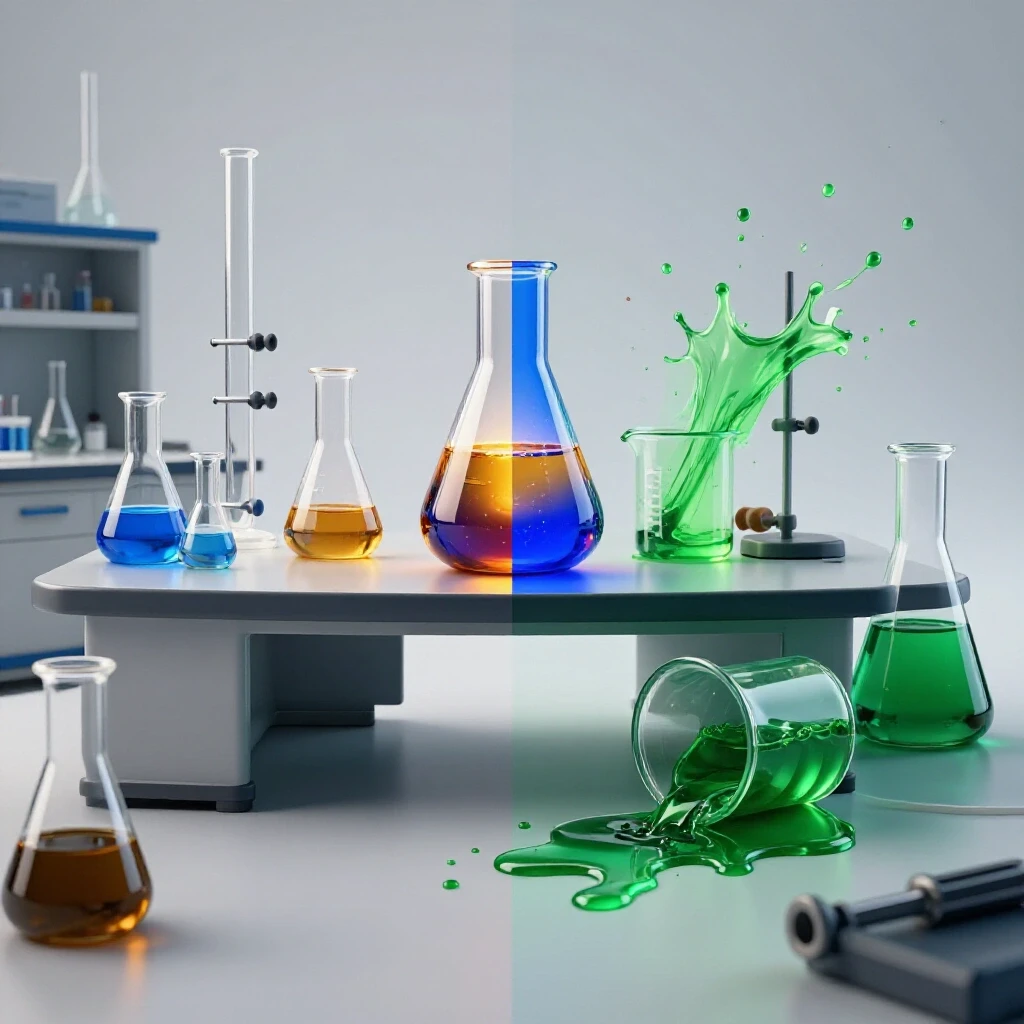
In higher education, the lab is where the “what” of your textbook meets the “how” of the real world. When you sit in a lecture, you hear about the laws of physics or the reactions of chemicals. When you enter the lab, you use your own hands to see those laws in action. It is not just a room with beakers and microscopes; it is a training ground for critical thinking. You are learning to observe, measure, and record data without bias.
For a first-year student, the lab can feel intimidating because of the specialized equipment. However, every piece of technology, from a simple glass stirring rod to a complex spectrophotometer, serves the same purpose: to help you see things the naked eye cannot. This environment allows you to practice the scientific method in a safe, supervised way.
My First Lab Failure: The Lesson of the Contaminated Plate
A lab failure is an unexpected result caused by procedural errors, equipment issues, or environmental factors. In an academic setting, these failures are not “F” grades but are valuable learning moments that teach students how to troubleshoot and refine their experimental techniques.
I remember my first week in a microbiology lab as an undergraduate. I was tasked with growing a specific strain of bacteria on an agar plate. I followed every step in the manual with what I thought was extreme care. I wore my white coat, I put on my gloves, and I used the Bunsen burner to sterilize my metal loop. I felt like a “real” scientist until I returned to the lab 48 hours later.
Instead of the neat, isolated colonies of bacteria I expected, my plate looked like a chaotic fuzzy forest. I had contaminated it. Somewhere in my process, I had let outside air or a stray touch introduce mold into my sample. My heart sank. I thought I would lose points or be told I wasn’t cut out for science.
My professor, however, did not look disappointed. He pulled up a stool and asked, “Alan, why do you think it looks like that?” We spent the next twenty minutes retracing my steps. We realized I had held the plate lid open too wide for too long. That “failure” taught me more about sterile technique than any lecture ever could. It turned a dry protocol into a lived experience.
How Does a Lab Credit Hour Work?
A lab credit hour typically represents more “contact time” in the classroom than a standard lecture. While a 3-credit lecture meets for 3 hours a week, a 1-credit lab might meet for 3 or 4 hours, reflecting the hands-on nature of the work.
In the United States, the “credit hour” is the standard unit of measure for your progress toward a degree. Most bachelor’s degrees require 120 credits. However, the ratio of time spent in class to the credit earned is different for labs. This is a common point of confusion for international students and freshmen.
- Lecture: Usually 1 hour of class time equals 1 credit.
- Lab: Usually 3 to 4 hours of class time equals 1 credit.
The reason for this imbalance is the lack of outside homework. In a lecture, you are expected to study two hours outside of class for every hour in class. In a lab, most of your work happens while you are physically in the room. You do the experiment, record the data, and often write a portion of your report before you leave.
Comparison of Lecture vs. Lab Structures
| Feature | Lecture Course | Laboratory Course |
|---|---|---|
| Primary Goal | Learning theory and concepts | Applying theory through practice |
| Credit Value | Usually 3 to 4 credits | Usually 1 to 2 credits |
| Time in Class | 3 hours per week | 3 to 4 hours per week |
| Grading Basis | Exams, essays, and quizzes | Lab reports, participation, and skills tests |
| Environment | Auditorium or classroom | Specialized facility with safety gear |
Key Lab Terms Every Student Should Know
Academic lab terminology includes words like “co-requisite,” “protocol,” and “reagent.” Understanding these terms helps students navigate their course catalogs and ensures they register for the correct sequence of classes needed for their degree progress.
Navigating a course catalog can feel like reading a foreign language. When you see a science course, you will often see several related terms. Here are the most common ones explained in plain English:
- Co-requisite: This is a course you must take at the same time as another. For example, you usually cannot take “General Chemistry Lab” unless you are also enrolled in “General Chemistry Lecture.”
- Protocol: This is the “recipe” for your experiment. It is a set of step-by-step instructions that you must follow exactly to ensure safety and accuracy.
- Reagent: This is a substance or compound added to a system to cause a chemical reaction. Think of it as a specialized ingredient.
- TA (Teaching Assistant): Many labs are led by graduate students rather than the main professor. They are your primary point of contact for help.
- Lab Manual: This is your “textbook” for the lab. It contains all the protocols and data sheets you will need for the semester.
Why Do Labs Cost More? Understanding Lab Fees
Lab fees are additional charges added to your tuition to cover the cost of specialized materials, equipment maintenance, and safety supplies. These fees ensure that students have access to high-quality chemicals, biological samples, and modern technology required for their specific field of study.
When you look at your tuition bill, you might see a “Lab Fee” ranging from $50 to $250 per course. For many parents and students, this feels like an unnecessary extra cost. However, these fees are vital for the operation of the course.
- Consumables: This includes things that get used up, like chemicals, gloves, glass slides, and agar.
- Equipment Maintenance: Microscopes, scales, and centrifuges are expensive and require regular calibration and repair.
- Safety Infrastructure: Fees help pay for eye-wash stations, chemical waste disposal, and ventilation systems (fume hoods).
If you are concerned about costs, check the course description in the college catalog before registering. Most colleges are required to list these fees upfront so you can plan your budget accordingly.
Navigating Lab Requirements: Tips for Newcomers and International Students
Lab requirements often vary by country and institution, making it essential to understand how transfer credits apply. Success in a lab setting involves following strict safety protocols and participating in collaborative group work, which may differ from traditional classroom expectations.
For international students, the American lab system can be a culture shock. In some countries, science education is purely theoretical until the graduate level. In the U.S., we value “experiential learning” from day one.
- Attendance is Mandatory: In a lecture, you might be able to miss a day and catch up by reading. In a lab, if you miss the day, you miss the experiment. Most labs have a very strict “no-makeup” policy because the materials are prepared fresh for that specific day.
- Safety is Non-Negotiable: You will likely have to pass a safety quiz before you are even allowed to touch the equipment. If you show up in sandals or shorts, you will be sent home. This is for your protection.
- Transfer Credits: If you are transferring from another school, be aware that “Science with Lab” is a specific category. If your previous course didn’t have a physical lab component, it might not count toward your degree requirements at your new school.
How to Recover from a Lab Mistake
Recovering from a lab mistake involves documenting the error, identifying the cause, and adjusting the process for the next attempt. This iterative approach is the core of the scientific method and helps students develop resilience and critical thinking skills.
When you realize you have made a mistake—like I did with my contaminated plate—your first instinct might be to hide it. Don’t. The best thing you can do is be honest with your TA or professor.
- Document the Error: Write down exactly what happened in your lab notebook. Did you spill something? Did you read the scale wrong?
- Analyze the “Why”: Look at your protocol. Where did the deviation happen? Identifying the source of the error is a high-level scientific skill.
- Ask for Guidance: Ask your TA, “My results aren’t what I expected. Can we look at my process to see where I went wrong?”
- Focus on the Report: In your final lab report, you can still get an “A” even with failed results if you can clearly explain why the failure happened and what you would do differently next time.
Tools and Resources for Navigating Academic Systems
Understanding the logistics of college is easier when you use the right tools. Here are five resources I recommend to every student and parent:
- NCES College Navigator: A free tool from the Department of Education that lets you look up accreditation and average costs for any college.
- College Scorecard: This site provides data on graduation rates and typical student debt, helping you see if the “lab fees” and tuition provide a good return on investment.
- Transferology: A digital tool that helps you see if your lab credits from a community college will transfer to a four-year university.
- The Common App Guide: Useful for high schoolers to understand which science tracks require labs for admission.
- Your School’s “Course Catalog”: This is the ultimate “rule book.” Search for terms like “Lab Fee,” “Corequisite,” and “Academic Standing” to understand the policies.
Key Takeaways for Your First Lab
- Labs are about process, not perfection. Your goal is to learn the technique, not just get the “right” number.
- Expect more time for fewer credits. Budget your weekly schedule knowing that a 1-credit lab takes 3 to 4 hours of your time.
- Safety is the priority. Always wear the required gear and follow the instructor’s lead.
- Failure is data. When an experiment goes wrong, it is an opportunity to practice troubleshooting, which is what real scientists do every day.
Frequently Asked Questions (FAQ)
What is the difference between a lab and a lecture? A lecture is a large-group setting where a professor presents information and theories. A lab is a smaller, hands-on setting where students perform experiments to test those theories. Lectures focus on “knowing,” while labs focus on “doing.”
Do I have to pay extra for lab classes? Yes, most colleges charge a “lab fee” to cover the cost of materials like chemicals, safety gear, and specialized equipment maintenance. These fees are usually listed in the course catalog next to the tuition price.
What happens if I fail an experiment in my lab class? Failing an experiment does not mean you fail the class. In most cases, you are graded on your lab report and your ability to explain what happened. If you can identify why the experiment failed, you can still receive full credit.
Can I take a lab without taking the lecture? Usually, no. Labs are typically “co-requisites,” meaning you must take the lecture at the same time, or “pre-requisites,” meaning you must have finished the lecture before starting the lab.
Why does a 1-credit lab take 3 hours of my time? Lab credits are calculated differently because they involve “supervised practice” rather than “independent study.” Since you do most of the work inside the classroom, you spend more time there, but you usually have less homework than a lecture course.
What should I wear to my first lab? Safety rules usually require long pants, closed-toe shoes (no sandals), and hair tied back. Your school will provide or require you to buy a lab coat and safety goggles.
Are lab credits harder to transfer between colleges? They can be. When transferring, the receiving college looks for a “lab component.” If your transcript just says “Biology” without a lab designation, they may not give you full credit. Always keep your lab syllabus to prove you did the hands-on work.
What is a TA, and why are they teaching my lab? A TA is a Teaching Assistant, usually a graduate student studying that subject. They lead labs because they are trained in the specific technical skills needed for the experiments. They are often more available for one-on-one help than the lead professor.
Is it okay to ask for help during a lab? Absolutely. In fact, it is encouraged. Labs involve expensive equipment and potentially hazardous materials. If you are unsure about a step in the protocol, always ask your TA before proceeding.
How do I prepare for a lab session? The best way to prepare is to read the “Lab Manual” and the assigned protocol before you arrive. Knowing the steps ahead of time will help you feel less rushed and reduce the chance of making a procedural mistake.
(This article was written by one of our staff writers, Alan Westbrook. Visit our Meet the Team page to learn more about the author and their expertise.)