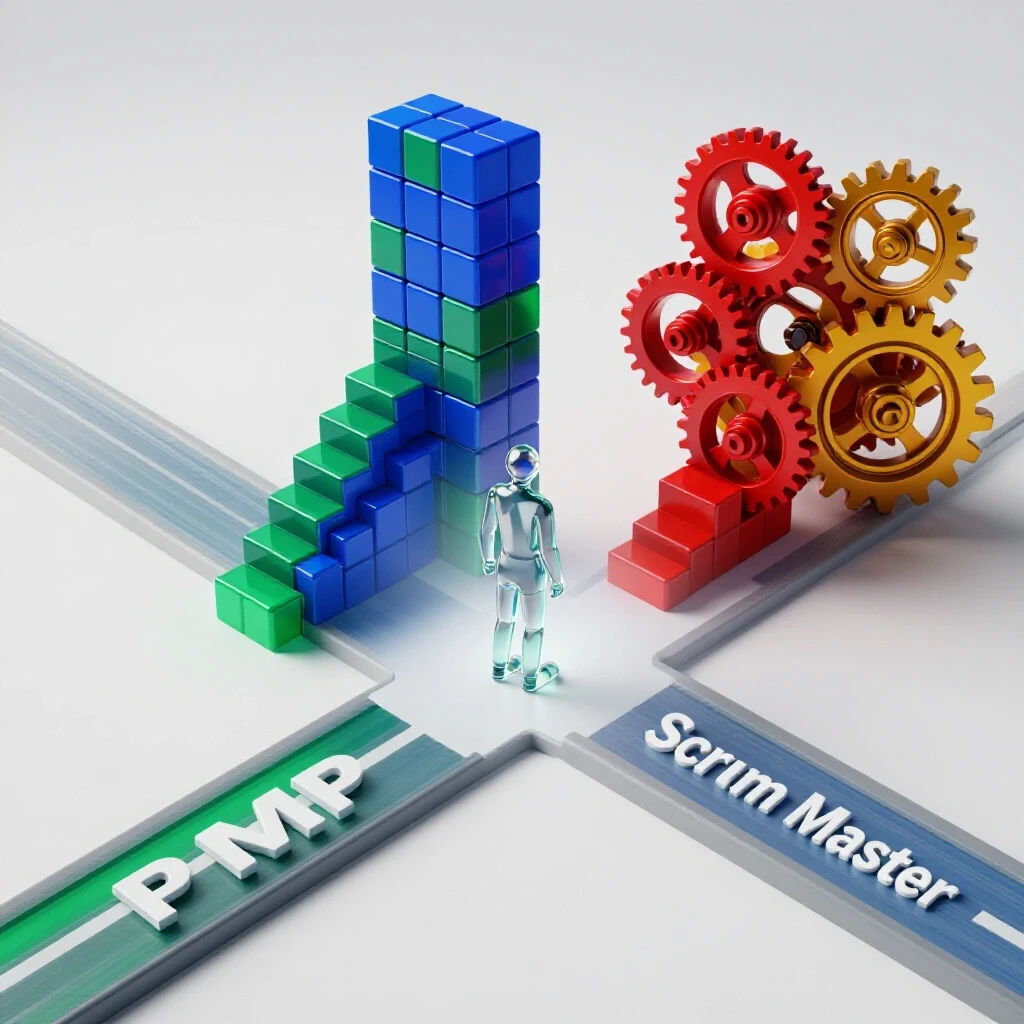
Tutors vs Self-Study: Which Helps Your Credential Goals? (Guide)
Imagine sitting at your desk at 9:00 PM with a thick textbook and a cold cup of coffee. You have spent three months studying for a major professional exam, but your practice scores are not moving. You wonder if you are wasting your time or if there is a faster way to reach the finish line. This is the “invisible wall” many mid-career professionals hit when trying to level up their careers.
Choosing Your Path: Degrees vs. Targeted Credentials
This selection process requires evaluating whether a multi-year academic program or a short-term certification better fits your goals. Degrees like an MBA offer broad leadership training, while credentials like the CPA or PMP provide specialized skills. The right choice depends on your specific industry requirements and career timeline.

When I mentor professionals between the ages of 25 and 50, the first question is always about the “why.” A JD degree ROI (Return on Investment) is very different from the PMP certification value. A law degree is a three-year commitment that can cost over $150,000. In contrast, a PMP might cost $1,000 and take three months.
If you want to switch fields entirely, a degree is often the better bridge. It provides a network and a broad foundation. However, if you are looking for a $15,000 raise in your current field, a targeted certification is usually the most efficient professional credential. According to the Graduate Management Admission Council (GMAC), MBA graduates see a median salary increase of 77%. Meanwhile, the Project Management Institute (PMI) reports that PMP holders earn 16% more than their non-certified peers.
- Degrees (MBA, JD, MD): Best for career pivots and long-term leadership.
- Certifications (CPA, PMP, PHR): Best for immediate salary bumps and technical authority.
- Licensure (PE, NCARB): Required for specific regulated roles in engineering or architecture.
Tutors vs Self-Study: My Personal Credential Journey
This comparison analyzes the effectiveness of independent learning versus hiring a private expert to guide study efforts. It measures how each method impacts time-to-completion, financial investment, and the ultimate success rate for high-stakes professional examinations. This choice often determines if a candidate passes on the first attempt or faces a costly retake.
A few years ago, I decided to pursue a high-level management certification to sharpen my skills. I am a disciplined person, so I chose the self-study route first. I bought the official guides and set a strict schedule. I studied for ten hours a week while working a full-time job.
After eight weeks, I took a full-length practice exam. I failed. My score was a 62%, and I needed a 75% to pass. I felt stuck. I was putting in the time, but I was not grasping the “why” behind the complex logic questions. I was stuck in a cycle of reading and forgetting.
Phase One: The Limits of Independent Self-Study
Self-study is the process of learning a subject without direct supervision or a structured classroom environment. It relies on textbooks, online videos, and practice sets. While it is the most affordable option, it requires high levels of self-discipline and the ability to identify your own knowledge gaps without external feedback.
During my self-study phase, I spent about $350 on materials. My biggest challenge was the “echo chamber” of my own mind. When I got a question wrong, I would read the explanation, but I did not always understand the underlying principle. I was memorizing answers instead of learning concepts.
For many working adults, self-study feels like a second job. It is easy to skip a session when a work project runs late. Without an external person holding you accountable, your six-month plan can easily turn into a twelve-month struggle.
- Cost: Low (mostly books and software).
- Flexibility: High (study whenever you want).
- Risk: High (easy to get stuck on difficult topics).
- Discipline: Must be 10/10.
Phase Two: The Impact of Targeted Tutoring
Targeted tutoring involves working one-on-one with a subject matter expert who focuses on your specific weaknesses. Unlike a general class, a tutor adapts the curriculum to your learning style and pace. This method aims to maximize efficiency by cutting out topics you already know and drilling into high-weight exam sections.
After my failed practice exam, I hired a private tutor. We met for two hours once a week for six weeks. The cost was $150 per hour, totaling $1,800. This was a significant investment, but the change was immediate.
My tutor identified that I was over-analyzing the questions. He taught me how to spot “distractor” answers that looked correct but were technically wrong. He provided a framework for the logic section that I had missed in the textbooks. By our fourth session, my practice scores jumped to 85%.
| Feature | Self-Study | Private Tutoring |
|---|---|---|
| Average Cost | $200 – $600 | $1,200 – $5,000 |
| Time to Completion | 6 – 12 Months | 2 – 4 Months |
| Success Rate | Moderate (approx. 50%) | High (approx. 80%+) |
| Stress Level | High (isolation) | Lower (supported) |
| Feedback Loop | Slow (self-graded) | Instant (expert led) |
The Outcome: ROI and Final Performance
The final outcome of this experiment was a passing score of 92% on the actual exam. More importantly, the process took four months total instead of the year I had originally feared. When I calculated my ROI, the $1,800 spent on a tutor led to a $12,000 salary increase within six months.
The “payback period” for the tutor was less than two months of my new salary. For a mid-career professional, time is often more valuable than money. Saving six months of study time allowed me to focus on a major promotion much sooner.
Best Professional Certifications for Career Advancement
These credentials are high-impact designations recognized by global industries as proof of expert-level knowledge. They are often used by employers to filter candidates for senior roles and higher pay grades. Selecting the right one requires looking at labor market data and specific job descriptions in your target field.
In my work, I see certain certifications consistently deliver the best results. For those in business, the PMP is a gold standard. According to the Bureau of Labor Statistics (BLS), project management roles are expected to grow by 6% through 2032. If you are in finance, the CPA remains the most powerful tool for career stability.
- PMP (Project Management Professional): Best for leaders in tech, construction, and healthcare.
- CPA (Certified Public Accountant): Essential for senior accounting and tax roles.
- SHRM-CP (HR Certification): The standard for human resources advancement.
- CISSP (Cybersecurity): One of the highest-paying certifications in the IT sector.
MBA vs Certifications: Which Offers Better ROI?
This comparison looks at the total cost of a Master of Business Administration versus the cumulative cost of several specialized certifications. It weighs the long-term networking benefits of a degree against the immediate technical credibility of a certificate. ROI is calculated by comparing the salary lift to the total investment.
An MBA is a “broad” degree. It teaches you how to run a whole company. A certification is “narrow.” It teaches you how to do one job very well. If you are 30 years old and want to be a CEO one day, the MBA is likely worth the $100,000 investment.
However, if you are 45 and just want to earn more in your current industry, a $2,000 certification might give you a better return. I have seen mentees spend two years on a degree only to find that their employer would have given them the same promotion for a three-month certificate. Always check your company’s “preferred qualifications” in job postings before committing to a degree.
PMP Certification Value and JD Degree ROI
The value of these two paths represents opposite ends of the professional education spectrum. The PMP focuses on operational efficiency and is often completed while working full-time. The JD is a rigorous legal academic path that typically requires a full-time commitment and leads to a specific professional license.
The JD degree ROI is a long-term play. It opens doors to the legal field, government, and high-level consulting. But the “opportunity cost” is high. You lose three years of salary.
The PMP certification value is about “speed to market.” You can earn it without quitting your job. For a working professional with family responsibilities, the PMP offers a lower-risk path to a higher tax bracket.
- JD ROI Payback: Often 5 to 10 years.
- PMP ROI Payback: Often 6 to 12 months.
Professional Licensure Pathways and Application Strategies
Licensure pathways are the legal requirements set by state or national boards that allow an individual to practice a specific profession. These pathways usually involve a combination of education, a minimum number of work hours, and passing a standardized exam. Application strategies focus on meeting these requirements in the most efficient order.
If you are pursuing a license like the CPA or a Professional Engineer (PE) designation, the path is non-negotiable. You must follow the board’s rules. The biggest mistake I see is people starting to study before they are even eligible to sit for the exam.
- Step 1: Verify your credits. Many boards require specific college courses.
- Step 2: Submit your application early. Processing can take months.
- Step 3: Plan your exam windows. Some exams are only offered certain times of the year.
Balancing Work, Study, and Cost: A Practical Plan
This strategy involves creating a sustainable schedule that allows a professional to maintain their job performance while making steady progress toward a credential. It focuses on time-management techniques and financial planning to avoid burnout and debt. A successful plan balances the needs of the employer, the family, and the individual.
To succeed, you must treat your study time like a non-negotiable meeting. I recommend the “Power Hour” method. Wake up one hour earlier than usual and study when your mind is fresh.
- Audit your time: Use a tracking app for one week to see where you waste hours.
- Set a budget: Include the cost of the exam, books, and a potential tutor.
- Talk to your boss: Many companies have “Tuition Reimbursement” programs that cover 50% to 100% of the cost.
- Use “Dead Time”: Listen to professional podcasts or audiobooks during your commute.
Tools and Resources for the Modern Learner
These are digital and physical assets that help streamline the learning process for busy adults. They include everything from AI-powered flashcards to executive-friendly online programs. Using the right tools can reduce study time by 20% or more by focusing on active recall and spaced repetition.
- AI Study Assistants: Use AI to summarize long chapters into bullet points.
- Spaced Repetition Apps: These help you memorize facts by showing them to you right before you are likely to forget them.
- Executive Programs: Look for “low-residency” or “hybrid” degrees designed for people who work 40+ hours a week.
- LinkedIn Learning: Great for “pre-studying” to see if you actually like a subject before buying a full course.
Frequently Asked Questions
Is a private tutor really worth the money for a professional exam? Yes, if you have hit a score plateau or are on a tight deadline. A tutor can identify specific weaknesses that you might miss during self-study. For high-stakes exams where a retake costs $500 and months of time, a tutor is an insurance policy for your success.
Can I self-study for the CPA exam while working full-time? It is possible but very difficult. Most successful candidates who self-study commit to 20 hours a week for 12 to 18 months. If you choose this path, you must use high-quality practice software that mimics the actual exam environment.
How many hours per week should I study for the PMP? Most professionals find that 10 to 15 hours per week over three months is the “sweet spot.” This allows you to cover the material without burning out at your day job.
Does an MBA offer a better ROI than a specialized certification? It depends on your goal. An MBA has a higher total salary ceiling but a much higher upfront cost. A certification has a faster “payback period” and is better for technical roles.
How do I balance a 40-hour work week with a JD program? Many law schools offer part-time “evening” programs specifically for working adults. These programs usually take four years instead of three. It requires extreme discipline and support from your family and employer.
What is the average cost of a private tutor for professional credentials? Prices vary by field, but you can expect to pay between $100 and $250 per hour for a high-quality, experienced tutor. Always ask for their personal pass rates and student testimonials before hiring.
How do I know if I am a “self-study” person? If you can sit down for two hours without checking your phone and you enjoy digging through textbooks to find answers, self-study may work for you. If you find yourself getting frustrated or confused easily, the structure of a tutor or class is better.
What is the fastest way to get a promotion using a credential? Choose a certification that solves a specific problem your company has. If your company struggles with data, get a Data Analytics certificate. If they struggle with organization, get a PMP. Show your boss your progress before you even finish the exam.
Are online certifications respected by major employers? Yes, as long as they are from a recognized body like PMI, AICPA, or a major university. Employers today care more about the “skills acquired” and the “passing of the national exam” than whether you sat in a physical classroom.
How do I handle exam anxiety for a high-stakes test? The best cure for anxiety is “over-preparation.” Use timed practice exams to get used to the pressure. If you are still struggling, a tutor can provide mental strategies and test-taking tips to keep you calm.
What is the first step I should take today? Download the “Exam Content Outline” for the credential you want. This is a free document provided by the testing body that tells you exactly what will be on the test. Knowing the “map” is the first step to winning the race.
(This article was written by one of our staff writers, Richard Thornton. Visit our Meet the Team page to learn more about the author and their expertise.)