How to Self-Study Python in 1 Year: Step-by-Step Results (Guide)
Scrubbing a dirty window is a lot like learning to code. At first, the grime of confusion blocks your view, and everything looks blurry. As you wipe away the errors and clear the streaks of bad logic, the path forward becomes bright and clear. This clarity is what allows a self-taught learner to see a new career path without the fog of high costs or student debt.
I have spent over a decade looking at how people learn outside of the traditional classroom. I have seen many people trade four years of college for six to twelve months of focused, self-directed study. Python is often the tool they use to make this change. It is a language known for being readable and useful in the real world. In my work as an advocate for alternative pathways, I have tracked many learners who skipped the degree and went straight to the skill.
Learning Python on your own is not just about writing lines of text. It is about building a system of thinking that solves problems. When I started my own journey into Python, I did not have a teacher or a syllabus. I had a laptop and a goal. I wanted to see if a regular person with a job and a family could reach a professional level of skill in one year using only free or low-cost tools.
Why Choose Python as an Alternative Pathway to a Degree?
Choosing Python as a career tool allows you to bypass the high costs of a four-year university. This language is the backbone of data science, web development, and automation. By focusing on self-directed learning, you can gain specific, job-ready skills that employers value more than a general degree in many modern fields.
For many 25 to 40 year olds, the idea of going back to college is stressful. It costs too much money and takes too much time. Data from the Department of Labor shows that skills-based hiring is on the rise. This means companies care more about what you can do than where you went to school. Python is the perfect entry point because it is used in almost every industry today.
Building a skill like Python through self-study offers several benefits:
- Total cost is often under $200 for books and small certificates.
- You can learn at your own pace while keeping your current job.
- The curriculum is always up to date with what the industry needs.
- You build a portfolio of real work that proves your ability to hiring managers.
Interestingly, a study by Burning Glass Technologies found that coding skills are now required in many roles that are not strictly “tech” jobs. Marketing, finance, and even health care now look for people who can use Python to handle data. This makes it a very safe bet for anyone looking to change their career path.
The 12-Month Self-Study Roadmap: My Personal Journey
A one-year plan for learning Python provides a structured way to move from a beginner to a job-ready professional. This timeline allows for deep learning without the burnout of a fast-paced bootcamp. It focuses on building a strong foundation first, followed by complex projects that show off your problem-solving skills to future employers.
When I began my 12-month experiment, I treated it like a part-time job. I spent about 10 to 15 hours a week on my studies. I did not use expensive classes. Instead, I used the vast world of free resources available online. My goal was to prove that self-direction is a valid alternative to traditional education.
Months 1 to 3: Mastering the Syntax and Basic Logic
The first three months of learning Python focus on understanding how the language works and how to talk to a computer. You learn about variables, loops, and basic data types. This phase is about building muscle memory and getting used to the “look” of code while solving simple math and logic puzzles.
During my first 90 days, I focused on the basics. I used “Automate the Boring Stuff with Python” by Al Sweigart. This resource is free online and very practical. I learned how to make the computer do repetitive tasks for me. This is where I learned about:
- Variables and Data Types: How to store information.
- Control Flow: Using “if” statements and loops to make decisions.
- Functions: How to write reusable blocks of code.
- Basic Debugging: How to find and fix mistakes in my work.
I spent a lot of time on sites like FreeCodeCamp. Their interactive lessons helped me stay on track. I found that doing just 30 minutes every single day was better than doing five hours once a week. This consistency is the secret to making the logic stick in your brain.
Months 4 to 8: Moving to Intermediate Libraries and Object-Oriented Programming
This middle phase is where you start to build more complex programs and learn how to organize your code like a professional. You explore libraries like Pandas for data or Flask for web apps. You also learn Object-Oriented Programming (OOP), which is a way to structure code to make it more efficient and scalable.
By month four, I felt like I knew the words but didn’t know how to write a book. I started looking at how to handle larger sets of data. I used the free version of the CS50P course from Harvard. It taught me how to think like a programmer. I also began using Git and GitHub. These are tools that every developer uses to save their work and show it to others.
During these months, I focused on:
- Object-Oriented Programming (OOP): Learning about classes and objects.
- Working with APIs: Learning how to pull data from websites like Weather.com or Twitter.
- Data Analysis: Using the Pandas library to clean and sort large spreadsheets.
- File Handling: Writing scripts that can read and write files on my hard drive.
This was the hardest part of the year. The concepts got tougher, and I had to learn how to read documentation. Documentation is the “instruction manual” for code. Learning to read it is a vital skill that separates beginners from professionals.
Months 9 to 12: Building a Portfolio and Real-World Applications
The final three months are dedicated to taking everything you have learned and building projects that solve real problems. This is where you create a portfolio to show employers. Instead of a diploma, you have a collection of working software that proves you have the skills needed for a high-paying job.
In the final stretch, I stopped following tutorials and started building my own ideas. This is where the real learning happens. When you don’t have a guide to follow, you have to figure things out on your own. I built two main projects that I felt proud of.
Project One: The Automated Job Scraper. I wrote a script that searched five different job boards for specific keywords. It collected the job titles and links, then sent me an email every morning with the results. This showed I could handle web scraping and automated emails.
Project Two: The Local Housing Data Dashboard. I used Python to pull data about home prices in my area. I cleaned the data and made charts to show price trends over time. This project proved I could work with data and present it in a way that people could understand.
Comparing Self-Study to Traditional and Paid Alternatives
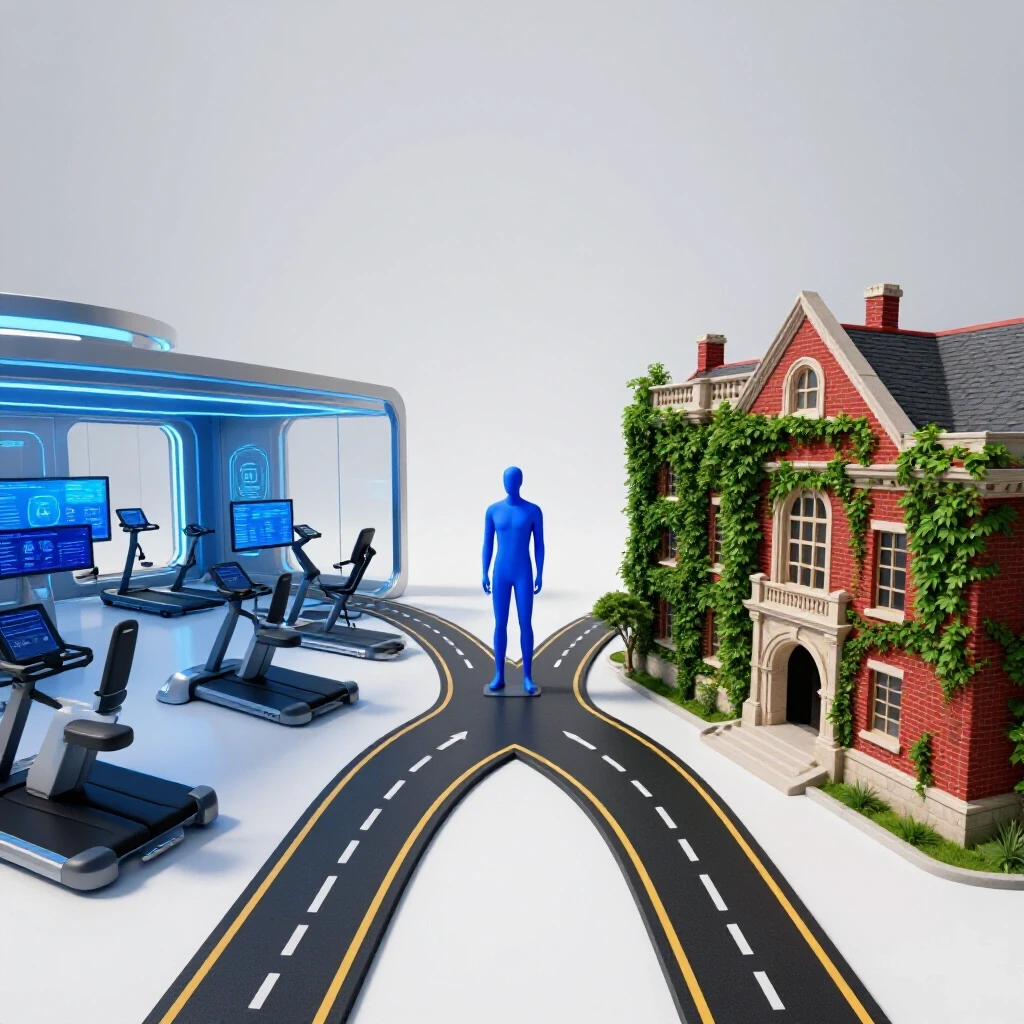
Comparing different learning paths helps you see the true value of your time and money. While a degree offers a formal title, self-study and micro-credentials offer speed and lower costs. Understanding the return on investment (ROI) for each path is essential for making a smart choice for your future career.
As an advocate for alternative paths, I always look at the data. Traditional degrees are becoming harder to justify for many people. The cost has risen much faster than the average salary. Below is a comparison of the most common ways to learn Python and enter the tech field.
| Feature | Traditional Degree | Coding Bootcamp | Python Self-Study |
|---|---|---|---|
| Total Cost | $40,000 – $100,000 | $10,000 – $20,000 | $0 – $500 |
| Time Commit | 4 Years | 3 – 6 Months | 6 – 12 Months |
| Flexibility | Very Low | Low to Medium | Very High |
| Curriculum | Broad / Theory | Fast / Practical | Custom / Practical |
| Job Readiness | Medium | High | High (with Portfolio) |
The data shows that self-study is the most cost-effective way to gain these skills. While bootcamps are faster, they often require you to quit your job. Self-study allows you to keep your income while you learn. According to a report by Coursera, 87% of people learning for professional development report career benefits like a promotion or a new job.
Tools and Resources for the Self-Directed Learner
Finding the right tools is the first step toward a successful self-study journey. There are many free and low-cost platforms that provide high-quality education. These resources allow you to build a custom learning path that fits your specific career goals and matches the skills currently in demand by top employers.
You do not need to spend a lot of money to get a world-class education in Python. The following resources are what I used and what I recommend to the people I mentor. They are verified, high-quality, and widely respected in the industry.
- Python.org: The official home of the language. Their documentation is the best place to find answers to specific questions.
- FreeCodeCamp: A non-profit that offers a full curriculum on Python and data analysis. It is completely free and very hands-on.
- Harvard CS50P: A free course available on edX. It provides a deep dive into Python and teaches you how to think like a computer scientist.
- GitHub: This is where you will store your code. It serves as your digital resume.
- Google Career Certificates: While not just for Python, these offer a great way to learn how to apply your skills in a professional setting.
- LinkedIn Learning: Great for short, focused videos on specific libraries or tools.
Using these tools together is called “credential stacking.” You take a free course here, a small certificate there, and combine them with your projects. This creates a very strong case for your skills when you start applying for jobs.
Measuring the ROI of Your Python Skills
Measuring the return on investment (ROI) helps you understand the financial and professional impact of your learning. By looking at salary increases and job placement rates, you can see if your time was well spent. For most learners, the ability to double their income within a few years makes self-study a winning choice.
When we talk about ROI, we look at what you put in versus what you get out. If you spend $100 and 500 hours of your time, and it leads to a job that pays $20,000 more a year, that is a massive return. In my research, I have seen many career changers move from $45,000 a year to $75,000 a year after mastering Python.
Key metrics for Python learners include:
- Average Starting Salary: Entry-level Python roles often start between $65,000 and $85,000.
- Time to Employment: Most dedicated self-taught learners find work within 4 to 9 months of finishing their portfolio.
- Cost Savings: Choosing self-study over a degree saves an average of $35,000 in tuition alone.
- Skill Durability: Python has been a top language for over 10 years and shows no signs of slowing down.
Employers are increasingly using “skills-based hiring.” They use tests and portfolio reviews rather than just looking at your degree. This shift is a huge advantage for the non-traditional learner. If your code works and your projects are good, you are a strong candidate.
Practical Tips for Balancing Work and Learning
Balancing a full-time job with a rigorous study schedule requires a clear plan and realistic goals. It is important to manage your energy and avoid burnout by setting a sustainable pace. By using small pockets of time and staying consistent, even the busiest adult can successfully learn complex new skills.
Most people I work with are between 22 and 45 years old. They have jobs, kids, and bills. They cannot study for eight hours a day. Here is how you can make it work:
- The 30-Minute Rule: Commit to 30 minutes every day. It is easier to find 30 minutes than two hours.
- Study Early: Many people find they learn best before the rest of the house wakes up.
- Use Your Commute: Listen to tech podcasts or watch coding videos on the bus or train.
- Build Something You Need: If you build a tool that helps you at your current job, you are practicing while you work.
The biggest mistake people make is trying to learn everything at once. Focus on one thing until you understand it. If you get stuck, don’t give up. Use sites like Stack Overflow to see how others solved the same problem. Everyone gets stuck; the pros just know how to find the answer.
Conclusion
The path of self-study is a powerful way to take control of your career without the burden of traditional college. By following a structured 12-month plan, you can gain professional-level Python skills for almost no cost. This approach values your time, your money, and your ability to learn through doing.
My one-year journey showed me that the only thing standing between a person and a new career is a plan and the will to follow it. You do not need a fancy degree to be a great programmer. You need curiosity, a laptop, and the discipline to keep wiping that window until the view is clear. The world of tech is waiting for people who can prove they have the skills.
Frequently Asked Questions
Is Python actually enough to get a job without a degree? Yes, but you need a strong portfolio. Python is a foundational skill. When you combine it with knowledge of a specific field like data science or web development, you become very hireable. Employers in the tech world care most about your ability to solve problems and write clean code.
How much does it really cost to self-study Python? You can do it for $0. Websites like FreeCodeCamp and YouTube have everything you need. If you want to buy a few highly rated books or pay for a platform like DataCamp, you might spend $100 to $500 over the course of a year. This is a tiny fraction of the cost of a college degree.
How many hours a week should I spend studying? Aim for 10 to 15 hours a week. This is enough to make real progress without burning out. Consistency is more important than total hours. Studying for two hours every day is much better than studying for 10 hours on Sunday and nothing the rest of the week.
What if I have no experience with computers or math? You do not need to be a math genius to learn Python. Basic algebra is usually enough for most programming tasks. Python was designed to be easy to read, almost like English. If you can think logically, you can learn to code.
Will AI like ChatGPT make learning Python useless? No, AI is a tool that helps programmers work faster. You still need to understand the logic to tell the AI what to do and to fix the mistakes it makes. Knowing Python allows you to use AI more effectively and build even more complex systems.
What should I put in my portfolio if I have no work experience? Put in personal projects that solve real problems. Examples include a weather app, a tool that organizes your files, or a script that tracks prices on Amazon. These show that you can apply what you have learned to real-world situations.
How do I handle the stigma of not having a degree? The best way to handle it is with proof of skill. When you can show a hiring manager a working application you built from scratch, the lack of a degree matters much less. Many top companies like Google and Apple have officially removed degree requirements for many of their roles.
Which version of Python should I learn? Always learn Python 3. Python 2 is outdated and no longer supported. Most modern tutorials and libraries use Python 3, which is the industry standard.
Do I need a powerful computer to learn Python? No. Python is very lightweight. You can learn on an old laptop or even a cheap Chromebook using online tools like Google Colab or Replit. You don’t need expensive hardware to start.
How do I know when I am “job-ready”? You are job-ready when you can take a problem and build a solution without following a step-by-step tutorial. If you can look at a task, plan the code, and fix the errors that come up, you are ready to start applying for entry-level roles.
(This article was written by one of our staff writers, Andrew Kensington. Visit our Meet the Team page to learn more about the author and their expertise.)