Degree vs Hybrid Program: Which Pathway Boosts Your Career? (Guide)
In a world where we prioritize eco-conscious choices to protect our planet, we must apply that same lens of sustainability to our education. Just as a sustainable product is built to last and serve a specific purpose, your career roadmap after a bachelor’s degree or a hybrid certificate should be designed for long-term durability. I have spent over a decade analyzing how people learn and how that learning translates into a paycheck. I have seen students graduate with honors but struggle to explain what they can actually do for an employer.
I remember mentoring a student named Alex who was torn between a traditional four-year degree and a high-intensity hybrid program. Alex wanted to work in environmental data science, a field that demands both deep theoretical knowledge and the ability to use specific software on day one. We looked at the data together, mapping out how each path would shape his brain and his resume. This journey taught me that the “best” path isn’t about the name on the diploma; it is about the specific learning outcomes that align with your career goals.

What can I do with this degree or hybrid certificate?
This question explores how different educational structures translate into practical roles within the modern labor market. It focuses on identifying the specific skills, certifications, and knowledge bases that employers value most when they review a candidate’s profile for an open position.
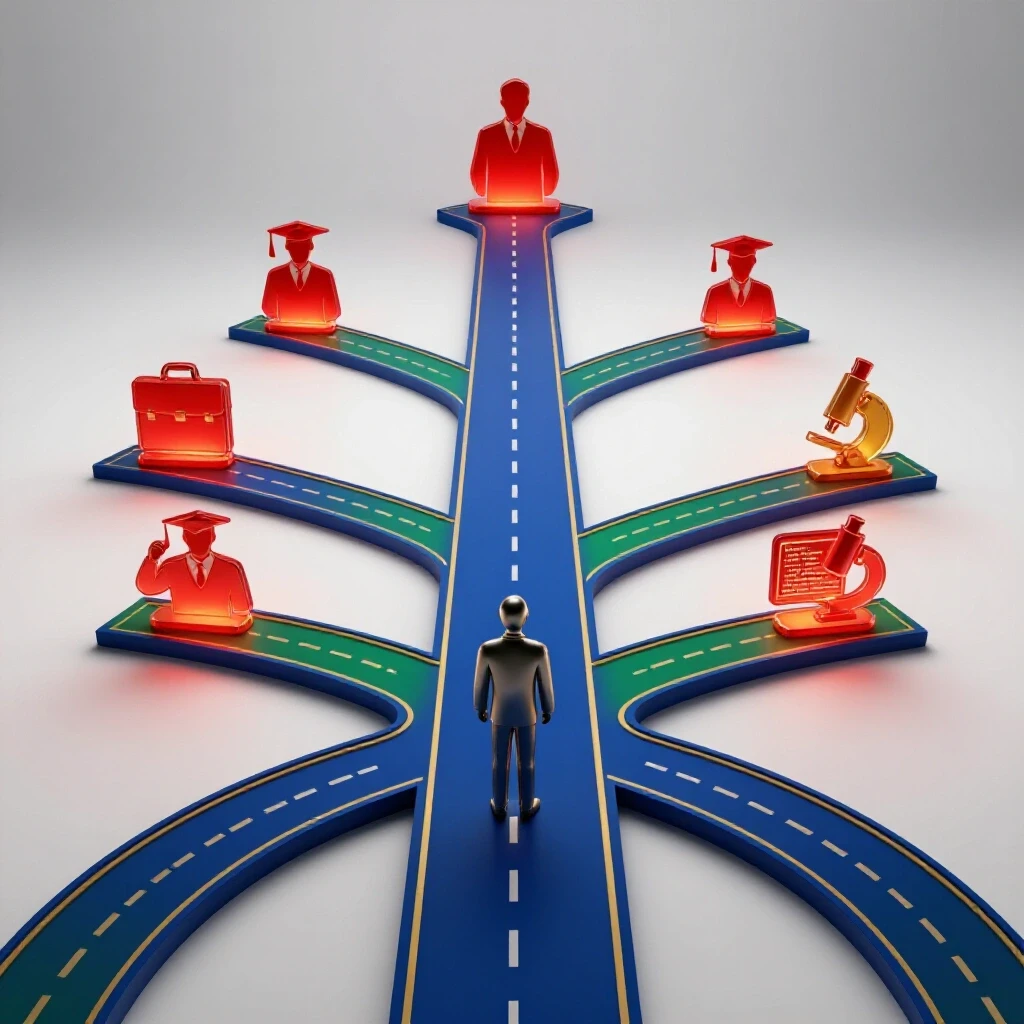
When you ask what you can do with your education, you are really asking about your “degree to career pathways.” A traditional degree offers a broad lens. For example, a Bachelor’s in Communications teaches you the “why” behind human interaction. You learn about rhetoric, history, and social theory. This creates a flexible foundation. You could go into public relations, technical writing, or corporate training.
Hybrid programs, however, are often built for “just-in-time” learning. These programs blend online theory with in-person, hands-on labs. If you take a hybrid program in Cybersecurity, you aren’t just reading about firewalls; you are building them in a controlled environment with an instructor watching your screen. The outcome is a narrow but deep set of technical skills that allow you to step into a “Security Analyst” role immediately.
In my experience, the greatest strength of a degree is “cognitive flexibility.” Because you spend four years reading, writing, and debating, you develop the ability to learn how to learn. Data from the Bureau of Labor Statistics (BLS) suggests that while degree holders might take longer to find their specific niche, they often have higher promotion rates into management after five years. This is because they have been trained to handle ambiguity and complex organizational structures.
- Knowledge Retention: High for theoretical concepts and historical context.
- Skill Set: Broad, including writing, research, and analytical reasoning.
- Adaptability: High; graduates can often pivot between industries (e.g., a History major moving into Market Research).
The Learning Outcome of Hybrid Programs
Hybrid programs combine the flexibility of online learning with the rigor of hands-on, in-person sessions. These programs prioritize immediate skill application and technical proficiency tailored to specific industry needs, often resulting in faster entry into specialized technical roles.
Hybrid models are the “special forces” of education. They cut out the electives and focus on “competency-based” outcomes. I worked with a mentee who transitioned from retail to UX Design through a hybrid program. She spent her mornings watching videos on design theory and her afternoons in a physical studio with a mentor. The learning outcome was a portfolio of real-world projects that proved she could do the job.
- Knowledge Retention: High for technical tasks and software-specific workflows.
- Skill Set: Narrow and deep; focused on “day-one” readiness.
- Adaptability: Moderate; highly effective for the specific role but may require additional training to switch fields.
Comparing Knowledge Retention and Practical Application
This section analyzes how well students remember what they learn and how effectively they can apply that knowledge in a professional setting. It compares the long-term memory of academic theories against the immediate utility of technical skills gained in different environments.
One of the biggest pain points I hear from recent graduates is the “experience gap.” They know the theory, but they don’t know which buttons to click. Traditional degrees often suffer from a “lag” between learning and doing. You might learn about marketing strategy in your sophomore year but not use it until an internship in your senior year. By then, some of that knowledge has faded.
Hybrid programs solve this by using “active recall” and “spaced repetition.” Because these programs are shorter and more intense, the gap between learning a concept and applying it in a lab is often only a few hours. This leads to higher immediate proficiency. However, the risk is “knowledge decay.” If you don’t use those specific technical skills every day after the program ends, you might lose them faster than the broad “thinking skills” from a degree.
| Feature | Traditional Degree | Hybrid Program |
|---|---|---|
| Primary Goal | Holistic understanding and critical thinking | Task mastery and job-ready skills |
| Learning Pace | Slower, allowing for deep reflection | Accelerated, focused on high-impact tools |
| Feedback Loop | Semester-based grades and essays | Real-time coaching and project reviews |
| Curriculum | Fixed, updated every 3-5 years | Dynamic, updated to match current tech |
| Outcome | Long-term career “floor” | Immediate career “ladder” |
How Curriculum Adaptability Affects Your Career Roadmap
Curriculum adaptability refers to the speed at which an educational program updates its teaching material to reflect current industry trends and technologies. This factor determines how relevant your skills will remain in a rapidly changing job market over the next decade.
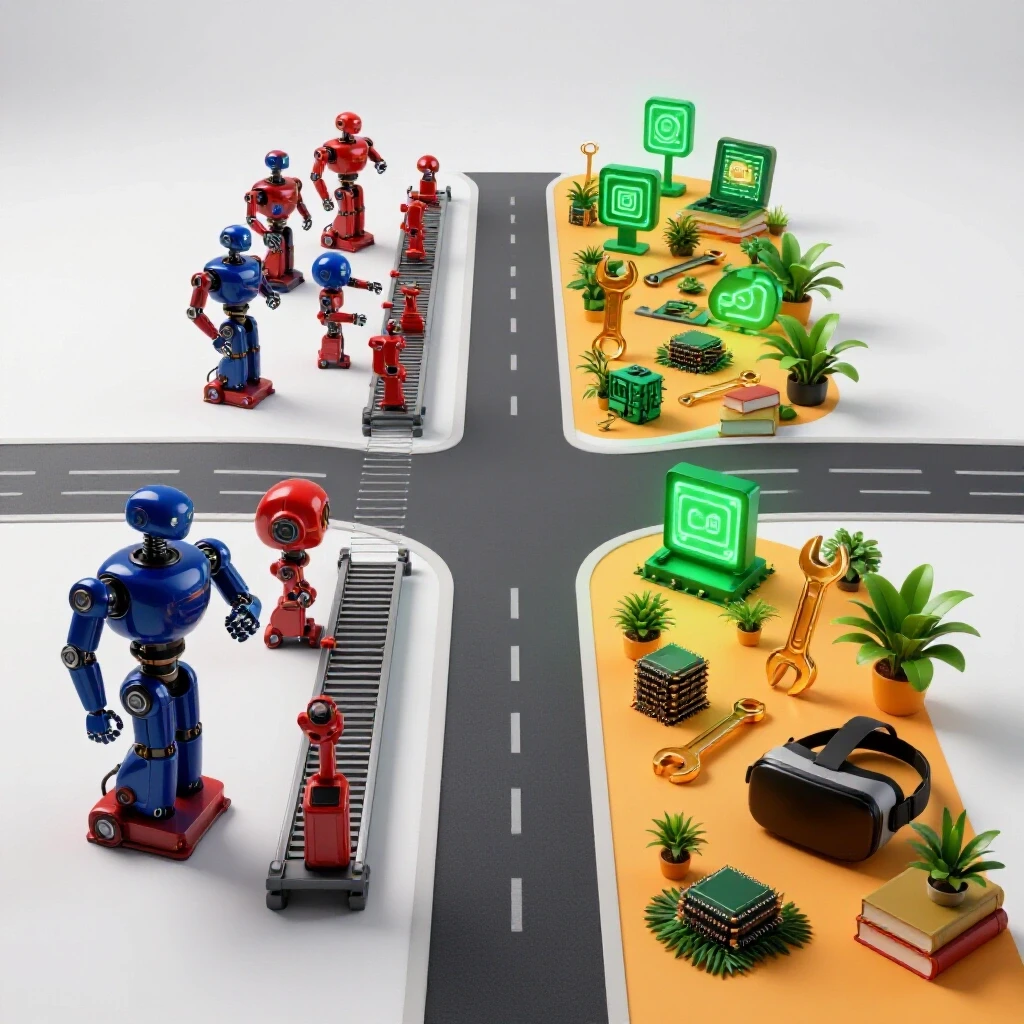
The job market moves faster than university bureaucracies. It can take years for a college to approve a new course on Artificial Intelligence. In contrast, hybrid programs are often run by industry professionals who can update a syllabus in a weekend. For a student mapping out a career roadmap after a bachelor’s, this is a critical distinction.
If you are entering a field like software engineering or digital marketing, a degree might give you the “logic,” but a hybrid certificate will give you the “tools.” I often advise mid-career professionals to use hybrid programs as “booster shots” for their existing degrees. This combination creates a powerful career trajectory. You have the degree for the “management track” and the hybrid certificate for the “technical track.”
- Degree Update Cycle: Often 5 to 10 years for major curriculum overhauls.
- Hybrid Update Cycle: Often 6 to 12 months, tracking with software releases.
- Market Alignment: Hybrid programs often use O*NET data to map their lessons directly to job descriptions.
Strategies to Maximize Employability and Satisfaction
Maximizing employability involves choosing an educational path that aligns your personal interests with the actual demands of the labor market. This strategy focuses on creating a flexible career plan that accounts for both your first job and your long-term professional growth.
To build a realistic career roadmap, you must look at your education as a “stack.” I tell my students to stop looking for the “perfect” degree and start looking for the “perfect” skill set. Your degree is the foundation, but your hybrid experiences are the bricks.
- Audit Your Desired Role: Go to LinkedIn or Handshake. Look at five job descriptions for the role you want in five years. What skills do they list?
- Identify the Gap: Does your current degree cover those skills? If it only covers 40%, a hybrid program can fill the other 60%.
- Build a Multi-Path Roadmap: Don’t just plan for one job. Plan for a “cluster” of roles. A degree in Business plus a hybrid certificate in Data Analytics allows you to apply for roles in Finance, Marketing, or Operations.
Metrics of Success in the First 5 Years
When we look at career outcomes, we need to track specific benchmarks. Based on my analysis of alumni outcome studies, here are the general trajectories for these two paths:
- Time to First Job: Hybrid graduates often find work in 3-6 months due to specialized skills. Degree holders may take 6-9 months to find a role that matches their field.
- Promotion Timeline: Degree holders often see their first major promotion to “Senior” or “Lead” roles between years 3 and 5. Hybrid-only graduates may hit a “ceiling” at year 4 unless they add broader leadership training.
- Skill Relevance: Hybrid skills usually need an “update” every 2 years. Degree-based “soft skills” (communication, leadership) remain relevant for 20+ years.
Navigating Transitions for Mid-Career Professionals
Career transitions for mid-career professionals involve pivoting from one industry or role to another by leveraging existing experience and adding new, targeted learning. This process requires a strategic blend of past expertise and fresh, market-driven skills.
If you are 30 years old and feel stuck, you don’t necessarily need another four-year degree. This is where hybrid programs shine. I once helped a teacher transition into Corporate Instructional Design. She already had the “pedagogy” (the degree). She just needed the “tools” (the hybrid program).
We mapped out a 6-month plan. She kept her job while doing the online portion and spent two weekends a month in an intensive workshop. This “hybrid” approach allowed her to prove to employers that she had modernized her skill set without starting from scratch.
- Step 1: Identify “transferable” skills from your degree (e.g., project management, writing).
- Step 2: Use a hybrid program to gain “hard” skills (e.g., Python, Salesforce, CAD).
- Step 3: Rebrand your resume to lead with the new skills while using the degree as a mark of stability.
Tools and Resources for Mapping Your Pathway
These tools and resources are essential for researching labor market trends, identifying required skills, and visualizing potential career paths. They provide the data-driven foundation needed to make informed decisions about your education and professional future.
- BLS Occupational Outlook Handbook: Use this to find the “Job Outlook” (growth rate) for any career. Aim for fields growing at 5% or higher.
- O*NET Online: This is the gold standard for “degree to career pathways.” It breaks down every job into specific tasks, skills, and knowledge areas.
- LinkedIn Career Explorer: This tool shows you how people in your city transitioned from one job to another and what skills they added.
- Handshake: Excellent for students to see which employers are actively recruiting from specific degree or hybrid programs.
- My Roadmap Template: Create a simple spreadsheet with three columns: “Year,” “Learning Goal,” and “Marketable Outcome.”
Building a Flexible Roadmap with Multiple Options
A flexible career roadmap is a strategic plan that includes several possible career directions rather than a single, rigid path. This approach allows you to adapt to economic shifts and personal changes while maintaining a clear sense of professional progress.
I always tell my mentees: “Plan for the career you want, but prepare for the market you’ll get.” A flexible roadmap means you aren’t just a “Graphic Designer.” You are a “Visual Communicator with technical skills in Adobe Suite and a theoretical background in Psychology.”
- Option A (The Dream): Direct entry into your target role (e.g., Data Scientist).
- Option B (The Pivot): A related role that uses 70% of your skills (e.g., Data Analyst).
- Option C (The Foundation): A role that builds the one missing skill you need (e.g., Junior Developer).
By having these options, you reduce the anxiety of “what if I don’t get the job?” You realize that your degree and your hybrid learning have given you a toolkit, not just a single key.
Key Takeaways for Long-Term Success
- Degrees provide the “why,” while hybrid programs provide the “how.” Both are valuable, but they serve different phases of your career.
- Focus on learning outcomes, not just credentials. Can you perform the tasks listed in the job description?
- Stack your education. Use a degree as your foundation and hybrid programs to stay current with technology.
- Update your roadmap annually. The labor market changes; your plan should too.
- Prioritize “active” learning. Whether in a degree or a hybrid program, the more you do, the more you retain.
Frequently Asked Questions
What can I do with this degree if I feel it didn’t teach me practical skills?
If your degree felt too theoretical, you can bridge the gap by enrolling in a short-term hybrid program or completing a project-based certification. Employers value the “critical thinking” a degree represents, but they need to see “applied evidence.” Use your degree to apply for roles that require high-level analysis, and use a hybrid program to show you can handle the specific software or tools used in that industry. This combination often makes you a more competitive candidate than someone with only one or the other.
How do hybrid programs compare to degrees in terms of workforce readiness?
Hybrid programs usually lead to faster “workforce readiness” for technical or specific roles because they focus strictly on the skills used in the office today. A traditional degree prepares you for “long-term career readiness,” giving you the broad skills needed to move into leadership or management later. If you need a job right now, a hybrid program is often the faster route. If you want a path to the C-suite, the degree provides the necessary foundational breadth.
Can a hybrid program replace a bachelor’s degree for career transitions?
In some fields, like tech, digital design, or specialized trades, a hybrid program can effectively replace a degree, especially for those who already have professional experience. However, for regulated industries like healthcare, finance, or engineering, a degree is still a legal or professional requirement. For a mid-career transition, a hybrid program is often the most efficient way to “retool” your existing professional background for a new industry without spending four years back in school.
Which path offers better knowledge retention for long-term career growth?
Degrees tend to offer better long-term retention of “first principles” and “theoretical frameworks” because of the extended time spent on the subject. Hybrid programs offer better “muscle memory” and immediate recall for technical tasks. For long-term growth, the best approach is a combination: the degree helps you understand the “big picture” of your industry, while periodic hybrid learning keeps your technical skills from becoming obsolete.
How do I explain a hybrid program to a traditional employer on my resume?
Focus on the “learning outcomes” and “competencies.” Instead of just listing the program name, list the specific projects you completed and the tools you mastered. Use phrases like “Intensive hybrid program focused on [Skill A] and [Skill B] with 200+ hours of applied lab work.” This shows the employer that the program was rigorous and directly relevant to their needs, bridging the gap between “online learning” and “real-world experience.”
Are hybrid programs more adaptable to AI and new technology than degrees?
Yes, hybrid programs are significantly more adaptable. Because they are often run by private organizations or specialized departments, they can update their curriculum in months to include new tools like AI or updated software versions. Traditional universities often have a multi-year approval process for new courses. If your career roadmap is in a fast-moving field like tech or marketing, a hybrid program is essential for staying current.
What is the typical promotion timeline for someone with a hybrid certificate vs. a degree?
Data suggests that hybrid certificate holders often start at a similar or slightly higher technical salary but may hit a promotion “ceiling” around year 3 or 4 if they don’t have a degree. Degree holders may start in a broader role but often move into “Senior” or “Manager” positions faster between years 5 and 7. The most successful professionals use hybrid learning to get in the door and their degree-based “soft skills” to climb the ladder.
How can I use BLS data to decide between a degree and a hybrid program?
Look at the “Entry-Level Education” requirement for your target job on the BLS website. If it says “Bachelor’s Degree,” you likely need the degree to get past automated resume filters. If it says “Postsecondary Non-degree Award” or “High School Diploma,” a hybrid program might be the more efficient path. Also, check the “Work Experience in a Related Occupation” section; if experience is highly valued, the hands-on nature of a hybrid program may be your best bet.
What are the best majors for the current job market when considering hybrid add-ons?
Majors in “broad” fields like Business, Psychology, Communications, or Biology are excellent when paired with a “technical” hybrid program. For example, a Psychology degree paired with a hybrid UX Design certificate is a powerful combination for tech companies. A Biology degree with a hybrid Data Analytics certificate opens doors in biotech and pharmaceuticals. These “stacks” allow you to leverage the stability of a degree with the marketability of a specialized skill.
How do I build a career roadmap that includes both types of learning?
Start with your 10-year goal. If you want to be a Director of Marketing, your roadmap might look like this: Years 1-4 (Bachelor’s in Marketing for the foundation), Year 5 (Hybrid Certificate in Growth Hacking for immediate technical edge), Year 8 (Advanced Leadership training or a specialized Master’s). This “step-ladder” approach ensures you have the theoretical depth to lead and the practical skills to execute, making you an indispensable asset to any eco-conscious and sustainable business.
(This article was written by one of our staff writers, James Holloway. Visit our Meet the Team page to learn more about the author and their expertise.)