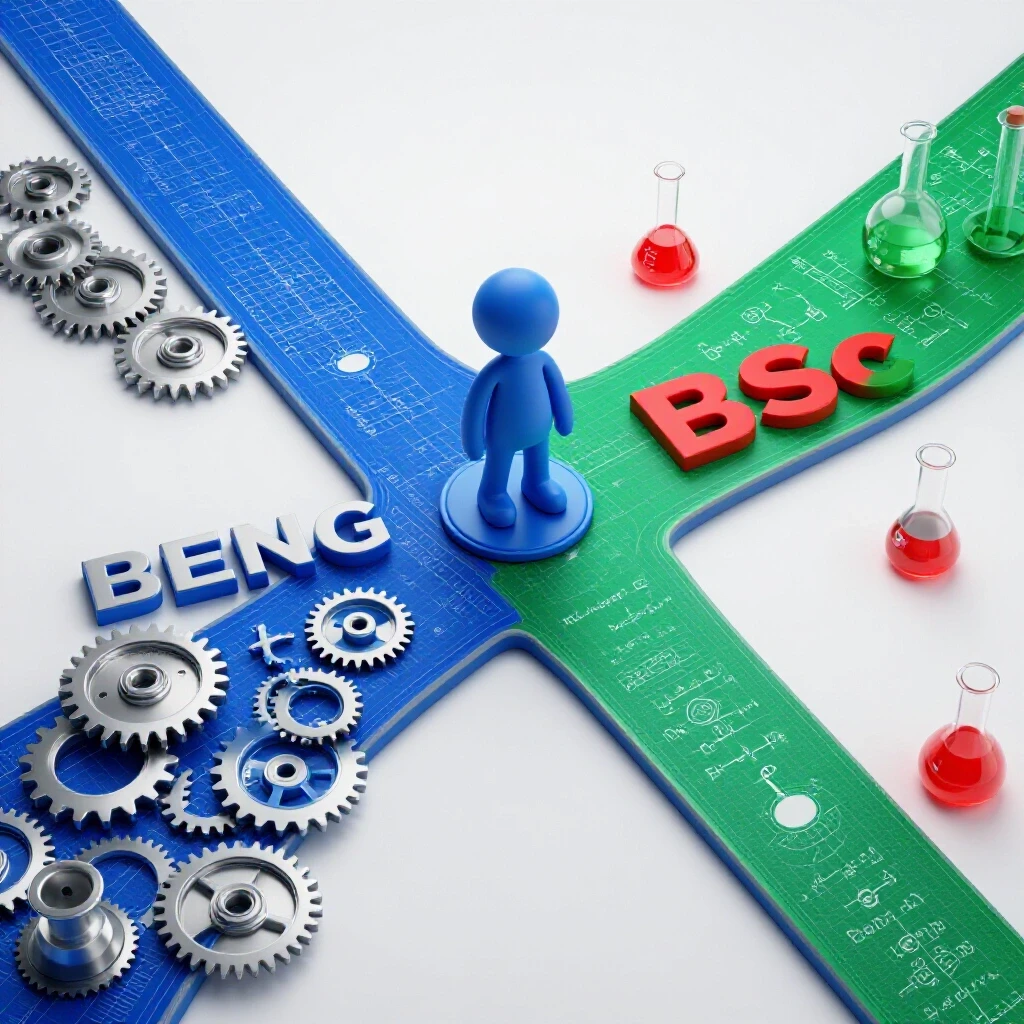
MBA vs MPA: How Long to Advance Your Career? (2026 Guide)
According to a study by the Council of Graduate Schools, nearly 30 percent of students who pursue an MBA or MPA started their undergraduate careers in a completely unrelated major, proving that the foundation you build today dictates the speed of your future promotion. This fact often surprises the high school seniors and college freshmen I mentor. They often feel that their first choice of major locks them into a single path forever. In my 14 years as an education policy analyst, I have seen that the opposite is true. Your undergraduate degree is a launchpad, not a cage. Whether you choose a Bachelor of Arts (BA) or a Bachelor of Science (BS), your goal is to build a “career velocity” that allows you to advance quickly once you reach the graduate level.

I remember working with a student named Alex Rivera. Alex was a bright sophomore who felt stuck between a love for community service and a desire for financial security. Alex asked me, “If I want to lead a large organization one day, should I focus on business or public service?” We looked at the data together. We compared the Master of Business Administration (MBA) and the Master of Public Administration (MPA). We looked at how long it took graduates from each path to reach mid-level management. This guide is built on the same data-driven approach I used with Alex to help you navigate these choices.
Wondering What Is the Best Bachelor’s Degree for Your Career Goals?
Choosing a degree involves matching your skills with market demand. It is the first step in deciding whether you will eventually pursue an MBA for corporate leadership or an MPA for public service. This decision starts with understanding how your undergraduate major feeds into these advanced professional degrees.
When you look for the best bachelor’s degree for careers, you have to look at the long game. An MBA is designed for the private sector. It focuses on profit, efficiency, and scaling businesses. An MPA is the “MBA of the public sector.” It focuses on policy, implementation, and social impact. If you want to work for a Fortune 500 company, a BS in Business or Economics is a standard starting point. If you want to run a city government or a global non-profit, a BA in Political Science or Sociology is common.
However, the “time-to-promotion” often depends on the technical skills you gain early on. Data from the Bureau of Labor Statistics (BLS) shows that management roles in both sectors are growing. But the path to those roles looks different. In the business world, advancement is often merit-based and can happen rapidly—sometimes within 2 to 4 years post-MBA. In the public sector, advancement is often tied to “grade levels” or years of service, meaning an MPA holder might see a more predictable, steady climb over 5 to 7 years.
BA vs BS: Which Degree Type Should You Choose?
A Bachelor of Arts (BA) usually focuses on humanities and social sciences, while a Bachelor of Science (BS) emphasizes technical and scientific skills. Both can lead to graduate management degrees, but the coursework differs significantly. Understanding these differences helps you avoid “major regret” later in your college career.
In my research, I have found that students often stress over the “BA vs BS” label more than they should. However, the coursework does matter for graduate school readiness. A BS often requires more math and lab science. This can be a huge advantage if you plan to get an MBA, as many top business schools look for “quantitative readiness.” On the other hand, a BA focuses on critical thinking, writing, and cultural context. These are the “soft skills” that the National Association of Colleges and Employers (NACE) says are in high demand for MPA programs and public leadership.
Below is a comparison table to help you see the structural differences.
BA vs BS Differences at a Glance
| Feature | Bachelor of Arts (BA) | Bachelor of Science (BS) |
|---|---|---|
| Core Focus | Humanities, Social Sciences, Arts | Math, Science, Technical Skills |
| Coursework | Broad, interdisciplinary, language requirements | Specialized, technical, heavy lab/math requirements |
| Flexibility | Higher; easier to double major or add minors | Lower; many “prescribed” credit hours |
| Career Path | Communication, Law, Education, MPA | Engineering, Finance, Tech, MBA |
| Graduate Prep | Strong writing and research focus | Strong data and analytical focus |
Building on this, I often tell my mentees that the “best” degree is the one where they will earn the highest GPA while gaining relevant internships. A 3.8 GPA in a BA program often opens more doors than a 2.5 GPA in a BS program, even in technical fields.
MBA vs MPA: Understanding the Career Advancement Timeline
Career velocity refers to the speed at which a professional moves from entry-level to executive roles. An MBA often leads to faster private-sector promotions, while an MPA provides a steady climb in government or non-profit sectors. Both degrees are valuable, but they operate on different schedules.
When we look at how long it took to advance, the MBA path is often described as “high-intensity.” According to institutional analyses of MBA graduates, many see a “promotion jump” immediately upon graduation or within the first 24 months. This is because many MBA students already have 3 to 5 years of work experience. They use the degree to pivot from a functional role (like accounting) to a leadership role (like Senior Manager).
The MPA timeline is different. Public sector roles often use the General Schedule (GS) pay scale. For example, a new MPA holder might enter the federal workforce at a GS-9 level. With experience, they move to GS-11 and GS-12. This process is highly structured. Interestingly, while the “peak” salary might be lower than a corporate VP, the job stability and benefits often provide a higher “lifetime value” for those who stay in the system.
- MBA Promotion Timeline: 2-4 years to reach mid-senior management.
- MPA Promotion Timeline: 5-7 years to reach senior policy or director roles.
- Starting Salary (MBA): $85,000 – $125,000 (average varies by school rank).
- Starting Salary (MPA): $60,000 – $85,000 (average varies by agency).
Choosing the Right Major to Maximize Your ROI and Career Velocity
ROI, or Return on Investment, measures the financial gain of a degree against its cost. Selecting a major with high employability ensures you have the work experience needed to enter a top-tier MBA or MPA program. This is a critical part of any college planning guide.
I recently analyzed College Scorecard data for a group of first-generation students. We found that “underemployment” (working a job that doesn’t require a degree) is highest for students who choose a major without a clear career link. To maximize your ROI, you should look at the “debt-to-income ratio.” Ideally, you should not borrow more for your total undergraduate education than you expect to earn in your first year of work.
If you are looking for the best bachelor’s degree for careers that lead to an MBA, consider: – Finance or Accounting – Industrial Engineering – Business Analytics – Economics
If you are looking for the best bachelor’s degree for careers that lead to an MPA, consider: – Public Policy – Sociology or Urban Studies – Political Science – Public Health
Best Bachelor’s Degrees by ROI (Estimated 5-Year Outcomes)
| Major | Avg. Starting Salary | Debt-to-Income Ratio | 5-Year Salary Growth |
|---|---|---|---|
| Finance (BS) | $66,000 | 0.65 | High (35%) |
| Public Policy (BA) | $52,000 | 0.80 | Moderate (20%) |
| Economics (BA/BS) | $62,000 | 0.70 | High (30%) |
| Nursing (BS) | $75,000 | 0.55 | Moderate (15%) |
| Sociology (BA) | $45,000 | 1.10 | Low (12%) |
Note: Data compiled from NCES and College Scorecard averages.
Real-World Outcomes: How Long It Took to Advance in Business vs. Public Service
Advancement timelines vary by industry. Business professionals with an MBA might see a promotion within 2-3 years, whereas MPA holders in the public sector often follow a structured “step” system for raises and promotions. These real-world outcomes show that “speed” isn’t the only metric for success.
Let’s look at two anonymized case studies from my files.
Case Study A: The MBA Path (The “Accelerator”) “Sarah” graduated with a BS in Marketing. She worked for 4 years as a junior analyst. She then went to a top-20 MBA program. Within 18 months of graduating from her MBA, she was promoted to Director of Strategy at a tech firm. Her total time from her first post-grad job to Director was about 7.5 years. Her salary tripled in that window.
Case Study B: The MPA Path (The “Architect”) “Marcus” graduated with a BA in Political Science. He worked as a community organizer for 3 years before getting his MPA. After his MPA, he joined a state housing agency. It took him 6 years to move from Program Coordinator to Deputy Director of the agency. While his salary growth was slower than Sarah’s, his pension and loan forgiveness (PSLF) options made his total financial picture very stable.
As a result of these different structures, I tell students like Alex Rivera to think about their “environment preference.” Do you thrive in a fast-paced, competitive environment where “time-to-promotion” is the main goal? Or do you prefer a mission-driven environment where your impact is measured over decades?
BA vs BS Differences and Their Impact on Graduate School Readiness
The specific focus of your undergraduate degree can influence your graduate school application. BS degrees often prepare students for the quantitative rigors of an MBA, while BA degrees can provide the writing skills essential for an MPA. This is a subtle but important part of choosing the right major.
In my experience, MBA admissions committees look for “evidence of rigor.” If you have a BA in English but want an MBA, you must prove you can handle the math. You might do this by taking extra calculus or statistics courses. Conversely, if you have a BS in Engineering and want an MPA, you must prove you can write persuasive policy memos.
- MBA Readiness: Focus on Statistics, Microeconomics, and Financial Accounting.
- MPA Readiness: Focus on Research Methods, Ethics, and Grant Writing.
- Common Mistake: Choosing an “easy” major to get a high GPA, but failing to take the prerequisite classes needed for graduate school.
- Pro Tip: Use your elective credits to “bridge the gap” between your BA/BS focus and your future graduate goals.
College Planning Guides: Transitioning from Undergraduate to Professional Leadership
A successful transition requires a multi-year plan. This includes selecting the right internships, maintaining a strong GPA, and understanding the specific accreditation standards of your chosen graduate program. This section provides a step-by-step action plan for students.
- Self-Discovery (Freshman/Sophomore Year): Use tools like the College Board’s “BigFuture” or career aptitude assessments. Ask yourself: Do I like solving problems with data (MBA lean) or through policy and people (MPA lean)?
- Major Declaration (Sophomore Year): Decide on a BA vs BS based on your strengths. If you struggle with high-level math, a BA with a focused minor might be a better path to a high GPA.
- Work Experience (Junior/Senior Year): This is the most important factor for “how long it took to advance.” Students with two or more internships typically find jobs 15% faster than those with none, according to NACE data.
- The “Gap” Years (Post-Graduation): Most top MBA and MPA programs prefer candidates with 2 to 5 years of professional work experience. Use this time to build your resume.
- Graduate Selection: Ensure your program is accredited. For MBAs, look for AACSB accreditation. For MPAs, look for NASPAA accreditation.
Actionable Metrics for Your Degree Journey
To make an informed, data-driven decision, you need to know the numbers. These metrics represent national averages and can help you set realistic expectations for your career velocity.
- Average 4-Year Graduation Rate: 45% at public universities (aim to be in this group to save money).
- Major Switch Rate: About 30% of students change their major at least once. It is okay to pivot!
- Average Student Debt (Undergrad): $28,000 – $32,000.
- MBA Salary Increase: Graduates often see a 50% to 100% increase over their pre-MBA salary.
- MPA Stability: Government jobs have a much lower turnover rate (approx. 1.5%) compared to the private sector (approx. 3.5%).
Interestingly, when I work with career changers, they often worry that they have “wasted time.” I remind them that the skills learned in a BA program—like communication and empathy—are the very things that make a mid-career MBA or MPA student stand out. Your timeline is unique to you.
Tools and Resources for Choosing the Right Major
Navigating the world of higher education is easier when you have the right tools. I recommend these five resources to every student and parent I advise.
- College Scorecard: Use this U.S. Department of Education tool to see actual starting salaries and debt levels for specific majors at specific schools.
- BLS Occupational Outlook Handbook: This is the gold standard for researching what jobs will be in demand ten years from now.
- LinkedIn Skills-Gap Data: Look at the profiles of people who have the job you want. What was their undergraduate major? Did they get an MBA or an MPA?
- O*NET OnLine: A detailed tool for seeing what daily life is like in different professions.
- Degree Comparison Spreadsheets: Create a simple sheet to track tuition, average salary, and “time-to-degree” for your top three choices.
Frequently Asked Questions About BA vs BS and Career Paths
What is the main difference between a BA and a BS? The main difference is the breadth versus depth of the curriculum. A Bachelor of Arts (BA) offers a broad education in the liberal arts, requiring more credits in humanities and social sciences. A Bachelor of Science (BS) is more specialized, focusing heavily on technical, mathematical, and scientific subjects. Neither is “better,” but one may align more closely with your natural strengths.
Does an MBA always lead to a higher salary than an MPA? Generally, yes, in terms of starting salary. MBA graduates often enter the private sector where bonuses and stock options are common. However, MPA graduates often have access to better healthcare, more robust retirement plans, and Public Service Loan Forgiveness (PSLF), which can make the “net wealth” over a 30-year career more comparable than it first appears.
How many years of work experience do I need before getting an MBA? Most reputable MBA programs require 3 to 5 years of professional work experience. This experience allows you to contribute to classroom discussions and ensures you have the maturity to handle leadership roles. MPA programs are often more flexible, sometimes accepting students directly from undergrad, though 2 years of experience is still recommended.
Can I get an MBA if I have a BA in a “soft” subject like History? Absolutely. In fact, many business schools value “non-traditional” candidates because they bring diverse perspectives. You will simply need to demonstrate your ability to handle the quantitative side of the program, perhaps through a strong GMAT/GRE score or by taking a few business-related community college courses first.
What is “career velocity”? Career velocity is the speed at which you move through the ranks of an organization. It is measured by how long it takes to go from an entry-level role to a manager, and then to a director or executive. Your choice of degree and the internships you complete during college are the primary drivers of this velocity.
Is it worth switching majors if I am already a sophomore? If you are unhappy or realize your current path has low ROI, switching can be worth it. However, you must calculate the “cost of time.” If switching adds two years to your graduation date, you have to decide if the higher starting salary of the new major will offset the extra tuition and the “lost” years of earning.
What are the best bachelor’s degrees for careers in 2024? Based on BLS data, degrees in Healthcare (Nursing, Health Admin), Technology (Computer Science, Data Analytics), and Finance continue to have the highest ROI. However, “interdisciplinary” degrees that combine tech with humanities—like Digital Marketing or Ethics in AI—are becoming increasingly valuable.
How does accreditation affect my degree’s value? Accreditation is a “seal of approval.” If your school or program isn’t accredited by a recognized body (like AACSB for business), your degree may not be recognized by employers or other graduate schools. Always verify accreditation before enrolling to ensure your time and money are well-spent.
What should I do if I feel overwhelmed by these choices? Start small. Focus on your next two semesters. Choose a major that you are genuinely interested in, as you are more likely to study hard and get a high GPA. Use your electives to explore other fields. Remember, your first job is just the beginning of a 40-year career; you have plenty of time to pivot.
Does the “name brand” of a college matter for an MBA or MPA? For an MBA, the “brand” of the school often matters because of the alumni network and the companies that recruit on campus. For an MPA, the school’s location and its connections to local, state, or federal agencies are often more important than its national ranking.
What is the average debt-to-income ratio for a new graduate? A “healthy” ratio is 1.0 or lower. This means if you expect to earn $50,000 in your first year, you should try to keep your total student loans under $50,000. Using the College Scorecard can help you estimate these numbers before you sign for a loan.
How long did it take to advance for most people in these fields? On average, business professionals with an MBA reach mid-level management in 3 to 5 years. Public sector professionals with an MPA often reach similar levels of responsibility in 5 to 8 years. The “speed” is faster in business, but the “ceiling” is often higher in the public sector for those who reach top-tier political or agency appointments.
(This article was written by one of our staff writers, Michael Harrington. Visit our Meet the Team page to learn more about the author and their expertise.)