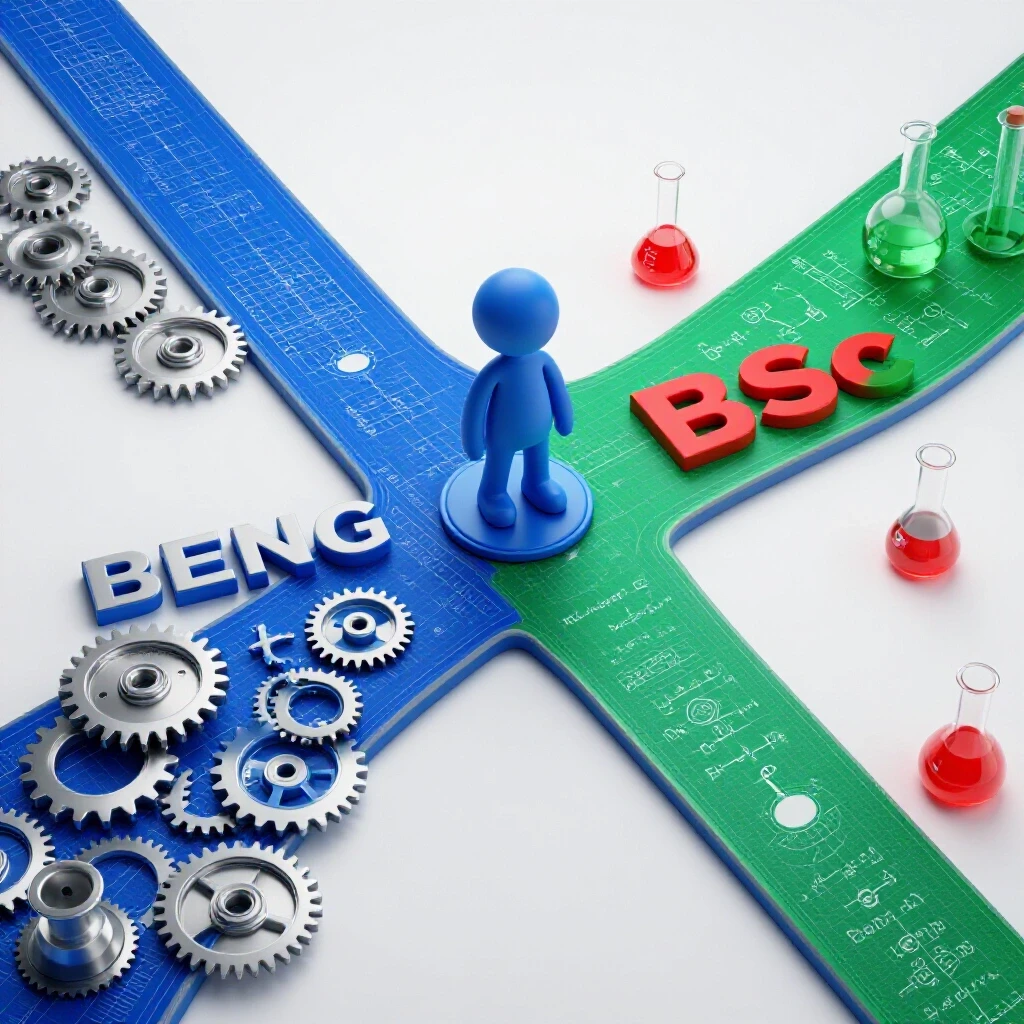
MA vs MFA: How to Choose the Best Degree for Your Portfolio (Guide)
“The portfolio is not just a collection of work; it is a map of your intellectual and creative curiosity that proves you are ready for the rigors of advanced study.” This quote from a leading graduate admissions dean perfectly captures the weight of the portfolio. As an education policy analyst with 14 years of experience, I have seen how a single portfolio can change a student’s trajectory. Whether you are a high school senior looking ahead or a college sophomore choosing the right major, understanding the difference between a Master of Arts (MA) and a Master of Fine Arts (MFA) is vital. These two paths require very different evidence of your skills. In my work with the National Center for Education Statistics (NCES), I have tracked how students move through these pathways. I have mentored dozens of students who felt overwhelmed by the choice between a research-heavy MA and a practice-based MFA. By looking at the data and my own lessons from the field, we can clear the fog. Choosing the right degree starts with knowing what kind of work you want to show the world.

Understanding the Core Differences Between MA and MFA Portfolios
An MA portfolio focuses on your ability to research, analyze, and write about complex ideas within a specific field. In contrast, an MFA portfolio highlights your technical skill, creative voice, and ability to produce a cohesive body of original artistic work. These differences dictate every choice you make during your undergraduate years.
When I talk to students about choosing the right major, I start with the “why.” Why are you creating this work? If you find joy in digging through archives and writing long essays, an MA might be your path. If you spend your nights in a studio or editing booth, an MFA is likely the goal. According to the U.S. Department of Education, the MFA is often considered a “terminal degree.” This means it is the highest degree you can get in that specific practice area. The MA is often a stepping stone to a PhD or a specialized professional role.
In my time as an advisor, I helped a student named Maria. She was a talented painter but also loved art history. She was torn between an MA in Art History and an MFA in Painting. We looked at her current work. Her paintings were beautiful, but her research papers on Renaissance techniques were groundbreaking. She realized her portfolio for an MA would need to be 20 pages of deep analysis. Her MFA portfolio would need 20 high-quality images of her own art. This distinction helped her choose the best bachelor’s degree for her career goals.
The Master of Arts (MA) Portfolio: Evidence of Critical Thinking
The MA portfolio is a collection of your best academic writing and research. It shows that you can handle graduate-level theory and contribute new ideas to your field through words and data. This portfolio proves you have the “academic stamina” needed for a research-intensive program.
When building an MA portfolio, the focus is on depth over breadth. You do not need fifty short papers. You need two or three “deep dives.” These should show that you can: – Form a clear thesis or argument. – Use primary and secondary sources correctly. – Analyze data or texts with a critical eye. – Follow strict citation styles like APA or Chicago.
I remember guiding a career changer who wanted to move into Media Studies. He had a lot of blog posts, but no academic papers. We spent six months turning his observations into a formal research portfolio. We used college planning guides to find the right structure. We focused on a 15-page paper that analyzed film trends using NCES data on media consumption. This transition showed the importance of “theoretical framework.” In an MA portfolio, you must show you understand the “rules” of your field before you try to break them.
The Master of Fine Arts (MFA) Portfolio: Evidence of Technical Mastery
An MFA portfolio is a curated gallery of your creative output. It demonstrates your command over your tools—whether those are cameras, brushes, or digital software—and your unique creative vision. This portfolio is less about what you know and more about what you can make.
For an MFA, the “cohesive body of work” is the gold standard. I once worked with a student who had a portfolio of 30 different things: a few poems, some sketches, a short film, and a song. While he was talented, he lacked focus. MFA programs want to see that you can stick with one idea and explore it deeply. We narrowed his portfolio down to ten high-quality photographs that all told a story about urban life. This change made his application much stronger.
- Technical Skill: Can you use the software or tools of your trade at a high level?
- Consistency: Does your work look like it came from the same person?
- Evolution: Can you show how a project grew from a sketch to a final piece?
- Artist Statement: Can you explain the “why” behind your creative choices in a page or less?
| Feature | MA Portfolio Focus | MFA Portfolio Focus |
|---|---|---|
| Primary Output | Research Papers / Essays | Creative Projects / Studio Work |
| Core Skill | Critical Analysis | Technical Execution |
| Narrative Style | Objective & Academic | Subjective & Expressive |
| Volume | 2-3 Long-form Documents | 15-20 Individual Pieces |
| Key Requirement | Annotated Bibliography | Artist Statement |
Choosing the Right Major and Degree Path for Your Portfolio
Selecting an undergraduate major is the most important step in building a graduate-level portfolio. Your major provides the assignments, faculty feedback, and resources you need to create high-quality work. It is the foundation upon which your future applications will stand.
Many students ask me, “What is the best bachelor’s degree for careers in the arts or humanities?” The answer depends on your end goal. If you want an MA, a Bachelor of Arts (BA) is often the standard choice because it allows for more elective courses in history and theory. If you want an MFA, a Bachelor of Fine Arts (BFA) is usually better. A BFA typically requires about 65% to 70% of your credits to be in studio or practice courses. This gives you the time to build a massive amount of work.
I often see students make the mistake of choosing a “broad” major because they are afraid to commit. However, data from institutional program analyses suggests that specialized majors lead to more robust portfolios. A student in a “General Studies” major often struggles to find a cohesive theme for their portfolio. A student in “Digital Media Production” has a clear path.
Lessons from My Portfolio Journey: Curating for MA vs MFA
My own journey through higher education taught me that curation is more important than creation. You might create 100 things in college, but only five of them belong in your portfolio. Learning to be your own toughest critic is a skill that takes years to master.
When I was helping a mentee named Alex, we looked at his four years of work. He had a mix of research and creative projects. He wanted to apply to both MA and MFA programs to keep his options open. This was a mistake. We realized that by trying to do both, he was watering down his strengths.
- Lesson 1: Your portfolio must speak to the specific degree. You cannot use a research paper to get into a studio-based MFA.
- Lesson 2: Quality always beats quantity. A portfolio with five amazing pieces is better than one with twenty “okay” pieces.
- Lesson 3: The “Artist Statement” for an MFA is not a “Research Statement” for an MA. One is about your soul; the other is about your brain.
We eventually decided that Alex’s strength was in “Applied Arts.” He chose a path that allowed him to combine his writing with his design work. This is what we call an “interdisciplinary approach.” It is becoming more common, but you still need a primary “home” for your portfolio.
College Planning Guides: How to Build Your Portfolio Early
Building a portfolio is a marathon, not a sprint. You should start collecting your work in your freshman year of college, or even in high school. This “archive” will become the raw material you use when you are a senior applying to graduate programs.
I recommend that every student keep a “Digital Vault.” This can be a simple cloud folder where you save every final project, every draft, and every piece of feedback from a professor. You never know which small project might turn into a portfolio centerpiece later. According to the College Board, students who engage in “intentional portfolio building” early are more likely to finish their degrees on time. They have a clearer sense of purpose.
- Freshman Year: Focus on “Skill Acquisition.” Save everything. Don’t worry about quality yet.
- Sophomore Year: Identify your “Core Interests.” Start noticing which projects you enjoyed the most.
- Junior Year: Begin “Refining.” Take your best projects and push them further. Ask for extra feedback.
- Senior Year: “Curate and Polish.” Select the top 10% of your work. Write your statements.
Best Bachelor’s Degree for Careers and Portfolio Alignment
The “ROI” or return on investment of a degree is often measured by the skills you gain. A degree that helps you build a professional-grade portfolio has a high ROI, regardless of the major. This is because the portfolio is your “proof of concept” to the world.
In my analysis of NCES data, I have found that students in “Professional” bachelor’s degrees (like a BFA or a Bachelor of Music) often have a more direct path to MFA programs. Students in “Liberal Arts” degrees (like a BA in English or History) have a more direct path to MA programs.
- BA (Bachelor of Arts): Best for MA paths. Focuses on broad knowledge and writing.
- BS (Bachelor of Science): Can lead to an MA in technical fields like Psychology or Economics. Focuses on data.
- BFA (Bachelor of Fine Arts): Best for MFA paths. Focuses on intense studio practice.
- BAS (Bachelor of Applied Science): Good for technical or vocational portfolios.
When you are choosing the right major, look at the “capstone” requirement. Does the college require a senior thesis (great for MA) or a senior exhibition (great for MFA)? This single requirement can tell you if the program aligns with your portfolio needs. I once helped a student switch from a BA to a BFA in her junior year because she realized she needed more studio hours to be competitive for an MFA. It cost her an extra semester, but her portfolio became ten times stronger.
Strategic Portfolio Development by Major Type
| Major Category | Recommended Degree | Portfolio Element |
|---|---|---|
| Humanities | BA | 20-page Research Thesis |
| Visual Arts | BFA | 15-20 Image Slide Room |
| Social Sciences | BA or BS | Data Analysis Report |
| Performing Arts | BFA or BM | Audition Video / Composition |
| Communications | BA | Media Campaign or Writing Clips |
Practical Tips for Your Portfolio Journey
Building a portfolio can feel like a mountain of work, but it is manageable if you break it down. Whether you are 16 or 35, the steps are the same. You are telling a story about who you are and what you can do.
- Seek External Feedback: Don’t just show your work to your parents or friends. Ask a professor or a professional in the field. They will see the gaps you miss.
- Document the Process: For MFA portfolios, showing “how” you made something is often as important as the final piece. Save your sketches and early drafts.
- Stay Organized: Use clear file names. “Final_Project_V2_Actual_Final” is a nightmare. Use “Year_ProjectName_Type.”
- Check the Specs: Every school has different rules. Some want PDFs, others want a website link. Read the fine print carefully.
I remember a student who almost missed a deadline because her portfolio files were too large for the upload portal. We spent three hours at a coffee shop resizing images. This is a common mistake. Always test your digital portfolio on different devices to make sure it looks right.
Tools and Resources for Portfolio Success
You don’t have to do this alone. There are many tools designed to help you organize and present your work. Using the right technology can make your portfolio look much more professional.
- College Scorecard: Use this to see which schools have high graduation rates in your major.
- Adobe Portfolio / Behance: Great for visual MFA portfolios. They are easy to use and look sleek.
- Google Scholar: Use this to find academic papers that can serve as models for your MA writing.
- LinkedIn Learning: If you have a “skills gap” in your portfolio, take a short course to learn a new tool.
- Grammarly or Hemingway Editor: Essential for MA portfolios to ensure your writing is clear and error-free.
Using these tools helps you stay competitive. In today’s world, a “digital-first” mindset is expected. Even for an MA in Philosophy, a clean, well-organized digital submission shows that you are a modern scholar.
FAQ: Navigating MA and MFA Portfolio Decisions
What is the biggest difference between an MA and an MFA portfolio?
The biggest difference is the “output.” An MA portfolio is almost entirely text-based research and analysis. It proves you can think critically and write at a high level. An MFA portfolio is practice-based. It consists of creative work like art, film, or design, proving you have mastered the technical skills of your craft.
Can I apply to an MFA with a BA degree?
Yes, you can. Many MFA programs accept students with a Bachelor of Arts. However, you must ensure your BA program gave you enough studio time to create a competitive portfolio. You may need to take extra classes or work on independent projects to match the volume of work produced by BFA students.
How long should an MA research paper be for a portfolio?
Most MA programs look for a “writing sample” that is between 15 and 25 double-spaced pages. It should be a polished piece of work, usually from an upper-level undergraduate course, that includes a full bibliography and proper citations.
Does the “prestige” of my undergrad school matter for my portfolio?
While a well-known school can help, the quality of your portfolio matters much more. Graduate committees look at your work first. A student from a small state college with a brilliant, cohesive portfolio will often beat a student from a “top” school with a messy, unfocused one.
How many pieces should be in an MFA portfolio?
The standard is usually 15 to 20 individual pieces. If you are a filmmaker, this might be 15 minutes of footage. If you are a painter, it is 20 images. The goal is to show a “cohesive body of work,” meaning the pieces should feel related in theme or style.
Should I include “work in progress” in my portfolio?
For an MFA, yes. Many programs appreciate seeing your process. This could be a page of sketches or a short “making of” video. For an MA, you generally only submit the final, polished version of your research.
What if my undergraduate major is different from the graduate degree I want?
This is common for “career changers.” If your major was different, your portfolio becomes even more important. It is your only way to prove you have the skills for the new field. You may need to spend a year building a “bridge portfolio” through post-baccalaureate classes.
Is an MFA really “better” than an MA?
Neither is “better.” They serve different purposes. An MFA is a professional, terminal degree for practitioners. An MA is an academic degree for researchers and scholars. Your choice should depend on whether you want to “do” the work or “study” the work.
How do I write an Artist Statement for an MFA?
An Artist Statement should be one page. It explains your creative process, your influences, and the themes you explore in your work. Avoid “art speak” or overly complex language. Be honest and direct about why you make what you make.
What is the “best” bachelor’s degree for someone who is undecided?
If you are torn between research and practice, a Bachelor of Arts (BA) is often the most flexible. It allows you to take a mix of theory and studio classes. This gives you time to decide which type of portfolio you are better at building before you reach your senior year.
(This article was written by one of our staff writers, Michael Harrington. Visit our Meet the Team page to learn more about the author and their expertise.)