Comparing Degree ROI vs Stackable Certificates (2026 Guide)
That tight, sinking feeling in your chest when you look at a six-figure tuition bill isn’t just nerves; it is a rational response to a massive financial risk. For many families I sit down with, the fear of student debt is more than a worry—it is a barrier to their future. I have spent 15 years looking at the cold, hard numbers of higher education, and I can tell you that the traditional path is no longer the only way to win. There is a smarter, data-backed strategy that treats education like a high-yield investment portfolio rather than a blind gamble.

What is the ROI of a College Degree in the Modern Market?
Return on Investment (ROI) in education measures the financial gain of a degree relative to its total cost. It considers tuition, lost wages during study, and the lifetime earnings premium. High ROI degrees typically have low debt-to-income ratios and lead to high-demand occupations with steady wage growth.
When we talk about the ROI of college degree programs, we have to look past the sticker price. The true cost includes the interest on your loans and the four years of salary you didn’t earn while sitting in a classroom. According to the Bureau of Labor Statistics (BLS), bachelor’s degree holders earn about 67 percent more than those with only a high school diploma. However, that “average” hides a lot of variation. A degree in petroleum engineering has a vastly different financial trajectory than one in fine arts.
I recently analyzed a data set from the Georgetown University Center on Education and the Workforce. It showed that the median ROI for a bachelor’s degree 40 years after enrollment is approximately $723,000. But here is the catch: at some private, non-profit colleges, that number can drop below $200,000, while at top-tier technical schools, it can soar over $2 million. This is why you cannot afford to pick a school based on the campus scenery or the football team. You have to look at the outcomes.
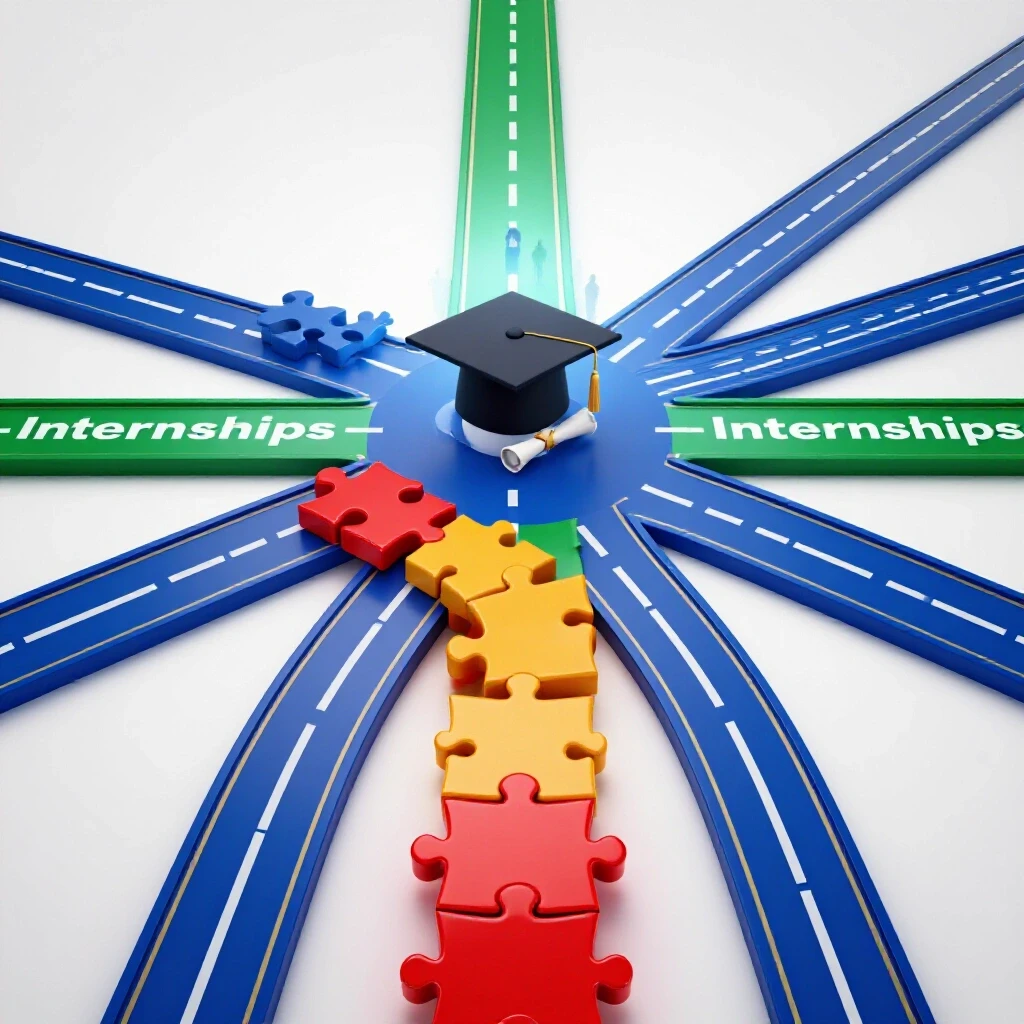
The market has shifted toward “skills-first” hiring. This means that while a degree still acts as a signal to employers, the specific skills you bring to the table often matter more for your starting salary. This shift is what led me to investigate stackable certificates. These are bite-sized, industry-recognized credentials that can be earned quickly and often “stacked” together to count as credit toward a full degree.
- Engineering: $1.1M median 40-year ROI
- Business: $949,000 median 40-year ROI
- Health: $910,000 median 40-year ROI
- Education: $467,000 median 40-year ROI
- Arts/Humanities: $452,000 median 40-year ROI
How Do Stackable Certificates Change the Debt-to-Income Ratio?
The debt-to-income ratio is a metric that compares your total student loan debt to your annual gross income. Stackable certificates lower this ratio by reducing upfront costs and accelerating entry into the workforce. This allows students to earn professional wages while finishing their formal degree requirements.
The debt-to-income ratio education experts recommend is 1:1 or lower. This means you should not borrow more for your entire degree than you expect to earn in your first year on the job. If you want to be a social worker earning $45,000, you should not take out $80,000 in loans. Stackable certificates are the ultimate “hack” for this ratio. They allow you to get a “foot in the door” job with a certificate that costs $50 to $5,000, rather than a $40,000 freshman year.
Building on this, the certificates act as an insurance policy. If you have to stop your education halfway through a traditional degree, you have nothing but debt and “some college” on your resume. If you stop halfway through a stackable pathway, you already have three or four professional certifications that have market value. This reduces the financial risk of life getting in the way of your studies.
Interestingly, many major universities now partner with platforms like Coursera or edX to offer these certificates. Schools like the University of London, Illinois Tech, and Arizona State University allow you to earn a certificate and then apply those credits directly to a degree. This “try before you buy” model is the most transparent way to evaluate whether a field is right for you without committing to a multi-year loan.
| Pathway Type | Average Initial Cost | Time to First Job | Average Starting Debt |
|---|---|---|---|
| Traditional 4-Year | $100,000 – $200,000 | 48 Months | $37,000 |
| Stackable Certificate | $2,000 – $10,000 | 6 – 12 Months | $0 – $5,000 |
| Hybrid (Stack + Degree) | $40,000 – $60,000 | 12 – 24 Months | $15,000 |
Comparing Degrees by Stackable Certificates: My ROI Win Case Study
A stackable certificate pathway involves earning industry-recognized credentials that count toward a full college degree. This modular approach provides immediate job skills and reduces the number of credits needed at a traditional university. It is a strategic way to lower education costs while maintaining high academic standards.
I want to share the story of a mentee I worked with named Sarah. Sarah was 22, working in retail, and felt stuck. She wanted a Computer Science degree but was terrified of the $60,000 price tag at her local state school. We sat down and looked at a stackable model. Instead of enrolling as a freshman, she started with the Google Data Analytics Professional Certificate. It cost her about $300 in subscription fees over six months.
Once she finished, she used that certificate to land an entry-level data analyst role making $52,000 a year. But the real “win” came next. We found a university that accepted her Google certificate as 12 credits toward their Bachelor of Science in Data Analytics. She then took three more specialized certificates from IBM and Meta, which the school accepted for another 18 credits. By the time she officially “enrolled” in the university, she was already a junior and had zero debt.
As a result, Sarah finished her degree in two years while working full-time in her field. Her total out-of-pocket cost for the degree was under $20,000. Compared to the traditional four-year path, she saved $40,000 in tuition and earned over $100,000 in wages while her peers were still in classrooms. Her debt-to-income ratio was nearly zero. This is the power of choosing best value degrees through modular learning.
- Initial Investment: $300 (Certificate)
- Income Boost: $0 to $52,000 (Within 6 months)
- Credits Earned via Certificates: 30 credits (1 year of school)
- Total Degree Savings: $40,000
- Final ROI: 400% higher than the traditional student model
Evaluating Best Value Degrees Using the College ROI Calculator
A college ROI calculator is a digital tool used to estimate the financial value of a specific program. By inputting tuition, expected salary, and debt, users can determine the “break-even” point. These tools help students identify programs where the long-term earnings significantly outweigh the initial investment.
To find the best value degrees, you must move beyond the marketing brochures. I always tell my students to use the College Scorecard. This is a tool provided by the U.S. Department of Education that shows you exactly what graduates from a specific program at a specific school are earning two years after graduation. It also shows the median debt they carry. If the debt is higher than the starting salary, that is a red flag.
When you use a college ROI calculator, you should look for the “Net Present Value” (NPV). This is a fancy term for what your future earnings are worth in today’s dollars. A high NPV means the degree is a strong investment. You also want to look at the “payback period.” This is how many years it will take for your increased earnings to cover the total cost of the degree. For a high-value degree, the payback period should be under 10 years.
Another tool I recommend is the NCES Data Explorer. It allows you to compare graduation rates and post-college earnings across different demographics. Interestingly, some smaller, less “prestigious” schools often have better ROI than famous universities because their tuition is so much lower. In the world of ROI, a “name brand” school is rarely worth a $150,000 premium unless you are entering a field like high-finance or big-law where networking is the primary product.
- Visit the College Scorecard website.
- Search for your intended major.
- Filter by “Median Earnings” and “Median Debt.”
- Calculate the ratio: (Median Debt / Median Salary).
- Aim for a ratio of 1.0 or lower for the best financial safety.
Is the Worth of a Master’s Degree Better with Modular Learning?
The worth of a master’s degree is determined by the salary increase it provides compared to a bachelor’s degree. In modular learning, professionals earn graduate certificates first. These credits later apply toward a full master’s, allowing students to test the career market before committing to the full cost.
Many professionals ask me if the worth of a master’s degree justifies the cost. The answer is: it depends. In fields like nursing, engineering, or school administration, a master’s degree often triggers an automatic pay raise. In other fields, like general MBA programs, the ROI can be hit or miss. This is where stackable graduate certificates are a game-changer. You can earn a graduate certificate in a niche like “Supply Chain Management” for a fraction of the cost of an MBA.
If that certificate leads to a promotion, you have already won. If you decide you need the full master’s later, many schools will let you “stack” that certificate into their graduate program. This eliminates the risk of spending $50,000 on a degree that doesn’t move the needle on your paycheck. You are paying for the education as you see the results, which is the ultimate way to manage your debt-to-income ratio education.
Data from the Bureau of Labor Statistics shows that master’s degree holders earn a median of $1,661 per week, compared to $1,432 for bachelor’s holders. That is a $11,000 annual difference. If your master’s costs $60,000, it will take you over five years just to break even on the tuition, not counting interest. By stacking certificates, you can often cut that tuition cost in half, making the break-even point much more attractive.
- Master’s in Education: 10-20% salary increase.
- Master’s in Business (MBA): 20-40% salary increase (highly variable).
- Master’s in Data Science: 25-35% salary increase.
- Master’s in Nursing (NP): 40-50% salary increase.
Step-by-Step Guide to Building Your Own Stackable Pathway
A personalized education plan focuses on minimizing debt while maximizing skill acquisition. By identifying transfer-friendly colleges and industry-aligned certificates, students can create a custom pathway. This method ensures that every dollar spent on education contributes directly to career growth and financial stability.
Building your own pathway requires a bit of research, but the financial rewards are massive. First, you need to identify your target career. Use the BLS Occupational Outlook Handbook to find the median salary and the required education level. Once you have a target, look for professional certificates that are recognized by employers in that field. Google, Microsoft, and AWS are the gold standards for tech, while organizations like SHRM or PMI are better for business.
Next, you must find “transfer-friendly” universities. Not every school will accept a certificate for credit. You want to look for schools that have “Prior Learning Assessment” (PLA) policies. These institutions are designed for adult learners and cost-conscious students. They will evaluate your certificates, work experience, and even military training to give you college credit. This is the most effective way to reduce the time and money spent on a degree.
Finally, keep a spreadsheet of your costs. Track every certificate fee, every credit hour cost, and your projected starting salary. This is your personal college ROI calculator. By seeing the numbers in front of you, you can make decisions based on logic rather than emotion. You are the CEO of your own career, and your education is your most important capital investment.
- Step 1: Identify a high-ROI career using BLS data.
- Step 2: Earn an entry-level professional certificate (e.g., Google, IBM).
- Step 3: Use that certificate to land an entry-level job in the field.
- Step 4: Find a university that grants credit for your certificate.
- Step 5: Complete the remaining degree requirements using employer tuition reimbursement if available.
Frequently Asked Questions (FAQ)
What exactly is a “stackable” certificate? A stackable certificate is a credential that stands alone as a professional qualification but can also be combined with other certificates or credits to fulfill the requirements of a full associate, bachelor’s, or master’s degree. They are often shorter, more affordable, and more focused on specific job skills than traditional college courses.
How do I know if a university will accept my certificate for credit? You should look for the school’s “Transfer Credit” or “Prior Learning Assessment” (PLA) policy on their website. Many schools also have specific “Articulation Agreements” with certificate providers like Coursera or StraighterLine. Always contact an admissions counselor and ask for a preliminary credit evaluation before enrolling.
Will employers respect a certificate as much as a degree? In many technical and skills-based fields, employers value certificates because they prove you have specific, up-to-date skills. However, for long-term career growth into management, a degree is often still required. The stackable model gives you the best of both worlds: the immediate skills of a certificate and the long-term credential of a degree.
Is the ROI of a college degree always positive? No. If the cost of the degree is extremely high and the starting salary in that field is low, the ROI can actually be negative. This means you would have been better off financially by not going to college at all. This is why checking the debt-to-income ratio for your specific major and school is vital.
What is the best college ROI calculator to use? The most reliable tools are the College Scorecard (for official government data), the Payscale College ROI Report (for private sector salary data), and the Net Price Calculators found on individual university websites. Using a combination of these will give you the most accurate picture.
Can I use stackable certificates for a Master’s degree? Yes. Many universities now offer “MicroMasters” or graduate certificates. These consist of three to five graduate-level courses. If you complete them and perform well, you can apply for the full Master’s program and have those credits count, often saving 25% to 50% on the total cost.
How does the debt-to-income ratio education impact my ability to buy a house later? Lenders look at your debt-to-income (DTI) ratio when you apply for a mortgage. If a large portion of your monthly income goes toward student loans, you may not qualify for a home loan. By using stackable certificates to keep your debt low, you protect your future purchasing power.
Are there specific majors where stackable certificates work best? The stackable model is most mature in Information Technology, Data Science, Business, and Healthcare. However, it is expanding into fields like Project Management, Marketing, and even some areas of Manufacturing and Logistics.
What is the “break-even point” in education? The break-even point is the moment when the extra money you have earned because of your degree equals the total amount you spent on that degree (including tuition, interest, and lost wages). A healthy investment usually breaks even within 5 to 10 years after graduation.
Is it better to go to a public or private institution for ROI? Generally, public in-state universities offer a higher ROI because their tuition is significantly lower. While some elite private universities have very high ROI due to high-paying career placements, the average private school often leaves students with a much higher debt burden for the same starting salary.
(This article was written by one of our staff writers, Benjamin Carter. Visit our Meet the Team page to learn more about the author and their expertise.)