Depth Requirement in Maritime Logistics Explained (2026 Guide)
Imagine you are sitting in your first Maritime Logistics lecture. The professor starts talking about a “depth requirement.” You might think they are talking about how deep your research needs to be for your final paper. However, in this field, the term has a very different, physical meaning that can determine whether a ship stays afloat or runs aground. This gap between what a word sounds like and what it actually means is one of the biggest hurdles for new students. My goal is to bridge that gap so you can focus on learning rather than decoding.
During my eighteen years in higher education, I have seen many students struggle with this kind of specialized jargon. I remember a student named Marcus who was a first-generation college student in a logistics program. He was brilliant at math, but he nearly dropped a course because he felt overwhelmed by terms like “draft clearance” and “depth requirement.” He thought he was missing some secret code. Once we sat down and I explained that these were just specific names for physical measurements, his confidence soared. He realized that the language of college is just a tool, and like any tool, you just need to learn how to hold it.
What Is a Depth Requirement in Maritime Logistics?
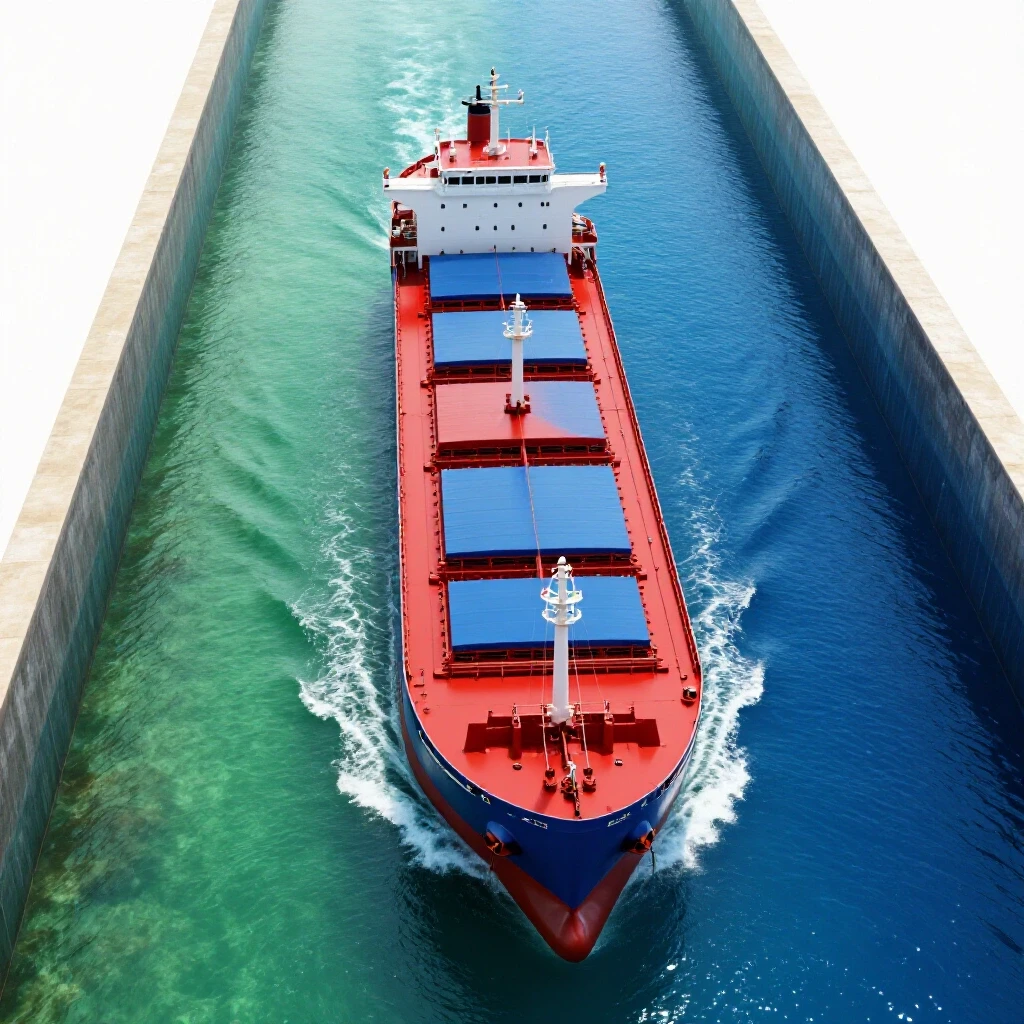
A depth requirement is the minimum amount of water needed for a ship to float safely without touching the bottom. It is defined as the vertical distance between the waterline and the lowest point of the ship’s hull, plus a safety buffer. This measurement ensures that vessels can enter ports and navigate channels safely.
In the world of shipping, this is often called “draft clearance.” If a ship has a draft of 30 feet, the depth requirement for a specific canal might be 35 feet to allow for a five-foot safety margin. Understanding this term is vital for students in supply chain management, international trade, and maritime policy. It is a perfect example of how a common word like “depth” takes on a very strict, technical meaning in a professional major.
Understanding the Mechanics of Draft and Clearance
Draft clearance is the specific measurement used to determine if a ship can navigate a particular waterway. It calculates the space between the bottom of the ship, known as the keel, and the floor of the ocean or river. This measurement changes based on how much cargo the ship is carrying at the time.
When a ship is heavily loaded with containers, it sits lower in the water. This increases its “draft” and changes the depth requirement for the ports it can visit. For a student, learning this concept is about more than just physics. It is about understanding the economic limits of global trade. If a port cannot meet the depth requirement of a modern mega-ship, that port loses business. This is why many cities spend millions of dollars on “dredging,” which is the process of scooping out mud from the bottom of a channel to increase the depth.
Comparing Maritime Terms and General Academic Terms
To help you navigate your syllabus, it is useful to see how technical terms in a major like maritime logistics compare to general terms you will hear in any college department.
| Maritime Logistics Term | General Academic Term | What It Means for You |
|---|---|---|
| Depth Requirement | Degree Requirement | The “must-have” conditions for success, whether for a ship or a graduation path. |
| Draft Clearance | Credit Hour | A specific unit of measurement used to calculate capacity and progress. |
| Port of Call | Major vs. Concentration | A specific destination or focus area within a broader journey or field of study. |
| Logistics Accreditation | Regional Accreditation | A stamp of approval from an outside body that proves the program meets high standards. |
| Transfer of Cargo | Transfer Credit | The process of moving “value” (goods or earned credits) from one location to another. |
Why Depth Requirements Matter for Your Academic Journey
A depth requirement represents a physical boundary that dictates where a ship can go and what it can do. In your education, understanding these boundaries helps you plan your career in international trade or engineering. It teaches you that every system has limits and specific rules that must be followed for safety and efficiency.
When you study these requirements, you are looking at the intersection of geography, physics, and economics. For example, the Panama Canal has very specific depth requirements. If a ship is too deep, it simply cannot pass through. This forces companies to find longer, more expensive routes. As a student, you will use these facts to solve problems in your assignments. You are not just memorizing a definition; you are learning how the world moves goods from point A to point B.
Navigating Jargon in Specialized Majors
Specialized majors often use everyday words in ways that can be confusing for newcomers. In maritime studies, terms like “depth” or “draft” are the building blocks of the entire industry. Learning this college terminology guide early on prevents you from feeling lost during fast-paced lectures or advising sessions.
I often tell my students to keep a “jargon journal.” When you hear a term like “depth requirement,” write it down along with its definition in plain English. This is especially helpful for international students who may be translating these terms into their native languages. In many cultures, the way we describe shipping and logistics varies wildly. Having a clear, standardized definition helps everyone stay on the same page.
- Use a glossary tool or an AI glossary assistant to look up terms before class.
- Ask your professor for a “terms of the trade” sheet during the first week.
- Compare the textbook definition with a real-world shipping news site like Lloyd’s List.
How to Apply This Knowledge to Degree Planning
Understanding technical requirements like those in logistics is very similar to understanding your degree requirements. Just as a ship needs a certain depth to move forward, you need a certain number of credit hours and specific types of classes to reach graduation. Most bachelor’s degrees require 120 credit hours, which is the “depth” you need to reach your goal.
When you look at your “major vs concentration,” think of it like a ship’s destination. Your major is the general type of ship you are on, and your concentration is the specific cargo you are carrying. If you are majoring in Business with a concentration in Maritime Logistics, you will need to master terms like depth requirement and draft clearance to prove you are ready for the field.
Key Metrics for Success in Specialized Programs
- 120 Credit Hours: The standard “depth” for a four-year degree in the United States.
- 30-40 Credits: The typical number of credits focused specifically on your major.
- 2.0 to 3.0 GPA: The minimum “clearance” or academic standing you must maintain to stay in good standing.
- 6-10 Specialized Courses: The number of classes where you will encounter technical jargon like maritime logistics terms.
The Role of Accreditation in Your Education
Accreditation is like the safety inspection for a port or a ship. It is a process where an outside organization reviews a college to make sure it provides a high-quality education. If a school is not accredited, your degree might not be recognized by employers, and you might not be eligible for financial aid like the FAFSA.
For students in technical fields like maritime logistics, specialized accreditation is also important. Organizations like the Accreditation Council for Business Schools and Programs (ACBSP) ensure that the “depth requirement” you learn about is the same one used by professionals in the industry. This consistency is what makes your degree valuable when you start looking for a job.
Practical Steps for New Students and Advisors
If you are a new student or a parent helping a student, the best way to handle complex terminology is to be proactive. Do not wait until the midterm exam to realize you do not understand the core concepts of your major. Use the resources available to you to build a strong foundation of knowledge.
- Schedule an Advising Appointment: Use an advising appointment planner to list your questions about jargon and degree requirements before you meet.
- Check Transfer Credit: If you are moving from a community college, use a transfer equivalency database to see how your logistics or business credits will count toward your new degree.
- Use the NCES College Navigator: This tool from the National Center for Education Statistics can help you find the best accredited programs for maritime studies.
- Review the Syllabus Early: Look for technical terms like “depth requirement” and look them up before the first lecture.
Common Pitfalls to Avoid
One of the biggest mistakes I see is students assuming they know what a word means because they have heard it in a different context. In a literature class, “depth” means something very different than in a maritime logistics class. Always check the context. Another pitfall is ignoring the “why” behind the terminology. Understanding that a depth requirement is about safety and economics makes it much easier to remember than just memorizing a string of words.
International students should be especially careful with units of measurement. In the United States, depth requirements are often measured in feet, while much of the rest of the world uses meters. A small mistake in conversion can lead to a big mistake in a logistics calculation. Always double-check your units when working on technical assignments.
Frequently Asked Questions (FAQ)
What is the difference between draft and depth requirement?
The draft is the actual measurement of how deep a specific ship sits in the water at a given moment. The depth requirement is the total amount of water depth a waterway or port must have to safely accommodate that ship, including a safety buffer. Think of the draft as the size of the ship’s “underwater footprint” and the depth requirement as the “size of the shoe” needed to fit it.
How do credit hours work in a maritime logistics program?
A credit hour is a unit of measure representing about one hour of instruction and two hours of out-of-class work per week. A typical maritime logistics course is worth three credits. To graduate with a bachelor’s degree, you usually need to complete 120 credits, which includes general education, your major, and your concentration.
Why does accreditation matter for my logistics degree?
Accreditation ensures that your school meets national standards for quality. It affects your ability to get federal financial aid and ensures that other schools will accept your transfer credits. In technical fields, it also tells employers that you have been trained using the most current industry terminology and practices.
What is the difference between a major and a concentration?
A major is your primary field of study, such as “Business Administration.” A concentration is a specialized focus within that major, such as “Maritime Logistics.” The major gives you a broad foundation, while the concentration provides the specific “depth” and technical jargon you need for a specific career path.
How can I find out if my credits will transfer to a maritime program?
You should use a transfer equivalency database provided by the college you plan to attend. These tools show how courses from other schools match up with their own. You can also talk to a transfer advisor who specializes in evaluating technical or vocational credits from maritime academies.
What does “academic standing” mean for a college student?
Academic standing is a measure of your progress and performance, usually based on your Grade Point Average (GPA). If your GPA stays above a certain level (often 2.0), you are in “good standing.” If it drops below that, you may be placed on academic probation, which is a warning that you need to improve your grades to stay in the program.
How much does a typical college credit cost?
The cost per credit varies widely depending on the school. Public in-state tuition might average $300 to $500 per credit, while private universities can cost $1,500 or more per credit. Understanding this helps you calculate the total “investment depth” required to finish your degree.
What are the best tools for navigating college applications?
The Common App is the most widely used tool for applying to multiple colleges at once. For researching specific programs and their graduation rates, the College Scorecard and the NCES College Navigator are excellent, data-driven resources that provide verified information on costs and student success.
Is “depth requirement” used in other academic subjects?
Yes, but with different meanings. In a general degree plan, a “depth requirement” might refer to the need to take a certain number of advanced, upper-level courses in your major. This ensures you have more than just a surface-level understanding of your subject. Always check your department’s handbook for their specific definition.
How do I prepare for an advising session as a new student?
Prepare by writing down three to five specific questions about your degree plan or terms you don’t understand. Use a planner to track your progress toward your 120 credits. Being prepared shows your advisor that you are serious about your education and helps them give you the most accurate guidance.
(This article was written by one of our staff writers, Alan Westbrook. Visit our Meet the Team page to learn more about the author and their expertise.)