Evening PMP Prep Guide: Pass Your Exam While Working (2026)
Ancient mariners often spoke of the “Siren’s Call,” a melody so sweet it led sailors off their planned course. In the modern corporate world, that call is the lure of the “next big degree” or the “perfect certification.” We see a colleague get an MBA and think we need one too, or we watch a peer earn a PMP and wonder if that is the missing piece of our puzzle. I have spent 15 years helping mid-career professionals navigate these waters, and I have seen that the most successful individuals do not just collect titles; they strategically select the credentials that offer the highest return on investment for their specific life stage.

Choosing the Best Professional Certifications for Career Advancement
Selecting a credential involves weighing the time commitment against the expected salary bump and market demand. It is the process of matching your current skills with industry-standard benchmarks to ensure you remain competitive in a shifting global economy. This choice defines your professional brand for years to come.
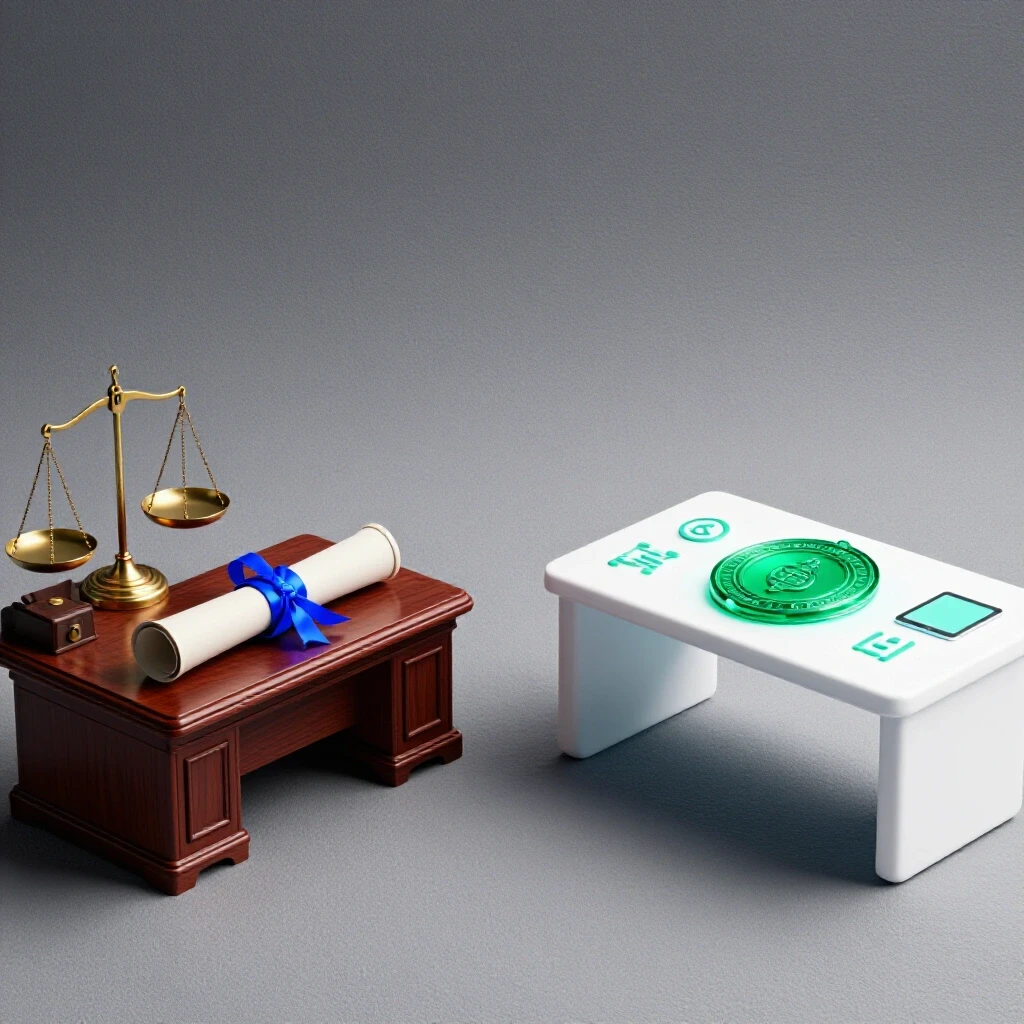
When I was 32, I found myself at a crossroads. I was working sixty hours a week and felt my career had hit a ceiling. I considered a JD, thinking the legal expertise would make me indispensable. However, after looking at the American Bar Association data on the JD degree ROI, I realized that a three-year, full-time commitment was not feasible for my family life. I needed something targeted.
Choosing the best professional certifications for career advancement requires a cold, hard look at your “why.” Are you looking for a pivot, or are you looking for a promotion? If you are in your 30s or 40s, time is your most precious resource. You cannot afford to spend three years on a degree if a six-month certification provides the same immediate salary lift.
- Identify the “Gold Standard” in your specific industry (e.g., CPA for accounting, PMP for management).
- Research the local job market to see which acronyms appear most in “Required Qualifications.”
- Calculate the “Time to Break Even” by comparing the cost of the program to the projected salary increase.
- Talk to mentors who have already earned the credential to see if it actually opened doors for them.
Is the PMP Certification Value Worth the Evening Grind?
The Project Management Professional (PMP) credential is a globally recognized mark of excellence that validates a leader’s ability to manage people, processes, and business priorities. Its value lies in its universal application across industries like tech, construction, and healthcare. It serves as a universal language for leadership.
Is the PMP certification value real? According to the Project Management Institute (PMI), PMP certification holders earn a median salary that is 16% higher than those without it in the United States. In some countries, that gap jumps to 33%. For a professional earning $90,000, that is an extra $14,400 per year.
I remember mentoring a project lead named Sarah. She was 42, a mother of two, and felt she was being passed over for senior roles because she lacked “formal” methodology. She was hesitant about the cost and the exam’s difficulty. We sat down and looked at the data. The cost of the exam and materials was roughly $1,000. If she got even a 10% raise, the credential would pay for itself in less than two months of her new salary.
- Global Recognition: The PMP is respected in over 200 countries.
- Standardization: It proves you understand the PMBOK Guide and Agile Practice Guide.
- Networking: You gain access to a massive community of local PMI chapters.
- Versatility: You can move from construction to IT without losing professional “rank.”
MBA vs Certifications: Which Path Accelerates Your Promotion?
This comparison evaluates the long-term career trajectory of a multi-year graduate degree against the immediate, specialized impact of a professional certification. While degrees offer a broad foundation, certifications provide specific, high-demand skills that employers often prioritize for immediate roles. Both have merits depending on your goals.
The MBA vs certifications debate is one I hear every week. An MBA provides a “broad-spectrum” education. You learn finance, marketing, and strategy. It is excellent for those who want to reach the C-suite. However, the Graduate Management Admission Council (GMAC) notes that the average cost of a top-tier MBA can exceed $100,000.
In contrast, a certification like the PMP or a CPA is a “targeted strike.” It tells an employer you are an expert in a specific function. If you are 45 years old and want a promotion by next year, a certification is often the faster, more efficient route.
| Feature | MBA Degree | Professional Certification (PMP/CPA/PMP) |
|---|---|---|
| Average Cost | $60,000 – $150,000 | $500 – $3,000 |
| Time Commitment | 2 – 4 Years | 3 – 6 Months |
| Primary Focus | General Management & Strategy | Technical Mastery & Execution |
| Salary Increase | 20% – 40% (Long-term) | 10% – 25% (Immediate) |
| Networking | Deep Alumni Base | Broad Professional Community |
My Pass Plan: A Realistic Evening PMP Prep Schedule
This structured study blueprint is designed for the working professional who has only 90 to 120 minutes of focus time after a full workday. It emphasizes consistency over intensity, spreading the workload over 10 to 12 weeks to prevent burnout. It is a marathon pace, not a sprint.
When I earned my PMP, I was working a full-time job and had a toddler at home. I could not study for eight hours on a Saturday. I had to create what I call “My Pass Plan.” This plan relies on the “1.5-Hour Rule.” You commit to 90 minutes every evening, five nights a week.
The key to this plan is managing cognitive fatigue. Your brain is tired after work. You cannot just read a dry textbook. You must use active recall. I recommend starting your evening with 10 practice questions to “wake up” your project management brain before diving into the theory.
Phase 1: The Foundation (Weeks 1-4)
In the first month, your goal is to understand the language of PMI. You should focus on the three domains: People, Process, and Business Environment.
- Read the “Process Groups: A Practice Guide” to understand the traditional waterfall flow.
- Review the “Agile Practice Guide” twice. Modern PMP exams are nearly 50% Agile or Hybrid.
- Use flashcards for terms like “Critical Path,” “Sprint Retrospective,” and “Minimum Viable Product.”
Phase 2: Deep Dive and Application (Weeks 5-8)
This is where you connect the dots. You are no longer just memorizing; you are learning how to handle scenarios.
- Focus on the “PMBOK Guide – Seventh Edition” principles.
- Start using PMI Study Hall for practice exams. This is the closest you will get to the actual exam logic.
- Identify your “Weak Domains.” If you are scoring low on “People,” spend an entire week on conflict resolution and leadership styles.
Phase 3: The Final Push (Weeks 9-12)
The final month is about stamina and exam simulation. You need to train your brain to sit for a 180-minute exam.
- Take one full-length mock exam every Saturday morning.
- Review every wrong answer. Understand why the correct answer is correct based on the PMI mindset.
- Memorize the “EVM” (Earned Value Management) formulas, though the current exam focuses more on their interpretation than complex math.
Managing Cognitive Fatigue During Evening Study
Cognitive fatigue is the mental exhaustion that occurs after a day of decision-making and problem-solving at work. Managing it requires strategic breaks, nutrient-dense snacks, and shifting from passive reading to active practice to keep the brain engaged. It is the biggest hurdle for adult learners.
I have seen many brilliant professionals fail their exams because they tried to study while “zombified.” If you have spent eight hours in meetings, your brain lacks the glucose and willpower to absorb the PMP’s complex “Situational Questions.”
To combat this, I suggest the “Transition Ritual.” When you get home, do not go straight to your books. Take 20 minutes to exercise, shower, or eat a light meal. This resets your nervous system. When you sit down to study, use the Pomodoro Technique: 25 minutes of deep focus followed by a 5-minute break.
- Avoid heavy, carb-loaded dinners before studying; they lead to “brain fog.”
- Keep your study space separate from your relaxation space to trigger a “work mode” mindset.
- Use blue-light filters on your screens if you are studying late to protect your sleep quality.
- If you hit a wall, stop. Ten minutes of focused study is better than two hours of staring at a page.
Professional Licensure Pathways for Mid-Career Success
Licensure pathways are the formal steps required to earn legally or industrially recognized titles like CPA, PE, or JD. These paths often involve specific educational prerequisites, rigorous exams, and verified work experience to ensure public safety and professional standards. They provide a “moat” around your career.
For those looking at professional licensure pathways, the stakes are even higher. A CPA (Certified Public Accountant) or a PE (Professional Engineer) license is not just a resume booster; it is a legal requirement for certain roles.
I once worked with a 38-year-old accountant named David. He had been a “staff accountant” for a decade. He was smart, but he couldn’t sign off on audits. He was stuck. We mapped out a two-year path for his CPA. He had to take additional college credits while working. The cost was high, but the result was a 25% salary increase and a promotion to “Senior Manager” within six months of passing his final section.
- Check your state board requirements early; they vary significantly by location.
- Look for “Executive” or “Part-time” tracks that allow you to keep your full-time salary.
- Inquire about employer tuition reimbursement; many firms will pay for licensure because it increases the firm’s billing rate.
Metrics of Success: Salary Uplift and Career Progression
Success metrics are the data points used to measure the effectiveness of a credential, including average salary increases, the time it takes to recoup the investment, and the speed of promotion. These figures help professionals make data-driven decisions about their education. They remove the emotion from the decision.
When we look at the data for the 25-50 age bracket, the “Payback Period” is the most critical metric. If you are 48, you have fewer years to recoup a $100,000 degree than if you are 28.
Data from the Bureau of Labor Statistics (BLS) and professional bodies suggest the following averages for mid-career professionals:
- PMP Certification: Average salary increase of 16-22%. Average time to complete: 3-5 months. Payback period: 6 months.
- CPA License: Average salary increase of 10-15% initially, but leads to much higher “ceiling” roles (CFO/Controller). Payback period: 1-2 years.
- MBA (Part-time/Executive): Average salary increase of 25-40%. Average time to complete: 2-3 years. Payback period: 4-6 years.
- JD Degree ROI: Highly variable. For mid-career pivots, the payback period can exceed 10 years unless entering high-stakes corporate law.
Strategic Steps for the Working Professional
If you are ready to move forward, you need a tactical approach. Do not sign up for an exam today. Instead, follow this sequence to ensure you are making the right move for your specific career stage.
- Step 1: The Gap Analysis. Look at the job description for the role you want three years from now. Which credentials appear most often?
- Step 2: The Budget Audit. Determine how much you can spend without dipping into emergency funds. Remember to include books, software, and exam fees.
- Step 3: The Time Audit. Track your time for one week. Where can you find 7.5 to 10 hours for study? Usually, it is a mix of early mornings, lunch breaks, and evening hours.
- Step 4: The Support System. Talk to your spouse, partner, or manager. You will need their “buy-in” when you are unavailable for chores or overtime during your 12-week push.
Essential Tools for the PMP Evening Prep
To succeed in your evening study, you need the right tools. I have found that “analog” methods often fail tired professionals. You need digital tools that track your progress and keep you accountable.
- PMI Study Hall: This is the official app from PMI. It uses the same “vibe” and “logic” as the actual exam questions.
- Pocket Prep (PMP): Great for “micro-study” sessions during your commute or while waiting for coffee.
- Anki Flashcards: Uses spaced repetition to help you remember the ITTOs (Inputs, Tools, Techniques, and Outputs) without rote memorization.
- Trello or Asana: Use these to manage your study plan like a real project. Check off your “tasks” (chapters) as you go.
- Focus@Will: A music service that uses neuroscience-based audio to help you stay focused during evening sessions when your willpower is low.
Frequently Asked Questions
How much does the PMP exam actually cost for a working professional? The PMP exam fee is $405 for PMI members and $555 for non-members. Membership itself costs $129 per year plus a $10 application fee. Most professionals find that joining PMI pays for itself through the exam discount and free access to the digital PMBOK Guide. Total costs, including study materials, usually range from $700 to $1,200.
Can I really pass the PMP without a boot camp? Yes, you can. While boot camps are popular, they often cram too much information into five days, which is difficult for working adults to retain. A self-paced “Evening Pass Plan” over 10-12 weeks often leads to better long-term retention and a higher pass rate because it allows for “distributed practice.”
What is the “PMI Mindset” everyone talks about? The PMI mindset is a specific way of answering situational questions. It assumes you are working in a “perfect” project environment where you follow all processes. It prioritizes proactive problem-solving, servant leadership, and always analyzing the impact of a change before acting. You must answer as a “PMI Project Manager,” not based on how your current boss does things.
Is an MBA better than a PMP for someone in their 40s? It depends on your goal. If you want to switch from a technical role to a general management role and have the funds, an MBA is powerful. However, if you want to stay in your field but lead larger teams and earn more immediately, the PMP offers a much faster ROI. At 40+, the “time-to-completion” of a PMP (3-6 months) is often more attractive than an MBA (2-3 years).
How do I handle the “35 contact hours” requirement for the PMP? You must document 35 hours of project management education. You do not need an expensive college course. Many affordable online platforms, such as Udemy or LinkedIn Learning, offer PMP Exam Prep courses that are pre-approved by PMI to satisfy this requirement.
What happens if I fail the PMP exam on my first try? Do not panic. You have one year from your application approval to pass the exam, and you can take it up to three times within that year. The re-examination fee is $275 for members. Most people who fail do so because they rushed their study or didn’t use “Agile” resources enough.
Does the PMP certification expire? The PMP is valid for three years. To maintain it, you must earn 60 Professional Development Units (PDUs) during that cycle. You can earn these by attending webinars, reading books, or even just working as a project manager. It is a very manageable process for a working professional.
Is the PMP exam harder now that it includes Agile? It is not necessarily “harder,” but it is different. It requires a more flexible mindset. You have to know when to use “Waterfall” (predictive) logic and when to use “Agile” (adaptive) logic. If you work in tech, the Agile portion may actually be easier for you than the traditional process-heavy sections.
How do I explain the value of a PMP to my boss for a raise? Focus on “Efficiency and Risk.” Tell your manager that the PMP training has given you a framework to reduce project waste, identify risks before they become issues, and lead teams more effectively using standardized communication. Use the “universal language” argument—that you can now interface better with vendors and clients who also use these standards.
What is the pass rate for the PMP exam? PMI does not officially publish the pass rate. However, industry experts and training providers generally estimate it to be around 60% to 70% for first-time takers. This is why a structured study plan and high-quality mock exams are essential for success.
(This article was written by one of our staff writers, Richard Thornton. Visit our Meet the Team page to learn more about the author and their expertise.)