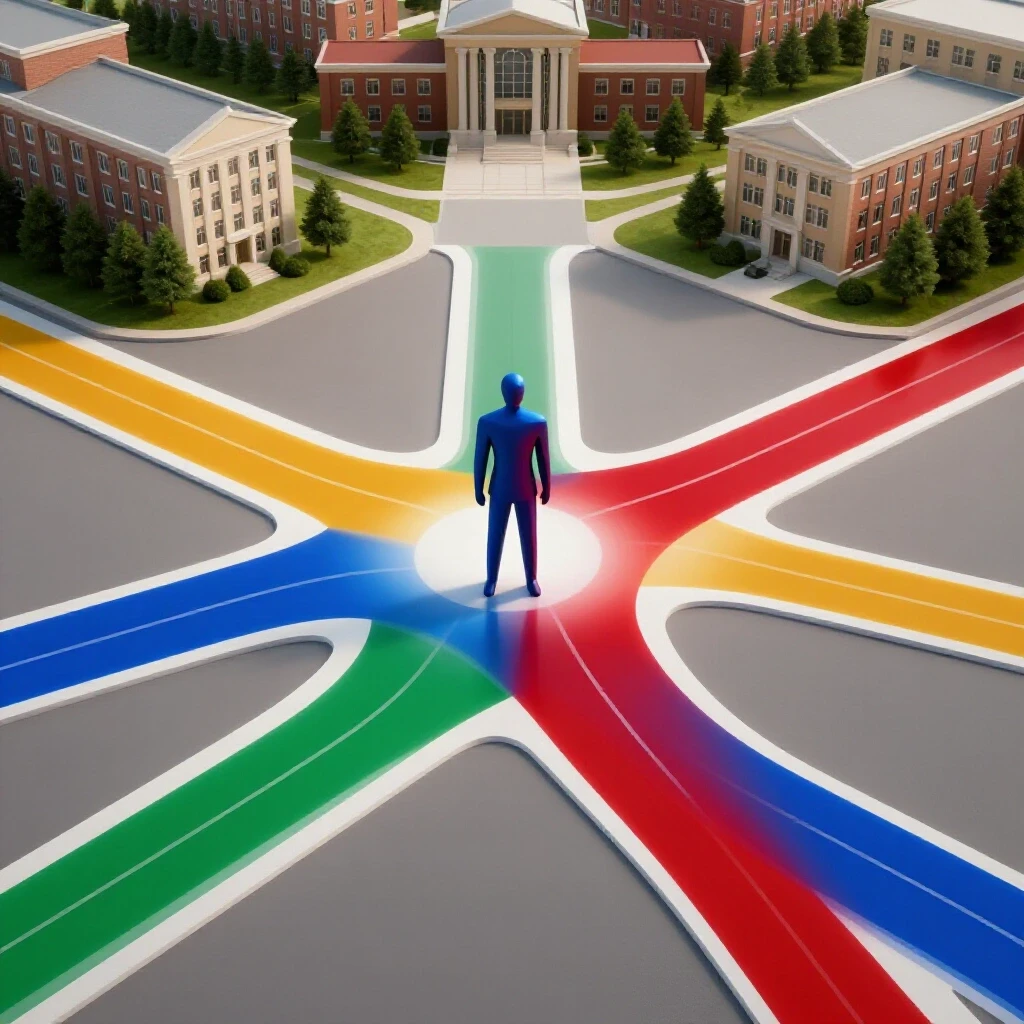
Degrees That WON’T Get You Arrested (Career Boost!)
(Career Boost!) for 2025
(Introduction: Personal Story)
Let me tell you a story. It’s about my cousin, Mark.
Mark always had a knack for tech. I mean, the guy could build a computer from spare parts before he could legally drive! So, naturally, he went into cybersecurity.
He landed a sweet gig right out of college, pentesting for a big financial firm. Sounds cool, right? It was, until he found a massive security flaw – one that could expose millions of customers’ data.
Now, Mark, being the ethical guy he is, reported it immediately. But, the company swept it under the rug. They were more worried about their reputation than fixing the problem.

Mark was torn. He knew he had to do something. He wrestled with the decision for weeks. The internal pressure was crushing.
The anxiety was palpable. He felt trapped between doing what was right and keeping his job. He feared legal repercussions if he blew the whistle.
Ultimately, he leaked the info to a journalist. It was the right thing to do, but the fallout was intense. He faced lawsuits, accusations of corporate espionage, and even a brief period where he felt like he was being watched.
Luckily, he had proof of his attempts to report internally, and the public outcry helped clear his name. But, the whole ordeal left a mark.
It made me realize that choosing a degree isn’t just about following your passion; it’s about understanding the ethical and legal landscape of that field. It is about knowing the potential pitfalls and whether you can navigate them with integrity.
That’s why I’m writing this article. It’s about finding career paths that are not only fulfilling but also keep you out of legal hot water. Let’s dive in, shall we?
(Section 1: Understanding the Implications of Your Degree Choice)
Think about the current climate. There’s so much scrutiny on different professions these days. What was once seen as a noble career can now be viewed with suspicion, or even outright hostility.
Take, for example, the pharmaceutical industry. While it develops life-saving drugs, it’s also been under fire for its role in the opioid crisis. Graduates in pharmacology or pharmaceutical marketing might find themselves facing ethical dilemmas, or even legal challenges, depending on the companies they work for.
Or consider the financial sector. The 2008 financial crisis cast a long shadow, and careers in investment banking or hedge fund management are still viewed with skepticism by many. Insider trading, fraud, and other financial crimes are serious risks in these fields.
Are there statistics to back this up? Absolutely. A study by the National White Collar Crime Center found a correlation between certain business degrees and involvement in financial crimes.
Of course, this doesn’t mean that everyone with a business degree is going to end up in jail! But, it does highlight the importance of understanding the risks and making informed choices.
It’s not just about personal interests anymore. You’ve got to consider the societal perceptions, the potential for ethical conflicts, and the legal implications of your chosen field. It’s a big decision, no pressure!
(Section 2: Degrees with Low Legal Risks)
Okay, so what are some degrees that offer both career security and a relatively low risk of legal trouble? Let’s break it down.
-
Healthcare Degrees:
First up, healthcare. I’m talking nursing, physical therapy, occupational therapy, healthcare administration – the whole shebang.
Why healthcare? Well, for starters, the job security is incredible. As the population ages, the demand for healthcare professionals is only going to increase.
Plus, you’re making a real, tangible difference in people’s lives. You’re helping them heal, recover, and live better. That’s a pretty good feeling, right?
And from a legal perspective, while there are certainly risks (malpractice suits, regulatory compliance issues), the vast majority of healthcare professionals operate with integrity and adhere to strict ethical codes.
According to the Bureau of Labor Statistics, employment in healthcare occupations is projected to grow 13 percent from 2021 to 2031, adding about 2 million new jobs. That’s huge! https://www.bls.gov/ooh/healthcare/home.htm
-
STEM Degrees:
Next, let’s talk STEM – science, technology, engineering, and mathematics. Computer science, software engineering, data science, environmental science, civil engineering – these fields are booming.
Why? Because technology is transforming every aspect of our lives, and we need skilled professionals to design, build, and maintain these systems.
The job market is incredibly strong, and the pay is generally excellent. Plus, STEM careers often involve innovation and problem-solving, which can be incredibly rewarding.
Ethical practices are increasingly emphasized in these industries. Companies are realizing that ethical AI, responsible data handling, and sustainable engineering practices are not just good for society, they’re good for business.
The U.S. Bureau of Labor Statistics projects that employment in computer and information technology occupations will grow 15 percent from 2021 to 2031, much faster than the average for all occupations. https://www.bls.gov/ooh/computer-and-information-technology/home.htm
-
Education Degrees:
Don’t underestimate the power of education! We need teachers, counselors, and educational administrators at all levels.
It’s a challenging profession, no doubt. But it’s also incredibly rewarding. You’re shaping young minds, inspiring the next generation, and making a real difference in your community.
And from a legal standpoint, while there are certainly risks (allegations of misconduct, student safety issues), educators are generally held to high ethical standards and are protected by strong professional codes of conduct.
The need for qualified educators is constant, and many districts offer loan forgiveness programs and other incentives to attract talented individuals.
According to the National Education Association, the U.S. is facing a teacher shortage, particularly in STEM fields and special education. This creates opportunities for passionate individuals who want to make a difference. https://www.nea.org/nea-today/all-news-articles/nation-still-faces-teacher-shortage
-
Business Degrees:
Now, I know what you’re thinking: “Didn’t you just say that business degrees can be risky?” And you’re right, some business careers can be. But, there are plenty of ethical and rewarding paths you can take with a business degree.
Think about marketing, human resources, project management, or entrepreneurship. These fields offer opportunities to create value, build teams, and solve problems without compromising your integrity.
Ethical business practices are becoming increasingly important. Consumers are demanding transparency and accountability from companies, and businesses that prioritize ethics are more likely to succeed in the long run.
Plus, the rise of social entrepreneurship is creating new opportunities for business professionals who want to use their skills to make a positive impact on the world.
The U.S. Small Business Administration reports that small businesses create about two out of every three new jobs in the U.S. This highlights the importance of entrepreneurship and the potential for business graduates to create their own opportunities. https://www.sba.gov/sites/default/files/advocacy/2022-Small-Business-Economic-Profile-US.pdf
-
Creative Arts Degrees:
Finally, let’s not forget the creative arts! Graphic design, writing, media production, music, fine arts – these fields offer opportunities for self-expression, innovation, and cultural enrichment.
The landscape of creative industries is evolving rapidly. Digital media, online content creation, and the creator economy are creating new opportunities for artists and creatives.
While these fields can be competitive, they also offer a great deal of freedom and flexibility. You can work as a freelancer, start your own business, or work for a company that values creativity and innovation.
And from a legal perspective, while there are certainly copyright and intellectual property issues to be aware of, the vast majority of artists and creatives operate within the bounds of the law.
According to a report by the National Endowment for the Arts, the arts and cultural sector contributes more than $900 billion to the U.S. economy annually, supporting millions of jobs. This demonstrates the economic value of creative industries and the potential for artists and creatives to make a living doing what they love. https://www.arts.gov/news/2023/arts-and-cultural-production-contributes-over-1-trillion-us-economy
(Section 3: Emerging Fields for 2025)
What about the future? What new fields are emerging that offer both career potential and legal safety?
-
Data Ethics and Privacy: With the explosion of data, we need professionals who can ensure that data is collected, stored, and used ethically and responsibly. This field combines technical skills with ethical reasoning and legal knowledge.
-
Sustainable Technology: As the world grapples with climate change, we need innovators who can develop sustainable technologies and solutions. This field combines engineering, environmental science, and business acumen.
-
Remote Work Management: The rise of remote work has created a need for professionals who can manage distributed teams, optimize remote workflows, and ensure employee well-being. This field combines human resources, technology, and organizational psychology.
-
Digital Accessibility: Ensuring that digital content and technology are accessible to people with disabilities is becoming increasingly important. This field combines web development, design, and accessibility expertise.
-
Gerontology and Aging Services: As the population ages, we need professionals who can provide care and support to older adults. This field combines healthcare, social work, and gerontology.
The rise of remote work and digital entrepreneurship is particularly interesting. Degrees related to these trends are less likely to lead to legal troubles because they often involve creating value and providing services in a transparent and ethical manner.
Interdisciplinary studies that combine technology with social sciences are also gaining traction. These programs foster innovation while maintaining ethical standards, preparing graduates to tackle complex challenges in a responsible way.
(Section 4: The Importance of Ethical Considerations in Career Choices)
Let’s be real, ethics matter. They’re not just some abstract concept you learn about in college; they’re the foundation of a successful and fulfilling career.
When your values align with your work, you’re more likely to be engaged, motivated, and satisfied. You’re also less likely to find yourself in a situation where you have to compromise your integrity or break the law.
What do ethical dilemmas look like in different fields?
-
In healthcare, it might be deciding how to allocate scarce resources or whether to disclose a patient’s confidential information.
-
In business, it might be deciding whether to cut corners to meet a deadline or whether to report a colleague’s unethical behavior.
-
In technology, it might be deciding how to design an AI system that is fair and unbiased or whether to disclose a security vulnerability to the public.
How do you navigate these dilemmas? By being aware of your own values, seeking guidance from ethical codes and professional organizations, and being willing to speak up when you see something wrong.
Your personal values play a crucial role in shaping a career path that aligns with both your professional aspirations and your legal integrity. Take some time to reflect on what’s important to you, what you believe in, and what kind of impact you want to have on the world.
(Section 5: Conclusion)
So, we’ve covered a lot of ground, haven’t we? We’ve talked about the importance of understanding the implications of your degree choice, explored degrees with low legal risks, identified emerging fields for 2025, and emphasized the significance of ethical considerations in career choices.
The main takeaway? Choosing a degree is not just about job prospects; it’s also about aligning with your values and considering the societal impact of your chosen career.
It’s about finding a path that allows you to thrive professionally while also staying true to yourself and contributing to a better world.
I hope this article has given you some food for thought. Take some time to reflect on your own interests, values, and goals. Research different career paths, talk to people who work in those fields, and consider the ethical and legal implications of your choices.
Your education and career are a journey, not a destination. Be open to new possibilities, be willing to learn and grow, and always strive to make a positive impact on the world. And try to stay out of jail, okay? 😉