How AI Impacts Engineering Licensure & Certifications (Guide 2026)
Imagine standing at the head of a conference table, presenting a complex infrastructure project that you completed in half the usual time. You have used cutting-edge artificial intelligence to optimize the design, yet every calculation is flawless and legally sound. Your Professional Engineer (PE) seal sits firmly on the documents, signaling to your clients and the state board that you remain in full control of the technology. This is the future of engineering leadership: a blend of high-stakes licensure and advanced digital tools that accelerates your career while protecting the public.
What is the best professional certification for career advancement in engineering?
Professional certifications are validated credentials that prove your expertise in a specific niche or broad field of practice. In the engineering world, the Professional Engineer (PE) license is the gold standard for legal authority and high-level leadership. It grants you the right to sign and seal drawings, testify as an expert witness, and lead private practices.

In my fifteen years of tracking professional pathways, I have seen that the PE license offers one of the most stable returns on investment. According to data from the National Society of Professional Engineers (NSPE), licensed engineers often earn between 10% and 15% more than their unlicensed peers. For a mid-career professional aged 30 to 45, this can translate to an additional $15,000 to $25,000 in annual salary.
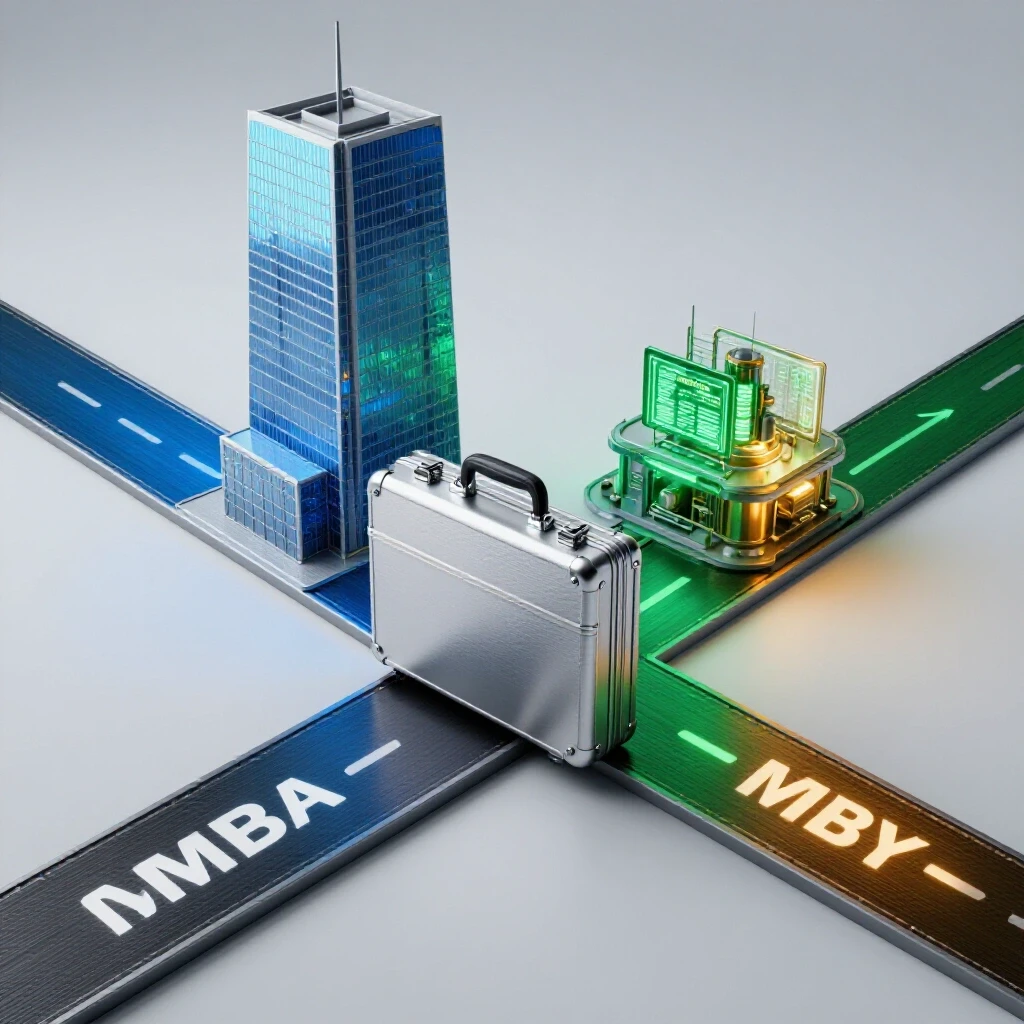
However, the “best” credential depends on your specific career goal. If you want to move into pure management, an MBA might be the right choice. If you want to lead complex projects without the legal liability of a design engineer, the Project Management Professional (PMP) certification is invaluable. I often mentor engineers who are torn between these paths. My advice is usually to secure the technical licensure (PE) first, as it provides a legal “moat” around your career that a general degree cannot.
- PE License: High legal authority, 10-15% salary bump, requires four years of experience.
- PMP Certification: Global recognition in project lead roles, 16% average salary increase, requires 35 hours of project management education.
- MBA Degree: Broad leadership focus, 25-50% salary increase post-graduation, but high cost and 2-year time commitment.
How does AI change the professional licensure pathways for engineers?
Licensure pathways are the legal and educational steps required to gain and maintain a professional license in a regulated field. Artificial Intelligence is now a critical tool within these pathways, helping candidates study more efficiently for exams like the FE or PE. It also helps licensed professionals manage complex data while still meeting their ethical duties.
I recently worked with a mentee named Sarah, a civil engineer with twelve years of experience. She was terrified that AI would make her role obsolete. We looked at the American Bar Association and NCEES guidelines together. The consensus is clear: AI is a tool, not a replacement. In engineering, the concept of “responsible charge” is the legal anchor. This means a licensed human must have direct supervisory control and professional liability for every decision.
AI can synthesize thousands of pages of building codes in seconds. It can suggest the most efficient beam sizes or drainage routes. But it cannot “sign” a document. The licensure pathway is becoming more about “AI oversight” than just “manual calculation.” This shift makes the PE license even more valuable. It proves you have the judgment to tell when the AI is wrong.
The concept of Responsible Charge in the age of AI
Responsible charge is the legal requirement that a licensed professional maintains independent control and direction of engineering work. When you use AI, you are still the one responsible for the output. If the AI makes a mistake and you seal the drawing, the liability rests solely on your shoulders.
Building on this, the NCEES (National Council of Examiners for Engineering and Surveying) emphasizes that you must be able to explain and defend every part of a project you seal. You cannot claim “the AI did it” as a defense in a court of law. This is why human-in-the-loop verification is the most important skill for a modern engineer.
My workflow for integrating AI into engineering licensure tasks
A workflow is a sequence of steps used to complete a complex task with high efficiency and accuracy. For a licensed engineer, this involves using AI for data gathering and drafting while keeping a strict human-in-the-loop process for final approval. This ensures that all work meets safety and legal standards.
I have developed a four-step workflow that I share with professionals looking to balance their heavy workloads. This process allows you to use AI to handle the “grunt work” so you can focus on high-level design and ethics.
- Data Synthesis and Research: Use AI to search through local zoning laws, environmental regulations, and past project data. This replaces hours of manual reading.
- Preliminary Drafting and Modeling: Feed your specific parameters into AI-enhanced CAD tools. Let the software generate three or four optimized options based on cost and material strength.
- Human-in-the-Loop Verification (QA/QC): This is the most critical step. You must manually check the AI’s math on a sample set of data. Use your professional judgment to look for “hallucinations” or errors in the AI’s logic.
- The Final Seal: Once you have verified the work, you apply your PE seal. This signifies that you have exercised responsible charge over the technology.
Interestingly, this workflow can reduce the time spent on the “drafting” phase by up to 40%. For a mid-career professional, this recovered time can be used to study for additional certifications or to manage more projects, leading to faster promotions.
Comparing MBA vs. certifications for mid-career engineering growth
This comparison looks at the long-term value, cost, and time commitment of a broad graduate degree versus a specialized technical credential. While an MBA offers general business skills, specialized certifications like the PE or PMP provide immediate industry recognition and often a faster return on investment.
When I analyze the ROI of these paths, I use data from the Graduate Management Admission Council (GMAC) and various licensing boards. An MBA is a “heavy lift.” It costs a lot of money and takes a lot of time. A certification like the PMP or PE is “targeted.” It proves a specific skill set and usually costs much less.
| Metric | Professional Engineer (PE) | MBA Degree | PMP Certification |
|---|---|---|---|
| Average Cost | $500 – $1,000 (Exams/Fees) | $60,000 – $150,000 | $400 – $600 |
| Time to Complete | 4 years experience + exams | 2 years (Full-time) | 3 – 6 months |
| Salary Uplift | 10% – 15% | 25% – 50% | 16% |
| ROI Payback Period | 1 year | 3.5 – 5 years | < 6 months |
| Industry Recognition | Legal / Technical | Management / Strategy | Project Leadership |
As you can see, the PMP and PE have very short payback periods. If you are 35 years old and have a family, spending $100,000 on an MBA might not be as efficient as spending $1,000 on a PE license that gives you an immediate $15,000 raise.
Balancing work-study-life while pursuing high-stakes credentials
Work-study-life balance is the strategic management of your career, your education, and your personal responsibilities. For professionals in the 25 to 50 age range, this balance is often the biggest hurdle to career advancement. It requires choosing flexible learning models and using high-efficiency study habits.
I often tell my students that you cannot “find” time; you have to “make” it. When I was pursuing my own credentials, I used a method called “Micro-Studying.” Instead of trying to find four hours on a Saturday, I studied for 20 minutes during my commute and 30 minutes during lunch.
- Use Hybrid Programs: Look for “Executive” or “Online” versions of degrees. These are designed for working adults and often have higher completion rates (up to 80% compared to 50% for standard part-time programs).
- Leverage AI for Study: Use AI tools to summarize long textbook chapters or to create practice exam questions. This can cut your study time by 25%.
- Employer Sponsorship: Many engineering firms will pay for your PE or PMP exams. Some will even pay for an MBA if you commit to staying with the company for two years.
- Set Clear Boundaries: Communicate with your family and your boss about your goals. If they know you are studying for a promotion that benefits everyone, they are more likely to support you.
How to select the most efficient credential for your career path
Selecting a credential requires a clear assessment of your current skills and your five-year career goal. You must weigh the cost of the program against the likely salary increase and the “staying power” of the credential in your specific industry.
In my coaching sessions, I use a “Decision Matrix” to help professionals choose. We look at three factors: Authority, Mobility, and Income.
- Authority: Does the credential give you the legal right to do something others cannot? (e.g., JD, MD, PE, CPA).
- Mobility: Can you take this credential to another state or another industry? (e.g., MBA, PMP).
- Income: What is the documented salary increase for this specific credential in your zip code?
For example, if you are a mechanical engineer in a manufacturing plant, a PMP might be more efficient than a PE because it allows you to move into operations management across different industries. However, if you are a civil engineer at a design firm, the PE is non-negotiable for any promotion above “Senior Engineer.”
Common mistakes to avoid when seeking professional credentials
Many professionals fall into the trap of “credential hoarding.” This is when you collect certifications that don’t actually help you reach your goal. It leads to burnout and wasted money. I have seen mid-career learners make these three common mistakes:
- Ignoring the “Experience” Requirement: Some certifications, like the PE or PMP, require years of documented experience. Don’t start the study process until you are sure you meet the eligibility criteria.
- Overestimating the “Degree” Value: A Master’s degree in a technical field often has a lower ROI than a professional license. Check the job postings for your “dream job.” If they ask for a “PE” and not a “Master’s,” follow the license path.
- Underestimating the Exam Difficulty: High-stakes exams like the CPA, JD Bar, or PE have pass rates between 50% and 70%. These are not “participation” certificates. They require a disciplined study plan of at least 100 to 300 hours.
By avoiding these pitfalls, you can focus your energy on the credentials that will actually move the needle for your career.
Step-by-step action plan for mid-career career acceleration
To achieve the best results, you need a structured plan. This plan should take you from your current state to your desired promotion in 12 to 24 months.
- Audit Your Current Path: Look at your company’s leadership. What credentials do they hold? This is your most accurate “map” for success.
- Calculate the ROI: Use a simple formula: (Expected Salary Increase / Total Cost of Credential). If the result is greater than 1.0 in the first two years, it is a solid investment.
- Choose Your Study Method: Decide between a structured “boot camp” or a self-paced online course. For busy parents, self-paced is usually better.
- Integrate AI Tools: Use AI to organize your study schedule and to explain complex concepts in simple terms.
- Document Your Progress: As you earn your credential, update your LinkedIn profile and your internal company bio immediately. Don’t wait for your annual review to announce your new status.
Building on this, I have seen professionals who follow a structured plan achieve a promotion 18 months faster than those who just “wait and see.”
Frequently Asked Questions about AI and Professional Licensure
Can AI be used to pass the Professional Engineer (PE) exam?
AI can be a powerful study aid to help you understand complex concepts or to generate practice problems. However, the PE exam is a proctored, high-security test. You cannot use AI during the exam itself. You must rely on your own knowledge and the approved reference materials provided by NCEES.
Will AI eventually replace the need for a PE license?
No. In fact, AI makes the PE license more important. Because AI can generate errors (hallucinations), the legal requirement for a human to take “responsible charge” is more critical than ever. The state boards require a human to be legally liable for public safety, which a machine cannot be.
Is an MBA or a PE more valuable for an engineering manager?
For a manager in a technical design firm, the PE is usually more valuable because it allows you to legally oversee the work. However, in a large corporation or a tech company, an MBA might provide better mobility into executive roles like VP of Operations or COO.
How much does a PMP certification increase an engineer’s salary?
According to the Project Management Institute (PMI), PMP holders earn a median salary that is 16% higher than those without it. For an engineer earning $90,000, this could mean an immediate jump to over $104,000.
What is the pass rate for the PE exam for working adults?
The pass rate varies by discipline, but it generally ranges from 60% to 70% for first-time takers. For working adults, the key to passing is a consistent study schedule over 4 to 6 months rather than “cramming” at the last minute.
Can I get an engineering license if my degree is from a different field?
It is difficult but possible in some states. Most states require a degree from an ABET-accredited engineering program. If your degree is in a related field like physics or math, you may need to take additional coursework or have more years of documented experience under a licensed PE.
How do I balance studying for a JD or MBA while working full-time?
The most successful mid-career students use “Executive” programs. These often meet on weekends or online, allowing you to keep your full-time salary. Using AI to help with reading summaries and research can also save you 5 to 10 hours of study time per week.
Does the “Responsible Charge” rule apply to AI-generated code?
Yes. If you are using AI to write code for a structural analysis or a control system, you are legally responsible for that code. You must be able to verify that the code is correct and safe before it is implemented in a physical project.
What is the ROI of a JD degree for an engineer?
A JD (Law degree) combined with an engineering background makes you a prime candidate for Patent Law. Patent attorneys often earn $160,000 to $200,000 starting salaries. However, the JD takes 3 to 4 years and is very expensive, so the ROI payback period is longer (7 to 10 years).
How can I get my company to pay for my certifications?
Create a “Business Case.” Show your boss how the credential will allow the company to take on more complex projects, reduce insurance premiums (in the case of the PE), or improve project success rates (in the case of the PMP). Most companies have a tuition reimbursement budget that goes unused every year.
(This article was written by one of our staff writers, Richard Thornton. Visit our Meet the Team page to learn more about the author and their expertise.)