How to Find a Job After Passing the CPA Exam (Step-by-Step Guide)
The physical wear-and-tear of the CPA exam is something most people do not talk about until they cross the finish line. After eighteen months of late nights, missed family dinners, and the constant mental weight of four massive exam sections, your body and mind feel the strain. I remember the day I received my final passing score; the relief was so heavy it felt like a physical weight leaving my shoulders. Now that the books are closed, you face a new challenge: turning those three letters into a career-defining promotion or a new high-paying role.
What are the best professional certifications for career advancement?
Professional certifications are targeted credentials that prove your skills in a specific industry. Unlike broad degrees, these certifications like the CPA, PMP, or CFA focus on technical mastery and ethical standards. They provide a clear signal to employers that you have met a rigorous national standard, often leading to immediate salary increases and leadership roles.
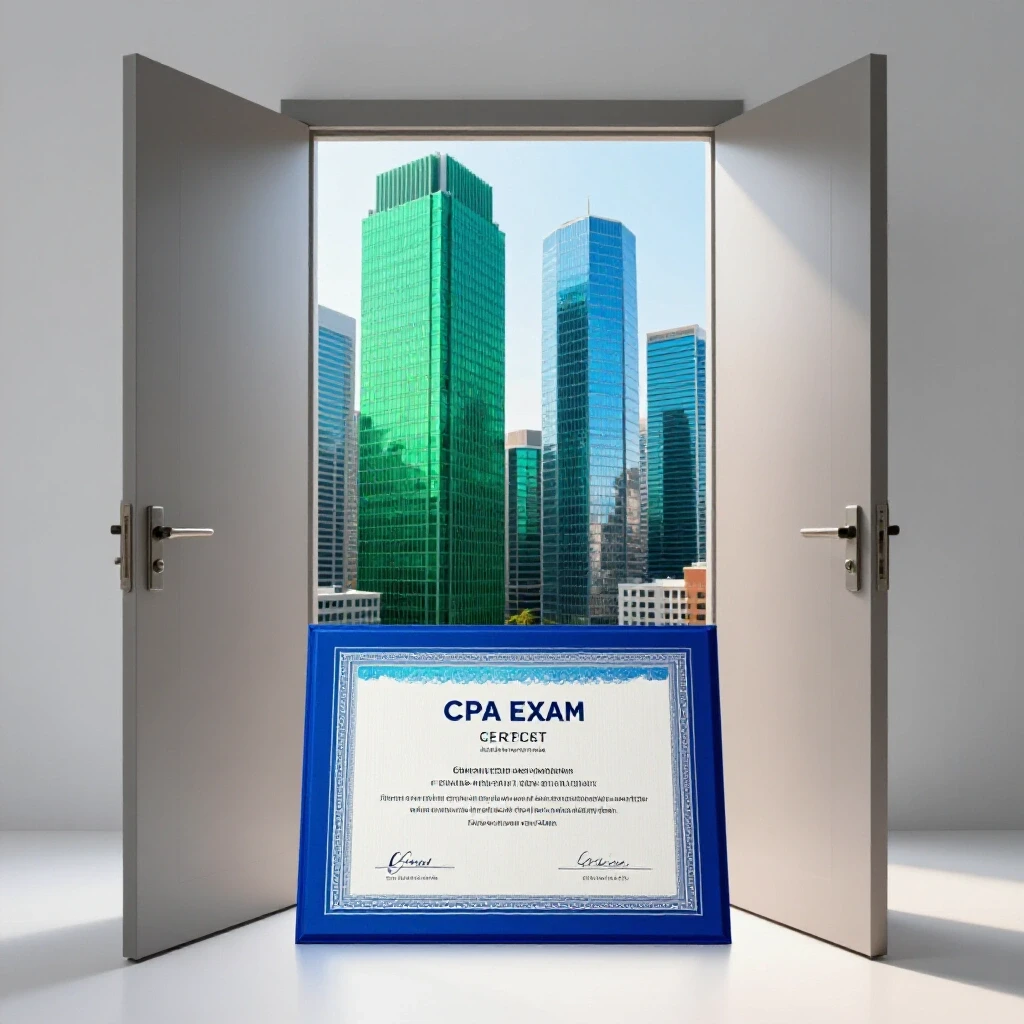
When I mentor mid-career professionals, they often ask if they should get a general degree or a specific license. The answer depends on your goal. If you want to lead an entire company, an MBA might help. However, if you want to be the undisputed expert in your field, a certification is often more efficient. For an accountant, the CPA is the gold standard. It is the most recognized professional licensure pathway in the financial world.
The data supports this choice. According to the AICPA, CPAs can earn 10% to 15% more than non-certified accountants. Over a thirty-year career, that adds up to over one million dollars in extra earnings. For many of my mentees, the return on investment (ROI) for a CPA happens in less than two years. This is much faster than the four to five years it often takes to pay back a full-time graduate degree.
How does the CPA compare to an MBA vs certifications like the PMP?
Choosing between a CPA, an MBA, or a PMP requires looking at your long-term career goals and your current budget. A CPA is a legal license to practice public accounting, while an MBA is a broad leadership degree. A PMP focuses strictly on project management across various industries. Each path has different costs, time commitments, and salary outcomes.
In my experience, the CPA offers the most “recession-proof” security. While an MBA provides a great network, the CPA provides a specific legal authority that companies must have. If you are a mid-career professional, you must weigh the high cost of an MBA against the lower cost but higher intensity of the CPA exam.
| Credential | Average Cost | Time to Complete | Average Salary Lift |
|---|---|---|---|
| CPA | $3,000 – $5,000 | 12 – 18 Months | 10% – 15% |
| MBA | $60,000 – $120,000 | 24 Months | 20% – 35% |
| PMP | $1,000 – $2,500 | 3 – 6 Months | 16% |
| JD | $100,000+ | 36 Months | Variable |
- CPA: Best for those staying in finance or accounting who want a high JD degree ROI equivalent in the financial sector.
- MBA: Best for those looking to pivot into general management or consulting.
- PMP: Best for professionals who manage teams and want to prove their efficiency.
- JD: A high-stakes commitment for those entering the legal field, offering the highest long-term prestige but the longest payback period.
What should I do in the first 30 days after passing the CPA?
The first 30 days of your post-CPA journey should focus on positioning and brand building. This period is about updating your professional identity to reflect your new status as a licensed expert. You must move from a “student” mindset to a “specialist” mindset by updating your resume, LinkedIn profile, and professional network.
I tell my mentees to start by adding “CPA Candidate” or “CPA” (if licensed) to their name everywhere. This is the fastest way to trigger recruiter algorithms. During these first four weeks, do not apply to every job you see. Instead, focus on the quality of your profile.
- Update your LinkedIn headline to include your new credential.
- Reach out to three recruiters who specialize in accounting and finance.
- Draft a new “impact-based” resume that highlights the technical skills you mastered during the exam.
- Schedule “victory lunches” with mentors to tell them you are now ready for more responsibility.
Building on this, the first 30 days are also for rest. You cannot perform well in an interview if you are still burnt out from the exam. Take one week to simply enjoy your success before you start the heavy lifting of applications. This balance ensures you approach the market with energy and confidence.
How do I navigate the interview phase in days 31 to 60?
The second month is when the “real” job search begins, involving technical interviews and salary discussions. This is the time to leverage the PMP certification value or CPA status to secure interviews for roles that were previously out of reach. You will likely face two types of interviews: behavioral and technical.
Interestingly, many employers will assume you have the technical skills because you passed the CPA. They will spend more time asking how you handle stress or lead teams. I once worked with a mentee named Sarah. She was 35 and felt stuck as a staff accountant. Once she passed, we practiced her “CPA Story”—how she managed a full-time job and the exam simultaneously.
- Prepare for technical questions about recent tax law changes or GAAP updates.
- Practice behavioral answers using the STAR method (Situation, Task, Action, Result).
- Research the specific industry of the company, such as healthcare or tech, to show you can apply your CPA skills.
- Use your new credential as leverage to skip entry-level roles and aim for Senior or Manager positions.
As a result of this preparation, Sarah landed a Senior Manager role that paid $25,000 more than her previous job. The key was not just her license, but her ability to explain how the license made her a better leader. In days 31 to 60, your goal is to get at least three high-quality interviews on your calendar.
How do I evaluate offers and negotiate in days 61 to 90?
The final 30 days are for making the right choice and securing the best possible compensation package. By this point, you should have one or two offers on the table. Negotiation is not just about the base salary; it is about your total value, including bonuses, remote work, and continuing education.
Many professionals feel lucky just to get an offer, but I remind them that they are now part of an elite group. Only a small percentage of accountants hold a CPA. This scarcity gives you power. When you negotiate, use data from the Bureau of Labor Statistics (BLS) to show the market rate for a CPA in your city.
- Compare the base salary against the cost of your benefits and 401k match.
- Ask for a “signing bonus” to help cover the costs of the exam prep materials you paid for.
- Inquire about the path to the next promotion, such as moving from Senior to Director.
- Ensure the company culture supports work-life balance so you do not burn out again.
The ROI payback period for your CPA should be at the front of your mind during this phase. If an offer doesn’t increase your pay by at least 10%, it may not be the right move unless the growth potential is massive. By day 90, you should be signing an offer letter that reflects your new professional worth.
What are the most effective tools for a post-CPA job search?
Using the right tools can save you dozens of hours during your 90-day search. Modern job hunting relies on AI-enhanced platforms and niche networking sites. If you are balancing a family and a current job, efficiency is your best friend. I recommend a “stack” of tools to keep your search organized and professional.
- LinkedIn Premium: This allows you to see how you rank against other applicants and gives you direct access to recruiters.
- Teal or Jobscan: These tools help you tailor your resume to specific job descriptions using keywords that recruiters search for.
- Glassdoor: Use this to verify salary data and read honest reviews about company culture before you accept an interview.
- AICPA Job Board: This is a specialized site where employers specifically look for CPA talent.
- Calendly: Use this to make it easy for recruiters to book time with you without the back-and-forth emails.
In my years of career coaching, I have seen that the most successful candidates are the most organized. Keeping a simple spreadsheet of where you applied, who you talked to, and what the next step is can prevent “search fatigue.” These tools are the bridge between your hard-earned license and your new office.
How do I balance a new role with ongoing professional development?
Once you land the job, the learning does not stop. You must maintain your license through Continuing Professional Education (CPE). For a mid-career professional, the challenge shifts from “studying for the exam” to “staying relevant in a changing market.” This is where you might consider adding another credential like a PMP or specialized tax certificate.
I often suggest that my mentees set a “CPE Calendar” in their first 90 days on the new job. This prevents a last-minute rush to earn credits at the end of the year. Many companies will pay for these courses, so it is a great way to keep learning on their dime.
- Schedule four hours of professional reading or webinars per month.
- Join a local chapter of your state CPA society to stay connected to peers.
- Look for “micro-credentials” in areas like data analytics or AI in finance.
- Mentor someone else who is currently taking the exam to reinforce your own knowledge.
Staying active in the professional community ensures that your career acceleration does not stall. The CPA is a door-opener, but your ongoing commitment to excellence is what keeps those doors open. Remember, you have already done the hardest part. Now, it is about managing your success.
Frequently Asked Questions
How much does a CPA increase my salary immediately? On average, passing the CPA exam leads to an immediate salary increase of 10% to 15%. However, if you use the credential to switch companies or move into a management role, I have seen salary jumps as high as 25% to 30%. The credential acts as a “floor” for your earnings, ensuring you are rarely paid below a certain professional level.
Should I get an MBA or a CPA first? For most accounting professionals, the CPA should come first. It is less expensive and provides a higher immediate ROI. The CPA is a technical requirement for many high-level finance jobs, whereas an MBA is a “nice-to-have” for general leadership. If you plan to stay in the financial sector, the CPA is the more efficient choice for mid-career advancement.
How long does it take to find a job after passing the CPA? Most of my mentees secure a new role or a promotion within 60 to 90 days. Because the demand for CPAs is high and the supply is relatively low, the hiring process often moves faster than it does for general business roles. If you are organized and proactive, you can expect multiple offers within three months.
What is the best way to explain the gap in my resume while I was studying? You should not view studying as a “gap.” Instead, list it as a period of professional development. You can write “CPA Candidate (Full-time Study)” on your resume. Employers value the discipline it takes to step back and invest in a high-stakes credential. It shows you are committed to your career and have a high level of grit.
Can I move into project management with a CPA? Yes, many CPAs move into project management, especially in the implementation of financial systems or corporate restructuring. If this is your goal, adding a PMP certification value to your CPA license makes you an incredibly strong candidate. You will have both the financial expertise and the organizational skills to lead large-scale corporate projects.
What are the biggest mistakes to avoid in the first 90 days? The biggest mistake is waiting too long to update your brand. Some people wait until they have the physical certificate in hand, but you should start your search as soon as you pass the final section. Another mistake is accepting the first offer without negotiating. Your value has increased significantly, and your compensation should reflect that new reality.
Is the CPA exam still worth it with AI changing the accounting field? Absolutely. While AI can handle basic bookkeeping, it cannot replace the professional judgment, ethical oversight, and legal authority of a CPA. In fact, AI makes the CPA more valuable because it allows you to focus on high-level strategy and advisory services rather than manual data entry. The “human element” of the CPA is more important now than ever.
How do I manage the cost of the job search after spending so much on the exam? Most of the tools you need for a job search are free or have low-cost tiers. Focus on high-impact activities like networking and LinkedIn optimization which cost nothing but time. Additionally, many firms will reimburse you for your exam fees and materials once you are hired, so keep all your receipts from the past year.
What if I want to leave public accounting after getting my CPA? The CPA is actually your best ticket out of public accounting. Private companies, non-profits, and government agencies all look for the CPA designation when hiring Controllers, CFOs, and Internal Audit Directors. Your first 90 days should focus on “Industry” roles if you are looking for a better work-life balance than public accounting typically offers.
How do I stay motivated during the 90-day job search? Remind yourself of the “why” behind your journey. You have already conquered one of the most difficult professional exams in the world. The job search is simply the victory lap. Set small weekly goals, like sending five personalized messages to recruiters, and celebrate those small wins to keep your momentum high.
(This article was written by one of our staff writers, Richard Thornton. Visit our Meet the Team page to learn more about the author and their expertise.)