Synchronous Learning Explained: Benefits, Comparison & Tips (Guide)
Walking into a classroom on the first day of the semester always brings a specific kind of energy. I remember a student named Maya who sat in the front row of my intro-level linguistics course. She was a first-generation college student, clutching a printed schedule that looked like a secret code. She pointed to the “Sync” note next to her Tuesday morning block and asked, “Does this mean I have to be here, or can I just watch the video later?” That question is more common than you might think. It highlights the initial hurdle every newcomer faces: the specialized language of higher education.
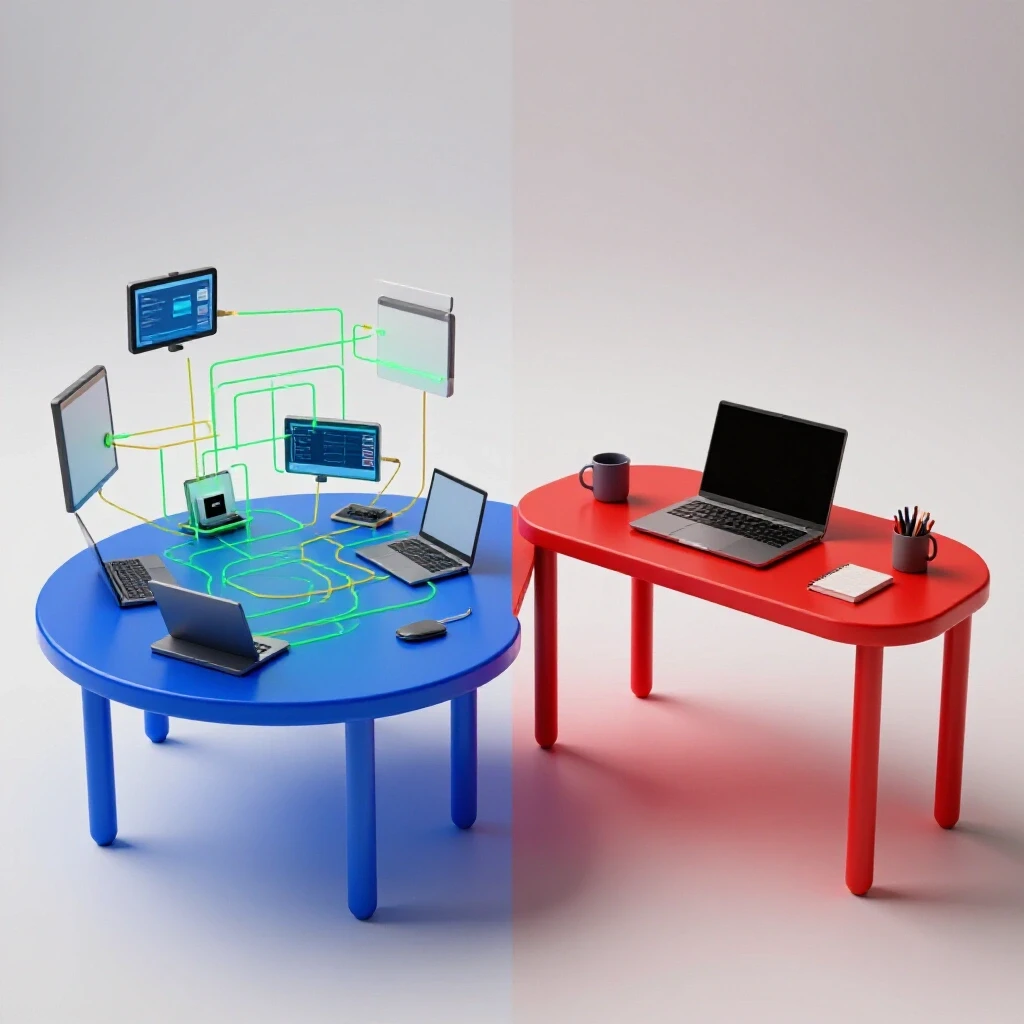
In my eighteen years as an educator and advisor, I have seen how these small misunderstandings can snowball. If Maya had assumed she could watch a recording later, she might have missed vital participation points or the chance to ask a question that cleared up a week’s worth of confusion. Synchronous learning is a fancy term for a very simple concept, but understanding its “why” and “how” is the key to mastering your first year of college. My goal today is to pull back the curtain on this term and show you why, in many cases, learning together in real-time is the most effective way to reach your goals.
What Is Synchronous Learning?
Synchronous learning is a method of instruction where the teacher and the students engage with the course material at the exact same time. This can happen in a physical classroom or through a digital platform. The defining feature is real-time interaction, allowing for immediate questions, live discussions, and instant feedback between everyone involved.
Think of it like a live concert versus a studio album. When you listen to a studio album, you are experiencing the music “asynchronously”—the band recorded it weeks or months ago. But when you are at a live concert, you and the band are in the same moment. If the lead singer asks the crowd to sing along, you do it right then. In a synchronous class, if I explain a complex concept like “phonemes” and I see a sea of confused faces, I can stop and try a different explanation immediately. That “live” connection is what makes this format so powerful for many students.
How Synchronous Learning Compares to Asynchronous Learning
Comparing these two modes helps clarify your options during course registration. While synchronous learning happens in real-time, asynchronous learning allows students to access materials, watch recorded lectures, and complete assignments on their own schedule within set deadlines. Each has a specific place in a well-rounded degree plan depending on your personal needs.
In my advising sessions, I often use a simple comparison to help students decide which sections to join. For a student working a full-time job, asynchronous might seem better. However, for a student who struggles with procrastination, the structure of a synchronous schedule is often the “secret sauce” for success.
| Feature | Synchronous Learning | Asynchronous Learning |
|---|---|---|
| Timing | Real-time, scheduled sessions | Self-paced within deadlines |
| Interaction | Immediate, live discussion | Delayed, via email or forums |
| Flexibility | Lower (fixed schedule) | Higher (choose your hours) |
| Feedback | Instant from instructors | Usually takes 24-48 hours |
| Community | High (live peer engagement) | Lower (independent study) |
Why Real-Time Interaction Worked Better for Collaborative Subjects
Specific academic subjects and skills are much easier to master when you have a live audience and immediate support. Synchronous learning “worked better” in contexts like foreign language practice, lab sciences, and high-level seminars because these fields rely on the “feedback loop.” This loop is the process of trying a skill and getting corrected instantly.
I once advised a group of international students who were nervous about a public speaking requirement. They initially wanted an asynchronous version to avoid the “pressure” of a live audience. I encouraged them to take the synchronous section instead. Why? Because you cannot learn to read a room or handle a Q&A session through a pre-recorded video. In the live sessions, they could see their peers nodding in agreement, which built their confidence in a way a computer screen never could.
- Immediate Feedback: You don’t have to wait three days for an email response to know if you solved a math problem correctly.
- Peer Motivation: Seeing your classmates engaged helps you stay focused on the lecture.
- Structured Routine: Having a set time to “show up” prevents the common trap of falling weeks behind in your coursework.
- Active Discussion: Complex topics in philosophy or sociology benefit from the “back-and-forth” of a live debate.
Understanding Credit Hours in Synchronous Environments
A credit hour is a standard unit of measure used to track the amount of time a student spends in a course. Typically, one credit hour represents about one hour of “seat time” in a synchronous setting and two hours of independent work per week. Most standard college courses are worth 3 credit hours.
When you see a 3-credit course on your schedule, it usually means you will be in a synchronous session for about 150 minutes per week. This might be split into two 75-minute sessions or three 50-minute sessions. For international students, it is vital to know that most student visas require you to maintain a “full-time” status, which is usually at least 12 credit hours per semester. Understanding this helps you calculate exactly how much “live” time you are committing to when you register.
- Full-time load: 12 to 15 credit hours per semester.
- Study time ratio: For every 1 hour in a live class, plan for 2 hours of homework.
- Graduation target: Most Bachelor’s degrees require 120 total credit hours.
The Impact of Accreditation on Your Learning Mode
Accreditation is a “seal of approval” from an independent body that ensures a college or university meets specific quality standards. It is the most important factor in whether your credits will transfer to another school or if you are eligible for federal financial aid. Both synchronous and asynchronous programs can be accredited.
I have seen students lose thousands of dollars because they enrolled in an unaccredited program that promised a “fast degree.” Accrediting bodies look closely at how “regular and substantive interaction” happens between students and teachers. Synchronous learning is often the easiest way for a school to prove they are meeting these high standards. If a school is accredited, it means a group of experts has verified that the education you are receiving—whether live or recorded—is worth the “credit” you are earning.
Navigating International Challenges in Real-Time Classes
For international students, synchronous learning presents unique hurdles, primarily involving time zones and cultural communication styles. When a class is “live,” a student in Seoul might be logging in at 3:00 AM to join a professor in New York. This requires careful planning and a deep understanding of the “why” behind the schedule.
In my experience, international students who participate in synchronous sessions often adapt faster to the local academic culture. They hear the slang, observe the social cues of their American peers, and build a network that helps them find internships later. If you are an international student, I recommend using a time-zone converter tool before you register for any “Sync” courses to ensure you aren’t setting yourself up for an impossible schedule.
- Time Zone Planning: Always check the “Eastern Standard Time” (EST) or the school’s local time against your home clock.
- Language Immersion: Real-time sessions provide more “listening and speaking” practice than recorded ones.
- Office Hours: These are also synchronous. Use them to ask for clarity on jargon or cultural references you didn’t understand in class.
Practical Strategies for Thriving in Live Sessions
Success in a synchronous environment requires more than just “showing up”; it requires an active mindset and a prepared environment. Because these sessions happen in real-time, you cannot “pause” the professor to go grab a snack or look up a word. You need to be ready before the clock starts.
I often tell my students to treat their synchronous digital sessions exactly like a physical classroom. This means sitting at a desk, having your notebook open, and turning your camera on if possible. The more you “act” like you are in a professional environment, the more your brain will focus on the material.
- Test Your Connection: Log in five minutes early to ensure your audio and video are working.
- Minimize Distractions: Put your phone in another room. In a live class, a 30-second distraction can cause you to miss a key instruction.
- Use the “Chat” Wisely: Most digital classrooms have a chat feature. Use it for questions, but avoid “side conversations” that might distract the professor.
- Take Handwritten Notes: Research shows that writing by hand helps you process information faster than typing, which is crucial when the lecture is moving in real-time.
The Role of Academic Advisors in Planning Your Schedule
Academic advisors are your “navigators” through the complex map of higher education policies. Their job is to help you balance your synchronous and asynchronous courses so you don’t burn out. A new advisor might be just as focused on the jargon as you are, so being prepared for your meeting is essential.
When I meet with students, I look for “bottleneck” courses. These are hard classes that everyone must take. I almost always suggest taking these in a synchronous format. Why? Because when the material is difficult, you need the ability to stop the professor and say, “I don’t understand that last point.” An advisor can help you see which classes in your major are “lecture-heavy” (better for sync) and which are “reading-heavy” (could be async).
- Ask your advisor: “Which of these courses are historically the most difficult for first-year students?”
- Ask your advisor: “Are there synchronous sections available for my ‘Major’ requirements?”
- Ask your advisor: “How many ‘Sync’ hours per week do you recommend for someone with my work schedule?”
Major vs. Concentration: How Learning Modes Vary
A “major” is your primary field of study, like Biology or History. A “concentration” is a specific focus within that major, such as “Marine Biology” or “Middle Eastern History.” Often, introductory courses for your major are large and might be offered asynchronously, while your concentration courses are smaller and synchronous.
In smaller concentration classes, the “worked better” aspect of synchronous learning is very clear. You might be in a group of only 12 students. In this setting, the professor isn’t just lecturing; they are mentoring. This real-time mentorship is where you get the best letters of recommendation for grad school or jobs later on.
| Term | Scope | Common Learning Mode |
|---|---|---|
| Major | Broad (e.g., Business) | Mix of Sync and Async |
| Concentration | Narrow (e.g., Accounting) | Mostly Synchronous/Seminar |
| Minor | Secondary (e.g., Spanish) | Often Synchronous for practice |
Transfer Credit Scenarios in Real-Time Learning
Transfer credit is the process where one college accepts the “value” of a course you took at another school. One common mistake students make is assuming all “online” credits are the same. Some selective universities are more likely to accept transfer credits from synchronous courses because they know the student had direct interaction with a professor.
If you plan to start at a community college and transfer to a four-year university, keep a copy of your “Syllabus.” The syllabus is the document that outlines the course requirements. It will state whether the course was synchronous. When you apply to transfer, having this proof can sometimes be the difference between your credits being accepted or having to retake the class.
- Transfer Acceptance Rate: On average, students lose about 43% of their credits when transferring. Choosing synchronous, accredited courses can help lower this risk.
- Syllabus Archive: Save every syllabus. It is your “receipt” for the education you purchased.
- Equivalency Databases: Check tools like “Transferology” to see how your synchronous credits move between schools.
Essential Tools and Resources for Navigating College
Navigating the jargon of higher education is easier when you have the right tools. I always recommend these three specific resources to my students and their parents to ensure they are making informed decisions.
- NCES College Navigator: This is a free database from the U.S. Department of Education. You can search for any school to see their accreditation status and graduation rates.
- College Scorecard: This tool allows you to compare the “cost vs. value” of different majors at different schools. It’s a great way to see if that expensive private school is actually worth the investment.
- The Common App Guide: For high school students, the Common App website has a massive glossary of terms that explains things like “Early Action” vs. “Early Decision.”
Frequently Asked Questions (FAQ)
What exactly is the difference between synchronous and “live” classes? In the context of college, they are essentially the same thing. “Synchronous” is the formal academic term, while “live” is the conversational term. Both mean that the instructor and the students are meeting at a specific, scheduled time to engage with the material together.
Can a course be both synchronous and asynchronous? Yes, this is often called a “Hybrid” or “Blended” course. In this setup, you might meet synchronously once a week for a live discussion and then complete the rest of your work asynchronously on your own time. This is a very popular “middle ground” for many modern college programs.
Does synchronous learning cost more than asynchronous learning? Generally, no. Most colleges charge the same “tuition per credit hour” regardless of how the course is delivered. However, some schools might charge a “distance learning fee” for any course taken online, whether it is synchronous or asynchronous. Always check your “Bursar’s” bill for these details.
Is synchronous learning better for international students? It depends on the student’s goals. If the goal is to improve English language skills and integrate into the campus culture, synchronous is much better. If the goal is to balance a degree with a full-time job in a different time zone, asynchronous might be more practical.
What happens if I miss a synchronous session? In most cases, you cannot “make up” the live interaction. Some professors record the sessions, but watching a recording is not the same as participating. Missing sessions often affects your “Participation Grade,” which can be 10% to 20% of your final grade.
How do I know if a class is synchronous before I register? Look at the “Course Schedule” in your student portal. If the class lists a specific day and time (e.g., MWF 10:00 AM – 10:50 AM), it is synchronous. If it says “TBA” or “Online – No Set Time,” it is likely asynchronous.
Why do some students find synchronous learning “overwhelming”? The main reason is “scheduling fatigue.” If you have four synchronous classes in a row, you are spending five or six hours in high-intensity social and mental environments. It is important to space your synchronous sessions out to give your brain a break.
Are synchronous exams harder? The difficulty is the same, but the “format” is different. Synchronous exams are taken by everyone at the same time, often with a live proctor (someone watching to ensure honesty). Asynchronous exams usually give you a “window” of 24-48 hours to start the test.
Does “Sync” learning work for all subjects? While it works for most, it is particularly effective for subjects requiring “performance,” such as music, nursing labs, or teacher training. It is less critical for subjects that are purely based on independent reading, though the community aspect is still a benefit.
How can parents support a student in synchronous classes? The best support is providing a quiet, dedicated space for the student during their “live” hours. Because these classes are in real-time, interruptions from siblings or household chores can be very disruptive to the student’s focus and participation.
What is the “Attendance Policy” for synchronous classes? Every professor is different, but most have a strict policy. Often, if you miss more than three or four live sessions, your grade will automatically drop by one letter. Always read the “Syllabus” on the first day to find these rules.
Do I need special equipment for synchronous learning? Usually, just a reliable computer with a webcam and a microphone. A stable internet connection is the most important “tool” you have. If your home internet is spotty, many colleges provide “hotspots” or dedicated computer labs for students to use.
(This article was written by one of our staff writers, Alan Westbrook. Visit our Meet the Team page to learn more about the author and their expertise.)