Stackable Pathway Explained: How to Build Flexible Careers (Guide)
Discussing regional needs reveals a significant shift in how we approach education across the country. In many states, local industries like healthcare, manufacturing, and technology are growing faster than the traditional four-year degree cycle can support. This gap has led to the rise of flexible learning models designed to get people into the workforce quickly while keeping the door open for future degrees.
I remember a student named Marcus who came into my office a few years ago. He was a first-generation college student working a full-time job to support his family. He felt paralyzed by the idea of a four-year commitment. He asked me, “Dr. Westbrook, is there a way to go to school without waiting four years to get a better job?” That conversation is exactly why I advocate for stackable pathways. It turned his overwhelming “four-year mountain” into a series of manageable hills.

What is a Stackable Pathway?
A stackable pathway is an educational framework that allows you to earn small, focused credentials that build on each other over time. Instead of waiting years to earn one big degree, you earn “bite-sized” certificates or badges that “stack” together. These smaller pieces eventually add up to a full associate or bachelor’s degree.
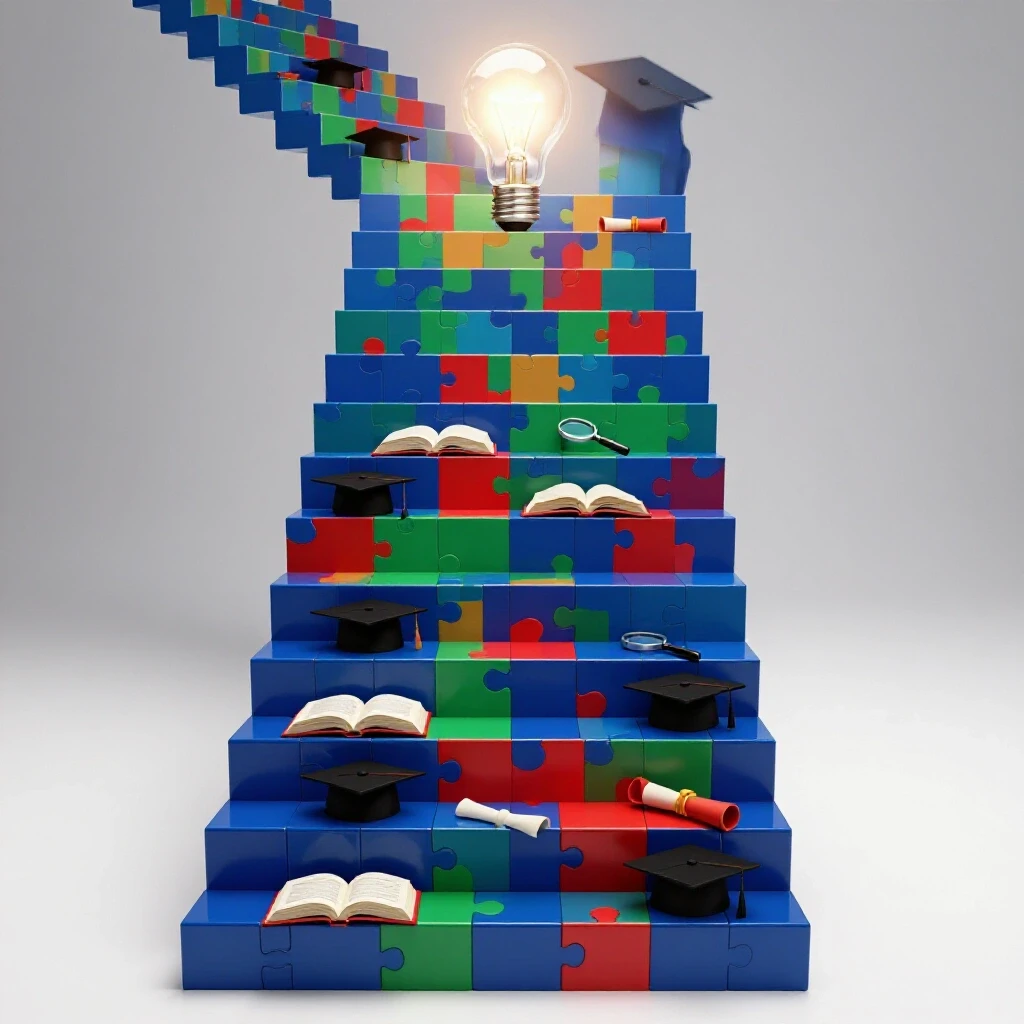
Think of it like building with Lego bricks. Each brick is a specific skill or certificate. You can stop after one brick and enter the workforce with a recognized credential. When you are ready, you can come back and add another brick. Eventually, those bricks form a complete structure, such as a college degree, without you ever having to repeat a class or lose progress.
How the Stackable Model Built Up Over Time
The stackable model grew out of a need to make higher education more affordable and responsive to the modern workplace. Historically, schools focused on long, rigid programs. However, rising tuition costs and the fast pace of technology forced a change. This system evolved from early vocational training and community college agreements into the formalized, flexible system we see today.
In my 18 years of researching policy, I have seen how the U.S. Department of Education and regional accreditors have worked to make this possible. In the past, if you left school halfway through a degree, you often left with nothing but debt. Today, the “stackable” approach ensures that every credit hour you earn has immediate value. It was built to help non-traditional students and workers who need to balance life, work, and learning.
The Key Components of a Stackable Pathway
A stackable pathway is made of several different types of credentials. Each one serves a specific purpose in your career and academic journey. Understanding these pieces helps you decide where to start and how to move forward without wasting time or money.
- Micro-credentials and Digital Badges: These are very short programs, often taking just a few weeks or months. They prove you have a specific skill, like data analysis or medical billing.
- Industry Certifications: These are credentials recognized by professional industries rather than just schools. Examples include a Certified Nursing Assistant (CNA) or a CompTIA A+ certification.
- Undergraduate Certificates: These are academic programs offered by colleges that usually take six months to a year. They often consist of 15 to 30 credit hours.
- Associate Degrees: This is a two-year degree (usually 60 credits). In a stackable system, your previous certificates “stack” directly into this degree.
- Bachelor’s Degrees: This is the traditional four-year degree (usually 120 credits). Your associate degree serves as the foundation, meaning you only have two years of “major-specific” work left.
Comparing Educational Paths
| Feature | Traditional Degree Path | Stackable Pathway |
|---|---|---|
| Time to First Credential | 2 to 4 years | 3 to 12 months |
| Workforce Entry | After graduation | After first certificate |
| Flexibility | Low (fixed schedule) | High (stop and start) |
| Risk of Dropping Out | High (all or nothing) | Low (earn as you go) |
| Cost Management | Large upfront loans | Pay-as-you-go options |
Why Does Accreditation Matter for Stacking?
Accreditation is a “seal of approval” from an independent agency that ensures a school provides a quality education. For a stackable pathway to work, the school must be accredited. This ensures that the credits you earn at one level will be accepted when you try to “stack” them into a higher degree later.
I often tell my students to think of accreditation as a universal currency. If you earn credits at a school that isn’t properly accredited, those credits are like “monopoly money”—they might look real, but you can’t spend them at another institution. Always check the NCES College Navigator to verify a school’s status before you enroll. This protects your financial aid eligibility and your future transfer options.
Understanding the Credit Hour System
A credit hour is a unit of measure used by colleges to track your progress toward a degree. Usually, one credit hour represents about one hour of classroom time per week. Most standard college courses are worth 3 credit hours. To graduate with a Bachelor’s degree, you typically need 120 credit hours.
In a stackable model, you might earn a 15-credit certificate first. Those 15 credits are not just for that certificate; they also count toward the 60 credits needed for an Associate degree. This “double-counting” is the secret to saving time. It prevents the common pitfall of taking classes that don’t help you graduate.
- Typical Certificate: 12-18 credit hours.
- Typical Associate Degree: 60 credit hours.
- Typical Bachelor’s Degree: 120 credit hours.
- Full-time Semester: 12-15 credit hours.
Transfer Credits Explained
Transfer credit refers to the process where one college recognizes and accepts the credit hours you earned at another school. This is the “glue” that holds stackable pathways together. Without clear transfer policies, you might find yourself repeating classes you have already passed, which is a major waste of money.
During my time as an advisor, I saw many international students struggle with this. If you are coming from a different country, your “credits” might be measured differently. It is vital to use a credential evaluation service to translate your experience into the U.S. credit hour system. Most colleges have a “Transfer Equivalency Database” on their website where you can see exactly how your previous work will stack.
Major vs. Concentration: How They Fit Into Your Stack
A major is your primary field of study, such as Business or Biology. A concentration is a specific “sub-topic” within that major. In a stackable pathway, your initial certificates often become your concentration once you reach the Bachelor’s degree level.
For example, if you start with a certificate in “Cybersecurity,” that might be your first stack. When you move to a Bachelor’s in “Information Technology,” your cybersecurity credits fill the “concentration” requirement. This allows you to become a specialist early in your education, which makes you more attractive to employers while you finish your broader degree.
How to Build Your Own Stackable Path
Building a stackable path requires a bit of planning, but it is much more manageable than traditional planning. You start by looking at the job you want now and the job you want in ten years. Then, you work with an advisor to find the credentials that bridge those two points.
- Identify the Entry Point: Find a certificate that leads to an immediate job in your region.
- Verify Transferability: Ask the school, “Does this certificate stack into an Associate degree here?”
- Check Accreditation: Ensure the school is regionally accredited so your credits can move with you.
- Apply for Financial Aid: Use the FAFSA. Even short-term certificates are often eligible for federal grants if they are part of a larger program.
- Enter the Workforce: Use your first credential to get a job in your field.
- Return and Stack: Use your employer’s tuition reimbursement (if available) to pay for the next level of your stack.
Common Pitfalls to Avoid
Even with a clear plan, there are mistakes that can slow you down. One of the most common issues is “credit loss” during a transfer. This happens when a student takes “technical” credits that a four-year university considers too specific to count toward a general degree.
Another pitfall is ignoring the “residency requirement.” Most colleges require you to take at least 25% of your credits at their institution to grant you a degree. If you stack too many credits from outside sources, you might find you have “too many” credits but still haven’t met the school’s specific rules. Always talk to an advisor before you take a course outside of your home college.
Tools and Resources for Success
Navigating this system is easier when you use the right digital tools. These resources are verified and used by professional academic advisors to help students make informed decisions.
- College Scorecard: A U.S. Department of Education tool that shows you the average salary and debt levels for specific certificates and degrees at any school.
- NCES College Navigator: The gold standard for checking a school’s accreditation and official statistics.
- Transferology: A website that helps you see how your credits will transfer between thousands of different colleges.
- O*NET OnLine: A tool to research which certificates and skills are actually in demand by employers in your specific zip code.
- Common App: While mostly for four-year schools, it is increasingly used for transfer students looking to stack their associate degrees into a bachelor’s.
Questions to Ask Your Academic Advisor
When you meet with an advisor, being prepared with the right questions can save you months of work. Don’t be afraid to ask for clarity on jargon. A good advisor wants you to understand the “why” behind the requirements.
- “Is this certificate ‘fully stackable’ into the Associate degree in this department?”
- “Are there any ‘articulation agreements’ with four-year universities for this specific program?”
- “Which of these courses are considered ‘general education’ and which are ‘technical’?”
- “What is the maximum number of credits I can transfer into this program from another school?”
- “Does this program qualify for federal Pell Grants?”
Key Takeaways for Navigating Your Journey
The stackable pathway is more than just a trend; it is a practical solution for the modern student. It reduces the financial risk of college by giving you “exit points” where you can stop and work. It also allows you to be a lifelong learner, adding new skills as your career evolves.
Remember that education is not a race. Whether you finish your degree in four years or ten, the most important thing is that the credits you earn belong to you. By choosing a stackable path, you are building a flexible future that fits your life, rather than trying to fit your life into a rigid school system.
Frequently Asked Questions (FAQ)
What exactly is a “stackable” credential? A stackable credential is a part of a sequence of qualifications that can be accumulated over time. Instead of one long program, it is broken into smaller parts like certificates or diplomas. Each part has its own value in the job market, but they also count toward a higher-level degree, such as an Associate or Bachelor’s.
Can I stack credits from different colleges? Yes, but it requires careful planning. This is called “transferring credit.” For this to work, the schools must be accredited, and the courses must be similar in content. You should always check a school’s “Transfer Equivalency Database” or speak with an advisor to ensure the credits will be accepted before you enroll.
How do stackable pathways save money? They save money in three ways. First, you can get a job sooner with a short-term certificate, which helps pay for later classes. Second, many students start at lower-cost community colleges and stack those credits into expensive universities later. Third, you avoid the cost of retaking classes because you are following a pre-planned “stack” that ensures every credit counts.
Are stackable certificates eligible for financial aid? Many are, but not all. For a certificate to be eligible for federal financial aid (like Pell Grants), it usually must be a certain number of weeks long and lead to gainful employment. Always check with the school’s financial aid office to see if the specific “stack” you are starting qualifies for FAFSA funds.
What is the difference between a certificate and a certification? A “certificate” is usually an academic credential awarded by a college after you complete a series of courses. A “certification” is a professional credential awarded by an industry body (like Microsoft or the Board of Nursing) after you pass a specific exam. In a stackable pathway, you often earn a college certificate that also prepares you to take the exam for an industry certification.
Do employers value certificates as much as degrees? Employers value skills. For entry-level roles, a specific certificate in a high-demand skill (like welding or medical coding) is often more valuable than a general degree. However, for management and high-level leadership roles, most employers still look for a Bachelor’s or Master’s degree. Stackable pathways give you the best of both worlds: immediate skills and long-term degree progress.
What is an articulation agreement? An articulation agreement is a formal partnership between two schools (usually a community college and a university). It acts as a “map” that guarantees your credits from the first school will stack perfectly into a degree at the second school. These agreements are the most secure way to build a stackable pathway between different institutions.
How do I know if my credits will expire? In most cases, general education credits (like English or Math) do not expire. However, in fast-moving fields like Technology or Nursing, some “technical” credits may expire after 5 to 10 years because the information becomes outdated. If you plan to take a long break between “stacks,” ask your advisor about the “shelf life” of your specific credits.
Can international students use stackable pathways? Yes, but they must be mindful of visa requirements. Most student visas (like the F-1) require you to be a full-time student. While you can still “stack” your credentials, you must ensure that each step of your path keeps you in compliance with immigration rules. International students should work closely with their Designated School Official (DSO) to plan their stack.
What if I change my major while stacking? If you change your major, some of your “major-specific” credits may no longer fit into the new “stack.” However, your “general education” credits (like history, science, and communication) will almost always transfer to the new major. This is why stackable pathways are often designed with a common core of classes at the beginning to allow for some flexibility.
(This article was written by one of our staff writers, Alan Westbrook. Visit our Meet the Team page to learn more about the author and their expertise.)