Reverse Transfer Explained: How to Get Your Associate Degree (Guide)
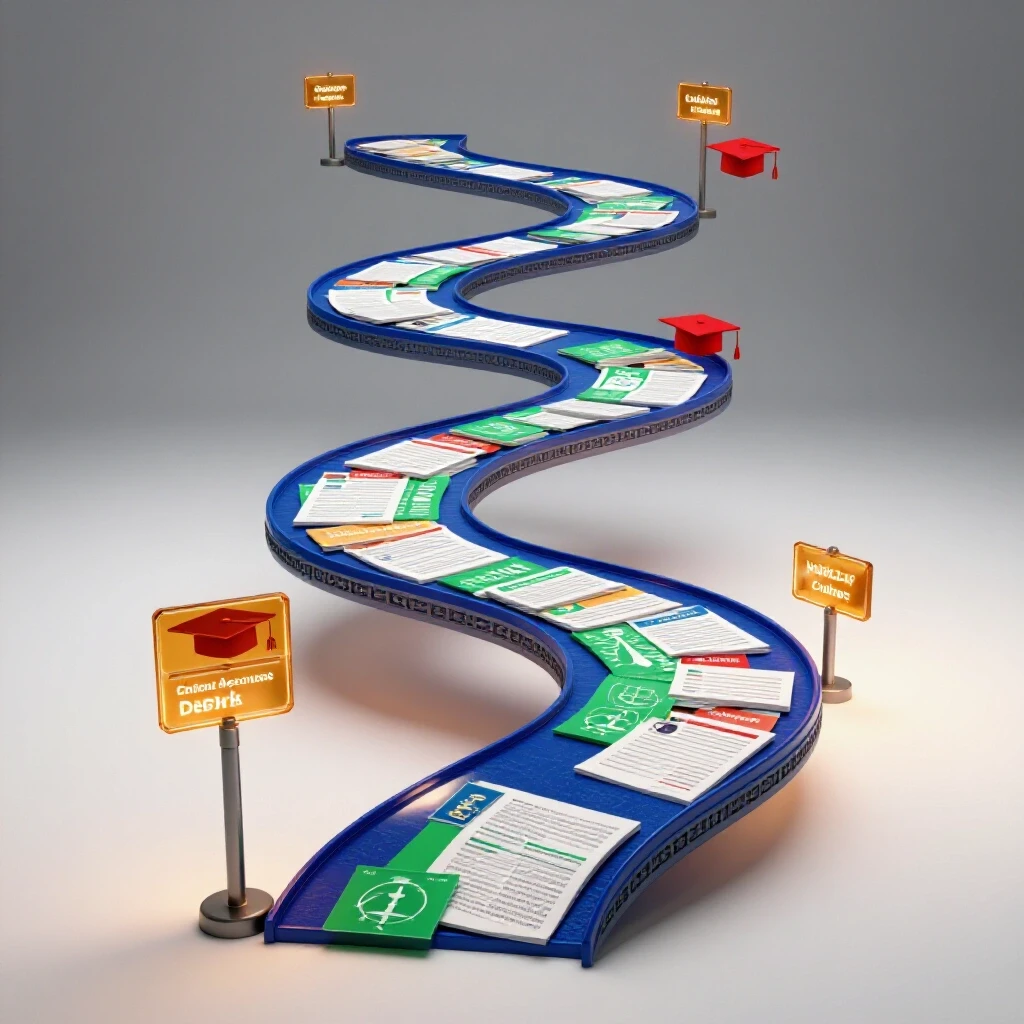
Life moves fast, and sometimes the path to a college degree feels like a long, winding road with unexpected detours. You might be juggling a part-time job, family responsibilities, and a full course load while trying to make sense of academic jargon that feels like a foreign language. In my eighteen years as an academic researcher and advisor, I have seen many students work incredibly hard only to feel they have nothing to show for it when life forces them to take a break from their studies.
I remember a student named Sarah who came into my office a few years ago. She had completed two years at a community college and then moved to a major university. However, in her junior year, a family emergency required her to move back home and start working full-time. She felt like a failure because she didn’t have a diploma hanging on her wall, despite having over 70 college credits. I told her about reverse transfer, and the look of relief on her face is something I will never forget. We “rescued” her degree, and she walked away with an Associate of Arts that helped her land a better job while she paused her bachelor’s degree.

What is Reverse Transfer?
Reverse transfer is a process where credits you earn at a four-year university are sent back to a community college you previously attended. The community college evaluates these credits to see if you have met the requirements for an associate degree. This allows you to earn a college credential retroactively without taking extra classes or paying more tuition.
Think of it like a puzzle. You started a puzzle at one house (the community college) and then moved to a bigger house (the university) to finish it. Reverse transfer is simply sending the new pieces you found at the big house back to the first house so you can complete that first puzzle. It honors the work you have already done and ensures you get the credit you deserve.
Why Should You Consider a Reverse Transfer?
A reverse transfer serves as an academic safety net and a powerful resume builder for students who may not finish their bachelor’s degree immediately. It provides a formal credential that proves your skills to employers, increases your earning potential, and ensures that the time and money you spent on university courses result in a tangible degree.
In my experience, many students view an associate degree as just a “stepping stone,” but it is actually a valuable destination. If you are a first-year college student or an international student, having a degree in hand provides security. If you ever need to stop your studies for a year or two, you aren’t just “someone with some college credits.” You are a college graduate. This distinction can be the difference between getting a promotion or being stuck in an entry-level position.
- Professional Recognition: Employers often look for completed degrees rather than a list of credits.
- Academic Security: It protects your progress if you have to leave the university unexpectedly.
- Motivation: Seeing a diploma on your wall can give you the mental boost needed to eventually finish your four-year degree.
- No Extra Cost: Most institutions facilitate this process through existing agreements, meaning you don’t pay for new classes.
Reverse Transfer vs. Traditional Transfer
While traditional transfer involves moving credits from a two-year school to a four-year school to start a higher degree, reverse transfer moves credits in the opposite direction. Traditional transfer looks forward toward a bachelor’s degree, while reverse transfer looks back to complete a degree you started earlier but did not finish.
Understanding the difference is crucial for your academic planning. I often tell my students that while they are climbing the mountain (the bachelor’s degree), reverse transfer is like setting up a base camp (the associate degree) behind them. If they need to slide back down, they have a safe place to land.
| Feature | Traditional Transfer | Reverse Transfer |
|---|---|---|
| Direction | Community College to University | University to Community College |
| Goal | Start a Bachelor’s Degree | Finish an Associate Degree |
| Timing | Usually after 30-60 credits | Usually after 60-90 total credits |
| Credential | Leads to a 4-year degree | Awards a 2-year degree |
| Primary Benefit | Academic advancement | Degree “rescue” and security |
Key Requirements for Earning Your Associate Degree
To qualify for a reverse transfer, you generally need to have earned a specific number of credits at your original community college and a total of at least 60 college credits overall. Most colleges require a “residency” minimum, meaning you must have completed about 15 to 25 percent of your degree at the school awarding the diploma.
In simple terms, you cannot just pick any community college and ask for a degree. You must have been a student there first. Most associate degrees require 60 credit hours. If you earned 45 credits at a community college and then earned 15 more at a university, you likely have enough for the associate degree.
- Credit Threshold: Usually 60 total credits (including university work).
- Residency Requirement: A minimum number of credits (often 15) must have been taken at the community college.
- Minimum GPA: You typically need a 2.0 or higher (“C” average) for the credits to count. | Course Alignment: The university credits must match the remaining requirements for the associate degree major.
How Does the Reverse Transfer Process Work?
The process begins with an audit of your existing transcripts to identify which university courses can fill the gaps in your community college degree plan. Once the community college confirms you have met all requirements, they officially confer the degree and send you your diploma, often without you ever having to step back onto their campus.
When I advise new academic advisors, I tell them to look for students who transferred “early”—meaning they left the community college before finishing their associate degree. These students are the prime candidates for this process.
- Check for Agreements: Ask your university registrar if they have a “Reverse Transfer Agreement” with your former community college.
- Consent to Release Records: You usually need to sign a form allowing the university to send your transcripts back to the two-year school.
- Transcript Evaluation: The community college registrar reviews your university grades.
- Degree Audit: The school checks if your “General Education” or “Major” requirements are now complete.
- Graduation: If everything matches, the community college grants the degree.
Real-World Scenarios and Case Studies
In my career, I have seen how reverse transfer changes lives. Consider the case of “James,” an international student who was studying engineering. He completed 40 credits at a local community college before transferring to a high-ranking university. Unfortunately, due to a change in his family’s financial situation back home, he had to leave the university after one year.
Because James had earned 30 credits at the university, he had a total of 70 credits. We initiated a reverse transfer. His university physics and calculus classes were sent back to the community college. They counted those toward his Associate in Science degree. James returned home not as a “dropout,” but as a college graduate with a degree he could use to find work immediately.
Another scenario involves “Maya,” a student who was pursuing a Bachelor of Business Administration. She was doing well but felt overwhelmed and wanted to take a “gap year” to work. By using reverse transfer, she secured her Associate in Business before her break. This allowed her to apply for management-trainee positions rather than basic retail jobs during her year off.
Actionable Steps for Students and Advisors
Navigating the bureaucracy of higher education can be daunting, but you can take control of your academic journey by being proactive. If you are a student, do not wait for the school to contact you; many institutions have automated systems, but some still require a manual request.
For advisors, I recommend making reverse transfer a standard part of your “exit interview” for any student leaving the university before graduation. It is a final act of support that can leave a lasting positive impact on the student’s life.
- Step 1: Contact your current university’s Registrar’s Office and ask about “Reverse Transfer.”
- Step 2: Identify your “Home Institution” (the community college where you earned the most credits).
- Step 3: Request an official transcript be sent to the community college’s graduation office.
- Step 4: Follow up with the community college advisor to ensure the credits were received and applied.
- Step 5: Update your resume and LinkedIn profile once the degree is posted.
Tools to Help You Track Your Credits
You don’t have to guess whether you are eligible for a degree. Several digital tools and databases can help you track your progress and understand how your credits move between schools. Using these resources can save you hours of phone calls and emails.
- National Student Clearinghouse: This is the primary organization that many colleges use to securely exchange transcripts for reverse transfer.
- Transferology: A web-based tool that shows how your university credits will “count” at other institutions, including your former community college.
- College Navigator (NCES): Useful for finding the contact information and accreditation status of your previous schools.
- Degree Audit Systems: Most colleges have an online portal (like DegreeWorks) where you can run a “What-If” report to see how close you are to a degree.
Common Pitfalls to Avoid
Even with the best intentions, students sometimes run into “red tape.” One common mistake is assuming that all credits will transfer perfectly. Some community colleges have very specific requirements for their degrees that a university course might not exactly match.
Another pitfall is the “Transcript Hold.” If you owe money to the university—even a small library fine—they may refuse to send your transcript to the community college. Always ensure your account is clear before starting the process. Finally, remember that “D” grades often do not transfer. Most schools require a “C” or better for a course to be accepted toward a degree requirement.
- Ignoring Deadlines: Graduation offices usually have specific dates for awarding degrees each semester.
- Assuming it’s Automatic: While some states have “opt-in” programs on their applications, you should always verify that your records were sent.
- Forgetting Residency Rules: You cannot get a degree from a school where you only took one or two classes.
Frequently Asked Questions
What is the main benefit of reverse transfer? The main benefit is earning a college degree using credits you have already completed. It provides a professional credential that can improve your job prospects and serves as a backup plan if you cannot finish your four-year degree immediately. It acknowledges your hard work without requiring more time or money.
Does reverse transfer cost money? In most cases, the process itself is free. The university and community college work together to share your records. However, some community colleges may charge a small “graduation fee” or “diploma fee” to process your final paperwork and mail your physical certificate.
Will getting an associate degree affect my bachelor’s degree progress? No, it will not. Earning an associate degree through reverse transfer does not stop you from continuing your bachelor’s degree. In fact, it often makes the process smoother because it proves you have completed your general education requirements, which can sometimes simplify your remaining university path.
How many credits do I need for a reverse transfer? Generally, you need a total of 60 college-level credits to earn an associate degree. Usually, you must have completed at least 15 to 25 percent of those credits at the community college that will be awarding the degree. The rest can come from your university coursework.
Can international students use reverse transfer? Yes, international students are eligible as long as they meet the credit and residency requirements of the participating schools. It is a great way for international students to ensure they have a U.S. degree even if they have to return to their home country before finishing a four-year program.
What if my university and community college don’t have an agreement? You can still pursue a reverse transfer manually. You will need to request an official transcript from your university and have it sent to the community college. Then, contact the community college’s admissions or registrar’s office and ask for a “degree audit for graduation purposes.”
Do I have to go back to the community college campus? No. The entire process is handled through administrative offices and transcript exchanges. You do not need to enroll in more classes or attend the community college in person. You can even choose to have your diploma mailed to you rather than attending a graduation ceremony.
Can I get a degree in a different major than I started? It depends on the credits you have earned. If your university credits align more closely with a “General Studies” or “Liberal Arts” associate degree than your original major, the community college may suggest switching majors to help you graduate faster.
Is an associate degree earned via reverse transfer “lesser” than a regular one? Absolutely not. The diploma you receive is identical to the one earned by a student who finished their degree at the community college. There is no indication on the diploma or transcript that it was earned through a reverse transfer process.
How long does the process take? Once your transcripts are sent, the evaluation usually takes 4 to 8 weeks. After the community college confirms you meet the requirements, your degree is typically awarded at the end of the current academic semester. It is a relatively quick way to add a major achievement to your resume.
Next Steps for Your Journey
If you think you might be eligible for a reverse transfer, your first move should be a conversation. Reach out to your current academic advisor or the registrar’s office. Ask them: “Does this institution have a reverse transfer agreement with my previous school?” and “What forms do I need to sign to share my transcripts?” Taking this small step today can secure your academic past and strengthen your professional future.
(This article was written by one of our staff writers, Alan Westbrook. Visit our Meet the Team page to learn more about the author and their expertise.)