Challenges of Online Learning Explained (Student Success Guide)
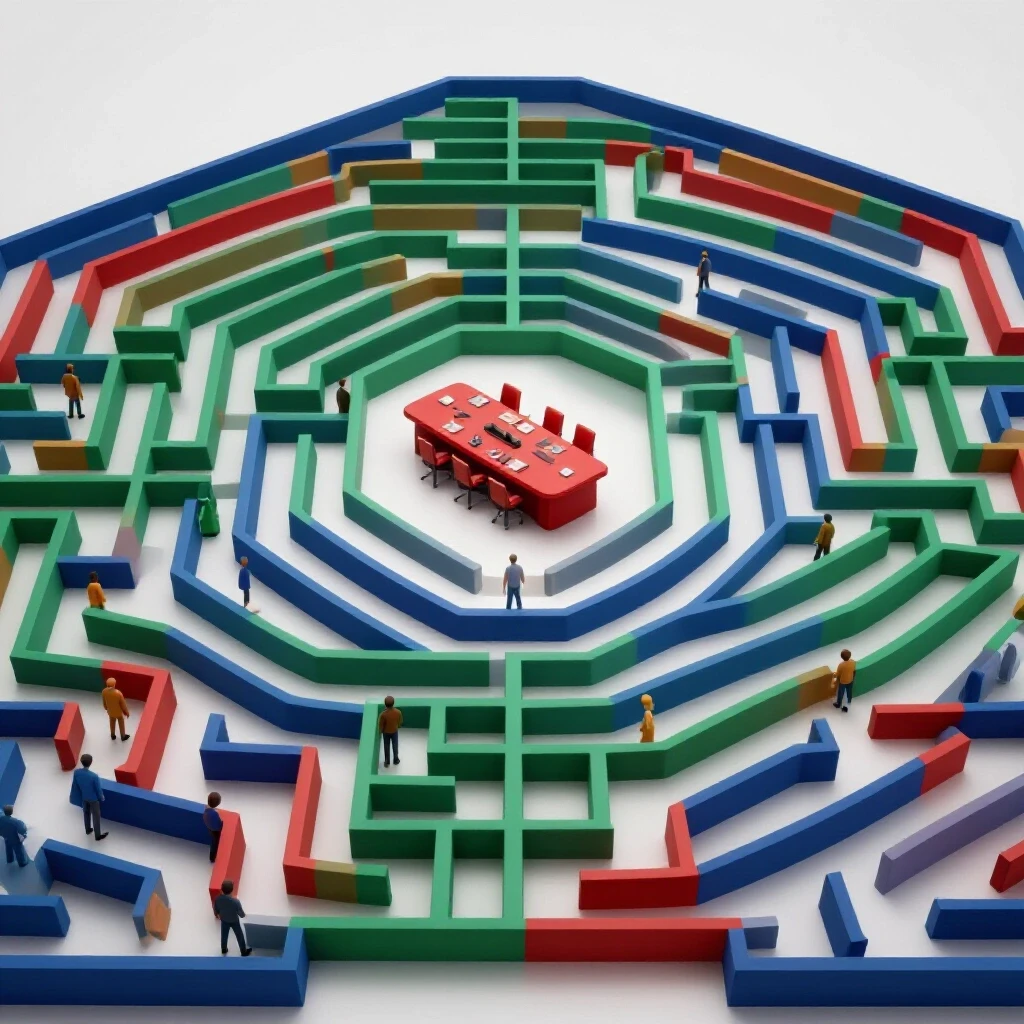
Focusing on bold designs in modern education often means looking past the physical campus to the digital structures that now house our classrooms. For many students, the shift to a virtual environment is not just a change of scenery, but a total redesign of how they process information and interact with mentors. While the internet has opened doors for millions, it has also introduced a set of complex, invisible challenges that can catch even the most prepared students off guard.
In my eighteen years as an academic researcher and advisor, I have seen many students struggle not because they lacked intelligence, but because they underestimated the “hard parts” of digital education. Online learning is often sold as a convenient shortcut, but in reality, it requires a higher level of mental discipline and self-awareness than traditional face-to-face classes. My goal today is to pull back the curtain on these challenges so you can build a solid foundation for your academic journey.

What is Online Learning?
Online learning is a method of education where instruction is delivered entirely through digital platforms rather than in a physical classroom. It requires students to use a Learning Management System (LMS) to access lectures, submit assignments, and communicate with professors, often requiring high levels of independent scheduling and digital literacy.
When we talk about online learning, we are usually looking at two main styles: synchronous and asynchronous. Synchronous learning happens in real-time, like a Zoom call where everyone meets at 10:00 AM. Asynchronous learning is more like a streaming service; the material is there, and you engage with it on your own schedule.
Early in my career, I advised a student named Marcus who chose an entirely asynchronous program. He thought it would be easier because he could work at night. However, he quickly realized that without a professor standing in front of him, the “distance” felt overwhelming. This is what experts call transactional distance. It is not just about miles; it is the psychological and communication gap that can lead to feelings of isolation.
Understanding Transactional Distance
Transactional distance is the psychological and communicative space between a learner and an instructor in an online environment. It is influenced by the structure of the course, the amount of interaction available, and the student’s own ability to direct their learning without immediate, face-to-face feedback from a teacher.
In a physical classroom, you can raise your hand and get an answer in seconds. You can see the professor’s body language and hear the tone of their voice. In an online setting, that “transaction” is stretched. You might send an email and wait 24 hours for a reply. This gap requires you to be much more proactive. If you don’t understand a concept, the “distance” means you have to work harder to seek out clarity.
- The Dialogue Factor: How much can you actually talk to your teacher?
- The Structure Factor: Is the course rigid or flexible?
- The Learner Autonomy: How much control do you have over your progress?
| Feature | Synchronous (Real-Time) | Asynchronous (Self-Paced) |
|---|---|---|
| Interaction | Immediate via video/chat | Delayed via email/forums |
| Schedule | Fixed times | Flexible deadlines |
| Social Connection | Higher; feels like a community | Lower; can feel isolating |
| Hardest Part | Technical glitches and “Zoom fatigue” | Procrastination and lack of clarity |
The High Cognitive Load of Online Learning
Cognitive load refers to the total amount of mental effort being used in your working memory while you are trying to learn. In online learning, this load is often much higher because you are not just learning the subject matter; you are also managing the technology and navigating complex digital interfaces.
Think of your brain like a computer with limited RAM. In a traditional classroom, most of your “RAM” goes toward listening to the lecture. In an online class, you are using “RAM” to figure out where to upload a file, how to fix your microphone, and how to ignore the thirty other tabs open on your browser. This is why you might feel exhausted after an hour of online study compared to an hour in a physical library.
Managing Self-Regulated Learning
Self-regulated learning is the process where a student takes charge of their own mental cycles to turn their abilities into academic skills. It involves setting goals, monitoring your own progress, and staying motivated even when there is no external pressure like a physical classroom environment or a teacher’s watchful eye.
I once worked with an international student who was brilliant at math but struggled with an online calculus course. Back home, his teachers provided a strict daily schedule. Online, he had to be his own “manager.” This shift is the hardest part for many 16-24-year-olds. Your brain’s executive functions—the part that helps you plan and focus—are still developing. Expecting yourself to be a perfect manager without practice is a common pitfall.
- Forethought Phase: Setting goals before you even open your laptop.
- Performance Phase: Staying focused while the work is happening.
- Self-Reflection Phase: Looking back to see what worked and what didn’t.
Executive Functioning and the Lack of Structure
Executive functioning is a set of mental skills that include working memory, flexible thinking, and self-control. In a virtual learning environment, these skills are tested because the physical “cues” of school—like walking into a building or sitting at a specific desk—are missing, forcing the student to create their own structure.
Without a physical campus, the boundaries between “home” and “school” vanish. I have seen students try to take exams while sitting in bed or participating in a discussion board while the TV is on. This lack of structure leads to a breakdown in focus. To succeed, you have to build an “invisible campus” in your own home.
The Reality of Time Commitment
Time commitment in online learning refers to the actual hours required to master course material, which often exceeds the time spent in traditional classrooms. Most colleges expect three hours of independent work for every one credit hour, meaning a three-credit online course requires roughly nine to twelve hours of weekly dedication.
Many students believe online classes take less time. This is a myth. Because you are teaching yourself much of the material through reading and videos, it often takes longer.
- Typical 3-Credit Course: 9-12 hours per week.
- Full-Time Load (12-15 credits): 40-50 hours per week.
- Success Metric: Students who log in at least five days a week have a 30% higher pass rate than those who log in only twice.
Questions to Ask Your Advisor: * Does this course have set meeting times, or is it fully self-paced? * What is the average weekly time commitment for students in this major? * Are there tutoring services specifically for online students?
The Erosion of Informal Peer Networks
Informal peer networks are the casual, unplanned relationships students build with each other outside of formal instruction, such as chatting before class or grabbing coffee. These networks are vital for “hidden learning,” where students clarify assignments, share notes, and provide emotional support, but they are often missing in digital spaces.
In my years of research, I have found that the “water cooler” moments are where a lot of learning happens. When you walk out of a physical classroom, you might turn to a classmate and ask, “Did you understand what he meant by ‘accreditation’?” In an online class, that moment doesn’t happen naturally. You have to manufacture it.
The Risk of Transactional Isolation
Transactional isolation is the feeling of being disconnected from the academic community, which can lead to lower motivation and higher dropout rates. It occurs when digital communication feels like a series of tasks rather than a human connection, making the student feel like just a number in a database.
I remember a first-year student who felt so isolated that she almost quit. She told me, “I feel like I’m shouting into a void.” We fixed this by finding her a virtual study group. If you don’t intentionally build these connections, the “hard parts” of the coursework will feel much heavier.
- The “Lurker” Effect: Reading posts but never contributing, which increases isolation.
- The Feedback Loop: The lack of “micro-affirmations” (nods, smiles) from peers.
- The Solution: Joining student Discord servers or GroupMe chats to recreate that social “glue.”
Navigating Academic Policies and Accreditation
Accreditation is a formal review process that ensures a college or university meets specific quality standards set by an external body. It is the “seal of approval” that ensures your credits will transfer to other schools and that your degree will be recognized by employers and the government for financial aid.
For online students, checking accreditation is the most important step in the application process. There are “degree mills” that look like real schools but lack proper oversight. If a school is not regionally accredited, you may find that your hard-earned credits won’t transfer, and you won’t be eligible for federal student loans (FAFSA).
Understanding Credit Hours in a Digital Space
A credit hour is a unit of measure that represents the amount of instruction and study time required for a course. In the U.S. system, one credit hour typically equals one hour of classroom instruction and two hours of out-of-class work per week over a fifteen-week semester.
In online learning, the “hour of instruction” is replaced by “equivalent activities.” This might include watching a video, participating in a forum, or completing an interactive lab.
- Check the Syllabus: Look for the “Expected Workload” section.
- Verify Transferability: Use tools like Transferology to see if the online credits count at other institutions.
- Financial Aid Impact: You must usually be enrolled at least half-time (6 credits) to receive federal loans.
| Accreditation Type | Description | Why It Matters |
|---|---|---|
| Regional Accreditation | The “Gold Standard” for traditional and online schools. | Highest transfer success; recognized by all employers. |
| National Accreditation | Often for vocational or technical schools. | Credits may not transfer to regional schools. |
| Programmatic Accreditation | Specific to a field (e.g., Nursing, Engineering). | Required for some professional licenses. |
Tools and Resources for the Online Student
Navigating the digital landscape requires a specific toolkit. You cannot rely on a notebook and a pen alone. You need systems that help you manage your time and verify the quality of your education.
- College Scorecard: A tool by the U.S. Department of Education to check graduation rates and average debt for online programs.
- NCES College Navigator: The primary database for verifying a school’s accreditation status and student demographics.
- Trello or Notion: Digital organization tools to build the “structure” that online classes lack.
- Focus To-Do (Pomodoro Timer): A tool to manage cognitive load by breaking study sessions into 25-minute chunks.
- Grammarly or Hemingway Editor: Essential for maintaining professional communication in a text-heavy online environment.
Actionable Steps for Success
To overcome the “hard parts” of online learning, you must move from a passive learner to an active manager of your education. Here is a timeline to help you stay on track.
- Two Weeks Before Class: Set up a dedicated workspace. It should be quiet and free from distractions. Test your internet speed and ensure your hardware meets the school’s requirements.
- Week One: Download every syllabus. Map out every single deadline for the entire semester on one master calendar. Introduce yourself to the professor via email.
- Daily: Log in every morning, even if it is just for ten minutes. This keeps the class “top of mind” and reduces the psychological distance.
- Weekly: Reach out to at least one classmate. Ask a question or share a resource. This breaks the isolation.
Key Takeaways: * Online learning is mentally heavier due to cognitive load. * Transactional distance is a psychological gap, not just a physical one. * Accreditation is non-negotiable for your future career. * You must be your own manager; structure does not come built-in.
Frequently Asked Questions
What is the difference between a major and a concentration in an online program? A major is your primary field of study, like Business Administration. A concentration is a specific focus within that major, such as Marketing or Human Resources. In online programs, concentrations are often designed to align with specific job market needs.
How do I know if an online degree is “real” and not from a degree mill? The most reliable way is to use the NCES College Navigator. Look for “Regional Accreditation.” If a school offers a degree based purely on “life experience” with no coursework, or if they are not listed in the Department of Education database, it is likely a degree mill.
Can I transfer credits from an online community college to a four-year university? Yes, provided the community college is regionally accredited. Most universities have “articulation agreements” which are formal maps showing how credits move between schools. Always check with an advisor at the school you plan to graduate from before enrolling.
Why do I feel more tired after an online class than a physical one? This is due to “Zoom fatigue” and high cognitive load. Your brain has to work harder to process non-verbal cues through a screen and manage the digital tools simultaneously. Taking frequent breaks and using the Pomodoro technique can help.
Is financial aid available for online students? Yes, online students are eligible for the same federal financial aid (FAFSA) as on-campus students, as long as the school is accredited. However, some private scholarships may have specific requirements about “residency” or physical attendance, so read the fine print.
What is a “proctored exam” in an online setting? A proctored exam is a test supervised by an unbiased third party to ensure academic integrity. In online learning, this often uses software that records your webcam and locks your browser, or you may have to go to a local testing center.
How do I build a relationship with my professor if I never see them? Be “digitally present.” Participate in discussion boards with thoughtful, long-form answers. Attend virtual office hours, even if you don’t have a major problem. Simply introducing yourself and sharing your goals makes you a real person in their eyes, not just a name on a screen.
What happens if my internet goes out during a deadline? This is a common “hard part.” Most professors require a “tech backup plan.” Always save your work in the cloud (like Google Drive) and have a secondary location in mind, like a local library or a friend’s house, where you can go if your home internet fails.
Do employers look down on online degrees? Most modern employers do not distinguish between online and on-campus degrees, especially if the degree comes from a well-known, accredited institution. What matters most to them is the reputation of the school and the skills you can demonstrate.
What is the “syllabus quiz” and why is it important? Many online courses start with a quiz about the syllabus. This is a tool professors use to ensure you understand the “rules of the road,” such as grading policies and late-work rules. It is often a “gatekeeper” task—you cannot see the rest of the course until you pass it.
(This article was written by one of our staff writers, Alan Westbrook. Visit our Meet the Team page to learn more about the author and their expertise.)