Information Literacy Explained: Avoid Research Mistakes (Guide 2026)
It is quite ironic that as a man who spent nearly two decades studying how people communicate and research, I once lost an entire week of work because I did not know how to read a website properly. I was a freshman in college, sitting in a dim library corner, feeling like a professional researcher because I found a website that perfectly matched my thesis. I didn’t check the author, the date, or the funding behind the site, and that single mistake nearly cost me my first major grade.
What Is Information Literacy?
Information literacy is the ability to find, evaluate, organize, and use information effectively and ethically in your academic and personal life. It involves more than just searching on Google; it is the skill of judging whether a source is trustworthy and understanding how to apply that data to your goals.

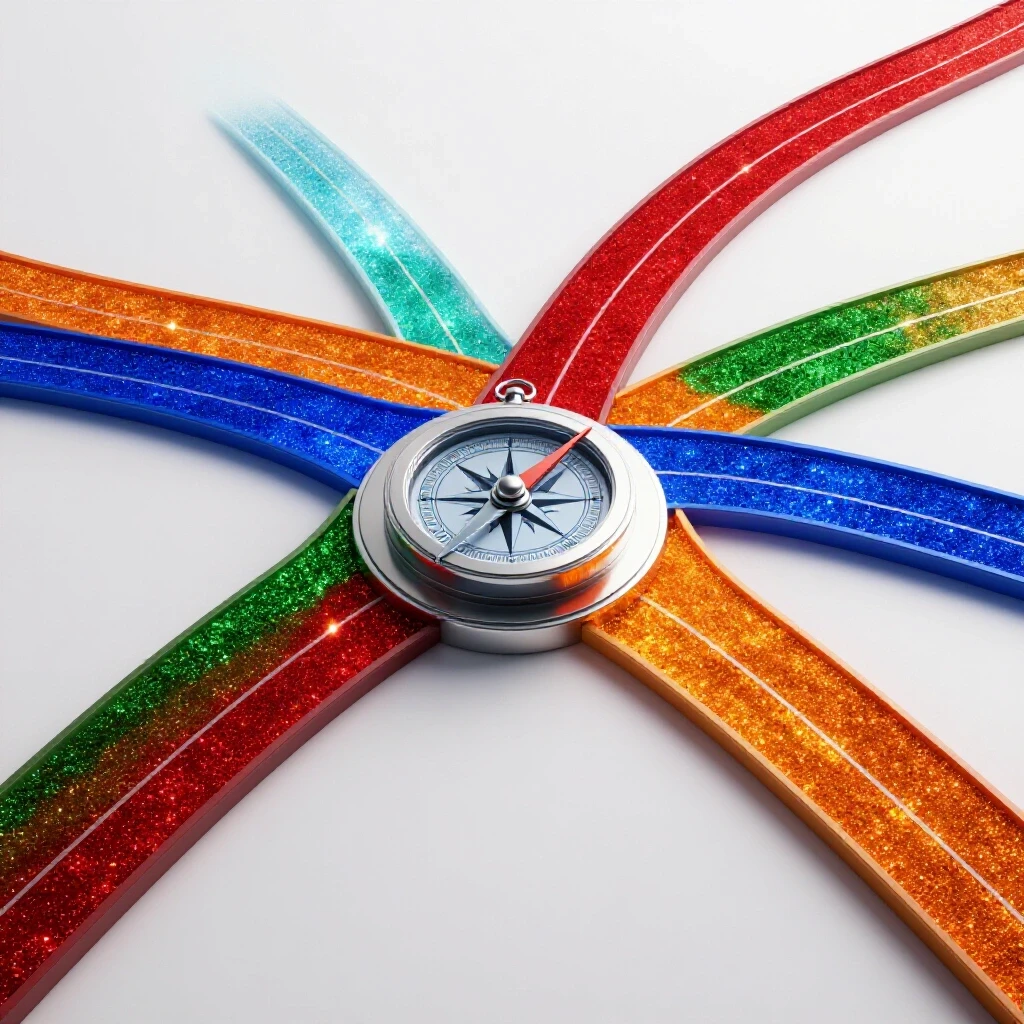
In my early days as a student, I thought information literacy just meant “finding a book in the library.” Today, it is much more complex. Think of it as a compass for the digital age. Without it, you are wandering through a forest of data with no way to tell which path leads to the truth and which path leads to a dead end.
When you start your college journey, you will hear this term often in your “First-Year Experience” or “College Success” courses. It is the foundation of every “major” (your primary field of study) and “concentration” (a specialized focus within your major). If you cannot tell the difference between a factual report and a biased opinion piece, you will struggle to meet the standards of higher education.
My Research Mistake: A Lesson in Confirmation Bias
Confirmation bias is the human tendency to search for, favor, and remember information that confirms what we already believe to be true. It acts like a pair of tinted glasses that only lets in the colors we want to see, often leading us to ignore facts that challenge our current views.
In my freshman year, I was writing a paper on language development. I found a website that claimed children learn languages best through a very specific, expensive type of software. Because I already liked technology, I ignored the fact that the website was actually owned by the company selling the software. I was a victim of confirmation bias; I wanted the “fact” to be true, so I didn’t look for the “truth.”
This mistake is common among new students. We often stop searching the moment we find a quote that fits our paper. To avoid this, you must practice “lateral reading.” Instead of reading a single page from top to bottom, you should open new tabs to see what other experts say about that specific author or organization.
Understanding Source Authority and Credibility
Source authority refers to the level of trust and expertise a person or organization has regarding a specific topic. In college, you must distinguish between “popular” sources like blogs or magazines and “scholarly” sources like peer-reviewed journals that have been checked by other experts in the field.
When you are looking at a source, ask yourself: Who wrote this? Why did they write it? A professor at a major university writing in an academic journal has more authority on a scientific topic than a social media influencer. This does not mean the influencer is always wrong, but their “credentials” (their qualifications) are different.
- Peer-Reviewed Journal: A high-authority source where experts check each other’s work.
- Primary Source: An original document, like a diary, a map, or a raw data set from a study.
- Secondary Source: A document that discusses or analyzes primary sources, like a textbook or a news article.
Comparing Academic Terms for New Students
Understanding the structure of your degree is just as important as understanding your research. Use this table to clarify common terms you will encounter during your first advising session.
| Term | Definition | Typical Credit Hours |
|---|---|---|
| Major | Your primary area of study (e.g., Biology). | 30 – 60 credits |
| Concentration | A specific focus within your major (e.g., Genetics). | 12 – 18 credits |
| Minor | A secondary area of study, often unrelated to your major. | 15 – 21 credits |
| Elective | A course you choose based on interest, not a requirement. | Variable |
| Core Curriculum | General classes everyone must take (Math, English, etc.). | 30 – 45 credits |
Lateral Reading: The Secret to Finding the Truth
Lateral reading is the practice of leaving a website to see what other people say about that website. Instead of reading “down” the page to judge it, you move “sideways” across the internet, opening multiple tabs to verify the author’s credentials and the site’s reputation through outside sources.
Most students are taught to look at the “About Us” page of a website. However, a biased website will always say good things about itself. Lateral reading is different. If you find an article about a new medical discovery, you should immediately search for the name of the scientist or the organization on a different site.
I once advised a student who found a “study” claiming that a specific diet could cure insomnia. By reading laterally, we discovered that the “study” was actually an advertisement disguised as an article. It took us less than two minutes to find three other medical websites that debunked the claim. This saved the student from using a false source in her final biology project.
How Information Literacy Impacts Your Degree Planning
Information literacy extends to how you navigate college policies, “articulation agreements” (rules for transferring credits), and “accreditation.” It involves researching your own education to ensure that the time and money you spend will lead to a valid, recognized degree.
If you are an international student or a transfer student, information literacy is your best friend. You need to verify if your “credit hours” (the value assigned to a course) will move with you to a new school. Most Bachelor’s degrees in the U.S. require 120 credits. If you don’t research the “transfer equivalency” of your classes, you might find yourself retaking courses you have already passed.
- Accreditation Check: Ensure your school is “regionally accredited.” This is the gold standard that ensures your degree is recognized by employers and other universities.
- Financial Aid Impact: Using unreliable information on your FAFSA or scholarship applications can lead to a loss of funding. Always verify deadlines through official “.gov” or “.edu” websites.
- Graduation Pathways: Use your school’s “degree audit” tool to track your progress. Don’t rely on word-of-mouth from friends; check the official college catalog.
Practical Tools for Navigating Research and College Life
To become information literate, you need to use the right tools. Higher education has many digital resources designed to help you verify facts and plan your academic career without feeling overwhelmed by jargon or complex systems.
- NCES College Navigator: A tool from the U.S. Department of Education that provides factual data on college costs, graduation rates, and accreditation.
- Google Scholar: A search engine that focuses specifically on scholarly literature rather than general websites.
- Transferology: A website that helps students see how their “transfer credits” will count at different colleges.
- Purdue OWL: The best resource for learning how to “cite” (give credit to) your sources correctly to avoid plagiarism.
- Your Campus Librarian: Perhaps the most underused “tool” on campus. Librarians are experts in information literacy and can help you find high-quality sources for free.
Key Metrics for Academic Success
In my 18 years of advising, I have noticed that students who master information literacy early tend to have higher GPAs and lower stress levels. Here are some metrics to keep in mind as you plan your semesters:
- 12-15 Credits: The typical load for a full-time student per semester.
- 3 Hours: The amount of study/research time you should spend outside of class for every 1 hour spent in class.
- 80% Acceptance: The average rate of transfer credit acceptance for students who use official “articulation agreements” compared to those who do not.
- 0% Tolerance: Most colleges have a zero-tolerance policy for “plagiarism” (using someone else’s work without credit), which often happens due to poor information literacy.
Common Mistakes to Avoid
Many newcomers fall into the trap of “convenience over quality.” They choose the first three sources they find on the first page of a search engine. This is a mistake because search engines often prioritize popular or paid content over the most accurate content.
Another mistake is ignoring the “date of publication.” In fields like science, technology, or nursing, information that is five years old might already be outdated. Always look for the most recent data available. Finally, never assume that a “.org” website is automatically unbiased. Many organizations exist specifically to promote a certain political or social viewpoint.
- Next Step: Before your next advising meeting, write down three sources you plan to use for a paper and practice lateral reading on them.
- Question for Advisor: “Can you show me where to find the official transfer equivalency guide for my major?”
- Question for Librarian: “What databases does the school subscribe to that are specific to my concentration?”
Frequently Asked Questions
What is the difference between a major and a concentration?
A major is your broad field of study, such as Business Administration. A concentration is a smaller, focused set of courses within that major, such as International Marketing. Think of the major as the tree and the concentration as a specific branch.
Why does accreditation matter for my research and degree?
Accreditation is a “seal of approval” from an outside agency. If a school is not accredited, your “credit hours” likely won’t transfer to other schools, and you may not be eligible for federal financial aid. It ensures the information you are learning meets professional standards.
How do I know if a source is biased?
Check the author’s background and the funding of the website. Ask yourself if the language is emotional or if it only presents one side of an argument. Use lateral reading to see what other experts say about the source’s claims.
Is Wikipedia a good source for college papers?
Wikipedia is a great place to start your research to get an overview, but it is not a “scholarly source.” You should use the references at the bottom of a Wikipedia page to find the original primary or secondary sources for your paper.
What are credit hours and how do they work?
A credit hour is a unit of measure representing one hour of instruction per week over a 15-week semester. Most classes are 3 credits, meaning you spend 3 hours in class per week. You typically need 120 credits to earn a Bachelor’s degree.
What is an articulation agreement?
This is a formal partnership between two colleges (usually a community college and a four-year university). it maps out exactly which “transfer credits” will be accepted so you don’t waste time or money on classes that won’t count toward your degree.
How can I avoid plagiarism if I’m not sure how to cite?
Use resources like the Purdue OWL or your campus writing center. Always give credit when you use someone else’s ideas, even if you put them in your own words. Information literacy includes the ethical use of information.
What is the “CRAAP” test?
It is a popular method for evaluating sources. It stands for Currency (is it timely?), Relevance (does it fit your needs?), Authority (who is the author?), Accuracy (is it reliable?), and Purpose (why does this info exist?).
Can international students use their home country’s credits?
Yes, but you usually need a “credential evaluation” from a service like WES or ECE. This process translates your international grades and credits into the U.S. system so your new college can understand your academic history.
Why should I talk to a librarian?
Librarians are trained to help you navigate complex databases that you can’t find on the open web. They can save you hours of research time and help you find high-quality, “peer-reviewed” sources that will impress your professors.
(This article was written by one of our staff writers, Alan Westbrook. Visit our Meet the Team page to learn more about the author and their expertise.)