What Is a Hypothesis? Definition, Examples, and Tips (Guide)
I remember sitting in a drafty chemistry lab during my first year of college, staring at a beaker of clear liquid that was supposed to turn blue. It stayed clear. I felt a knot of anxiety tighten in my stomach because I thought I had failed. In my mind, my “guess” about what would happen was wrong, and in the high-stakes world of grades, being wrong felt like losing. It took a very patient professor to lean over and tell me something that changed my entire career: “Alan, a hypothesis isn’t a promise of the truth; it’s just the door you choose to walk through first.” That moment of relief is what I want to share with you today.
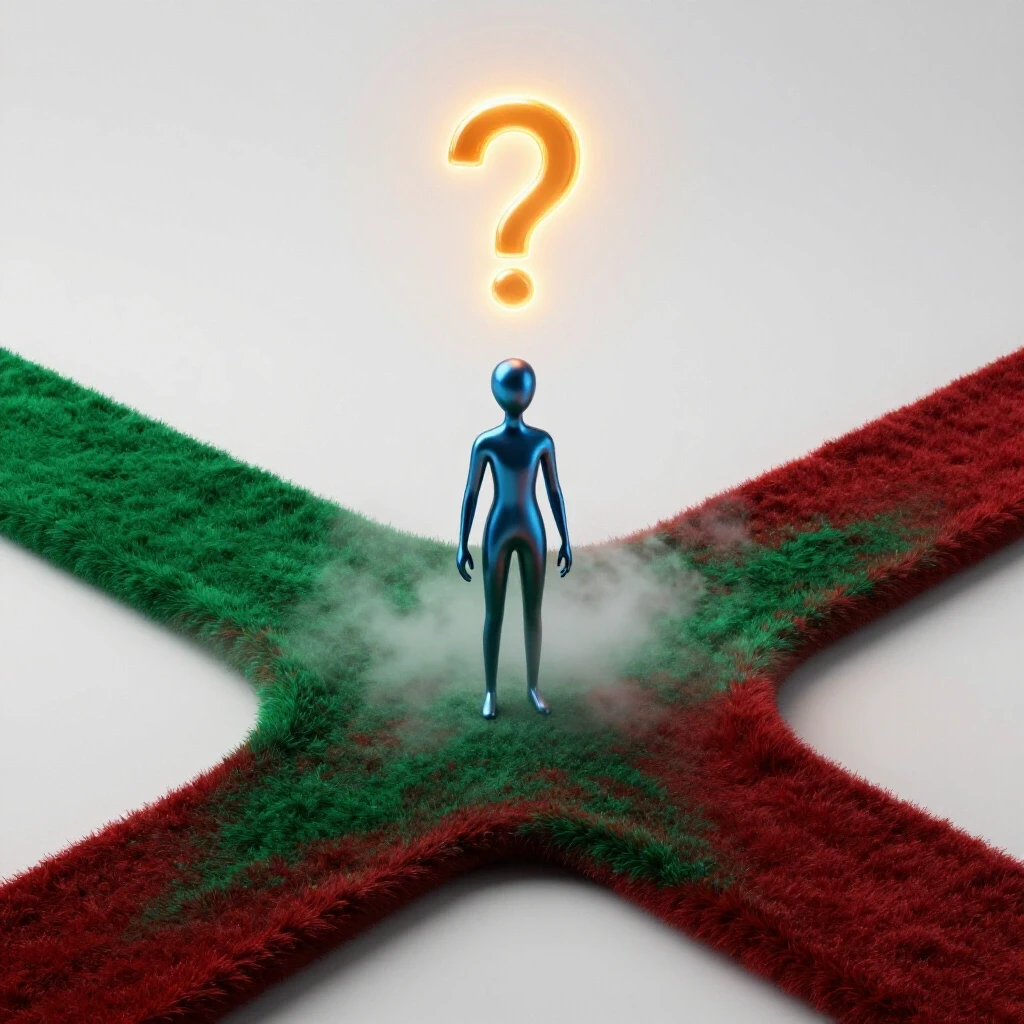
What Is a Hypothesis?
A hypothesis is a proposed, testable, and falsifiable explanation for a narrow set of observations. It serves as the foundational starting point for any scientific inquiry or organized problem-solving process. Rather than being a random guess, it is a structured “if-then” statement that guides your research or experiment toward a clear result.
When you are navigating college terminology, you will see this word in science labs, psychology papers, and even business strategy classes. Think of a hypothesis as a trial idea. You aren’t saying, “This is definitely the truth.” Instead, you are saying, “Based on what I see, I think this might be why this is happening. Now, let me try to prove myself wrong.” In higher education, we value the process of testing more than the “correctness” of the initial guess.
The Role of the “Wrong Guess” in Learning
The “wrong guess” is a successful scientific outcome that systematically eliminates an incorrect assumption. While students often feel that a disproven hypothesis is a failure, it is actually a vital step in narrowing the path to a factual conclusion. In academic research, knowing what is not true is just as important as knowing what is true.
I once advised a student named Elena, an international student from Italy who was terrified of her senior thesis. She had a hypothesis about how social media affected study habits, but her data showed the opposite of what she expected. She thought she would lose her scholarship. I explained to her that her “wrong” guess was actually a discovery. She had found a new piece of the puzzle that no one else had noticed. This is the heart of the scientific method: we move forward by crossing off what doesn’t work.
Comparing Ideas: Hypothesis vs. Prediction vs. Opinion
To understand a hypothesis, it helps to see what it is not. Many students confuse these three terms during their first semester.
| Term | What It Is | Can It Be Tested? | Example |
|---|---|---|---|
| Hypothesis | A proposed explanation based on limited evidence. | Yes, through experimentation. | “If students use digital planners, then their GPA will increase because of better time management.” |
| Prediction | A specific statement about what will happen in the future. | Yes, by waiting or observing. | “The students using digital planners will get higher grades on Tuesday’s test.” |
| Opinion | A personal belief or feeling that is not necessarily based on fact. | No, it is subjective. | “Digital planners are much better than paper ones because they look cooler.” |
Why Falsifiability Is Your Best Friend
Falsifiability is the inherent possibility that a hypothesis can be proven false by an observation or experiment. For a statement to be a valid academic hypothesis, there must be a way to show it is wrong. If a claim cannot be tested or challenged, it remains a belief rather than a scientific tool.
This sounds intimidating, but it is actually a safety net. If you write a hypothesis that is “falsifiable,” you are setting a clear goal for your work. You are saying, “Here is the finish line.” This clarity is essential when you are managing complex projects or 15-credit hour semesters. It prevents you from chasing vague ideas that never lead to a conclusion.
Common Academic Terms You’ll Encounter
As you build your hypothesis, you will navigate other college systems. Understanding these terms helps you plan your time for research and testing.
- Credit Hour: A unit of measuring educational credit, usually based on the number of hours of instruction per week. A typical class is 3 credit hours.
- Major: Your primary field of study, such as Biology or History, requiring about 30-60 credits.
- Concentration: A specific focus within your major. For example, a Biology major might have a concentration in Genetics.
- Accreditation: A “seal of approval” from an outside agency ensuring a college meets high standards. This is vital for your degree to be recognized by employers.
How to Write a Strong Hypothesis
Writing a hypothesis is a skill that helps you in every subject, from chemistry to sociology. It turns a vague curiosity into a concrete plan of action. A strong hypothesis is usually written in an “If… then… because…” format to keep your thoughts organized and focused.
First, you observe a pattern. For instance, you notice that you feel more tired on days when you drink three cups of coffee than on days when you drink one. Second, you ask why. Third, you turn that “why” into a testable statement. “If I limit my coffee intake to one cup, then my afternoon energy levels will increase because I will avoid a caffeine crash.” Now, you have a plan you can actually measure.
Steps to Success
- Start with a question: What are you trying to figure out?
- Do your background research: See what other people have already discovered.
- Make it specific: Avoid words like “better” or “worse” without defining them.
- Ensure it is testable: Make sure you have the tools (like a lab or a survey) to check it.
- Keep it simple: Focus on one variable at a time so your results are clear.
Navigating the Challenges of Being Wrong
In my 18 years of advising, I have seen many students struggle with the “perfectionism trap.” They believe that if their hypothesis is disproven, they have wasted their time. This is a common pitfall that can lead to “academic standing” issues, where a student’s GPA drops because they are too afraid to submit work that isn’t “perfectly correct.”
The reality of higher education is that we are all just making educated guesses. Whether you are a freshman or a tenured professor, your first guess is often a stepping stone. If you find that your hypothesis was wrong, you haven’t failed the assignment. You have successfully completed the most important part of the assignment: finding the truth through evidence.
Questions to Ask Your Academic Advisor
When you meet with your advisor to discuss your research or your degree plan, use these questions to stay on track:
- Does this hypothesis have a clear, measurable outcome?
- What resources (labs, databases, or libraries) does the college provide to test this?
- If my results don’t support my hypothesis, how should I present that in my final paper?
- How many credit hours should I dedicate to this research project per week?
- Does this project align with the requirements for my major or concentration?
The Practical Impact of the Scientific Mindset
Using the hypothesis method isn’t just for science labs; it’s a tool for navigating your entire college career. You can use it to test your study habits, your social life, and even your career path. For example, you might have a hypothesis that “If I join the pre-law society, then I will feel more confident about my major because I will meet people with similar goals.”
This mindset reduces anxiety. Instead of worrying about making the “perfect” choice, you are simply testing a theory. If the pre-law society isn’t a good fit, your hypothesis was disproven. That isn’t a failure—it’s a data point that helps you choose a better path next semester. This approach is especially helpful for international students who are adapting to a new educational culture and may feel extra pressure to be “right” all the time.
Tools for Academic Planning and Research
To help you manage your research and testing, several digital tools can simplify the process.
- Google Scholar: A search engine specifically for academic papers to help with your background research.
- Zotero: A free tool to help you collect, organize, and cite your research sources.
- Transferology: A database to see how “transfer credits” move between schools if you decide to change colleges.
- College Navigator (NCES): A tool to check the “accreditation” and graduation rates of schools you are considering.
- FAFSA Guide: Essential for understanding how your academic progress affects your financial aid.
A Roadmap for Your First Research Project
If you are a first-year student or a high schooler preparing for college, your first big research project can feel like a mountain. Break it down into these manageable steps to keep your stress levels low and your clarity high.
- Week 1-2 (The Observation Phase): Look around your field of study. What puzzles you? What seems to happen over and over again?
- Week 3-4 (The Research Phase): Read what the experts say. Use your college library’s digital databases.
- Week 5 (The Hypothesis Phase): Write your “If-Then” statement. Share it with your professor or a peer to see if it makes sense.
- Week 6-10 (The Testing Phase): Collect your data. This might be in a lab, through a survey, or by analyzing historical texts.
- Week 11-12 (The Analysis Phase): Look at what you found. Was your guess supported? If not, what did you learn instead?
- Week 13-14 (The Final Report): Write down your journey. Be honest about your “wrong guesses.”
Understanding the “Why” Before the “How”
Why do we care so much about hypotheses in college? It’s because higher education is designed to teach you how to think, not just what to think. By mastering the art of the hypothesis, you are learning how to handle uncertainty. You are learning that “I don’t know yet” is a perfectly acceptable answer, as long as it is followed by “but I have a plan to find out.”
This is the same logic used in “articulation agreements” between community colleges and universities. They have a hypothesis that if you pass certain classes at one school, you are prepared for the next. They test this by looking at student success rates. Everything in the university system, from “tenure” for professors to “post-secondary credentialing” for students, is built on this foundation of testing ideas against reality.
Key Takeaways for Navigating Academic Jargon
- A hypothesis is a tool, not a conclusion. It’s okay if it turns out to be wrong.
- Testability is key. If you can’t prove it wrong, it isn’t a hypothesis.
- Use the “If-Then-Because” format. This keeps your writing clear and your logic sound.
- Don’t fear the “Wrong Guess.” Disproving a hypothesis is a major part of scientific progress.
- Connect with your advisor. They are there to help you refine your ideas and navigate college policies.
Frequently Asked Questions
What is the simplest definition of a hypothesis?
A hypothesis is a specific, testable guess about how something works. It usually follows an “if-then” structure, such as “If I study in the library, then I will get better grades because there are fewer distractions.” It is the starting point for any experiment or research paper.
Does a hypothesis have to be correct for me to get an ‘A’?
No. In most college courses, your grade is based on how well you followed the scientific method and how clearly you explained your results. If your hypothesis was disproven, but you conducted a fair test and explained why the results were different than expected, you have done excellent work.
What is the difference between a major and a concentration?
A major is your primary field of study (like Business), while a concentration is a specialized track within that major (like Marketing). Understanding this helps you narrow down your hypothesis when you start doing advanced research in your specific area of interest.
How do I know if my hypothesis is “testable”?
A hypothesis is testable if you can perform an experiment or collect data that could potentially show the hypothesis is false. If your statement is based on a personal feeling or a “fact” that cannot be measured (like “ghosts are shy”), it is not a testable hypothesis.
Why do international students sometimes struggle with this concept?
In some education systems, “being wrong” is seen as a failure or a loss of face. In the U.S. higher education system, we view a disproven hypothesis as a successful part of the learning process. Adjusting to this “trial and error” mindset is a key part of academic success in a new country.
Can I have more than one hypothesis for one project?
Yes, but it is often better to focus on one main hypothesis at a time, especially in introductory courses. Having too many variables can make your results confusing. If you have multiple ideas, you can list them as “secondary hypotheses” that you might test later.
What should I do if I realize my hypothesis is wrong halfway through my project?
Don’t panic! This is a common part of research. Continue your experiment to see what the data actually says. In your final report, you will explain that your initial hypothesis was not supported and discuss what the data revealed instead. This shows high-level critical thinking.
How does accreditation affect my ability to do research?
Accreditation ensures that your college has the necessary resources, such as libraries and labs, to support your work. It also means that other colleges and employers will trust the “results” of your education. Always check a school’s accreditation status before applying to ensure your degree will be valued.
(This article was written by one of our staff writers, Alan Westbrook. Visit our Meet the Team page to learn more about the author and their expertise.)