PMP vs Scrum Master: Which Certification to Choose? (Guide 2026)
A senior director at a leading global technology firm recently made a choice that surprised many of his peers. Instead of enrolling in a prestigious executive MBA program, he opted to earn a specialized project management credential followed by a focused agile certification. He recognized that in a rapidly shifting economy, the ability to execute specific, complex initiatives is often more valuable than a broad theoretical education. This trendsetter’s choice reflects a wider shift among mid-career professionals who are prioritizing targeted, high-impact credentials over traditional degrees to achieve immediate career acceleration.
Why the Modern Project Leader is Choosing Targeted Credentials
Targeted credentials like the PMP and Scrum Master certifications provide specific, validated skills that employers recognize immediately. Unlike broad degrees, these certifications focus on direct application, governance, and team leadership within specific frameworks. They offer a faster return on investment and a clear signal of expertise to hiring managers and executive leadership.
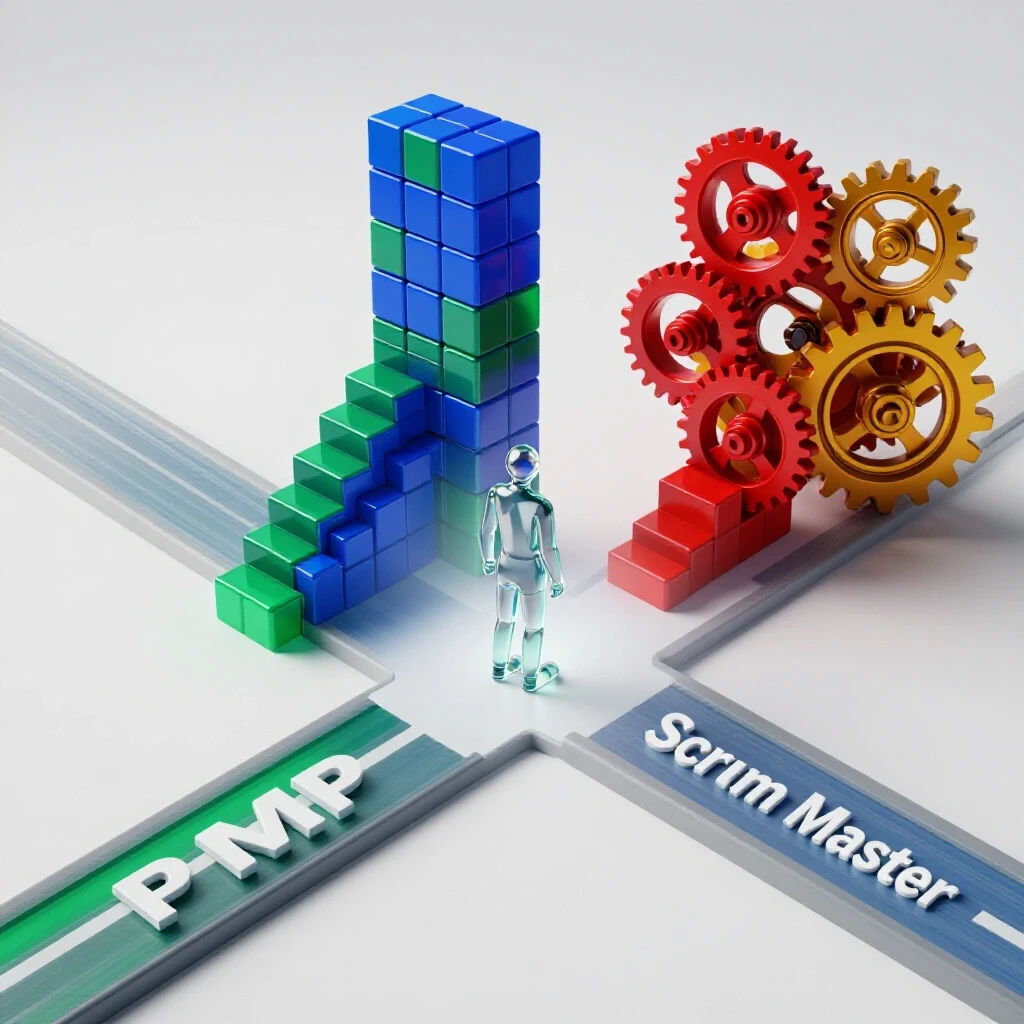
In my fifteen years as a professional credentials specialist, I have seen the landscape of career advancement shift dramatically. Mid-career professionals between the ages of 25 and 50 are no longer looking for just “more education.” They are looking for the right education. When I mentor individuals, the question is rarely about whether they should learn more, but rather which path will yield the highest industry recognition.
The choice between a broad degree, like an MBA, and a targeted credential often comes down to the “time-to-value” metric. A master’s degree can take two to three years and cost upwards of $60,000. In contrast, a professional certification can be earned in months for a fraction of the cost. For a working parent or a busy manager, this efficiency is not just a preference; it is a necessity.
- Direct skill application: You learn what you need for Monday morning.
- Industry standard: Global organizations use these frameworks to speak a common language.
- Cost-effectiveness: The entry price is significantly lower than graduate school.
- Network access: Joining these credentialing bodies connects you to millions of global practitioners.
Understanding the Project Management Professional (PMP) Certification
The Project Management Professional (PMP) is a globally recognized credential that validates a professional’s ability to lead projects using various methodologies, including predictive, agile, and hybrid approaches. It covers the entire project lifecycle from initiation to closing. This certification emphasizes the strategic and business environment aspects of managing large-scale organizational initiatives.
For the mid-career professional, the PMP acts as a “professional license” for management. I often tell my mentees that if an MBA teaches you how a business runs, the PMP teaches you how to change that business through successful execution. It is a high-stakes credential because it requires documented experience before you can even sit for the exam.
The Strategic Value of the PMP
The PMP provides a framework for managing risk, budgets, and stakeholder expectations at an enterprise level. It is designed for those who want to oversee the “big picture” of a project. This includes aligning project goals with the overall strategy of the organization and ensuring that resources are used efficiently.
- Risk Management: Identifying what could go wrong before it happens.
- Budget Oversight: Managing multi-million dollar allocations with precision.
- Stakeholder Communication: Navigating the complex needs of executives and clients.
- Governance: Ensuring the project adheres to legal and organizational standards.
Exploring the Role of a Certified Scrum Master (CSM)
A Scrum Master is a facilitator for an agile development team who ensures that the Scrum framework is followed. This role focuses on servant leadership, removing “impediments” or blockers for the team, and fostering a culture of continuous improvement. It is a tactical, team-level role primarily used in software development and creative industries.
In my experience mentoring professionals in the tech sector, the Scrum Master credential (such as the CSM from Scrum Alliance or PSM from Scrum.org) is often the first step into the world of Agility. It is less about “managing” people and more about “coaching” them. The Scrum Master does not tell the team what to do; they help the team decide how to do it best.
Interestingly, many professionals find the Scrum Master path more approachable if they prefer a collaborative, hands-on environment. While the PMP feels like a command center, the Scrum Master role feels like being the coach of a high-performing sports team. It is about flow, speed, and iterative delivery.
The Tactical Impact of Scrum
The Scrum Master focuses on short cycles of work called Sprints. Their goal is to deliver value to the customer as quickly as possible. This role is essential in environments where requirements change frequently and the final product is not fully defined at the start.
- Facilitation: Running daily stand-up meetings and retrospective sessions.
- Removing Blockers: Solving problems that stop the team from working.
- Team Protection: Shielding the team from outside interruptions.
- Continuous Delivery: Ensuring a working product is ready at the end of every cycle.
PMP vs Scrum Master: Comparing Methodology and Career ROI
Choosing between the PMP and a Scrum Master credential requires an analysis of your daily work style and long-term career goals. The PMP offers a broader, strategic scope suitable for diverse industries. The Scrum Master credential offers a specialized, tactical focus ideal for fast-paced, iterative environments like software and marketing.
Building on this, I have compiled data from the Project Management Institute (PMI) and various labor market reports to show how these two paths diverge in the real world.
| Feature | PMP (Project Management Professional) | Scrum Master (CSM/PSM) |
|---|---|---|
| Primary Focus | Strategic Governance and Lifecycle | Team Facilitation and Agility |
| Methodology | Hybrid (Predictive, Agile, Waterfall) | Strictly Agile (Scrum Framework) |
| Industry Reach | All (Construction, Healthcare, Finance, Tech) | High Tech, Software, Creative, Marketing |
| Decision Authority | High (Responsible for budget and scope) | Low (Facilitator, not a decision-maker) |
| Average Salary | $120,000 – $135,000 | $105,000 – $118,000 |
| Salary Uplift | 16% to 33% increase | 10% to 15% increase |
| Study Time | 2 to 6 months | 1 to 4 weeks |
| ROI Payback | 6 to 12 months | 3 to 6 months |
As a result of this data, it is clear that the PMP generally commands a higher salary and broader authority. However, the Scrum Master credential has a much faster “time-to-credential,” making it an excellent choice for someone needing a quick win to enter a new field.
Practical Decision Making for Mid-Career Professionals
Selecting the right credential involves assessing your current organizational culture and your five-year career trajectory. If you work in a regulated industry with strict budgets, the PMP is likely the better fit. If you work in a creative or tech-heavy field where speed is the priority, the Scrum Master path may offer more immediate relevance.
I once worked with a mentee named Sarah, a 38-year-old operations manager in the healthcare sector. She was torn between an MBA and a PMP. After reviewing her goals, we realized her company was moving toward a digital transformation. She chose the PMP first because it gave her the “authority” to lead the transition. Later, she added a Scrum Master certification to manage the software developers on her team. This “stacking” of credentials made her more valuable than an MBA candidate because she had the specific tools to execute the project.
To make your own decision, ask yourself these questions: 1. Do I want to be responsible for the budget and the final outcome (PMP)? 2. Do I prefer working closely with a small team to solve daily problems (Scrum Master)? 3. Does my industry value rigid structure or flexible iteration?
Case Study: The Career Pivot
Consider the journey of an anonymous professional I mentored who moved from traditional manufacturing to a software-as-a-service (SaaS) company.
- Initial Role: Production Supervisor (Salary: $75,000).
- First Step: Earned PMP to validate leadership skills.
- Outcome: Promoted to Project Manager (Salary: $95,000).
- Second Step: Earned CSM to understand the new company’s agile workflow.
- Final Outcome: Senior Program Manager (Salary: $145,000 within 3 years).
This progression shows that you don’t always have to choose just one. However, starting with the one that matches your current “pain point” at work is the most efficient strategy.
Balancing Professional Development with Full-Time Work
Adult learners must integrate study into a lifestyle that already includes full-time employment and family responsibilities. Successful candidates use “micro-learning” techniques and executive-style schedules to maintain progress without burning out. Consistency is more important than intensity when preparing for high-stakes professional exams.
I often see professionals make the mistake of trying to “cram” for these certifications like they did in college. That approach rarely works for a 40-year-old with a mortgage and a management role. Instead, I recommend a “staggered” study plan.
- The 5-Hour Rule: Dedicate one hour each workday to study.
- Leverage Commutes: Use audiobooks or podcasts to reinforce concepts.
- Workplace Integration: Apply a new concept (like a risk register or a sprint retrospective) at work the very next day.
- Study Groups: Join a virtual cohort to stay accountable.
Building on this, the use of AI-enhanced exam prep tools has changed the game. These tools can identify your weak areas and customize practice questions, saving you hours of unnecessary review.
Strategic Tools for Credential Success
Modern professionals should utilize a suite of digital tools to manage their certification journey and apply their new skills in the workplace. These range from project management software to specialized exam simulators that mimic the actual testing environment. Using the right tools reduces the cognitive load of learning complex frameworks.
- Project Management Software: Tools like Asana, Trello, or Jira allow you to practice the methodologies you are learning in real-time.
- Exam Simulators: High-quality simulators are essential for the PMP to build the “mental stamina” required for the 180-question exam.
- Flashcard Apps: Anki or Quizlet help with memorizing the specific terminology required for Scrum or PMP.
- Professional Networks: LinkedIn and PMI local chapters provide mentorship and job leads that are often not posted publicly.
Key Takeaways for Career Advancement
The most efficient path to a promotion is rarely the longest one. By choosing a targeted credential like the PMP or Scrum Master, you are signaling to the market that you possess specific, high-demand skills.
- The PMP is best for those seeking enterprise-level leadership and higher salary ceilings.
- The Scrum Master is best for those in tech-adjacent roles who value team agility and quick entry.
- Stacking credentials often provides a better ROI than a single, broad degree.
- Success for adult learners depends on integrating study into daily work-life rather than separating them.
Frequently Asked Questions
Is the PMP harder than the Scrum Master certification? Yes, generally the PMP is considered much more difficult. It requires significant documented experience (36 to 60 months of leading projects) and a 180-question exam that lasts nearly four hours. The Scrum Master certification (CSM) usually requires a two-day workshop and a shorter, more straightforward exam. The PMP covers a vast range of topics, while the CSM focuses specifically on the Scrum framework.
Can I get a PMP without a college degree? Yes, you can. The Project Management Institute (PMI) allows individuals with a high school diploma or associate degree to sit for the PMP exam. However, you must document 60 months of unique, non-overlapping professional project management experience. If you have a four-year degree, the experience requirement is reduced to 36 months.
Which certification is better for a career change into tech? If you are moving into software development or IT specifically, the Scrum Master (CSM or PSM) is often the better “entry” credential. It introduces you to the way tech teams actually work. However, if you want a management role in a tech company, having both the PMP and a Scrum Master certification is the gold standard for high-level hiring.
How much does a PMP increase your salary? According to the PMI Earning Power report, PMP certification holders earn a median salary that is 16% to 33% higher than those without it across 40 countries. In the United States, the median salary for PMP holders is often over $120,000, representing a significant jump for many mid-career professionals.
Do these certifications expire? Yes, both require ongoing maintenance. The PMP requires you to earn 60 Professional Development Units (PDUs) every three years. The Scrum Master (CSM) requires renewal every two years, which usually involves a fee and proving continued involvement in the agile community. This ensures that credential holders stay current with industry trends.
Is an MBA better than a PMP? It depends on your goal. An MBA is a broad degree that covers finance, marketing, and strategy, which is great for general management. A PMP is a specialized credential that proves you can execute projects. Many employers now value the PMP more for specific project-based roles because it guarantees a standard level of practical skill that an MBA may not.
Can I use Scrum Master skills in non-tech industries? Absolutely. Scrum is being adopted in marketing, healthcare, and even construction. Any field that requires iterative work, frequent feedback, and team collaboration can benefit from a Scrum Master. However, the PMP remains the dominant standard for traditional industries like civil engineering or heavy manufacturing.
What is the ROI of a PMP? The ROI is typically very high. If the total cost of obtaining a PMP (including study materials and exam fees) is around $1,000 to $2,000, and it leads to a $15,000 salary increase, the credential pays for itself in less than two months of work. This is significantly faster than the five to ten-year payback period of most graduate degrees.
Should I take the CSM or the PSM? The CSM (Certified Scrum Master) is more widely recognized but requires a mandatory in-person or live-virtual class. The PSM (Professional Scrum Master) from Scrum.org is often considered more rigorous and does not require a class, making it a popular choice for self-studiers. Both are highly respected in the industry.
How do I explain these certifications on my resume if I’m pivoting? Focus on the “transferable” skills. For a PMP, highlight your experience with budget management, risk mitigation, and stakeholder engagement. For a Scrum Master, emphasize your experience in team facilitation, conflict resolution, and improving process efficiency. Use the specific terminology of the framework to show you have mastered the “language” of the new field.
(This article was written by one of our staff writers, Richard Thornton. Visit our Meet the Team page to learn more about the author and their expertise.)