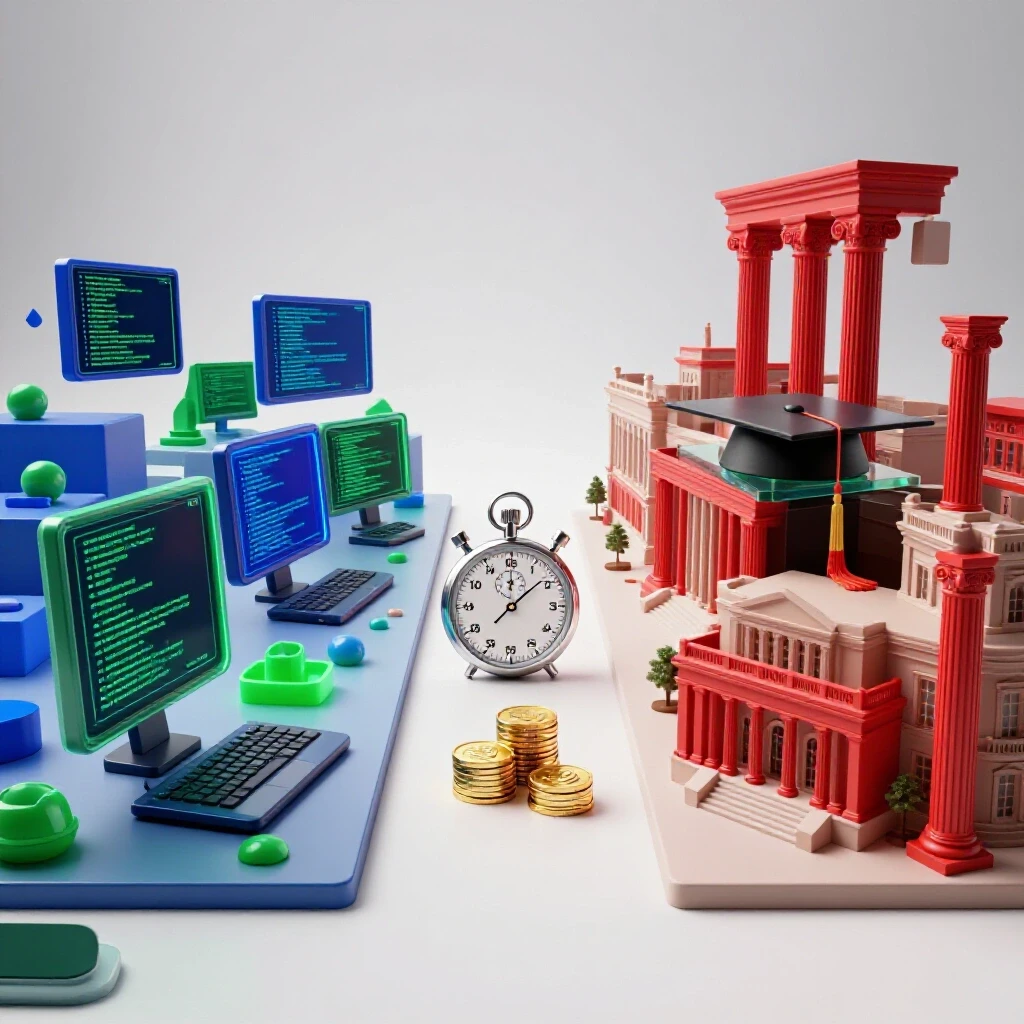
Online vs. On Campus Degree: Worth It? (*Ace Your Future*)
(Ace Your Future)
Introduction
Picture this: You’re strolling through a historic campus, ivy-covered buildings towering above.
The air buzzes with intellectual energy, students debating in sun-drenched quads.
This, for many, is the image of higher education – a ticket to a prosperous future, a gateway to an elite lifestyle.
For generations, an on-campus degree has been synonymous with success.
Think exclusive networking events, state-of-the-art facilities, and a vibrant social scene that shapes you as much as the coursework does.
It’s a luxurious experience, an investment in yourself that promises high returns.
But then came the internet, and with it, online degrees.

Suddenly, education was accessible to anyone, anywhere.
You could learn from top professors without leaving your living room.
Yet, the question lingered: Could an online degree truly compete with the prestige and perceived value of an on-campus experience?
As an educational counselor, I’ve seen firsthand how this debate plays out in people’s lives.
I’ve guided students torn between the allure of the traditional campus and the practicality of online learning.
And in 2025, this question is more relevant than ever.
So, let’s dive in.
Is an online degree as valuable as an on-campus one in today’s rapidly evolving job market?
Let’s explore the pros and cons, the real-world implications, and ultimately, help you decide which path is right for your future.
Section 1: The Traditional Campus
Experience
The Prestige Factor
Let’s be honest, there’s something undeniably appealing about a brick-and-mortar institution.
It’s the history, the tradition, the feeling of being part of something bigger than yourself.
I remember touring college campuses as a high schooler, feeling the weight of academic history in the libraries, imagining myself walking the same halls as countless successful alumni.
That prestige factor is real, and it carries weight.
Face-to-face interactions with professors and classmates are invaluable.
You can’t replicate the spontaneous brainstorming sessions after class, the late-night study groups fueled by pizza and desperation, or the mentorship that comes from building personal relationships with your instructors.
These experiences shape you in ways that online learning simply can’t.
It’s not just about the knowledge you gain, but the personal growth you experience along the way.
Networking Opportunities
One of the biggest advantages of the traditional campus experience is the networking opportunities.
Think about it: you’re surrounded by ambitious, like-minded individuals, all striving for success.
Alumni networks are incredibly powerful.
These connections can open doors to internships, job opportunities, and mentorship from seasoned professionals who have already walked the path you’re on.
I’ve seen students land incredible jobs simply because they connected with an alumnus at a career fair or through a professor’s introduction.
These kinds of opportunities are harder to come by in the online world.
Think of internship fairs, on-campus recruiting events, and the countless social interactions that can lead to unexpected connections.
These are all part of the traditional college experience, and they can be incredibly valuable for your future career.
Extracurricular Activities
Campus life isn’t just about academics; it’s about personal development.
Extracurricular activities play a huge role in shaping you into a well-rounded individual.
Clubs, organizations, sports teams, and volunteer opportunities – these are all part of the campus experience.
They allow you to explore your interests, develop new skills, and build lasting friendships.
I’ve seen students transform from shy freshmen into confident leaders through their involvement in campus organizations.
These experiences not only enhance your resume but also teach you valuable life skills like teamwork, leadership, and communication.
For example, a student I advised who struggled with public speaking joined the debate team.
Through that experience, they not only overcame their fear but also developed exceptional communication skills that helped them land a competitive job after graduation.
Section 2: The Rise of Online Education
Accessibility and Flexibility
Online education has revolutionized the way we learn, breaking down barriers and democratizing access to higher education.
It’s no longer necessary to relocate to attend a specific university or adhere to a rigid class schedule.
This accessibility is particularly beneficial for individuals who have family responsibilities, work full-time, or live in remote areas.
Online programs allow them to pursue their educational goals without sacrificing other important aspects of their lives.
According to the National Center for Education Statistics, enrollment in online courses has been steadily increasing over the past decade.
In 2020, over 6.3 million students were enrolled in distance education courses, highlighting the growing popularity and acceptance of online learning.
https://nces.ed.gov/fastfacts/fsDetail.asp?id=80
I’ve worked with students who are single parents, military veterans, and individuals with disabilities who have all found success through online education.
It’s a testament to the power of technology to make education more inclusive and accessible.
Technological Advancements
Online learning platforms have evolved significantly in recent years, offering interactive tools, virtual classrooms, and the ability to learn from top professors around the world.
Gone are the days of static online courses with minimal interaction.
Today’s online programs incorporate video lectures, interactive simulations, virtual labs, and collaborative projects that enhance the learning experience.
Many online programs also utilize adaptive learning technologies that personalize the curriculum to meet the individual needs of each student.
This ensures that students are challenged appropriately and receive the support they need to succeed.
I’ve seen online courses that are more engaging and interactive than some of the traditional on-campus courses I’ve taken.
Technology has truly transformed the online learning experience.
Cost-Effectiveness
One of the most compelling advantages of online education is its cost-effectiveness.
Online programs often have lower tuition costs than traditional on-campus programs, and students can save money on expenses like room and board, transportation, and textbooks.
According to a study by EducationData.org, the average cost of tuition and fees for an online bachelor’s degree is around $38,496, compared to $127,000 for a traditional on-campus bachelor’s degree.
https://educationdata.org/online-college-costs
This cost difference can be significant, especially for students who are paying for their education out of pocket or taking out student loans.
Online education can be a more financially responsible option for many individuals.
Additionally, many online students are able to work while they study, earning income to help offset the cost of their education.
This is a major advantage over traditional on-campus programs, where students may have limited opportunities for employment.
Section 3: The Value of an Online Degree
Employability and Recognition
The perception of online degrees in the job market has evolved significantly in recent years.
While there was initially some skepticism about the quality and rigor of online programs, employers are increasingly recognizing the value of online degrees.
Many companies now view online degrees as equivalent to traditional degrees, especially if the program is accredited and the student has demonstrated the necessary skills and knowledge.
I’ve spoken with hiring managers who say they are more interested in a candidate’s skills and experience than the format of their degree.
If a candidate can demonstrate that they have the skills and knowledge to do the job, they are likely to be considered regardless of whether they earned their degree online or on campus.
However, it’s important to note that not all online programs are created equal.
Accreditation is crucial, as it ensures that the program meets certain standards of quality and rigor.
Employers are more likely to recognize and value degrees from accredited online programs.
Skills Versus Credentials
In today’s rapidly changing job market, skills and experience are often more important than credentials.
Employers are looking for candidates who can demonstrate that they have the skills necessary to succeed in the role, regardless of how they acquired those skills.
This is good news for graduates of online programs, as they often have the opportunity to develop valuable skills through their studies.
Online programs can provide students with hands-on experience, real-world projects, and opportunities to collaborate with other students from around the world.
I’ve seen individuals with online degrees thrive in their careers because they were able to demonstrate the skills and knowledge they gained through their studies.
They were able to apply their knowledge to real-world problems and make a valuable contribution to their organizations.
For example, a student I advised who earned an online degree in data science was able to land a job at a major tech company because they had a strong portfolio of projects that demonstrated their skills in data analysis and machine learning.
Their online degree provided them with the foundation they needed to succeed, and their skills and experience set them apart from other candidates.
Real-World Applications
One of the best ways to assess the value of an online degree is to look at the success stories of graduates who have achieved notable success in their careers.
I’ve worked with graduates of online programs who have gone on to become successful entrepreneurs, business leaders, and innovators in their fields.
They have used the skills and knowledge they gained through their online education to make a positive impact on the world.
For example, I know a graduate of an online MBA program who started her own successful business.
She used the knowledge she gained in finance, marketing, and management to build a thriving company that employs dozens of people.
I also know a graduate of an online nursing program who is now working as a registered nurse in a major hospital.
She provides compassionate care to patients and makes a difference in their lives every day.
These are just a few examples of the many successful individuals who have thrived with online degrees.
Their stories demonstrate that online education can be a valuable pathway to a fulfilling and successful career.
Section 4: Personal Development and
Learning Styles
Learning Environment
The learning environment plays a crucial role in a student’s success.
Some individuals thrive in the structured environment of a traditional on-campus program, while others prefer the flexibility and autonomy of online learning.
On-campus programs offer a sense of community and belonging that can be beneficial for students who are looking for social interaction and support.
The opportunity to attend lectures in person, participate in group discussions, and interact with professors and classmates can enhance the learning experience for some individuals.
Online programs, on the other hand, offer a more flexible and self-directed learning environment.
Students can learn at their own pace, on their own schedule, and from anywhere in the world.
This can be particularly beneficial for students who have busy schedules or who prefer to learn independently.
I’ve seen students who struggled in traditional on-campus programs thrive in online programs because they were able to learn at their own pace and focus on the areas where they needed the most support.
Self-Discipline and Motivation
Pursuing an online degree requires a high degree of self-discipline and motivation.
Students must be able to manage their time effectively, stay organized, and stay motivated to learn without the structure and support of a traditional classroom environment.
This can be a challenge for some students, but it can also be a valuable opportunity for personal growth.
Students who successfully complete an online degree program often develop valuable skills in self-management, time management, and self-motivation.
These skills are highly valued by employers and can be beneficial in all aspects of life.
The ability to set goals, stay focused, and persevere through challenges is essential for success in today’s competitive world.
I’ve seen students who were initially hesitant about pursuing an online degree because they were concerned about their ability to stay motivated surprise themselves with their success.
They discovered that they were more capable of self-discipline and self-motivation than they thought.
Community and Support
One of the common criticisms of online education is that it can be isolating and that students may miss out on the sense of community that is often found in traditional on-campus programs.
However, online programs have adapted to create support networks and foster connections among students.
Many online programs offer virtual study groups, online forums, and opportunities to connect with professors and classmates through video conferencing.
I’ve seen online programs that have a stronger sense of community than some traditional on-campus programs.
The key is to actively participate in the online community and take advantage of the opportunities to connect with other students and professors.
For example, many online programs have online student organizations and clubs that allow students to connect with others who share their interests.
These organizations can provide a sense of belonging and support that is similar to what students find in traditional on-campus organizations.
Section 5: Future Trends in Education
Hybrid Models
The future of education is likely to involve a blend of online and on-campus learning.
Hybrid education models, which combine online and in-person instruction, are becoming increasingly popular.
These models offer the best of both worlds, providing students with the flexibility and accessibility of online learning while also allowing them to benefit from the social interaction and support of a traditional campus environment.
I believe that hybrid education models will become the norm in the coming years, as they cater to the diverse needs of students and provide a more personalized and effective learning experience.
For example, a student might take some courses online and other courses on campus, or they might attend in-person lectures once a week and complete the rest of the coursework online.
The possibilities are endless.
Employer Adaptation
Employers are adapting to the changing landscape of education and are increasingly valuing skills and experience over the format of the degree.
This means that graduates of online programs are becoming more competitive in the job market.
However, it’s important for online graduates to be able to effectively communicate the value of their online education to potential employers.
They should highlight the skills and knowledge they gained through their studies and demonstrate how they can apply those skills to the job.
I advise online graduates to create a strong portfolio of projects that showcase their skills and experience.
This can be a powerful way to demonstrate to employers that they have the skills and knowledge necessary to succeed in the role.
Globalization of Education
Globalization is influencing educational choices and opportunities, making it easier for students to pursue degrees from institutions around the world, whether online or on-campus.
Students can now access online programs from top universities in other countries, without having to leave their home.
This opens up a world of possibilities for students who are looking for a high-quality education at an affordable price.
I believe that globalization will continue to shape the future of education, as students become more mobile and are able to access educational opportunities from anywhere in the world.
Conclusion
So, is an online degree worth it?
As we’ve explored, the allure of the traditional campus experience remains strong.
The prestige, networking opportunities, and extracurricular activities offer a unique and valuable experience.
However, the growing acceptance and benefits of online degrees cannot be ignored.
The accessibility, flexibility, and cost-effectiveness of online education make it a viable option for many individuals.
In 2025, the value of a degree may be less about where it was earned and more about the knowledge, skills, and experiences gained.
Employers are increasingly valuing skills over credentials, and online programs are providing students with the opportunity to develop those skills.
Ultimately, the decision of whether to pursue an online or on-campus degree is a personal one.
It depends on your individual circumstances, learning style, and career goals.
I hope this article has helped you contemplate your own educational journey and the possibilities that lie ahead.
The future of education is bright, and I’m excited to see what you will achieve.