Online Oceanography Degree (Dive Into Demand!)
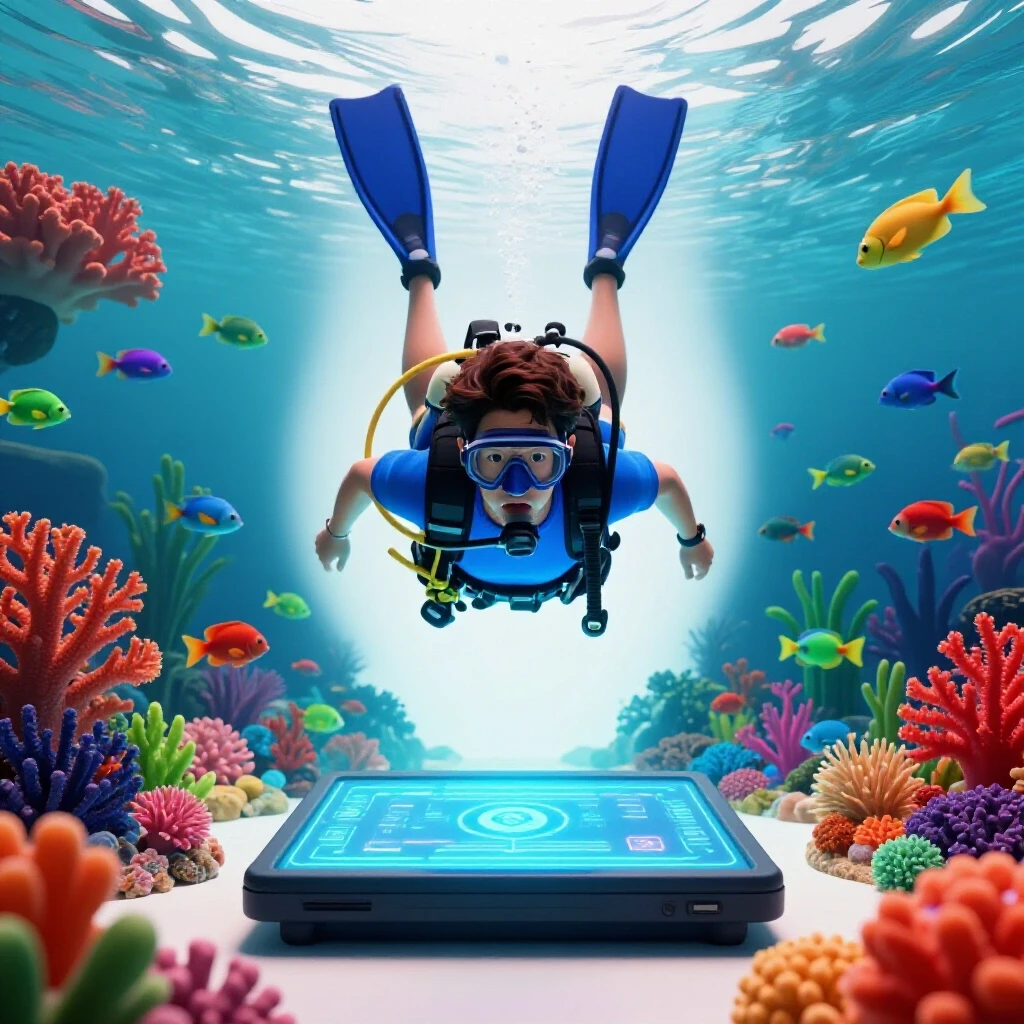
Sounds like a dream, right? Well, it’s becoming a reality with the rise of online oceanography degrees!
As an educational counselor, I’ve seen firsthand how technology is revolutionizing higher education.
And trust me, oceanography is no exception. For years, diving into this field meant packing your bags and heading to a coastal university.
Think about it: the ocean covers over 70% of our planet. It plays a crucial role in regulating climate, supporting diverse ecosystems, and providing resources for billions of people.
But our oceans are facing unprecedented challenges, from climate change and pollution to overfishing and habitat destruction.
That’s where oceanographers come in. These scientists are on the front lines, studying the ocean, understanding its complexities, and developing solutions to protect its health.
And guess what? The demand for skilled oceanographers is only going to increase in the coming years.
So, if you’re passionate about the ocean and want to make a real difference in the world, an online oceanography degree could be your ticket to an exciting and impactful career.
Ready to dive in and learn more? Let’s explore the world of online oceanography degrees and discover how they can help you ride the wave of opportunity in 2025 and beyond!
Section 1: Understanding Oceanography
Okay, so what exactly is oceanography?
Well, it’s not just about swimming with dolphins and collecting seashells (although that can be part of it!).
Oceanography is a multidisciplinary science that studies all aspects of the ocean, from its physical properties to its biological life and chemical composition.
Think of it as the ultimate ocean adventure, combining elements of biology, chemistry, geology, and physics to unlock the secrets of the sea.
Here’s a quick breakdown of the main branches of oceanography:
-
Physical Oceanography: This branch focuses on the physical properties of the ocean, such as temperature, salinity, currents, and waves. Physical oceanographers study how these factors influence ocean circulation, climate patterns, and marine life.
-
Biological Oceanography: Also known as marine biology, this branch explores the diverse life forms that inhabit the ocean, from microscopic plankton to giant whales. Biological oceanographers study marine ecosystems, food webs, and the interactions between organisms and their environment.
-
Chemical Oceanography: This branch investigates the chemical composition of seawater, including the distribution of elements, nutrients, and pollutants. Chemical oceanographers study how chemical processes affect ocean acidification, nutrient cycles, and the health of marine organisms.
-
Geological Oceanography: Also known as marine geology, this branch examines the structure and composition of the ocean floor, including its rocks, sediments, and tectonic plates. Geological oceanographers study seafloor spreading, underwater volcanoes, and the formation of oceanic landforms.
So, why is oceanography so important?
Well, for starters, the ocean plays a critical role in regulating Earth’s climate.
It absorbs a huge amount of carbon dioxide from the atmosphere, helping to mitigate the effects of climate change.
The ocean also generates oxygen, provides food and resources for billions of people, and supports a vast array of marine ecosystems.
But as I mentioned earlier, our oceans are facing serious threats. Climate change is causing ocean warming, acidification, and sea-level rise.
Pollution from plastics, chemicals, and other sources is harming marine life and degrading ocean habitats. Overfishing is depleting fish stocks and disrupting marine ecosystems.
That’s why oceanographers are so essential. They conduct research to understand these challenges, develop solutions to address them, and inform policy decisions to protect our oceans.
Oceanographers work in a variety of roles, from research scientists and professors to environmental consultants and policy advisors.
They collect data at sea, analyze samples in the lab, develop computer models, and communicate their findings to the public and policymakers.
Their work is crucial for understanding the complexities of the ocean and for developing strategies to ensure its long-term health and sustainability.
Section 2: The Evolution of Online Education
Now, let’s rewind a bit and talk about how online education has evolved over the years.
It wasn’t always as slick and sophisticated as it is today!
Back in the early days of the internet, online learning was pretty basic. Think text-based bulletin boards and email courses.
But as technology advanced, so did online education. The development of learning management systems (LMS) like Blackboard and Moodle revolutionized the way courses were delivered.
These platforms provided a centralized hub for course materials, assignments, and communication, making online learning more organized and accessible.
Then came video conferencing tools like Zoom and Skype, which allowed for real-time interaction between instructors and students.
This was a game-changer, as it enabled online students to participate in live lectures, discussions, and group projects.
And let’s not forget about interactive simulations and virtual labs, which have made it possible to conduct experiments and explore complex concepts in a virtual environment.
The COVID-19 pandemic really accelerated the shift toward online education. With campuses closed and in-person classes canceled, many students and institutions were forced to embrace online learning.
This led to a surge in demand for online courses and programs, as well as a greater acceptance of online education as a viable alternative to traditional classroom learning.
Here’s a quick timeline of the evolution of online education:
- 1960s: Early experiments with computer-based learning.
- 1980s: The rise of distance education programs.
- 1990s: The emergence of the World Wide Web and online courses.
- 2000s: The development of learning management systems and video conferencing tools.
- 2020s: The acceleration of online education due to the COVID-19 pandemic.
So, what does the future hold for online education? I believe it’s only going to become more prevalent and sophisticated.
We can expect to see more personalized learning experiences, with AI-powered tutors and adaptive learning platforms that tailor the curriculum to each student’s individual needs.
We’ll also see more immersive learning environments, with virtual reality and augmented reality technologies that allow students to explore real-world scenarios and interact with virtual objects.
And of course, online education will continue to become more accessible, with affordable options and flexible formats that cater to the needs of diverse learners.
Section 3: The Demand for Oceanography Professionals
Alright, let’s talk about the job market for oceanography professionals. Is there really a demand for these skilled scientists?
The short answer is: absolutely! As I mentioned earlier, our oceans are facing unprecedented challenges, and we need qualified oceanographers to help us understand and address these issues.
According to the U.S. Bureau of Labor Statistics, the employment of environmental scientists and specialists, including oceanographers, is projected to grow 8 percent from 2022 to 2032, about as fast as the average for all occupations.
About 9,300 openings for environmental scientists and specialists are projected each year, on average, over the decade.
All of these openings are expected to result from the need to replace workers who retire or transfer to other occupations.
Climate change is a major driver of this demand. As the ocean warms, sea levels rise, and extreme weather events become more frequent, we need oceanographers to monitor these changes, predict their impacts, and develop strategies to adapt to them.
Pollution is another major concern. Oceanographers are needed to study the sources and effects of pollution, develop technologies to clean up contaminated sites, and implement policies to prevent future pollution.
And let’s not forget about the growing demand for sustainable seafood. Oceanographers are needed to manage fisheries, protect marine habitats, and promote responsible aquaculture practices.
Here are some key industries that require oceanography expertise:
-
Academia: Universities and research institutions employ oceanographers to conduct research, teach courses, and mentor students.
-
Government: Federal, state, and local agencies employ oceanographers to monitor water quality, manage coastal resources, and develop environmental policies.
-
Private Sector: Environmental consulting firms, engineering companies, and renewable energy companies employ oceanographers to assess environmental impacts, design mitigation strategies, and develop sustainable technologies.
-
Non-profit Organizations: Conservation groups and advocacy organizations employ oceanographers to conduct research, educate the public, and advocate for ocean protection.
So, what kind of job titles can you expect to see with an oceanography degree?
Here are a few examples:
-
Research Oceanographer: Conducts research on various aspects of the ocean, such as climate change, marine ecosystems, and ocean currents.
-
Environmental Consultant: Assesses the environmental impacts of development projects and provides recommendations for mitigation.
-
Fisheries Manager: Manages fish stocks and implements regulations to ensure sustainable fishing practices.
-
Marine Policy Advisor: Develops and implements policies to protect marine resources and promote ocean conservation.
-
Oceanographic Data Analyst: Collects, analyzes, and interprets oceanographic data to support research and decision-making.
The salary for oceanographers can vary depending on their education, experience, and job location.
However, according to the U.S. Bureau of Labor Statistics, the median annual wage for environmental scientists and specialists was \$76,480 in May 2022.
With experience and advanced degrees, oceanographers can earn salaries well into six figures.
Section 4: Online Oceanography Degree Programs
Okay, so you’re interested in pursuing an online oceanography degree. That’s great!
But what kind of programs are available, and which one is right for you?
Well, there are several types of online oceanography degree programs, including associate, bachelor’s, and master’s degrees.
Associate Degrees: These programs provide a basic introduction to oceanography and related fields, and can be a good starting point for students who are new to the subject.
Master’s Degrees: These programs provide advanced training in a specific area of oceanography, such as climate change, marine biology, or ocean engineering.
Many reputable institutions now offer online oceanography degree programs. Here are a few examples:
-
Arizona State University: Offers an online Bachelor of Science in Earth and Space Exploration (Oceans, Climate, and Environment).
-
University of Florida: Offers an online Master of Science in Fisheries and Aquatic Sciences.
-
Oregon State University: Offers an online Master of Science in Marine Resource Management.
These programs vary in terms of their curriculum, faculty, and unique features. Some programs focus on specific areas of oceanography, such as climate change or marine conservation, while others offer a more general education in the field.
Some programs also offer opportunities for hands-on experience, such as virtual labs, fieldwork opportunities, and research projects.
For example, some online programs partner with research institutions or environmental organizations to provide students with opportunities to participate in real-world research projects.
Other programs offer virtual labs that allow students to conduct experiments and analyze data in a simulated environment.
So, what are the benefits of pursuing an online degree in oceanography? Well, there are several!
Flexibility: Online programs allow you to study at your own pace and on your own schedule, making it easier to balance your education with work, family, and other commitments.
Accessibility: Online programs are accessible to students from anywhere in the world, eliminating the need to relocate or commute to a physical campus.
Cost-Effectiveness: Online programs can be more affordable than traditional on-campus programs, as they often have lower tuition fees and eliminate the cost of housing, transportation, and other expenses.
Career Advancement: An online oceanography degree can help you advance your career by providing you with the knowledge and skills you need to succeed in a competitive job market.
Section 5: Skills and Competencies Acquired Through Online Oceanography Degrees
So, what skills and competencies can you expect to gain from an online oceanography degree program?
Well, you’ll develop a strong foundation in the core principles of oceanography, including physical, biological, chemical, and geological oceanography.
You’ll also learn how to collect, analyze, and interpret oceanographic data, using a variety of tools and techniques.
Here are some key skills and competencies you’ll acquire:
-
Scientific Knowledge: A deep understanding of the scientific principles underlying oceanography, including physics, chemistry, biology, and geology.
-
Data Analysis: The ability to collect, analyze, and interpret oceanographic data using statistical software and other tools.
-
Critical Thinking: The ability to think critically about complex scientific issues and to develop evidence-based solutions.
-
Problem-Solving: The ability to identify and solve problems related to oceanography, such as climate change, pollution, and overfishing.
-
Communication Skills: The ability to communicate scientific information effectively to a variety of audiences, including scientists, policymakers, and the general public.
One of the most important aspects of an oceanography education is interdisciplinary knowledge. You’ll need to be able to integrate knowledge from different fields, such as science, technology, and policy, to address complex ocean-related challenges.
For example, you might need to combine your knowledge of ocean currents with your understanding of environmental policy to develop strategies for cleaning up oil spills.
Or you might need to combine your knowledge of marine ecosystems with your understanding of economics to develop sustainable fisheries management plans.
Many online programs incorporate hands-on experiences, such as virtual labs, fieldwork opportunities, and research projects, to help students develop practical skills and gain real-world experience.
Virtual labs allow students to conduct experiments and analyze data in a simulated environment, while fieldwork opportunities provide students with the chance to collect data at sea or in coastal environments.
Research projects allow students to work with faculty members on cutting-edge research, gaining valuable experience in scientific inquiry and data analysis.
Section 6: Career Pathways and Opportunities
Okay, so you’ve got your online oceanography degree. Now what? What kind of career pathways are available to you?
Well, as I mentioned earlier, there are a wide range of career opportunities for graduates with an oceanography degree.
You could work as a research scientist, conducting research on various aspects of the ocean.
You could work as an environmental consultant, assessing the environmental impacts of development projects and providing recommendations for mitigation.
You could work as a fisheries manager, managing fish stocks and implementing regulations to ensure sustainable fishing practices.
You could work as a marine policy advisor, developing and implementing policies to protect marine resources and promote ocean conservation.
Here are some potential employers and sectors that actively seek oceanography graduates:
-
Government Agencies: The National Oceanic and Atmospheric Administration (NOAA), the Environmental Protection Agency (EPA), and state environmental agencies.
-
Research Institutions: Universities, research laboratories, and oceanographic institutions.
-
Private Sector Companies: Environmental consulting firms, engineering companies, and renewable energy companies.
-
Non-profit Organizations: Conservation groups, advocacy organizations, and marine research foundations.
Let me share a few success stories from graduates who have launched their careers in oceanography after completing an online degree:
-
Sarah: Completed an online Bachelor of Science in Environmental Science and now works as an environmental consultant for a large engineering firm. She helps assess the environmental impacts of coastal development projects and develops mitigation strategies to protect marine ecosystems.
-
Michael: Completed an online Master of Science in Marine Resource Management and now works as a fisheries manager for a state government agency. He helps manage fish stocks and implements regulations to ensure sustainable fishing practices.
-
Jessica: Completed an online PhD in Oceanography and now works as a research scientist at a university. She conducts research on climate change and its impacts on marine ecosystems.
These are just a few examples of the many career paths available to graduates with an online oceanography degree.
With the growing demand for skilled oceanographers, the future is bright for those who are passionate about the ocean and want to make a difference in the world.
Section 7: The Future of Oceanography Education
So, what does the future hold for oceanography education? I believe that online programs will play an increasingly important role in shaping the next generation of oceanographers.
As technology continues to advance, online learning will become even more immersive, interactive, and personalized.
We can expect to see more virtual reality and augmented reality technologies used to create realistic simulations of ocean environments, allowing students to explore the ocean from the comfort of their own homes.
We’ll also see more artificial intelligence (AI) and data analytics tools used to personalize the learning experience and provide students with individualized feedback.
AI-powered tutors could help students master complex concepts, while data analytics tools could track student progress and identify areas where they need additional support.
Emerging technologies like artificial intelligence and data analytics have the potential to transform oceanography studies and research.
AI can be used to analyze large datasets of oceanographic data, identify patterns and trends, and make predictions about future ocean conditions.
Data analytics can be used to improve our understanding of ocean processes, such as climate change, pollution, and marine ecosystem dynamics.
Continuous learning and professional development will be essential for oceanographers throughout their careers. The field of oceanography is constantly evolving, with new technologies, discoveries, and challenges emerging all the time.
Oceanographers will need to stay up-to-date on the latest developments in the field by attending conferences, reading scientific journals, and participating in professional development programs.
They’ll also need to be adaptable and willing to learn new skills as the field evolves.
Conclusion
So, there you have it! A deep dive into the world of online oceanography degrees and the growing demand for professionals in this field.
I hope this article has given you a better understanding of the opportunities available through online education and the potential for a rewarding career in oceanography.
As I’ve emphasized throughout this article, the ocean is facing unprecedented challenges, and we need skilled oceanographers to help us understand and address these issues.
An online oceanography degree can provide you with the knowledge, skills, and experience you need to make a real difference in the world.
It’s a flexible, accessible, and cost-effective way to pursue your passion for the ocean and launch a fulfilling career.
So, if you’re passionate about the ocean and want to contribute to its health and sustainability, I encourage you to consider the opportunities available through online education.
Take the plunge and dive into the exciting and essential field of oceanography! The ocean needs you, and the future of our planet depends on it.