MBA vs Technical Certifications for Engineers: Career Guide (2026)
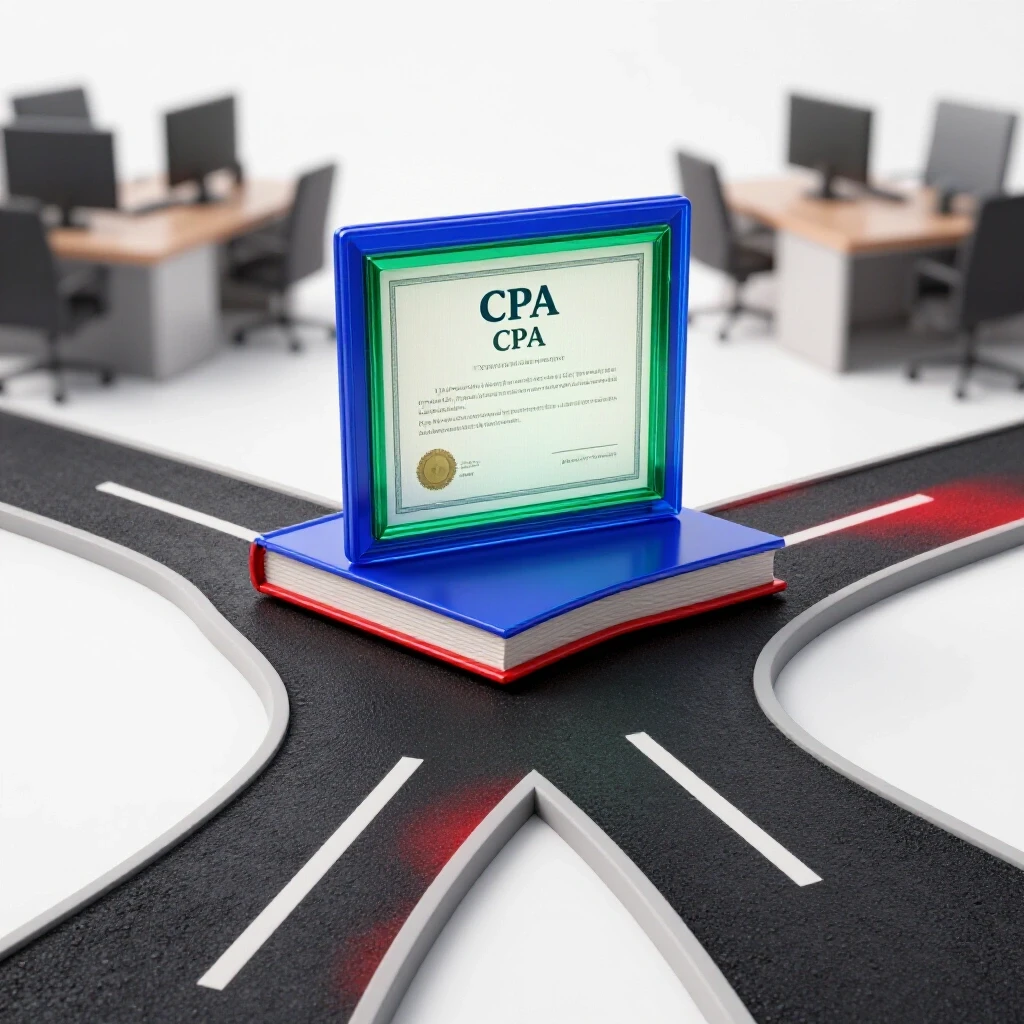
Many engineers reach a point where their technical skills no longer guarantee the next promotion. You might be a master of your craft, yet you find yourself passed over for leadership roles in favor of someone who understands “the business side.” This creates a difficult choice for mid-career professionals. Should you double down on technical certifications, or is it time to pursue a broad degree like an MBA? The pressure to choose the right path is high because your time and money are limited.
In my fifteen years as a professional credentials specialist, I have guided hundreds of engineers through this exact crossroad. One case that stands out is a mentee named Sarah. She was a brilliant structural engineer who felt trapped in a world of blueprints and calculations. She assumed an MBA would be her ticket out of engineering and into a high-powered executive suite. What she found, however, was not a way out, but a completely new way of seeing the work she already did.

The surprising outcome of Sarah’s journey was not a jump to a different industry. Instead, she became a far more effective leader within her own firm. She realized that the most valuable part of her degree was not the finance or accounting classes. It was the shift in her cognitive framework. She stopped seeing problems as technical puzzles and started seeing them as human and organizational systems. This shift is what truly accelerates a career.
Why do engineers struggle to choose between an MBA and technical certifications?
This conflict arises when technical experts reach a career plateau where further coding or design skills no longer yield promotions. Professionals must decide if a broad business degree or a narrow certification like the PMP offers the best path to senior leadership and higher influence.
Engineers are trained to find the single correct answer to a problem. This mindset is vital for building bridges or writing software, but it can be a hurdle in management. When you look at the best professional certifications for career advancement, you often see two paths. The first path is the “specialist” track. This includes credentials like the Professional Engineer (PE) license or specific software certifications. These prove you are an expert in your niche.
The second path is the “generalist” track, where the MBA sits. Many engineers fear that a generalist degree will make their hard-earned technical skills obsolete. I often tell my clients that an MBA does not replace your engineering background; it provides a new lens through which to view it. The struggle is balancing the immediate utility of a certification with the long-term strategic value of a degree.
- Technical Certifications: These offer a quick ROI and prove immediate competence.
- Broad Degrees (MBA): These require a larger time commitment but change how you think and lead.
- The Hybrid Approach: Many successful professionals combine a PMP certification with a later MBA to bridge the gap.
The Surprising Outcome: How an MBA reshaped an engineer’s mind
While most expect an MBA to teach finance or marketing, the most profound impact for engineers is often a shift in cognitive frameworks. This transition moves the professional from solving technical equations to understanding human systems, organizational psychology, and the nuances of strategic decision-making.
When I mentored Sarah, she was shocked by her “Organizational Behavior” course. She initially thought it was “soft science” with little value. However, she soon realized that her technical projects often failed not because of bad math, but because of poor communication and office politics. The MBA taught her that people are not variables in an equation. They have motivations, fears, and biases.
This realization changed her leadership style. She stopped trying to win arguments with data alone. Instead, she began to use empathy and persuasion to align her team with the company’s goals. This is the “surprising outcome” many engineers experience. They go in looking for hard business skills and come out with a mastery of soft skills. This cognitive shift allowed Sarah to move from a Senior Engineer to a Director of Operations within 18 months of graduation.
- From Logic to Psychology: Learning why people resist change in a corporate setting.
- From Output to Outcome: Focusing on the value a project creates rather than just the technical specs.
- From Silo to System: Understanding how the engineering department affects the sales and finance teams.
Comparing the MBA vs certifications for career advancement
Choosing the right path requires comparing the long-term impact of a degree against the immediate utility of a certification. This comparison looks at how each credential affects your ability to lead teams, manage budgets, and influence stakeholders across different departments in a company.
For many 25 to 50-year-olds, the “best” choice depends on their five-year goal. If you want to manage larger projects within your current scope, a PMP might be enough. If you want to sit at the table where the big decisions are made, an MBA is often the requirement. I have seen that the MBA vs certifications debate is less about which is “better” and more about which fits your current career stage.
| Feature | MBA Degree | PMP Certification | Specialized Technical Cert |
|---|---|---|---|
| Time to Complete | 2-3 Years | 3-6 Months | 1-4 Months |
| Primary Focus | Strategy & Leadership | Project Execution | Technical Mastery |
| Typical Salary Uplift | 20% to 40% | 10% to 15% | 5% to 10% |
| Career Longevity | Lifetime Value | Requires Renewal | High Obsolescence Risk |
| Networking Scope | High (Cross-industry) | Medium (Project focused) | Low (Niche focused) |
The PMP certification value for project-heavy roles
The Project Management Professional (PMP) is a targeted credential focusing on the mechanics of project execution. It is ideal for engineers who want to stay close to the technical work while improving their efficiency in managing timelines, resources, and risk.
The PMP certification value is immense for those who need to prove they can deliver results on time and under budget. According to the Project Management Institute (PMI), PMP holders often earn significantly more than their non-certified peers. For an engineer, this certification acts as a bridge. It shows you have moved beyond “doing” the work to “managing” the work. It is a highly efficient credential because it can be earned while working full-time with a relatively low cost compared to a degree.
Professional licensure pathways like the PE license
A Professional Engineer (PE) license is a legal credential that allows engineers to sign off on projects and work as independent consultants. It emphasizes public safety and technical mastery rather than the broad business leadership skills found in an MBA program.
For those in civil, mechanical, or electrical engineering, the PE license is often a non-negotiable professional licensure pathway. It provides a level of authority that no MBA can match. However, it is a technical ceiling. While it allows you to lead engineering projects, it does not necessarily prepare you to lead a corporation. I often advise my mentees to secure their PE first, then look toward an MBA or PMP to expand their influence.
Balancing work, study, and cost as a mid-career professional
Success in high-stakes education depends on managing a full-time job alongside rigorous coursework. This involves selecting hybrid or executive programs that offer flexibility without sacrificing the networking opportunities that are essential for long-term career growth and industry recognition.
The biggest pain point for my clients is the “triple threat” of work, family, and study. Mid-career professionals cannot simply quit their jobs to go back to school. This is why hybrid and online programs have become the gold standard. These programs allow you to apply what you learn on Monday directly to your job on Tuesday.
To balance these demands, I recommend the “Rule of Three.” Focus on three main priorities: your job, your family, and your credential. Everything else, like hobbies or extra social commitments, may need to take a backseat for a year or two. This focus ensures you don’t burn out before you reach the finish line.
- Use Micro-Learning: Study for 30 minutes during lunch or commutes rather than waiting for a four-hour block.
- Leverage Employer Support: Many companies will pay for certifications or offer tuition reimbursement for an MBA.
- Select Executive Tracks: These programs often meet on weekends, which minimizes the impact on your daily work schedule.
Step-by-step action plan for selecting your next credential
A structured approach helps you avoid “credential creep,” where you collect titles without a clear goal. This plan guides you through auditing your current skills, identifying your target role, and choosing the most efficient path to reach that position.
- Audit Your Current Role: List your daily tasks. Are they mostly technical or mostly managerial? If you spend more than 50% of your time in meetings or managing people, a business credential is likely next.
- Define the Destination: Look at the LinkedIn profiles of people two levels above you. What credentials do they hold? This gives you a roadmap of what your specific industry values.
- Calculate the ROI: Don’t just look at the cost. Look at the “payback period.” If a certification costs $1,000 but leads to a $5,000 raise, the payback is only a few months.
- Evaluate the Format: Decide if you need the networking of an in-person program or the convenience of an online one. For an MBA, the network is often as valuable as the curriculum.
- Secure Buy-In: Talk to your manager. Explain how this new credential will help the company. This can lead to financial support and a guaranteed promotion path.
Key metrics for mid-career career acceleration
Understanding the data behind these choices can help you make a more confident decision. Based on reports from the Graduate Management Admission Council (GMAC) and various licensing boards, we can see clear patterns in career progression.
- Average Salary Increase: Professionals often see a 25% to 35% increase in total compensation within three years of completing an MBA.
- Promotion Timelines: MBA graduates are three times more likely to move into a Director-level role within five years compared to those with only technical certifications.
- Program Completion Rates: For working adults, hybrid programs have a completion rate of over 85%, significantly higher than purely self-paced online courses.
- PMP Pass Rates: The first-time pass rate for the PMP exam is approximately 60%, highlighting the need for dedicated study time.
- ROI Payback Period: Most professionals recoup the cost of a mid-tier MBA or a high-level certification within 2.5 to 4 years through salary bumps and bonuses.
Frequently Asked Questions about MBA for Engineers
Is an MBA worth it for an engineer who wants to stay in a technical field? Yes, but the value is in leadership and strategy rather than technical skill. An MBA helps an engineer understand how their technical decisions impact the company’s bottom line. It allows them to lead departments and influence high-level project selection, making them indispensable to the organization.
How does a PMP compare to an MBA for someone in their 30s? The PMP is a tactical tool. It is perfect if you want to manage projects better right now. The MBA is a strategic tool. It is better if you want to move into general management or executive leadership over the next decade. Many professionals in their 30s get the PMP first because it is faster and cheaper, then pursue an MBA in their late 30s.
Can I get an MBA while working a 50-hour week in engineering? It is challenging but possible through Executive MBA (EMBA) or part-time hybrid programs. These are designed specifically for working professionals. They focus on high-impact learning and often have more flexible deadlines than traditional full-time programs.
What is the most important “soft skill” an engineer learns in business school? The most important skill is often “Stakeholder Management.” Engineers are great at solving problems for the user, but they often struggle to manage the expectations of bosses, investors, and other departments. Business school teaches you how to speak the language of each group.
Will an MBA make my technical skills go to waste? Not at all. In fact, an “Engineer with an MBA” is one of the most sought-after profiles in the tech and manufacturing sectors. You become the bridge between the people who build the product and the people who sell it. Your technical background gives you credibility that a pure business major lacks.
What are the best professional certifications for career advancement besides the PMP? Depending on your field, the Six Sigma Green or Black Belt is excellent for process improvement. For those in tech, the CISSP is vital for security leadership. If you are moving into finance-heavy roles, the CFA or even a CPA can be powerful, though they are much more specialized.
How do I choose between an online MBA and an in-person program? If your goal is purely knowledge and a credential on your resume, online is efficient. However, if you want to pivot industries or need a high-level professional network, in-person or hybrid programs are superior. The relationships you build in the classroom are often the source of your next three job offers.
Does a JD degree have a high ROI for engineers? A JD is a specific path into patent law or intellectual property. For a very small group of engineers, this has a massive ROI, often leading to high-paying roles in law firms or corporate legal departments. However, it is a much larger commitment than an MBA and should only be pursued if you are certain you want to practice law.
What is the average time-to-completion for a part-time MBA? Most part-time programs take between 24 and 36 months. Some accelerated programs can be finished in 18 months, but this requires a very heavy workload that may be difficult for those with demanding engineering jobs and families.
How do I handle the cost of these credentials? Always start by checking your company’s HR policy. Many firms offer $5,000 to $10,000 per year in tuition assistance. Additionally, focus on the ROI. A $40,000 degree that results in a $20,000 annual raise pays for itself in just two years. Treat it as an investment in your “human capital” rather than an expense.
What is the “surprising outcome” most common among your engineering mentees? The most common surprise is the realization that they actually enjoy the “people” side of the business. Many engineers start an MBA thinking they will hate the soft skills, but they find that leading a team to a successful launch is just as satisfying as solving a complex math problem.
Is there a risk of being “over-qualified” with too many credentials? There is a risk of “credential stacking” without a clear career narrative. If you have five different certifications in unrelated fields, it looks like you are lost. However, a logical progression—like an engineering degree, a PE license, and an MBA—tells a clear story of a professional moving toward senior leadership.
(This article was written by one of our staff writers, Richard Thornton. Visit our Meet the Team page to learn more about the author and their expertise.)