Maritime Archaeology Online (Dive Into a Career!)
Dive Into a Career in 2025
Maritime archaeology is like being an underwater detective, uncovering history one shipwreck or submerged city at a time.
And guess what?
It’s becoming way more accessible thanks to online education.
I’m here to guide you through diving into a maritime archaeology career in 2025, exploring how online platforms are changing the game and what you need to succeed.
Ready to explore?
Introduction:
Room-Specific Needs
Maritime archaeology isn’t just about finding cool stuff underwater.
It’s about piecing together the stories of human history that are hidden beneath the surface.
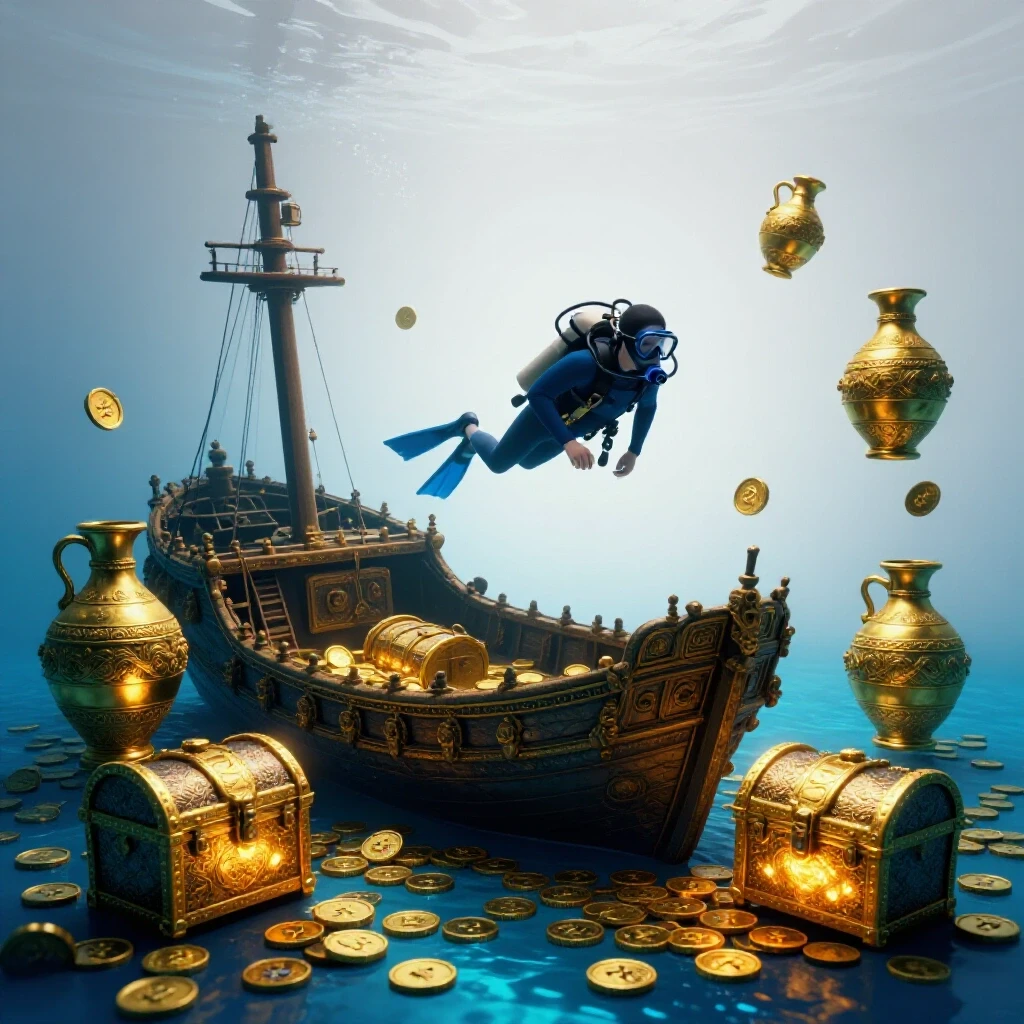
Think about it: shipwrecks tell tales of trade, migration, and even battles.
Submerged cities reveal how civilizations adapted to changing environments.
The rise of technology and online learning has made this fascinating field more accessible than ever.
No longer do you need to be near a university with a specialized program.
Now, you can learn from experts around the world from your own home.
But let’s be real, pursuing a career in maritime archaeology, especially online, comes with specific needs.
You’ll need specialized training in things like underwater excavation techniques, access to research resources, and a supportive community to bounce ideas off.
That’s where this guide comes in.
I’ll walk you through everything you need to know, from understanding the field to building your skills and finding your dream job.
Section 1:
Understanding Maritime Archaeology
So, what exactly is maritime archaeology?
Simply put, it’s the study of human history through the excavation and analysis of underwater sites.
This includes everything from shipwrecks and submerged settlements to harbor installations and even aircraft crash sites.
Defining the Scope
Unlike traditional archaeology, maritime archaeology deals with the unique challenges of working underwater.
Think about it: currents, limited visibility, and the delicate nature of submerged artifacts all require specialized skills and techniques.
The scope is vast, covering millennia of human interaction with the sea.
Historical Context
Maritime archaeology has come a long way.
In the early days, it was often driven by treasure hunters.
But over time, it evolved into a rigorous scientific discipline.
Key discoveries, like the raising of the Vasa in Sweden or the exploration of the Titanic, captured the public’s imagination and helped to solidify the field’s importance.
An Interdisciplinary Field
What I find so cool is that maritime archaeology isn’t just about history. It’s deeply interdisciplinary.
You’ll need to understand aspects of history, anthropology, geology, oceanography, and even marine biology.
It’s a true melting pot of knowledge!
For instance, understanding ocean currents can help you predict where shipwrecks might be located.
Geological surveys can reveal submerged landscapes where ancient settlements once thrived.
Section 2:
The Evolution of Maritime Archaeology Education
Okay, let’s talk about how you can actually learn about this stuff.
Maritime archaeology education has transformed dramatically over the years.
From Classrooms to Computers
Traditionally, maritime archaeology was taught in universities with specialized programs.
These programs often involved field schools where students could gain hands-on experience with underwater excavation.
But now, online courses are opening up new possibilities.
The Benefits of Online Learning
Why choose online learning?
Well, for starters, it’s incredibly flexible.
You can study at your own pace, fitting your coursework around your existing commitments.
It’s also more accessible. You don’t need to relocate to a university town or spend a fortune on tuition.
Plus, online courses often feature experts from around the world, giving you a diverse range of perspectives.
According to a 2023 study by Statista, the online learning market is projected to reach \$325 billion by 2025, showing just how popular and accepted online education has become.
Online Programs in 2025
In 2025, you’ll find a variety of online programs and certifications in maritime archaeology.
These might include:
-
Introductory Courses: Covering the basics of maritime archaeology, research methods, and underwater survey techniques.
-
Specialized Certifications: Focusing on specific skills like underwater photography, 3D modeling, or GIS mapping.
-
Advanced Degrees: Some universities now offer online master’s degrees in maritime archaeology or related fields.
When choosing a program, look at the curriculum, duration, cost, and the instructors’ qualifications.
Read reviews and talk to alumni to get a sense of the program’s reputation.
Section 3:
Essential Skills and Knowledge for Aspiring Maritime Archaeologists
So, what skills do you really need to succeed in this field?
It’s not just about loving the ocean!
Key Skills
Here are some essential skills you’ll need to develop:
-
Scuba Diving: This is a must! You’ll need to be a certified scuba diver with experience in underwater environments.
-
Research Methodology: You’ll need to know how to conduct research, analyze data, and write reports.
-
Data Analysis: Being able to interpret data from surveys, maps, and artifacts is crucial.
The Importance of Language Skills
Don’t underestimate the power of language skills.
If you’re interested in working in a specific region with a rich maritime history, learning the local language can be a huge asset.
Imagine excavating a shipwreck off the coast of Spain.
Knowing Spanish would be incredibly helpful for communicating with local authorities, researchers, and community members.
The Role of Technology
Technology is transforming maritime archaeology.
Here are some key technologies you’ll want to familiarize yourself with:
-
GIS (Geographic Information Systems): Used for mapping and spatial analysis.
-
Remote Sensing: Techniques like sonar and magnetometry are used to locate underwater sites.
-
3D Modeling: Creating 3D models of shipwrecks and artifacts for documentation and analysis.
These technologies allow us to explore and document underwater sites in ways that were once unimaginable.
Section 4:
Career Opportunities in Maritime Archaeology
Okay, let’s get to the good stuff: what kind of jobs can you get with a maritime archaeology background?
Career Paths
Here are some potential career paths:
-
Academic Positions: Teaching and research at universities.
-
Fieldwork Opportunities: Working on archaeological excavations around the world.
-
Museums and Cultural Heritage Organizations: Curating exhibits, managing collections, and conducting research.
-
Government Agencies: Working for organizations that protect underwater cultural heritage.
Emerging Trends
The field of maritime archaeology is constantly evolving.
Here are some emerging trends to watch:
-
Underwater Preservation: As climate change threatens underwater sites, there’s a growing need for experts in preservation techniques.
-
Climate Change Discussions: Maritime archaeologists are playing an increasingly important role in understanding how past civilizations adapted to changing environments.
Success Stories
There are many successful maritime archaeologists who have made significant contributions to the field.
For example, Dr.
Robert Ballard, who discovered the Titanic, has dedicated his career to exploring the deep sea and sharing his findings with the world.
Dr. Dolores Elkin, an Argentinian maritime archaeologist, has done pioneering work on submerged indigenous sites in South America.
These individuals serve as inspiring examples of what’s possible with passion, dedication, and the right skills.
Section 5:
Building a Professional Network and Gaining Experience
Networking is key to landing your dream job in maritime archaeology.
Networking Tips
Here are some ways to build your professional network:
-
Professional Organizations: Join organizations like the Society for Historical Archaeology or the Nautical Archaeology Society.
-
Online Forums: Participate in online forums and discussion groups related to maritime archaeology.
-
Conferences and Workshops: Attend conferences and workshops to meet other professionals in the field.
Gaining Hands-On Experience
Internships, volunteer opportunities, and field schools are essential for gaining hands-on experience.
Look for opportunities to work on archaeological excavations, museum projects, or research initiatives.
Even if you’re studying online, try to find ways to get involved in real-world projects.
Social Media
Social media can be a powerful tool for connecting with professionals and staying updated on industry developments.
Follow maritime archaeology organizations, researchers, and museums on platforms like Twitter, Facebook, and Instagram.
Engage with their content and participate in online discussions.
Section 6:
Challenges and Considerations in Maritime Archaeology
Let’s be real, maritime archaeology isn’t always smooth sailing.
There are challenges you’ll need to be aware of.
Common Challenges
Here are some common challenges:
-
Funding: Securing funding for research projects can be difficult.
-
Access to Sites: Gaining permission to excavate underwater sites can be a complex process.
-
Environmental Concerns: Protecting fragile underwater environments is a top priority.
Ethical Considerations
Ethical considerations are paramount in maritime archaeology.
You’ll need to be mindful of:
-
Protecting Cultural Heritage: Ensuring that underwater sites are properly preserved and protected from looting or damage.
-
Collaboration with Local Communities: Working closely with local communities to ensure that their perspectives are taken into account.
The Impact of Technology
Technology can be a double-edged sword.
While it offers new tools for exploration and analysis, it also raises ethical dilemmas.
For example, the use of drones and ROVs (remotely operated vehicles) can allow us to explore sites without disturbing them, but it also raises questions about privacy and access.
Section 7:
The Future of Maritime Archaeology
What does the future hold for maritime archaeology?
I think it’s going to be an exciting ride!
Advancements in Technology
I expect to see even more advancements in technology that will transform the field.
Virtual reality (VR) and augmented reality (AR) could revolutionize how we study and experience underwater sites.
Imagine being able to explore a shipwreck from the comfort of your own home, or using AR to overlay historical information onto a real-world underwater site.
Interdisciplinary Collaboration
Interdisciplinary collaboration will be more important than ever.
Maritime archaeologists will need to work closely with experts in other fields, such as climate science, oceanography, and engineering, to address global challenges.
For example, understanding how climate change is impacting underwater sites will require collaboration with climate scientists and engineers who can develop preservation strategies.
Conclusion:
The Call to Adventure
So, there you have it!
A career in maritime archaeology is an exciting and rewarding adventure.
It’s a chance to explore the unknown, uncover the secrets of the past, and contribute to our understanding of human history.
With the rise of online education, it’s more accessible than ever to pursue your passion for maritime archaeology.
I encourage you to explore this unique field and consider how you can contribute to preserving our maritime heritage.
Who knows?
Maybe you’ll be the one to discover the next big shipwreck or submerged city!