Bootcamp vs Degree: Choosing the Best Path for Career Growth (Guide)
Discussing room-specific needs for career advancement often reveals a common tension between speed and stability. Many of us, including myself, have looked at the rising cost of traditional education and sought a faster exit from the “entry-level” struggle. We turn to bootcamps as a quick fix, hoping a few months of intense study will replace four years of college. While these short-term programs provide immediate tools, they often leave gaps in long-term career security. This guide explores how transitioning from a bootcamp to a formal degree can serve as a powerful “second try” to build a sustainable, high-growth career.
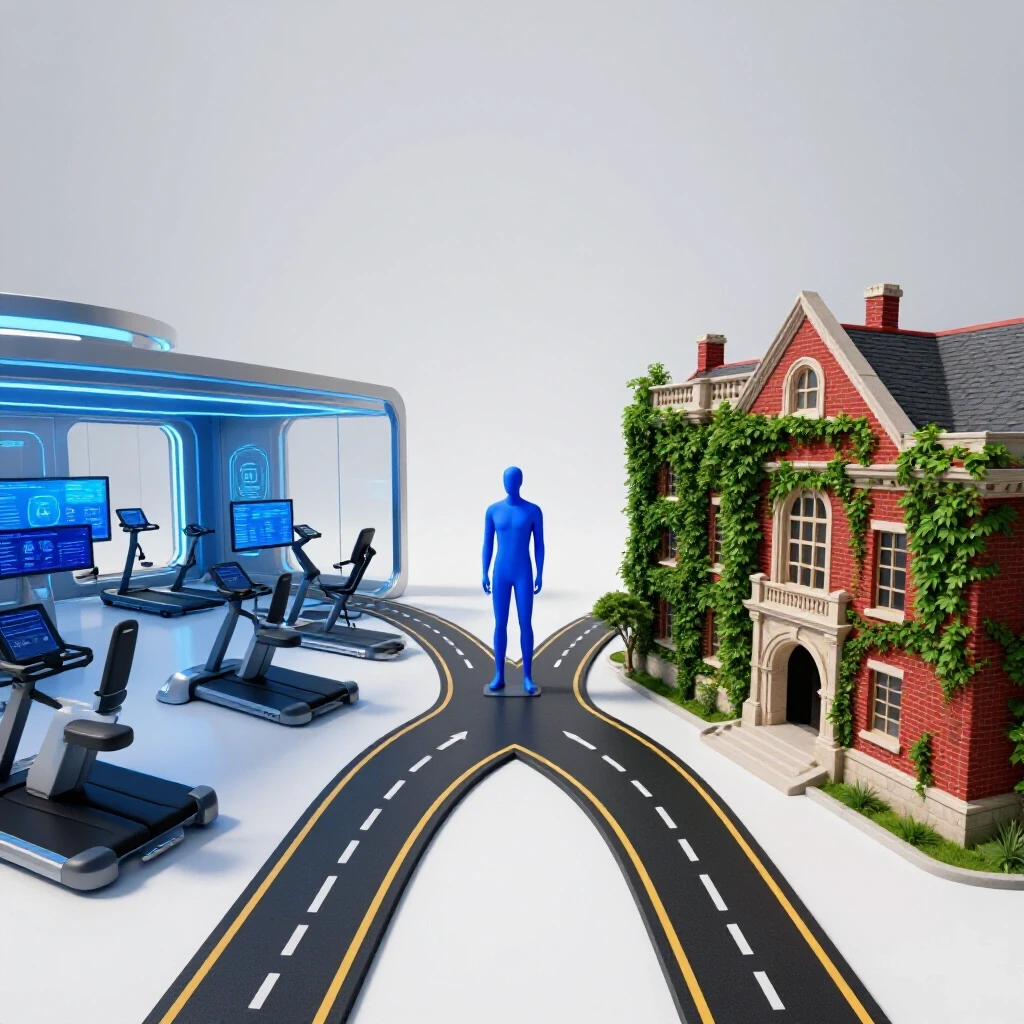
Why Consider Alternative Pathways to a Degree?
Alternative pathways to a degree are non-traditional routes that combine short-term technical training with long-term academic credentials. These paths allow learners to gain job-ready skills quickly through bootcamps or certificates while eventually pursuing a degree to solidify their theoretical knowledge. This hybrid approach balances immediate employment needs with future career stability.
In my twelve years of researching these models, I have seen a recurring pattern. A career changer, perhaps aged 30, feels stuck in a low-wage job. They see an advertisement for a coding or design bootcamp and sign up. For many, this is a life-changing move. It provides the “how” of a job. You learn to write the code or build the layout. However, after a year or two in the industry, many of these same individuals find themselves hitting a “knowledge ceiling.”
I experienced this personally. My initial transition into the technical world was through a fast-paced intensive program. I was productive within weeks, but I lacked the deep understanding of data structures and systems architecture that my degree-holding peers possessed. When the market shifted, I realized that my skills were highly specific but lacked the broad foundation needed to adapt. This is why exploring alternative pathways to a degree is becoming a preferred strategy for the modern worker. It is not about choosing one over the other; it is about using the bootcamp to get your foot in the door and the degree to stay in the room.
Comparing the Bootcamp Experience and Degree Programs
Comparing bootcamps and degree programs involves looking at the fundamental differences in their goals, costs, and depth of instruction. Bootcamps focus on immediate, practical skills for specific job roles, while degrees provide a broad, theoretical foundation and long-term institutional recognition. Understanding these differences helps learners choose the right sequence for their goals.
When we look at the data, the differences are stark. A typical bootcamp lasts between 12 and 24 weeks. The goal is 100% focused on job placement. In contrast, a degree program takes two to four years and covers everything from ethics to advanced theory.
- Time Investment: Bootcamps are sprints; degrees are marathons.
- Curriculum Focus: Bootcamps teach “how” to use tools; degrees teach “why” those tools work.
- Cost Structure: Bootcamps often require upfront payment or income-share agreements; degrees offer access to federal loans and grants.
- Networking: Bootcamp networks are often limited to recent alumni; degree networks include decades of graduates and established institutional partnerships.
| Feature | Technical Bootcamp | Formal Degree Program |
|---|---|---|
| Average Duration | 3 – 6 Months | 2 – 4 Years |
| Average Cost | $10,000 – $15,000 | $30,000 – $60,000+ |
| Primary Outcome | Immediate Job Skills | Theoretical Foundation |
| Credential Type | Certificate of Completion | Accredited Diploma |
| Employer Perception | Skill-specific / High Risk | Broadly Recognized / Stable |
Addressing the Gaps in the Bootcamp Model
The gaps in the bootcamp model refer to the missing pieces of education that short-term programs often overlook, such as foundational theory and systemic industry recognition. While bootcamps are excellent for teaching current tools, they often struggle to provide the deep, transferable knowledge required to navigate a shifting job market or complex technical challenges.
Many of the mentees I work with come to me after their first year on the job. They are successful, but they feel like they are “faking it.” This is because bootcamps often skip the “boring” stuff. You might learn to build a website, but you might not learn how memory management works or how to optimize a database for millions of users.
Interestingly, data from employer surveys suggests that while hiring managers value the “hustle” of bootcamp grads, they often prefer degree holders for senior-level architectural roles. This is due to three main factors: * Lack of Foundational Theory: Without understanding the underlying science, it is harder to solve unique, non-standard problems. * Market Saturation: As more people complete short-term programs, the competition for entry-level roles increases, making a degree a key differentiator. * Systemic Hiring Biases: Many large corporations still use automated filters that prioritize candidates with four-year degrees, regardless of their actual skill level.
The Strategic Shift: Using a Degree as a Second Try
Using a degree as a second try is a strategy where a learner uses their initial bootcamp experience to enter the workforce and then pursues a degree to secure long-term stability. This “second try” addresses the limitations of the bootcamp by adding a recognized, accredited credential to a portfolio of practical, real-world skills.
I often advise working adults to view their education as a series of building blocks. If you are 35 and changing careers, you might not have four years to wait before earning a paycheck. In this case, the bootcamp is your “first try.” It gets you the salary increase you need right now. Once you are stable, the degree becomes your “second try.”
This approach is becoming more common as universities begin to recognize non-traditional credits. Some programs allow you to test out of introductory classes based on your bootcamp experience. This makes the degree faster and cheaper than it would have been otherwise. By the time you graduate, you have three years of work experience and a formal credential. This combination is almost unbeatable in the eyes of a hiring manager.
Financial and Time Commitments of Each Pathway
Financial and time commitments are the measurable investments of money and hours required to complete an educational program. For non-traditional learners, these metrics are critical for determining the return on investment (ROI) and the feasibility of balancing education with existing work and family responsibilities.
When we talk about the best bootcamps for career changers, we must look at the total cost of ownership. A bootcamp might cost $12,000, but if you have to quit your job for three months, the “real” cost includes your lost wages.
- Bootcamp ROI: High initial return due to low time commitment, but may plateau after 2-3 years.
- Degree ROI: Lower initial return due to high cost and time, but provides a higher salary ceiling over 10-20 years.
- Time-to-Employment: Bootcamp grads often find work in 3-6 months; degree students may wait years.
For someone balancing a family, the bootcamp offers a faster path to a better life. However, the degree offers the insurance policy against future economic downturns. According to the Department of Labor, individuals with a bachelor’s degree still earn significantly more over their lifetime and face lower unemployment rates than those with only some college or a non-degree certificate.
Building a career path using this method involves several clear steps: * Step 1: Start with Micro-Credentials. Take a low-cost online course to see if you actually like the field. * Step 2: Complete a Technical Bootcamp. Gain the intense, practical skills needed for an entry-level role. * Step 3: Secure Employment. Start working in the field to gain experience and earn a salary. * Step 4: Enroll in a Degree Program. Use your income to pay for a part-time, online degree that fills in your theoretical gaps.
This stacking method is particularly effective for entrepreneurs and career changers. It reduces the risk of spending thousands of dollars on a degree only to find out you hate the actual work. It also allows you to stay current with technology while the degree provides the timeless principles that don’t change every six months.
Overcoming Stigma and Navigating Employer Perception
Overcoming stigma involves addressing the skepticism some employers have toward non-degree pathways. Navigating this perception requires a strategy of showcasing both practical skills and a commitment to formal learning. It is about proving that your non-traditional background is an asset rather than a shortcut.
While many tech companies have removed degree requirements from their job descriptions, the “unspoken” preference often remains. In my experience mentoring career changers, I have found that the most successful candidates are those who can speak both languages. They can talk about the “sprint” they did in their bootcamp and the “depth” they are gaining in their degree.
Employers are increasingly moving toward skills-based hiring. However, they still look for signs of “grit” and “long-term commitment.” A degree program, even if completed online while working, signals to an employer that you are willing to do the hard work of learning the foundations. It removes the “stigma” of being a “short-cut learner” and positions you as a well-rounded professional.
Tools and Resources for the Non-Traditional Journey
Tools and resources for non-traditional learners include the platforms and organizations that provide the education, tracking, and networking needed to succeed outside of a standard classroom. These resources range from online course providers to government-backed apprenticeship programs that offer a more structured route to employment.
If you are looking for high-quality alternative education routes, you need a toolkit that covers every stage of the journey. Here are the most effective resources currently available:
- Online Micro-Credential Platforms: Use these for low-risk exploration of new skills.
- Apprenticeship.gov: A massive database of “earn-while-you-learn” programs that often bridge the gap between training and a degree.
- Skills-Based Job Boards: Platforms that prioritize your portfolio and test results over your pedigree.
- Portfolio Hosting Sites: Places to show off the actual work you did during your bootcamp.
- Online Degree Providers: Universities that specialize in “degree completion” for working adults with previous technical credits.
Using these tools in combination allows you to build a custom education. You are no longer limited by what a single school offers. You can take the best coding class from one provider, the best business class from another, and wrap them all into an accredited degree.
Action Plan for the Second Try
An action plan for the second try is a step-by-step strategy for moving from a skills-only background to a fully credentialed professional. It focuses on identifying specific knowledge gaps, finding the right degree program, and managing the logistics of working while studying.
If you are currently a bootcamp graduate feeling the “ceiling,” here is how you move forward:
- Audit Your Knowledge: Look at a standard university curriculum for your field. What subjects did your bootcamp skip? Usually, it is math, theory, and ethics.
- Research Transfer Credits: Find “transfer-friendly” colleges. Many will give you credit for certifications or work experience.
- Choose a Flexible Format: Look for “asynchronous” online programs. These allow you to watch lectures and do work on your own schedule.
- Leverage Employer Benefits: Many companies offer tuition reimbursement. Let your job pay for your “second try.”
- Stay Focused on the Goal: Remember that the degree is about long-term stability. You already have the skills; now you are getting the credentials to match.
This path is not the easiest, but it is the most resilient. By combining the speed of a bootcamp with the depth of a degree, you create a career that is both fast-moving and firmly grounded.
Frequently Asked Questions
Are alternative pathways to a degree actually respected by major employers? Yes, but with a caveat. Most major employers respect the combination of a bootcamp and a degree more than either one alone. The bootcamp shows you have the immediate skills to be productive. The degree shows you have the foundational knowledge and the discipline to complete a long-term goal. In a competitive market, having both makes you a much lower-risk hire than someone who only has a 12-week certificate.
Is a Google Career Certificate worth it if I want to eventually get a degree? These certificates are excellent starting points. They are designed to be “job-ready,” meaning they teach you exactly what you need for an entry-level role. Many universities now have agreements where they will grant you college credit for completing these certificates. This makes them a very cost-effective way to start your degree while also gaining a credential that can help you get a job immediately.
How do I choose between a bootcamp and a degree if I am just starting out? If you need a higher salary immediately to survive, a bootcamp is often the better first step. It provides a faster “return on time.” However, if you have the resources and time to invest, a degree is the safer long-term bet. For most working adults, the “stacking” method is best: do a short program to get a job, then use that job to fund a part-time degree.
What is the average cost savings of a bootcamp-to-degree path? By starting with a bootcamp and transferring credits or testing out of classes, you can often save 25% to 40% on the total cost of a four-year degree. Additionally, because you are working in the field while finishing your degree, your “opportunity cost” (lost wages) is much lower. You are earning a professional salary while you learn, rather than sitting in a classroom for four years without an income.
Do bootcamps provide enough theory for senior-level roles? Generally, no. Most bootcamps are designed to get you into a junior-level role. They focus on the tools and syntax used in the industry today. Senior-level roles require an understanding of how systems scale, how security works at a deep level, and how to manage complex technical debt. These are the areas where a formal degree program excels and where most bootcamp-only grads struggle.
How long does it take to see a salary increase after a bootcamp? Most successful bootcamp graduates see a salary increase within 6 to 9 months of completing their program. The average salary bump for a career changer moving from a non-technical role into a technical one can range from $15,000 to $30,000. However, to maintain that growth and reach the six-figure mark, the additional depth provided by a degree or advanced certifications is often necessary.
Can I get a master’s degree if I only have a bootcamp certificate? No, you generally need a bachelor’s degree to enter a master’s program. However, some innovative “bridge” programs allow people with significant work experience and a technical certificate to take a few undergraduate courses and then move directly into a master’s program. This is a more advanced “stacking” strategy that can save a significant amount of time and money.
Is the “stigma” against bootcamps getting worse? The stigma is not necessarily getting worse, but the market is getting more crowded. In 2015, simply having a bootcamp certificate was enough to stand out. Today, there are tens of thousands of bootcamp grads. To stand out now, you need to show that you haven’t stopped learning. Moving from a bootcamp into a degree program is the best way to prove to an employer that you are serious about your professional development.
What are the best bootcamps for career changers who want to go to college later? The best programs for this path are those that have “articulation agreements” with universities. This means the college has officially reviewed the bootcamp’s curriculum and agreed to grant college credit for it. Before you sign up for any bootcamp, ask their admissions team if they have any formal partnerships with accredited universities. This can save you months of redundant work later on.
How do I balance a full-time job and a degree program? The key is to look for “competency-based” or “asynchronous” programs. These formats allow you to move through the material as fast as you can prove you know it. If you already learned a topic in your bootcamp, you can take the test and move on immediately. This allows working adults to finish a “four-year” degree in much less time while still working 40 hours a week.
(This article was written by one of our staff writers, Andrew Kensington. Visit our Meet the Team page to learn more about the author and their expertise.)