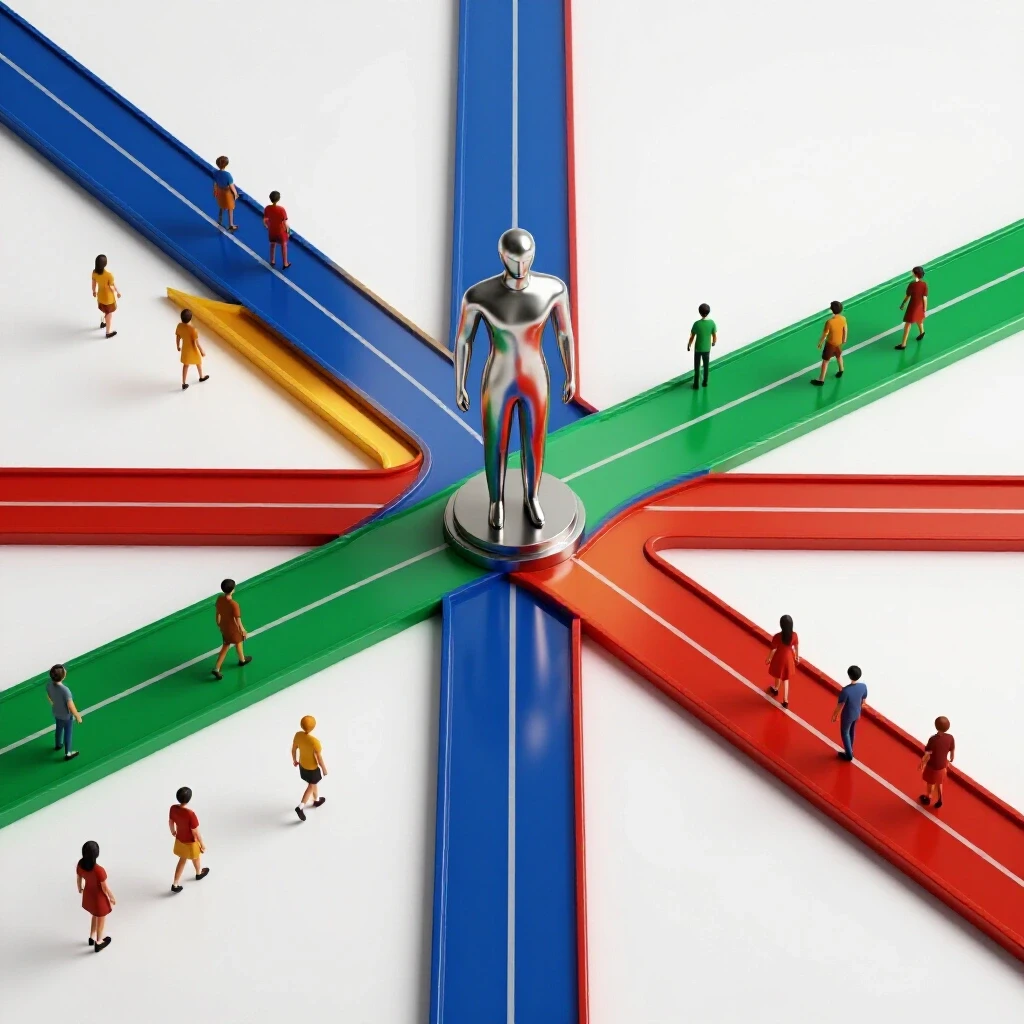
¿Equivale el Bachelor Degree? (Global Career Impact!)
The year is 2025. Think about it.
The self-driving cars are almost here, space tourism is becoming a thing, and the way we work and learn is changing faster than ever before.
Higher education and career paths are in constant flux.
For generations, a Bachelor’s Degree has been seen as the golden ticket – the key to unlocking a stable career and a comfortable life.
It was the expected path for many, a rite of passage.
But does it still hold the same weight?
That’s the question I want to explore with you: “Does a Bachelor’s Degree still hold the same value in a globalized workforce?”

I’m going to dive deep into how the very definition of a Bachelor’s is evolving, what’s happening in the global labor market, and how employers are viewing degrees these days.
We’ll also look at the mind-blowing impact technology is having on education and career development, and why lifelong learning is no longer a “nice-to-have” but a “must-have.”
Ready to unpack this? Let’s get started.
Section 1: The Evolving Definition of a
Bachelor’s Degree
Historically, a Bachelor’s Degree was the standard.
It was the benchmark that employers used to gauge a candidate’s knowledge, skills, and potential.
It signaled a commitment to learning and a certain level of intellectual capability.
It was a clear signal.
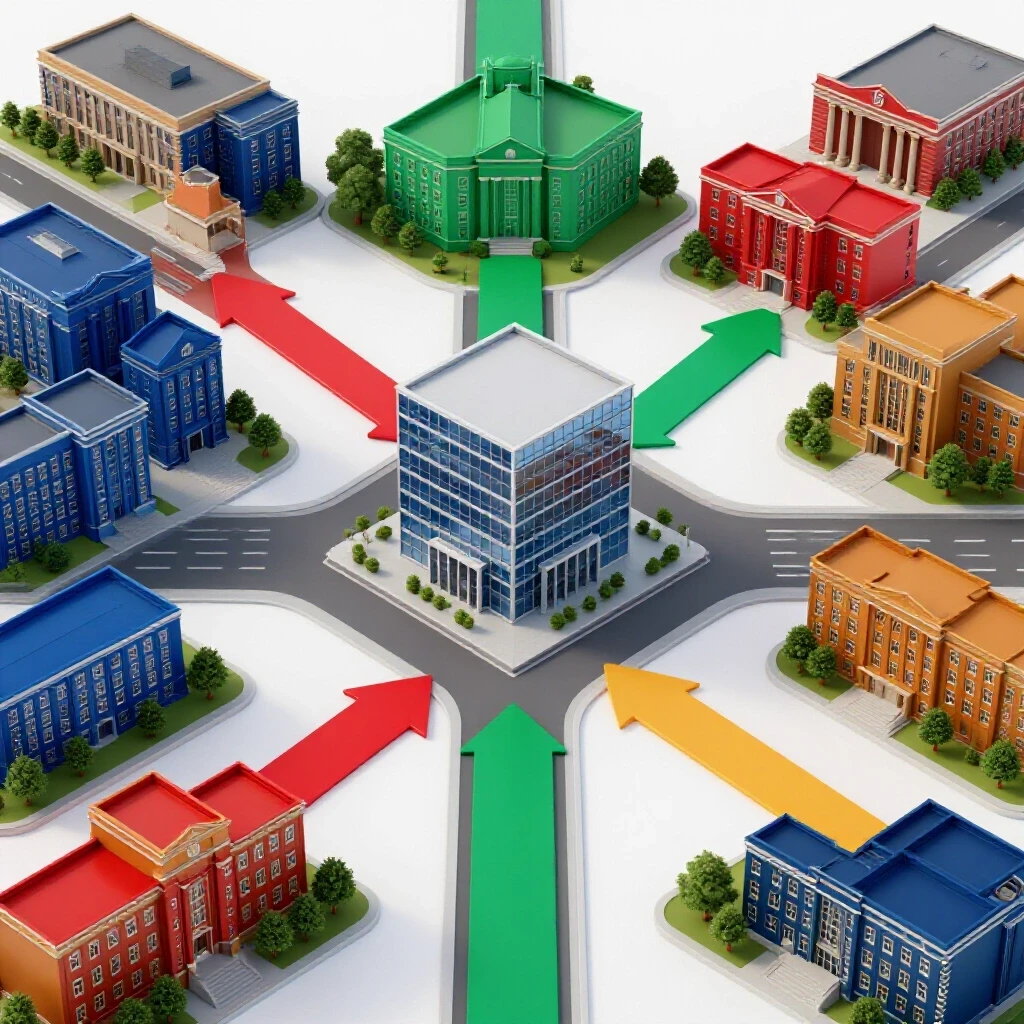
Think about it, though. What does a four-year degree really mean in today’s world?
The rise of online learning has democratized education, making it more accessible than ever before.
Platforms like Coursera, edX, and Udacity offer courses and even full degrees from top universities, often at a fraction of the cost of traditional on-campus programs.
Vocational training programs are also gaining traction.
These programs focus on providing students with the specific skills and knowledge they need to succeed in a particular trade or industry.
They offer a more direct path to employment, often bypassing the need for a four-year degree.
And let’s not forget about alternative educational pathways like coding bootcamps, design schools, and specialized workshops.
These programs provide intensive, hands-on training in high-demand skills, allowing graduates to quickly enter the workforce.
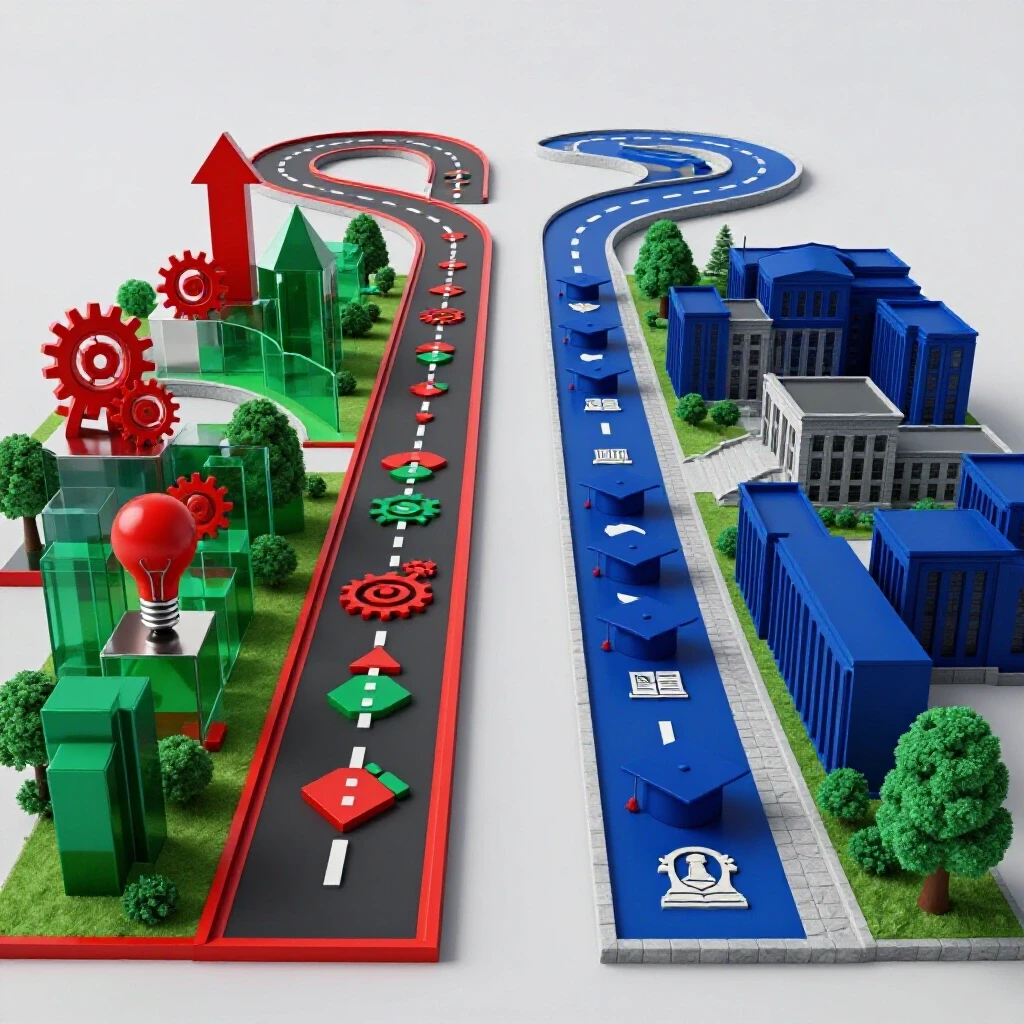
These alternatives are redefining what it means to be “educated” and “qualified.” They’re challenging the traditional notion that a Bachelor’s Degree is the only path to success.
So, what do the numbers say?
According to the National Center for Education Statistics (NCES), college enrollment has been declining in recent years.
(https://nces.ed.gov/fastfacts/stat ist ics/sas.asp?st=US&yr=2022)
While this doesn’t necessarily mean that people are abandoning education altogether, it does suggest that they are exploring other options.
They’re questioning the ROI of a traditional four-year degree and seeking out more efficient and affordable ways to acquire the skills they need.
Globally, we’re seeing similar trends.
In some countries, like Germany and Switzerland, vocational training is highly valued and seen as a viable alternative to university education.
These countries have strong apprenticeship programs that provide students with real-world experience and a direct pathway to employment.
The perception of a Bachelor’s Degree is changing.
It’s no longer seen as the guaranteed ticket to success.
It’s becoming just one of many options available to individuals seeking to advance their careers.
Section 2: Global Labor Market Trends
The global labor market is a dynamic and ever-changing landscape.
It’s influenced by a variety of factors, including technological advancements, economic shifts, and demographic changes.
By 2025, several key industries will be undergoing significant transformations.
Think about it: Artificial intelligence (AI) and machine learning (ML) are already disrupting industries like healthcare, finance, and manufacturing.
Automation is streamlining processes and increasing efficiency across a wide range of sectors.
The green economy is also booming, driven by growing concerns about climate change and the need for sustainable solutions.
This is creating new opportunities in areas like renewable energy, sustainable agriculture, and green building.
And let’s not forget about the digital economy, which is transforming the way we work, communicate, and consume goods and services.
This is creating a huge demand for professionals with skills in areas like software development, data analytics, and digital marketing.
So, what’s the impact on the skills gap?
The skills gap refers to the mismatch between the skills that employers need and the skills that job seekers possess.
This is a growing problem in many industries, and it’s being exacerbated by the rapid pace of technological change.
According to a recent report by McKinsey, more than 87% of companies worldwide are facing skills gaps, or expect to face them within the next few years.
(Source: McKinsey Global Survey, 2020)
In many cases, employers are finding that candidates with traditional degrees lack the specific skills and competencies they need to succeed in today’s workforce.
They’re looking for candidates who have practical experience, problem-solving skills, and the ability to adapt to new technologies.
This is leading to a shift in hiring practices, with employers increasingly focusing on skills and competencies over formal degrees.
They’re using assessments, simulations, and other tools to evaluate candidates’ abilities and potential.
Let’s look at some case studies:
Germany: As I said before, Germany has a strong vocational training system that provides students with the skills they need to succeed in manufacturing and engineering.
Many German companies prefer to hire candidates with vocational training over those with traditional degrees.Singapore: Singapore is investing heavily in skills-based training programs to prepare its workforce for the digital economy.
The government is working with employers to identify the skills that are in demand and develop training programs that meet those needs.United States: In the US, there’s a growing demand for skilled tradespeople, such as electricians, plumbers, and carpenters.
Many of these jobs don’t require a four-year degree, and they offer competitive salaries and benefits.
These case studies illustrate the shifting employment paradigms that are taking place around the world.
They highlight the growing value of practical experience and skills-based training.
Section 3: Employer Perspectives on
Educational Credentials
How are employers really feeling about Bachelor’s Degrees these days? It’s a crucial question, right?
I’ve been talking to HR professionals and recruiters, and what I’m hearing is that employers are definitely adjusting their hiring criteria.
They’re not necessarily throwing out the Bachelor’s Degree altogether, but they’re definitely looking beyond it.
They’re placing a greater emphasis on skills, experience, and demonstrated abilities.
They want to see candidates who can hit the ground running and contribute to the company’s bottom line from day one.
Let’s look at some survey data:
A recent survey by the Society for Human Resource Management (SHRM) found that more than 68% of employers are placing a greater emphasis on skills and competencies when hiring.
(Source: SHRM, 2023)
The survey also found that employers are increasingly using skills-based assessments to evaluate candidates’ abilities.
These assessments can include things like coding challenges, writing samples, and problem-solving exercises.
I’ve also spoken with HR managers who say that they’re more likely to hire a candidate with a strong portfolio of work or a proven track record of success, even if they don’t have a traditional degree.
The rise of skills-based hiring is a big deal.
It means that candidates without degrees have a greater opportunity to compete for jobs.
It also means that candidates with degrees need to demonstrate that they have the skills and experience that employers are looking for.
Some companies, like Google and Apple, have even announced that they no longer require applicants to have a college degree for certain roles.
They’re focusing on skills and experience instead.
Of course, a Bachelor’s Degree can still be valuable.
It can provide a broad foundation of knowledge and skills that can be useful in a variety of roles.
It can also be a signal to employers that a candidate is intelligent, motivated, and capable of learning.
However, it’s no longer the be-all and end-all.
It’s just one factor among many that employers consider when making hiring decisions.
Section 4: The Role of Technology in Education
Technology is not just changing the way we work; it’s also transforming the way we learn.
The impact of technology on education is profound, and it’s only going to become more so in the years to come.
Online degrees, MOOCs (Massive Open Online Courses), and micro-credentials are becoming increasingly popular.
These platforms offer flexible, affordable, and accessible learning opportunities for people of all ages and backgrounds.
Online degrees allow students to earn a Bachelor’s or Master’s Degree from the comfort of their own homes.
MOOCs provide access to courses from top universities around the world, often for free.
Micro-credentials are short, focused courses that provide students with specific skills and knowledge in a particular area.
These technologies are disrupting the traditional education system and creating new opportunities for lifelong learning.
They’re also making it easier for people to acquire the skills they need to succeed in the workforce.
But that’s not all.
Artificial intelligence (AI) and automation are also having a major impact on education.
AI-powered tutoring systems can provide personalized instruction and feedback to students.
Automation can streamline administrative tasks and free up teachers to focus on teaching.
AI is also influencing the demand for specific skills and knowledge.
As AI and automation become more prevalent in the workplace, there will be a growing demand for professionals with skills in areas like AI development, data science, and robotics.
What could the future of education look like?
I envision a future where education is more personalized, flexible, and accessible than ever before.
Students will be able to learn at their own pace and focus on the skills and knowledge that are most relevant to their career goals.
Technology will play a central role in this future, providing students with access to a wide range of learning resources and tools.
AI-powered tutors will provide personalized instruction and feedback, and virtual reality (VR) and augmented reality (AR) will create immersive learning experiences.
In this future, a Bachelor’s Degree may still be valuable, but it will be just one option among many.
Students will be able to choose from a variety of educational pathways, including online degrees, MOOCs, micro-credentials, and vocational training programs.
The key will be to acquire the skills and knowledge that are in demand in the workforce, regardless of how you acquire them.
Section 5: The Future of Work and Lifelong Learning
The future of work is uncertain, but one thing is clear: lifelong learning is essential for success.
The skills and knowledge that are in demand today may not be the same as the skills and knowledge that are in demand tomorrow.
To stay relevant in their fields, professionals need to be constantly learning and adapting.
They need to be willing to acquire new skills, explore new technologies, and embrace new ways of working.
This doesn’t necessarily mean going back to school to get another degree.
It can mean taking online courses, attending workshops, reading books, and networking with other professionals.
It also means being proactive about your own career development.
Identify the skills that are in demand in your field and find ways to acquire those skills.
Seek out opportunities to learn and grow, and don’t be afraid to take risks.
Adaptability is key.
The ability to adapt to change is one of the most important skills you can have in the future of work.
The world is changing rapidly, and you need to be able to keep up.
This means being open to new ideas, being willing to learn new things, and being able to adjust to changing circumstances.
It also means being resilient and able to bounce back from setbacks.
Continuous education is a must.
Lifelong learning is not just about acquiring new skills; it’s also about staying up-to-date on the latest trends and developments in your field.
This means reading industry publications, attending conferences, and participating in online communities.
It also means being willing to share your knowledge and expertise with others.
This can help you to stay engaged and motivated, and it can also help you to build your professional network.
Personal development is crucial.
In addition to acquiring new skills and staying up-to-date on the latest trends, it’s also important to focus on your personal development.
This means working on your communication skills, your leadership skills, and your emotional intelligence.
It also means taking care of your physical and mental health.
This can help you to stay energized, focused, and productive.
In the future of work, success will depend on your ability to learn, adapt, and grow.
A Bachelor’s Degree can be a valuable asset, but it’s not enough.
You need to be a lifelong learner and be willing to invest in your own personal and professional development.
Conclusion
So, does a Bachelor’s Degree still hold the same value in 2025?
The answer, as you might have guessed, is complicated. It’s not a simple yes or no.
The perception and value of a Bachelor’s Degree are definitely evolving.
It’s no longer the automatic guarantee of a good job that it once was.
The rise of online learning, vocational training, and skills-based hiring are all changing the landscape.
Employers are increasingly focusing on skills, experience, and demonstrated abilities, rather than just formal degrees.
Technology is transforming the way we learn and work, and lifelong learning is becoming essential for success.
What does this mean for you?
If you’re a student, it means that you need to think carefully about your educational choices.
Consider your career goals and the skills that are in demand in your field.
Don’t just assume that a Bachelor’s Degree is the only path to success.
If you’re an educator, it means that you need to adapt your curriculum to meet the changing needs of the workforce.
Focus on teaching students the skills that they need to succeed in the 21st century, such as critical thinking, problem-solving, and communication.
If you’re an employer, it means that you need to rethink your hiring practices.
Focus on skills and competencies, rather than just degrees. Use assessments and simulations to evaluate candidates’ abilities.
The future of education and career paths is dynamic and uncertain.
But by embracing change, focusing on lifelong learning, and adapting to the evolving needs of the workforce, we can all thrive in this new environment.
The world is changing. Are you ready?