Common Dorm Life Problems & Solutions for College Planning (Guide)
Many families believe that choosing a “luxury” or “newly renovated” dormitory guarantees a seamless living experience. They assume that high tuition or a modern facade translates to personal comfort and modern convenience. However, my seventeen years in college admissions consulting have shown that even the most expensive campuses often hide logistical hurdles that can disrupt a student’s academic focus.
The Hidden Reality of Dorm Life and College Planning
Dorm life is more than just a place to sleep; it is a logistical environment that impacts your daily academic performance. Understanding these physical constraints helps students choose schools where they can actually thrive and focus on their degree goals without unnecessary daily stress. A strategic college plan must account for these environmental factors during the campus visit phase.
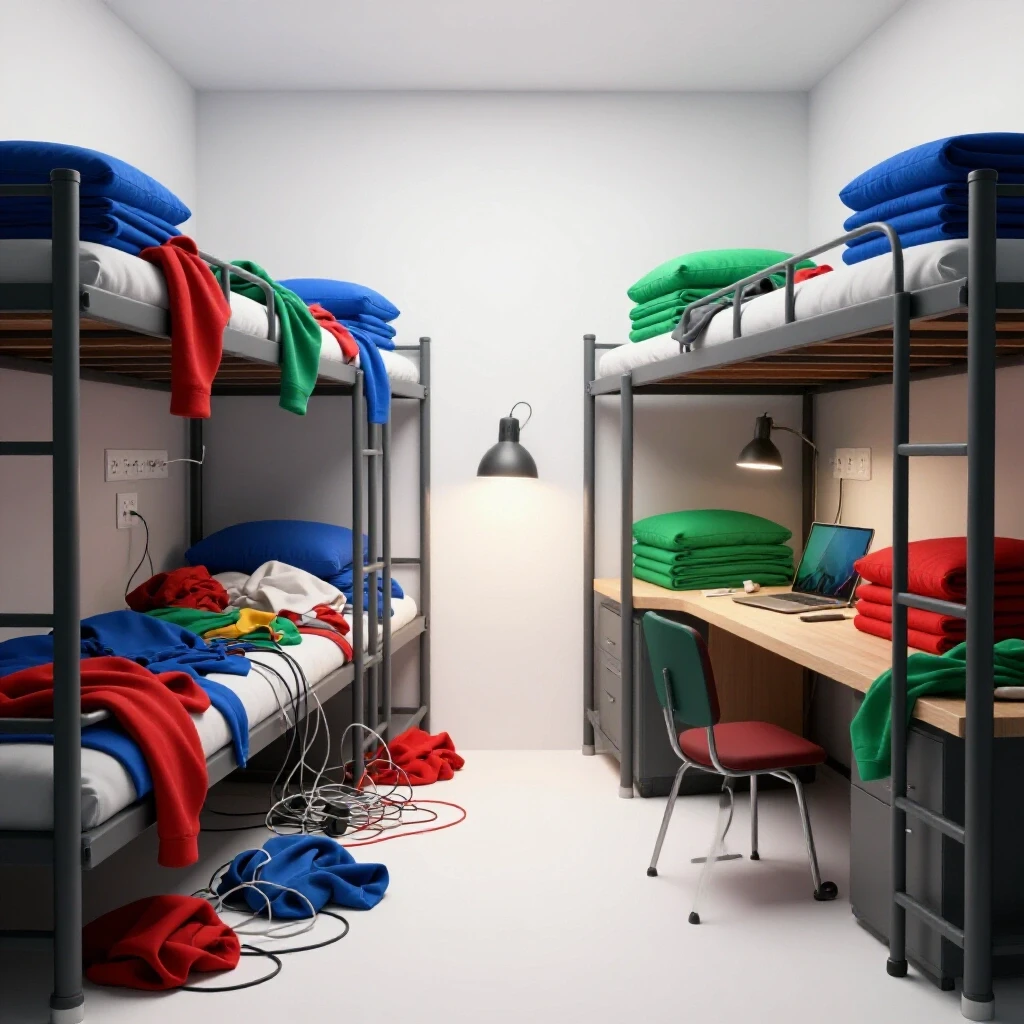
When I work with families on building a college list, we often focus on the “big” things like the Common App strategies or financial aid planning. But I have seen students struggle because they did not consider the daily friction of their living space. A student who cannot sleep because of room temperature or who misses a 9:00 AM lab because of a bathroom line will have a harder time maintaining the GPA needed for graduation.
Building a balanced college list involves looking past the shiny brochures. You need to investigate the “bones” of the campus. This means looking at retention and graduation statistics alongside the physical age of the housing. If a school has a high freshman retention rate, it often means they have mastered the art of making campus life livable.
Problem 1: Centralized HVAC and Micro-Climate Conflicts
Many college dorms use centralized heating and cooling systems that do not allow for individual room control. This creates “micro-climates” where one side of a room might be freezing while the other is sweltering, leading to physical discomfort and disrupted sleep patterns for students. This is a common issue in both historic buildings and some mid-century high-rises.
I remember a transfer student guide I wrote for a young man moving from a small community college to a large state university. He was thrilled about the prestige of the school but found himself in a dorm with a “two-pipe” system. In these systems, the entire building is either “on heat” or “on cooling” based on the calendar, not the daily weather. If an unseasonably warm day hits in November, the heat stays on, and the room becomes an oven.
Understanding HVAC Systems in College Selection
- Two-Pipe Systems: These switch between heating and cooling once or twice a year. They lack flexibility for sudden weather changes.
- Four-Pipe Systems: These allow for simultaneous heating and cooling, offering much better individual room control.
- Window Units vs. Central Air: Window units are often loud and inefficient but allow for some local control. Central air is quieter but often controlled by a master thermostat for the whole floor.
When you are planning visits, I suggest looking at the thermostat in the model room. If there is no thermostat, or if it is covered by a plastic lockbox, you are looking at a centralized system. This is a small detail that impacts your “fit” and long-term success.
| System Type | Control Level | Common In | Impact on Student |
|---|---|---|---|
| Two-Pipe | Low | Older/Mid-century dorms | High risk of overheating in fall/spring. |
| Four-Pipe | High | Modern/Premium dorms | Consistent comfort year-round. |
| VRF Systems | Very High | Newest “Luxury” builds | Individualized temperature settings. |
Problem 2: The Shared Bathroom Rush Hour Bottleneck
Bathroom bottlenecks occur when dozens of students in a traditional or suite-style dorm attempt to use limited facilities at the same time. This logistical jam usually happens between 7:30 AM and 9:30 AM, creating a significant hurdle for students trying to reach morning classes on time. It is a matter of math and timing rather than cleanliness.
In my years of college admissions tips, I always tell families to look at the “student-to-stall” ratio. A floor might have 40 students and only four showers. If 20 of those students have a 9:00 AM “Introduction to Psychology” class, the math simply does not work. This leads to a frantic morning routine that increases stress before the first lecture even begins.
Navigating the Morning Logistical Jam
- The 15-Minute Rule: Most students take 15 minutes in a shared space. With four showers and 40 students, it takes 150 minutes for everyone to cycle through.
- Suite-Style Risks: Suites often seem better because you share with only three or four people. However, if one person takes a long shower, the entire suite is blocked from the only toilet and sink.
- Traditional Hall Benefits: Ironically, traditional halls with large communal bathrooms often have more “points of entry,” meaning you might wait less than in a private suite.
I worked with a family whose daughter was a transfer student. She moved from a school with private baths to a traditional hall. She found that the “rush hour” was her biggest stressor. We adjusted her college application process for her next move to prioritize schools with “pod-style” bathrooms. These are individual, private bathrooms shared by a smaller group, which balances privacy with availability.
Problem 3: Digital Infrastructure and Electrical Strain
Modern students carry multiple devices, but older dorms were designed for a single lamp and a clock radio. Digital infrastructure strain involves the lack of physical power outlets and the drop in Wi-Fi speeds when hundreds of students stream or download large files simultaneously during peak study hours. This can directly interfere with submitting assignments on time.
Think about the average student today. They have a laptop, a tablet, a smartphone, a smartwatch, and perhaps a gaming console or a second monitor. Most older dorm rooms have exactly two outlets per person, often located behind a heavy, immovable desk or bed. This leads to a “daisy chain” of power strips that can be a fire hazard and a daily frustration.
The Bandwidth and Power Gap
- Outlet Placement: In older buildings, outlets are rarely where you need them. This forces a layout that might not be ideal for studying.
- Wi-Fi Dead Zones: Concrete walls in older dorms are excellent at blocking Wi-Fi signals. A student might have great signal at their desk but zero signal in their bed.
- Peak Load Throttling: Between 8:00 PM and 11:00 PM, when everyone is doing homework (or streaming), the campus bandwidth can slow to a crawl.
When evaluating your college list, check the “Information Technology” section of the school’s website. Look for mentions of “Wi-Fi 6” or “high-density wireless.” These are signs that the school has invested in the digital infrastructure needed for modern degree goals.
Essential Tech Tools for Dorm Success
- UL-Certified Power Strips: Look for long cords (10-15 feet) to reach those hidden outlets.
- Ethernet Cables: If the room has a physical jack, use it. It is always faster and more reliable than Wi-Fi during peak hours.
- Command Hooks for Cables: These keep your charging cords organized and prevent them from falling behind heavy furniture.
- Portable Power Banks: Useful for when you need to study in a common area where all the outlets are taken.
Strategic Planning for Housing and Enrollment
Your housing choice is a major part of your enrollment decision. When you receive your financial aid planning package, look at the “Room and Board” line item. Often, the price is the same for a modern dorm and an older one. If you have the choice, opting for the building with better infrastructure can improve your freshman year GPA by reducing daily friction.
As you navigate the college application process, use the campus tour to ask specific questions. Don’t just ask “Is the dorm nice?” Ask “How many outlets are in a standard double?” or “When does the building switch from heat to AC?” These questions show demonstrated interest and help you gather the data needed for a realistic college plan.
Data Points to Consider
- Four-Year Graduation Rates: Schools with better campus infrastructure often see higher graduation rates because students are more comfortable.
- Retention Rates: If the freshman-to-sophomore retention is above 85%, it suggests the campus environment is supportive.
- Net Price After Aid: Compare the cost of “premium” housing versus “standard” housing. Sometimes the $1,000 difference is worth it for the academic focus it provides.
Action Plan for Families and Students
To maximize your chances of long-term success, you must be proactive. Don’t wait until move-in day to realize your room has one outlet and no air conditioning. Use the following steps to integrate housing logistics into your application strategy.
Step 1: Research During the Application Phase
While filling out the Common App, take a moment to look at the housing section of each school’s website. Use tools like Naviance to see if students have commented on housing quality. Look for “Virtual Campus Tours” that show actual student rooms, not just the student union.
Step 2: The “Infrastructure Walkthrough” on Tours
When you visit, leave the tour group for a moment if possible. Walk into a residential hall and look at the hallway ceilings. Visible Wi-Fi routers (the small white boxes on the ceiling) are a good sign of recent upgrades. Check the bathroom layout. Are the showers private stalls or just curtains?
Step 3: Post-Acceptance Decision Making
Once the acceptance letters arrive, compare the housing contracts. Some schools guarantee housing for four years; others don’t. This affects your long-term affordability. If you have to move off-campus junior year, your costs might rise significantly.
Frequently Asked Questions
What is the most common electrical issue in older dorms?
The most common issue is the lack of “grounded” outlets and the sheer scarcity of plugs. Many rooms built before 1980 only have one or two outlets per wall. Students often find that these outlets are located in inconvenient spots, requiring long extension cords. Using high-quality, surge-protected power strips is essential to protect expensive laptops and tablets from power fluctuations common in old wiring.
How can I find out about a dorm’s HVAC system before I move in?
You can usually find this information on the University’s “Facilities Management” or “Residential Life” website. Look for terms like “central plant” or “building climate control.” If the website is vague, email the housing office directly. Ask if students have individual control over the thermostat in their specific room. This is a fair question that helps you plan what kind of bedding and fans to bring.
Why does the Wi-Fi slow down at night on campus?
Campus Wi-Fi is a shared resource. During “peak academic hours,” which surprisingly occur between 9:00 PM and midnight, thousands of students are using the same bandwidth for research, video calls, and entertainment. Even with high-speed fiber optics, the “access points” in the dorm hallways can become overwhelmed. This is why having a physical Ethernet cable is a smart backup for submitting late-night assignments.
Are suite-style bathrooms always better than communal ones?
Not necessarily. While suite-style bathrooms offer more privacy, they often create a “single point of failure.” If one person is using the shower, no one else in the suite can use the toilet or sink. In a communal bathroom, there are multiple stalls and sinks available. For students with tight morning schedules, the communal bathroom often results in less waiting time.
What should I ask about housing during a campus visit?
Ask your tour guide about the “laundry to student” and “shower to student” ratios. Also, ask how the university handles the transition between seasons regarding heating and cooling. Another great question is whether the Wi-Fi covers the outdoor spaces near the dorms, which can be a lifesaver if the indoor signal is weak.
How does dorm quality affect my financial aid planning?
Most schools have tiered pricing for housing. The “standard” room price used in your financial aid “Cost of Attendance” might only cover the oldest, least-equipped dorms. If you need a room with specific infrastructure (like AC for medical reasons or a quieter suite), you might have to pay a “premium” rate. Always check if your scholarship or Pell Grant covers these higher-tier housing options.
Can I request a specific dorm based on its infrastructure?
At most universities, freshmen have limited choices. However, you can often rank your preferences. By researching which buildings have been recently renovated (usually listed in the campus “Master Plan” online), you can strategically rank the dorms with the best digital and physical infrastructure.
What is a “micro-climate” in a dorm room?
A micro-climate occurs when the physical layout of a room causes uneven temperatures. For example, a bed right next to a large, poorly insulated window might be 10 degrees colder than a desk located near the hallway door. This is common in older buildings with “radiator” heat, where the area near the radiator is very hot while the rest of the room stays chilly.
How do transfer students handle housing differently?
Transfer students are often placed in “overflow” housing or upperclassman apartments. These units often have better infrastructure, like full kitchens and private baths. However, they may be further from the center of campus. Transfers should use their “transfer student guide” provided by the admissions office to check if they are eligible for these more modern living spaces.
Does the Common App ask about housing needs?
The Common App itself does not usually ask for housing preferences. However, once you submit your application, most schools will give you access to a “Student Portal.” This is where you will fill out housing contracts and specify any needs related to physical infrastructure or accessibility.
Why is the “two-pipe” HVAC system so common?
It is common because it is cost-effective for the university to maintain. It uses one set of pipes to circulate either hot or cold water throughout the entire building. While efficient for the school, it lacks the flexibility to handle the “shoulder seasons” of spring and fall when temperatures fluctuate wildly between day and night.
What is the “Digital Infrastructure Strain” I should look for?
Look for “dead zones” where the Wi-Fi signal drops. This often happens in dorm basements, corner rooms, or rooms with thick masonry walls. If you see students studying in the hallways or common rooms rather than their desks, it is often a sign that the in-room digital infrastructure is lacking.
(This article was written by one of our staff writers, Christopher Langston. Visit our Meet the Team page to learn more about the author and their expertise.)