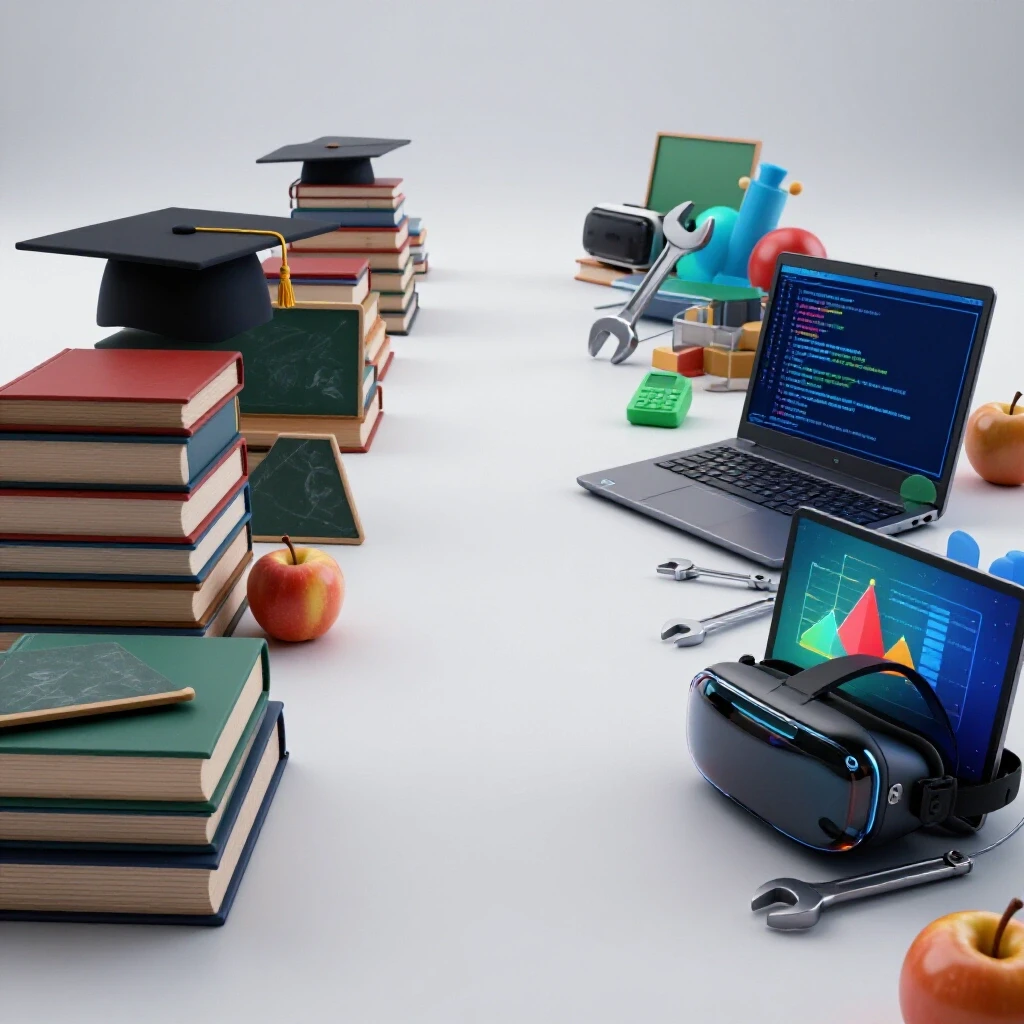
Does Your Bachelor’s Still Matter? (Skills Gap Alert!)
I remember talking to a young woman named Sarah a few years ago.
She had just graduated with a degree in Communications, excited to land her dream job in social media marketing.
She envisioned herself crafting viral campaigns and building brand awareness.
But after months of applications and interviews, she was still working part-time at a coffee shop, feeling frustrated and disillusioned.
“I thought a degree was my golden ticket,” she told me, “but it seems like everyone wants experience I don’t have.”
Sarah’s story isn’t unique.
It highlights a growing disconnect between what colleges are teaching and what employers actually need.

So, is a bachelor’s degree still worth it? Let’s dive in.
Section 1: The Changing Job Market
Okay, let’s get real about the job market.
As of 2023, we’re seeing some major shifts happening across almost every industry.
Think about it:
- Technology: Automation, AI, and machine learning are changing the skills companies need.
- Globalization: Businesses are operating on a global scale, requiring employees who can work across cultures and time zones.
- Consumer Preferences: Consumer demands are changing rapidly, forcing companies to innovate and adapt quickly.
These changes are creating a demand for new skills, and unfortunately, many recent graduates aren’t equipped with them.
According to the Bureau of Labor Statistics, the unemployment rate for recent college graduates (ages 20-29) fluctuates, and while it improves with economic recovery, underemployment remains a significant issue.
Underemployment, meaning graduates working in jobs that don’t require a college degree, or are part-time when they desire full-time work, affects a substantial portion of the workforce.
And let’s not forget the pandemic!
COVID-19 accelerated many of these trends, forcing companies to adopt new technologies and ways of working.
This has further widened the skills gap, which is basically the difference between the skills employers need and the skills job seekers possess.
A 2022 study by McKinsey found that 87% of companies worldwide are experiencing skills gaps, and that this gap is expected to widen in the coming years.
This means companies are struggling to find qualified candidates, even with a pool of college graduates to choose from.
Section 2: The Value of a Bachelor’s Degree
Historically, a bachelor’s degree has been seen as a pathway to a better life.
It was associated with higher earning potential, greater job security, and increased social mobility.
And for a long time, that was true!
Data from the U.S.
Census Bureau consistently shows that individuals with a bachelor’s degree earn significantly more over their lifetime than those with only a high school diploma.
For example, a 2022 report from the Social Security Administration estimated that men with a bachelor’s degree earn around $900,000 more over their lifetime than men with only a high school diploma.
For women, the difference is around $630,000.
However, this data doesn’t tell the whole story. Student loan debt is a major factor to consider.
The average student loan debt for the class of 2022 was over $37,000.
That’s a huge burden to carry, especially if you’re struggling to find a well-paying job after graduation.
Also, the type of degree you get matters a lot.
STEM (Science, Technology, Engineering, and Mathematics) degrees tend to be in higher demand than humanities degrees.
According to the National Association of Colleges and Employers (NACE), the starting salaries for STEM graduates are significantly higher than those for humanities graduates.
This doesn’t mean that humanities degrees are worthless, but it does mean that graduates with these degrees may need to be more proactive in developing in-demand skills and gaining relevant experience.
Section 3: Skills vs. Credentials
Here’s where things get interesting.
While a degree is still often seen as a basic requirement for many jobs, employers are increasingly focusing on skills and practical experience.
Think about it this way: a degree shows you can learn, but skills show you can do.
Companies are starting to prioritize skills assessments, portfolio reviews, and real-world projects over simply looking at a degree.
For example, many tech companies use coding challenges and technical interviews to assess candidates’ abilities.
Marketing agencies might ask for a portfolio of past campaigns or writing samples to evaluate a candidate’s creativity and communication skills.
And let’s not forget about the rise of alternative education paths.
Coding boot camps, online courses, and vocational training programs are becoming increasingly popular.
These programs often focus on teaching specific, in-demand skills in a shorter amount of time and at a lower cost than a traditional four-year degree.
For example, a coding boot camp might teach you the fundamentals of web development in 12 weeks, preparing you for an entry-level job as a front-end developer.
Online platforms like Coursera, edX, and Udemy offer a wide range of courses and certifications that can help you develop specific skills in areas like data science, digital marketing, and project management.
These alternative paths aren’t necessarily a replacement for a bachelor’s degree, but they can be a valuable supplement, especially if you’re looking to switch careers or gain a specific skill set.
Section 4: The Role of Employers
So, how are employers responding to the skills gap?
Many companies are realizing that they need to take a more active role in training and developing their employees.
Instead of relying solely on colleges and universities to provide qualified candidates, they’re investing in internal training programs, apprenticeships, and mentorship opportunities.
I spoke with an HR manager at a tech company recently, and she said, “We’re finding that it’s often easier to train someone with the right attitude and aptitude than to find someone with all the right skills on paper.”
“We’re looking for candidates who are eager to learn, adaptable, and have a strong work ethic.
We can teach them the technical skills they need.”
Companies are also partnering with educational institutions to develop curricula that are more aligned with industry needs.
This can involve guest lectures, internships, and collaborative research projects.
Some companies are even creating their own in-house universities to train employees in specific skills and technologies.
For example, Amazon has the Amazon Technical Academy, which provides software engineering training to non-technical employees.
This shift towards employer-led training has significant implications for the future of higher education.
It suggests that colleges and universities need to be more responsive to the needs of employers and provide students with more opportunities to develop practical skills.
Section 5: The Future of Higher Education
So, what does all this mean for the future of bachelor’s degrees in 2025?
Will they still hold value, or will alternatives gain dominance?
I believe that bachelor’s degrees will still be valuable, but their value will be increasingly tied to the skills and experiences that students gain during their education.
Colleges and universities will need to adapt to the changing job market by integrating technology into learning, offering more competency-based education, and partnering with industries to provide students with real-world experience.
Competency-based education focuses on assessing students’ mastery of specific skills and knowledge, rather than simply awarding credits based on seat time.
This approach allows students to progress at their own pace and demonstrate their abilities in a more practical way.
COVID-19 has also accelerated changes in education delivery methods.
Online learning has become more widespread, and many colleges and universities are now offering hybrid programs that combine online and in-person instruction.
This increased flexibility can make education more accessible to students who are working or have other commitments.
However, it also raises questions about the quality and effectiveness of online learning.
Colleges and universities need to ensure that online programs are engaging, interactive, and provide students with the support they need to succeed.
Conclusion
In conclusion, while a bachelor’s degree can still provide value, it’s no longer a guaranteed ticket to a successful career.
The job market is changing rapidly, and employers are increasingly focused on skills and practical experience.
To thrive in this environment, you need to be adaptable, continuously learning, and proactive in developing in-demand skills.
Think about it, the skills gap isn’t just a challenge for employers; it’s also an opportunity for you to stand out from the crowd.
By focusing on developing the skills that employers need, you can increase your chances of landing your dream job and building a successful career.
The definition of success is evolving.
It’s no longer just about getting a degree; it’s about aligning your education with real-world needs and continuously growing and adapting throughout your career.
So, as you contemplate your own path, remember that the future belongs to those who are willing to embrace change and learn new things.
Are you ready to step up and meet the challenge?