Diploma to Master’s (Accelerate Your Career!)
I get it. The job market is a beast, constantly evolving.
It feels like just yesterday a diploma was enough, but now?
A master’s degree can be the real game-changer.
Think about it: higher earning potential, more specialized skills, and a serious boost in your career trajectory.
And the best part? Access to education is exploding! Online programs, flexible schedules, financial aid…it’s all getting easier.
Let’s dive into how you can leverage this opportunity and seriously level up your career by 2025.
Ready? Let’s do this!
Section 1: Understanding the Value
of a Master’s Degree
So, what is a master’s degree, anyway?

Simply put, it’s a postgraduate academic degree earned after you’ve completed your bachelor’s (or in some cases, built upon a diploma with bridging courses).
You can get a master’s in pretty much anything you can imagine: Business Administration (MBA), Computer Science, Engineering, Education, Healthcare, even niche fields like Data Analytics or Cybersecurity.
But why bother? What’s the real value? Let’s break it down.
The Diploma vs. the Master’s: A Clear Advantage
Think of your diploma as the foundation of your career.
It gets you in the door.
A master’s, however, is like adding floors to that building.
It expands your knowledge, sharpens your skills, and significantly increases your earning potential.
Higher Earning Potential: This is a big one.
According to the U.S.
Bureau of Labor Statistics, the median weekly earnings for those with a master’s degree are significantly higher than those with only a bachelor’s degree.In 2022, it was estimated that those with a master’s degree earned approximately $1,690 per week, compared to $1,432 for bachelor’s degree holders.
That’s a considerable difference over the course of a career!
(Source: U.S.
Bureau of Labor Statistics)Increased Job Opportunities: A master’s degree
often opens doors to higher-level positions and specialized roles.
Employers often prefer (or even require) a master’s for leadership roles, research positions, and consulting gigs.Specialization: A master’s allows you to
deeply specialize in your chosen field.
This focused knowledge makes you a more valuable asset to employers and allows you to tackle complex problems with greater expertise.For example, let’s say you have a diploma in general IT.
Getting a Master’s in Cybersecurity would make you a highly sought-after expert in a field that’s exploding right now.Career Advancement: It’s not just about getting
a job; it’s about moving up.
A master’s can significantly accelerate your career trajectory, allowing you to reach management positions and leadership roles faster.
Proof is in the Pudding: Stats & Studies
Don’t just take my word for it. Here are some stats that back up the value of a master’s:
Lower Unemployment Rates: The BLS consistently
shows that individuals with higher levels of education have lower unemployment rates.
A master’s degree offers a buffer against economic downturns.-
Improved Job Security: In today’s volatile
job market, job security is paramount. A master’s makes you a more valuable and harder-to-replace employee.
-
Increased Marketability: A survey by the
Graduate Management Admission Council (GMAC) found that employers are actively seeking candidates with advanced degrees, particularly in fields like business, technology, and data analytics.
Real Stories: From Diploma to Master’s Success
Let’s hear from someone who’s actually done it:
“I started with a diploma in Mechanical Engineering,” says Sarah, now a Senior Project Manager at a leading tech company.
“I felt stuck.
I was good at my job, but I wasn’t going anywhere.
So, I enrolled in a part-time online master’s program.
It was tough balancing work and studies, but the payoff was HUGE.
Within a year of graduating, I got promoted to a management position.
The master’s gave me the skills and the confidence to lead.”
I’ve heard similar stories from countless people. The key takeaway?
A master’s isn’t just a piece of paper; it’s an investment in your future.
Section 2: The Journey from
Diploma to Master’s
Okay, you’re convinced a master’s is a good idea.
But how do you actually get there from a diploma?
Let’s map out the journey.
Typical Pathways
The exact pathway will depend on your field of study, your previous academic record, and the specific requirements of the master’s program you’re interested in.
However, here are some common routes:
Bridging Courses: Many universities offer
“bridging” or “pre-master’s” courses for diploma holders.
These courses fill in any knowledge gaps and prepare you for the rigor of a master’s program.Direct Entry (with conditions): Some programs
may allow direct entry to diploma holders with significant work experience.
However, you may need to demonstrate your knowledge through entrance exams or portfolio reviews.Bachelor’s Degree First: In some cases, you
might need to complete a bachelor’s degree before applying to a master’s program.
This might seem like a longer route, but it can provide a stronger foundation for advanced studies.
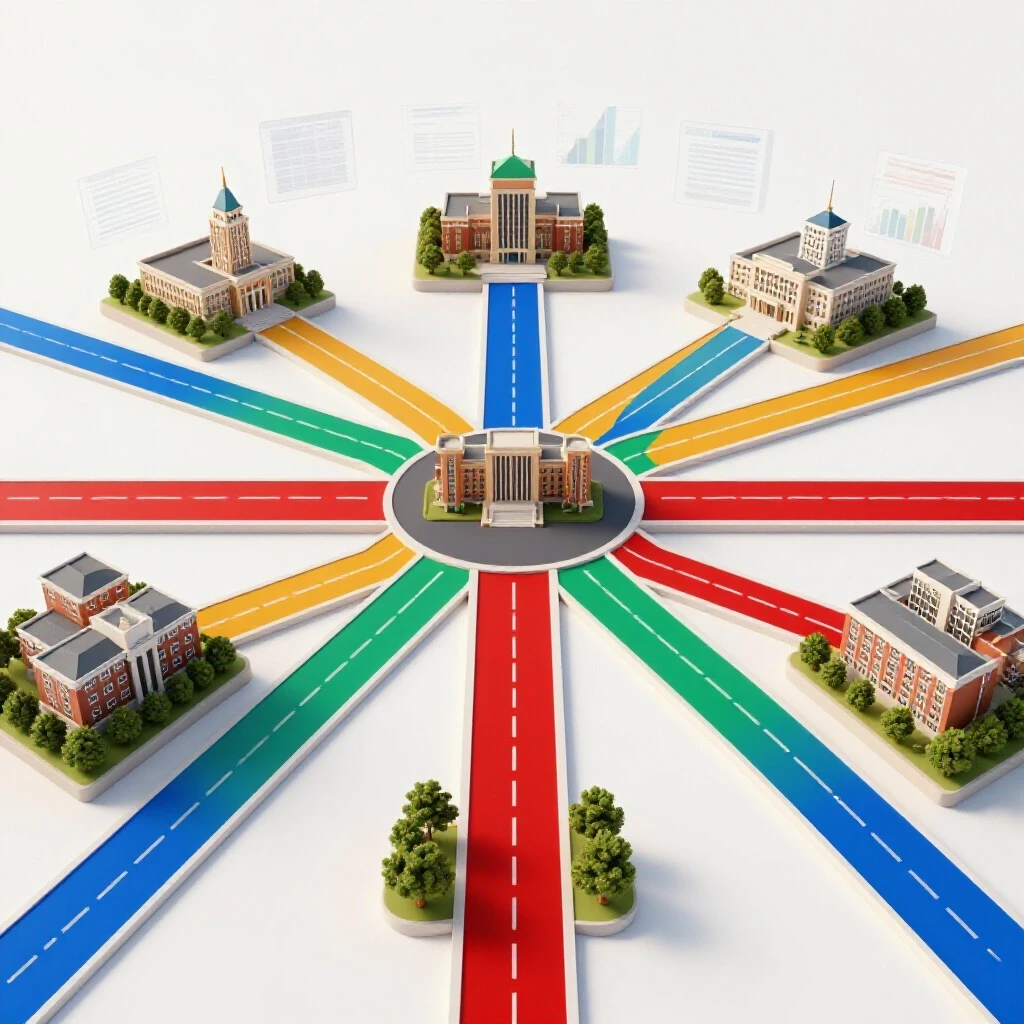
Educational Institutions and Online Platforms
The good news is, you have tons of options when it comes to choosing a program.
Universities, colleges, and online platforms are all vying for your attention.
Here are some things to consider:
-
Traditional Universities: These offer the
classic campus experience, with in-person classes, access to libraries and labs, and opportunities for networking.
-
Online Universities: These offer fully online
programs, providing flexibility and convenience for working professionals.
-
Hybrid Programs: These combine online learning
with occasional in-person sessions, offering the best of both worlds.
-
Specialized Institutions: Some institutions
specialize in specific fields, such as business or technology. These can offer highly focused and industry-relevant programs.
Types of Master’s Programs
Master’s programs come in various formats to suit different needs and lifestyles:
-
Full-Time: These programs typically take
1-2 years to complete and require a full-time commitment.
-
Part-Time: These programs allow you to study
while working, typically taking 2-4 years to complete.
-
Online: These programs are delivered entirely
online, offering maximum flexibility.
-
Executive Master’s: These programs are
designed for experienced professionals and focus on leadership and strategic management.
Choosing the Right Program
This is crucial. Don’t just pick the first program you see. Consider these factors:
-
Your Career Goals: What do you want to
achieve with your master’s degree? Choose a program that aligns with your long-term career aspirations.
Your Personal Circumstances: Can you afford
to study full-time?
Do you need a flexible online program?
Be realistic about your commitments and choose a program that fits your lifestyle.-
The Program’s Reputation: Research the
program’s faculty, curriculum, and alumni network. Look for accreditation and positive reviews.
-
The Cost: Master’s programs can be expensive.
Explore funding options, scholarships, and financial aid before making a decision.
Section 3: Accessibility in Education
Let’s talk about access.
I know that higher education used to feel like something only certain people could attain.
But times are changing!
Institutions are working hard to make master’s degrees more accessible to everyone, regardless of background.
Adapting to a Diverse Student Population
Universities are realizing that their student body is becoming increasingly diverse. They’re adapting in several ways:
-
Flexible Learning Options: As we’ve already
discussed, online and hybrid programs are making it easier for working professionals and students with family responsibilities to pursue a master’s.
-
Support Services: Many universities offer
academic advising, career counseling, and mental health services to support students throughout their studies.
-
Inclusive Curriculum: Institutions are working
to create curricula that are more inclusive and relevant to the experiences of diverse student populations.
Funding Options, Scholarships, and Financial Aid
Money is often the biggest barrier to higher education. But don’t despair! There are many funding options available:
-
Scholarships: These are merit-based or
need-based awards that don’t need to be repaid. Search for scholarships offered by universities, private organizations, and government agencies.
-
Grants: These are typically need-based awards
that don’t need to be repaid.
-
Loans: These are borrowed funds that need to
be repaid with interest. Explore federal and private loan options.
Employer Sponsorship: Some employers offer
tuition reimbursement programs for employees who pursue further education.
Check with your HR department to see if this is an option.
The Role of Technology
Technology is a game-changer in education. It’s making learning more accessible, engaging, and personalized.
-
Online Courses: These allow you to learn from
anywhere in the world, at your own pace.
-
Virtual Classrooms: These provide a collaborative
learning environment, with live lectures, discussions, and group projects.
-
Learning Management Systems (LMS): These
platforms provide access to course materials, assignments, and grades.
-
Mobile Learning: You can now access course
materials and complete assignments on your smartphone or tablet.
Inclusivity in Educational Practices and Policies
It’s not just about access; it’s about creating a welcoming and supportive environment for all students.
Universities are implementing policies and practices to promote inclusivity:
-
Diversity and Inclusion Training: This helps
faculty and staff understand and address the needs of diverse student populations.
-
Accessibility Services: These provide
accommodations for students with disabilities.
-
Mentoring Programs: These connect students
with mentors who can provide guidance and support.
Section 4: Overcoming Challenges in
Pursuing a Master’s Degree
Let’s be real: the journey from diploma to master’s isn’t always easy.
There will be challenges along the way. But don’t let that discourage you!
With the right strategies, you can overcome these obstacles and achieve your goals.
Common Challenges
Balancing Work and Studies: This is a big one,
especially for working professionals.
It can be tough to juggle a full-time job with the demands of a master’s program.-
Financial Constraints: Master’s programs can
be expensive, and many students struggle to afford tuition, fees, and living expenses.
-
Academic Preparedness: Some students may feel
unprepared for the rigor of a master’s program, especially if they’ve been out of school for a while.
-
Time Management: It can be challenging to
manage your time effectively when you have so many competing demands.
-
Feeling Isolated: Online learning can sometimes
feel isolating, especially if you’re used to in-person classes.
Strategies for Overcoming Challenges
-
Time Management: Create a realistic schedule
and stick to it. Prioritize tasks, break down large assignments into smaller chunks, and avoid procrastination.
Seeking Mentorship: Find a mentor who can
provide guidance and support.
This could be a professor, a former student, or a professional in your field.-
Utilizing Support Services: Take advantage of
the support services offered by your educational institution, such as academic advising, career counseling, and mental health services.
-
Building a Support Network: Connect with
other students in your program. Form study groups, attend social events, and support each other through the challenges.
-
Staying Motivated: Remember why you started
this journey. Keep your goals in mind and celebrate your successes along the way.
Success Stories
Let me share another inspiring story:
“I was a single mom working full-time when I decided to pursue my master’s in Nursing,” says Maria.
“It was the hardest thing I’ve ever done. I was constantly exhausted and overwhelmed.
But I knew that a master’s would give me the opportunity to provide a better life for my daughter.
I sought help from my professors, formed a study group with my classmates, and leaned on my family for support.
It took me three years, but I finally graduated.
And now, I’m a Nurse Practitioner, making a difference in people’s lives.”
Maria’s story is a testament to the power of perseverance and the importance of having a strong support system.
Section 5: The Future of Education
and Career Advancement
Okay, let’s look ahead to 2025.
What are the emerging trends that will shape the diploma-to- master’s pathway and the job market in general?
Emerging Trends in Education
Lifelong Learning: The days of getting a
degree and then coasting through your career are over.
Lifelong learning is essential for staying relevant in today’s rapidly changing job market.Upskilling and Reskilling: As technology
advances, many jobs are becoming obsolete.
Upskilling (learning new skills within your current field) and reskilling (learning entirely new skills) are crucial for career survival.Microcredentials: These are short, focused
courses that allow you to gain specific skills and knowledge.
They’re a great way to upskill or reskill quickly and efficiently.-
Personalized Learning: Technology is enabling
more personalized learning experiences, tailored to individual needs and learning styles.
Skills in Demand in the Near Future
-
Data Analytics: The world is awash in data,
and companies need people who can analyze it and extract insights.
-
Artificial Intelligence (AI) and Machine Learning:
AI is transforming industries, and there’s a huge demand for AI specialists.
-
Cybersecurity: As cyber threats become more
sophisticated, cybersecurity professionals are in high demand.
-
Cloud Computing: More and more companies are
moving their operations to the cloud, creating a demand for cloud computing experts.
-
Digital Marketing: In today’s digital world,
companies need people who can effectively market their products and services online.
Partnerships Between Educational Institutions and Employers
I’m seeing more and more partnerships between universities and employers to create tailored programs that meet workforce needs.
-
Internships and Co-ops: These provide students
with real-world experience and help them develop the skills that employers are looking for.
-
Industry-Specific Curricula: Universities are
working with employers to develop curricula that are aligned with industry needs.
-
Employer-Sponsored Programs: Some employers
are sponsoring master’s programs for their employees, providing them with the skills and knowledge they need to advance in their careers.
The Future Landscape of Job Markets
The job market of 2025 will be characterized by:
-
Increased Automation: Many routine tasks will
be automated, freeing up humans to focus on more creative and strategic work.
-
The Rise of the Gig Economy: More and more
people will be working as freelancers or contractors, rather than as full-time employees.
-
A Greater Emphasis on Soft Skills: In addition
to technical skills, employers will be looking for candidates with strong soft skills, such as communication, collaboration, and problem-solving.
-
A Need for Adaptability: The job market will
continue to evolve rapidly, so it’s important to be adaptable and willing to learn new things.
In this environment, a master’s degree will be more valuable than ever.
It will provide you with the specialized skills, knowledge, and credentials you need to thrive in the job market of the future.
Conclusion
So, there you have it!
The journey from diploma to master’s is a challenging but rewarding one.
It requires dedication, perseverance, and a willingness to learn.
But the payoff is huge: higher earning potential, increased job opportunities, and a more fulfilling career.
And remember, education is becoming more accessible than ever.
Online programs, flexible schedules, and financial aid are making it easier for people from all walks of life to pursue a master’s degree.
Don’t let anything hold you back!
Believe in yourself, set your goals, and take the first step towards a brighter future.
You’ve got this!