Diploma to Degree in Canada (Pathway REVEALED!)
Isn’t it amazing how early choices can shape a child’s future?
As an educational counselor, I’ve seen firsthand how a strong educational foundation sets the stage for lifelong learning and career opportunities.
We all want the best for our children, right? That means exploring all the pathways to success.
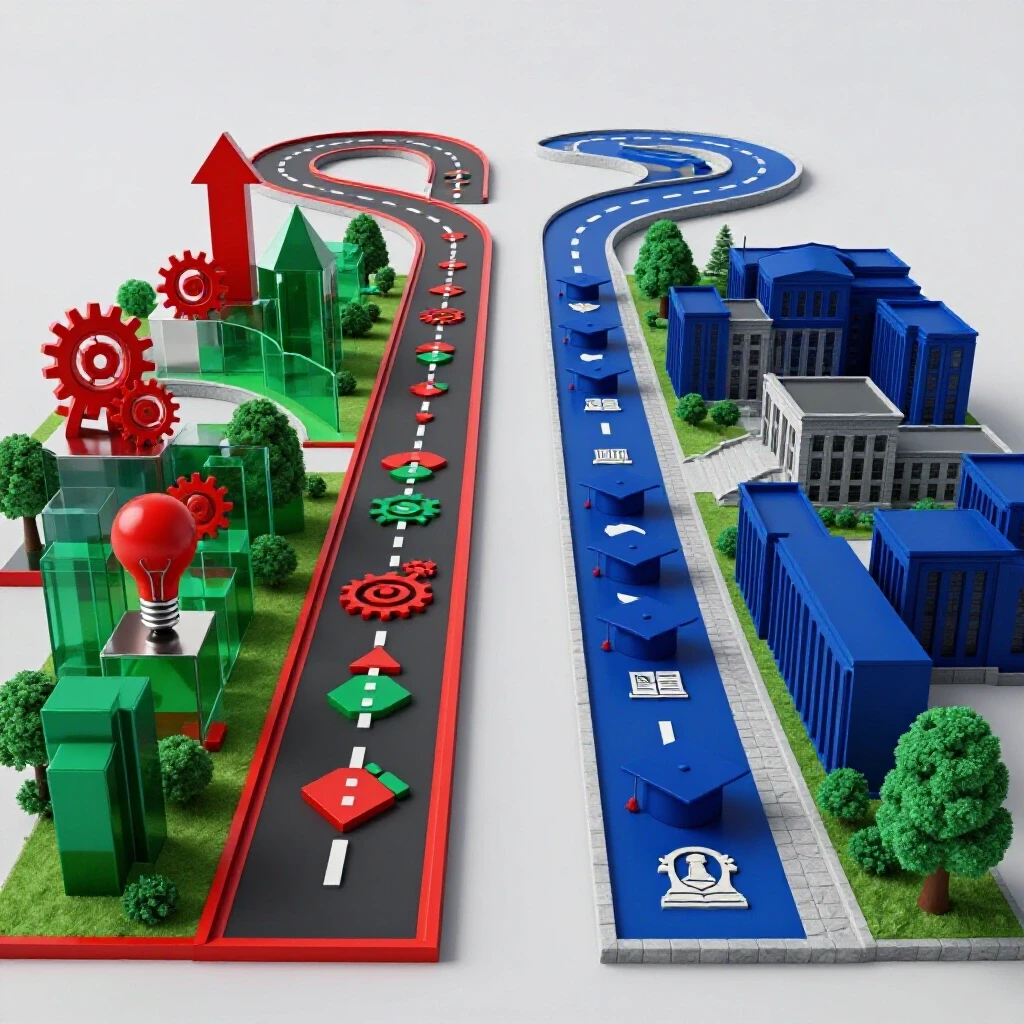
One path that’s gaining serious traction in Canada is the diploma-to-degree pathway.
What exactly is it?
It’s a fantastic option for students who want to pursue higher education after completing a diploma.
Think of it as a stepping stone.
Instead of going straight to university, students first gain practical skills and experience through a diploma program.

Then, they seamlessly transfer those credits towards a bachelor’s degree.
The education landscape is shifting, and flexible learning options are becoming increasingly popular.
Diploma programs are no longer seen as just an alternative to university; they’re powerful launchpads for future success.
Let’s explore this pathway in detail!
Section 1: Understanding the Canadian Education System
1.1 Overview of the Canadian Education System
The Canadian education system is structured in a way that provides multiple entry and exit points.
It starts with primary education, moves to secondary, and then post-secondary.
Each province and territory manages its education system, leading to some regional variations, but the core principles remain the same.
Think of it like this: you start with the fundamentals in elementary school, build on those in high school, and then specialize in college or university.
1.2 Detailed Explanation of Diploma Programs in Canada
Diploma programs are typically offered at colleges and polytechnics.
These programs are designed to provide students with practical, hands-on training in a specific field.
You’ll find a range of diploma types, including:
College Diplomas: These are usually two-year programs focused on applied skills.
Advanced Diplomas: These are more in-depth, often three-year programs that provide a higher level of specialization.
Post-Graduate Diplomas: These are for students who already have a degree or diploma and want to gain expertise in a specific area.
These programs are all about getting you ready for the workforce.
They often include co-op placements or internships, giving you real-world experience before you even graduate.
1.3 The Role of Post-Secondary Institutions
Colleges and universities play distinct but complementary roles. Colleges focus on career-oriented programs, offering diplomas and certificates.
Universities, on the other hand, emphasize theoretical knowledge and research, offering bachelor’s, master’s, and doctoral degrees.
Many colleges have partnerships with universities, creating diploma-to-degree pathways.
This means you can start at a college, gain practical skills, and then transfer your credits to a university to complete your degree.
It’s the best of both worlds!
1.4 Benefits of Pursuing a Diploma Before a Degree
Why choose a diploma before a degree? Well, there are several advantages:
Practical Skills: Diploma programs are designed to provide you with hands-on skills that employers value.
Work Experience: Many diploma programs include co-op placements or internships, giving you valuable work experience.
Smoother Transition: A diploma can provide a smoother transition to university-level studies, as you’ll already have a solid foundation of knowledge and skills.
Cost-Effective: Diploma programs are often less expensive than university degrees, allowing you to save money while still pursuing higher education.
Career Exploration: It gives students an opportunity to explore a career path before committing to a 4 year degree.
I’ve seen students thrive in this environment.
They gain confidence and clarity about their career goals, making them more successful in their future studies and careers.
Section 2: The Pathway from Diploma to Degree
2.1 Definition and Explanation of Diploma-to-Degree Pathways
A diploma-to-degree pathway is an articulated agreement between a college and a university.
It allows students to transfer credits earned in a diploma program towards a bachelor’s degree.
This means you don’t have to start from scratch when you go to university; you get credit for the courses you’ve already completed.
These pathways are designed to be seamless, ensuring that the courses you take at the college level are recognized and transferable to the university.
It’s a win-win situation!
2.2 Overview of Various Diploma Programs with Transfer Options
You’ll find diploma-to-degree pathways in a wide range of fields, including:
Business: Diplomas in Business Administration, Marketing, or Accounting can often be transferred to Bachelor of Commerce or Business Administration programs.
Health Sciences: Diplomas in Nursing, Medical Laboratory Technology, or Paramedicine can lead to Bachelor of Science in Nursing or Health Sciences degrees.
Engineering Technology: Diplomas in Civil Engineering Technology, Mechanical Engineering Technology, or Electrical Engineering Technology can be transferred to Bachelor of Engineering degrees.
Computer Science: Diplomas in Computer Programming, Web Development, or Network Administration can lead to Bachelor of Computer Science degrees.
These are just a few examples.
The key is to research the specific programs and institutions that interest you to see if they have articulation agreements in place.
2.3 Step-by-Step Guide on How to Transition
Ready to make the leap from diploma to degree? Here’s a step-by-step guide:
Research: Identify diploma programs and universities that offer diploma-to-degree pathways in your field of interest.
Check Prerequisites: Ensure you meet the admission requirements for both the diploma program and the university degree program.
Apply: Apply to the diploma program of your choice.
Succeed: Excel in your diploma program and maintain a good GPA.
Apply to University: In your final year of the diploma program, apply to the university degree program.
Transfer Credits: Work with the college and university to transfer your credits.
Complete Your Degree: Finish your bachelor’s degree and launch your career!
It sounds like a lot, but with careful planning and the right support, it’s absolutely achievable.
2.4 Case Studies of Successful Students
Let me tell you about Sarah.
She completed a diploma in Business Administration at a local college.
She then transferred her credits to a university and completed her Bachelor of Commerce degree.
Today, she’s a successful marketing manager at a major corporation.
Or consider David. He started with a diploma in Electrical Engineering Technology.
He then transferred to a university and earned his Bachelor of Engineering degree.
He’s now working as a project engineer on major infrastructure projects.
These are just two examples of the many students who have successfully navigated the diploma-to-degree pathway.
Their stories are inspiring!
2.5 Comparison of Different Institutions and Programs
When choosing a diploma-to-degree pathway, it’s important to compare different institutions and programs. Consider factors such as:
Reputation: Research the reputation of the college and university.
Program Quality: Look at the curriculum, faculty, and resources available.
Articulation Agreements: Ensure there’s a clear articulation agreement in place that outlines which credits will transfer.
Location: Consider the location of the college and university and whether it’s a good fit for you.
Cost: Compare the tuition fees and other expenses.
For example, some colleges may have stronger industry connections, while others may offer more flexible learning options.
Do your homework!
Section 3: Popular Diploma Programs with Degree Pathways
3.1 In-Depth Exploration of Popular Diploma Programs
Let’s take a closer look at some popular diploma programs and their corresponding degree pathways:
Business Administration: Many colleges offer diplomas in Business Administration that can be transferred to Bachelor of Commerce or Business Administration programs at universities like the University of Toronto, York University, and the University of British Columbia.
Nursing: Diplomas in Practical Nursing can be laddered into Bachelor of Science in Nursing (BScN) programs at universities like McMaster University, Ryerson University (now Toronto Metropolitan University), and the University of Alberta.
Computer Programming: Diplomas in Computer Programming can be transferred to Bachelor of Computer Science programs at universities like the University of Waterloo, the University of Calgary, and Simon Fraser University.
Engineering Technology: Diplomas in various engineering technologies can lead to Bachelor of Engineering degrees at universities like the University of Ontario Institute of Technology (Ontario Tech University), Concodia University and the University of Victoria.
These programs are designed to provide you with the skills and knowledge you need to succeed in today’s competitive job market.
3.2 Overview of Partner Universities
Many colleges have formal partnerships with universities, making the transfer process even smoother. These partnerships often include:
Guaranteed Admission: Some universities guarantee admission to diploma graduates who meet certain GPA requirements.
Block Transfer of Credits: Universities may offer block transfer of credits, meaning you can transfer a set number of credits without having to have each course individually evaluated.
Joint Programs: Some colleges and universities offer joint programs, where you can earn both a diploma and a degree in a shorter amount of time.
For example, Seneca College has partnerships with several universities, including York University and the University of Toronto, offering various diploma-to-degree pathways.
3.3 Industry Demand and Job Prospects
Graduates of diploma programs are in high demand in many industries.
According to Statistics Canada, the employment rate for college graduates is consistently high, often exceeding that of university graduates in certain fields.
For example, graduates of diploma programs in healthcare, such as nursing and medical laboratory technology, are in high demand due to an aging population and increasing healthcare needs.
Similarly, graduates of diploma programs in technology are sought after by companies looking for skilled programmers, web developers, and network administrators.
Potential salaries vary depending on the field and level of education, but generally, graduates with a combination of a diploma and a degree earn higher salaries and have more opportunities for career advancement.
3.4 Testimonials from Students and Employers
I’ve spoken with many students who have benefited from the diploma-to-degree pathway.
They often say that the practical skills they gained in their diploma program gave them a competitive edge in the job market.
Employers also value the combination of theoretical knowledge and practical skills that graduates of diploma-to-degree programs possess.
They appreciate that these graduates are ready to hit the ground running and contribute to the success of their organizations.
For instance, a hiring manager at a local engineering firm told me that they prefer to hire graduates with a diploma in Engineering Technology and a Bachelor of Engineering degree because they have both the technical skills and the theoretical knowledge to excel in their roles.
Section 4: Challenges and Solutions in the Transition Process
4.1 Common Challenges Students Face
The transition from a diploma to a degree program isn’t always easy. Some common challenges include:
Academic Readiness: University-level studies can be more demanding than college-level studies, requiring a higher level of critical thinking and analytical skills.
Financial Constraints: University tuition fees can be expensive, and students may need to take out loans or work part-time to cover their expenses.
Emotional Stress: The transition to a new academic environment can be stressful, and students may experience feelings of anxiety or isolation.
Credit Transfer Issues: Sometimes, not all diploma credits are accepted by the university, leading to extra courses.
4.2 Support Systems Available to Students
Fortunately, there are many support systems available to help students overcome these challenges:
Academic Advising: Colleges and universities offer academic advising services to help students choose the right courses, develop study skills, and plan their academic pathways.
Mentorship Programs: Many institutions have mentorship programs that pair students with experienced faculty members or alumni who can provide guidance and support.
Financial Aid Options: Students can apply for scholarships, bursaries, and student loans to help finance their education.
Campus Services: Universities offer a range of services, including counseling, health services, and disability support.
4.3 Strategies for Students to Overcome Challenges
Here are some strategies students can use to overcome the challenges of transitioning from a diploma to a degree program:
Time Management: Develop effective time management skills to balance your studies, work, and personal life.
Study Resources: Utilize study resources such as libraries, tutoring services, and online learning platforms.
Networking: Build relationships with your professors, classmates, and other students.
Self-Care: Take care of your physical and mental health by eating well, exercising, and getting enough sleep.
Seek Help: Don’t be afraid to ask for help when you need it.Reach out to your academic advisor, professors, or other support services.
Section 5: Future Trends in Diploma-to-Degree Pathways
5.1 Emerging Trends in the Canadian Education Landscape
The Canadian education landscape is constantly evolving.
Some emerging trends that may influence diploma-to-degree pathways in 2025 and beyond include:
Increased Demand for Skilled Workers: As the Canadian economy continues to grow, there will be an increasing demand for skilled workers in fields such as healthcare, technology, and engineering.
Emphasis on Experiential Learning: Employers are increasingly looking for graduates with practical experience, leading to a greater emphasis on co-op placements, internships, and other forms of experiential learning.
Personalized Learning: Educational institutions are exploring ways to personalize learning experiences to meet the individual needs of students.
5.2 The Impact of Technology on Education
Technology is transforming the way we learn.
Online learning and hybrid programs are becoming increasingly popular, offering students more flexibility and convenience.
Diploma programs are also incorporating new technologies into their curriculum, preparing students for the digital economy.
For example, many colleges now offer online diploma programs in fields such as web development, digital marketing, and data analytics.
These programs allow students to learn at their own pace and from anywhere in the world.
5.3 Predictions on the Evolving Job Market
The job market is constantly evolving, and it’s important to anticipate the skills that will be in demand in the future.
Some skills that are expected to be highly valued in the coming years include:
Digital Literacy: The ability to use and understand digital technologies.
Critical Thinking: The ability to analyze information and make sound judgments.
Problem-Solving: The ability to identify and solve complex problems.
Communication: The ability to communicate effectively both orally and in writing.
Adaptability: The ability to adapt to changing circumstances and learn new skills.
Diploma-to-degree pathways can help students develop these skills and prepare for the jobs of the future.
5.4 Potential Policy Changes in Education
Government policies can have a significant impact on education.
Potential policy changes that may affect diploma and degree programs in Canada include:
Increased Funding for Post-Secondary Education: Governments may increase funding for post-secondary education to make it more accessible and affordable.
Changes to Student Loan Programs: Governments may make changes to student loan programs to reduce the burden of debt on students.
Immigration Policies: Immigration policies can affect the demand for certain skills and the availability of international students.
Staying informed about these policy changes can help you make informed decisions about your education.
Conclusion
I hope this article has shed some light on the diploma-to-degree pathway in Canada.
As we’ve discussed, these pathways offer a valuable opportunity for students to gain practical skills, work experience, and a solid foundation for further education.
The value of these educational pathways lies in their ability to provide opportunities for personal and professional growth.
By combining the hands-on training of a diploma program with the theoretical knowledge of a degree program, students can position themselves for success in today’s competitive job market.
I’m optimistic about the future of education in Canada.
By embracing flexible learning options and supporting students on their academic journeys, we can ensure that all children have the opportunity to reach their full potential.
Remember to consider all available options and choose the pathway that’s right for you.
Good luck!