Best Degrees for Local Careers and Community Impact (Guide)
Imagine a student named Marcus sitting in a crowded campus library. He is staring at a job board, feeling a deep sense of disconnect between his sociology textbooks and the “help wanted” signs in his hometown. He wants to move back home after graduation, but he worries his degree won’t translate into a paycheck that supports a family. He feels like just another resume in a digital stack, destined for a remote data-entry job that offers no connection to the people he grew up with.
Now, picture Marcus three years later. He is standing in the center of a newly renovated community center in his home county. As a local program coordinator, he used his degree to secure a state grant that funded an after-school literacy program for two hundred kids. He isn’t just “employed”; he is a pillar of his community, seeing the direct results of his work every single day. This shift from feeling lost to becoming essential is what happens when you align your education with local workforce needs.
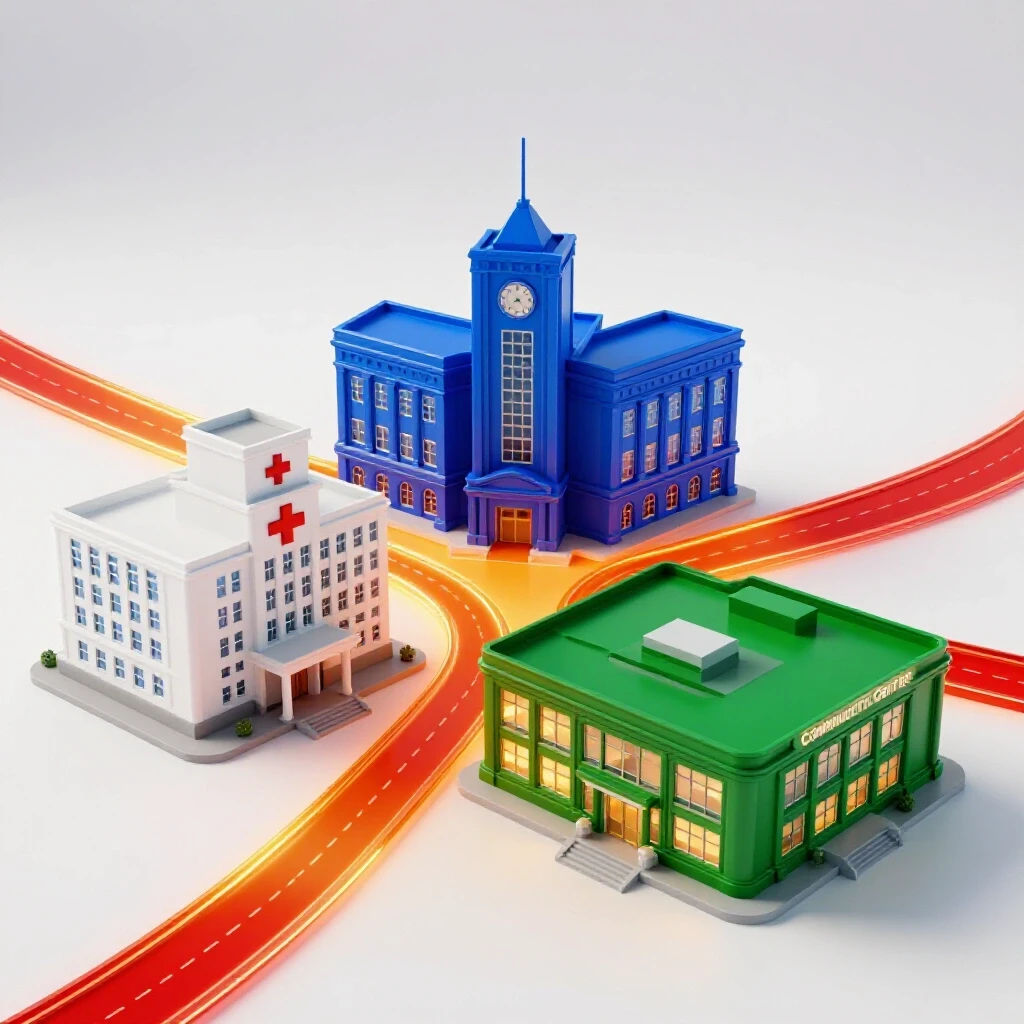
I have spent over a decade analyzing labor market trends, and I have seen too many graduates ignore the goldmine of opportunities in their own backyards. We often talk about “going away” to find success, but some of the most stable and rewarding career roadmap after bachelor’s options exist within your local ecosystem. Whether you are a student choosing a major or a professional navigating career transitions with a degree, focusing on community impact is a strategic move for long-term stability.
Understanding Degrees for Local Careers and Community Impact
Degrees for local careers are educational paths that prepare you for roles essential to a specific region’s health, safety, and growth. These programs focus on high-demand sectors like healthcare, education, and public administration where local shortages often exist. By choosing these paths, you ensure your skills remain relevant to the immediate needs of your neighbors and local economy.
When I mentor young professionals, I often ask them to look at their local “help wanted” data before they look at national trends. While tech hubs get all the headlines, your local school district, hospital system, and municipal government are likely the largest employers in your area. These entities provide “recession-proof” roles because their services are mandatory, not optional.
Choosing a path with local impact solves the “visibility” problem many graduates face. When you work in your community, your professional network grows naturally through local events, boards, and service. This visibility leads to faster promotions and a more resilient career roadmap.
- Local careers offer higher job security during economic downturns.
- Community-focused roles often qualify for federal and state loan forgiveness programs.
- Professional growth is often faster in mid-sized local markets than in over-saturated urban hubs.
High-Impact Degree to Career Pathways in Your Region
High-impact pathways are specific academic tracks that lead directly to roles addressing regional workforce shortages. These include fields like nursing, special education, and civil engineering, which are the backbone of any functioning town or city. Aligning your degree with these roles creates a clear bridge between your classroom learning and a concrete job offer.
In my experience, the strongest degree to career pathways are those that have a “clinical” or “practicum” component built in. When you spend time interning at a local agency, you aren’t just learning; you are auditioning for a permanent role. I once worked with a mentee named Sarah who was a nursing student. By choosing a local community college for her associate degree, she was able to rotate through every department in her county hospital. She had three job offers before she even sat for her board exams.
Healthcare Pathways: Nursing and Allied Health
Healthcare pathways focus on providing direct medical care and support services within a community’s clinics and hospitals. These degrees, ranging from two-year certifications to doctoral levels, address the most critical labor shortages in the United States today. Professionals in this field enjoy high mobility and the ability to find work in almost any zip code.
The Bureau of Labor Statistics (BLS) consistently ranks nursing and allied health as top growth areas. For example, registered nurses have a median salary of over $81,000, and the field is expected to grow significantly over the next decade. If you are looking for the best majors for job market stability, healthcare is the gold standard.
- 1-Year Outcome: Entry-level clinical roles with a median salary of $55,000 to $70,000.
- 5-Year Outcome: Specialization (e.g., ICU, Pediatrics) or lead nurse roles with a 15-20% salary increase.
- 10-Year Outcome: Nurse practitioner or healthcare administration roles, often exceeding $110,000.
Education Pathways: Teaching and Administration
Education pathways prepare individuals to lead classrooms and manage schools, which are often the largest employers in rural and suburban areas. These degrees focus on pedagogy, subject matter expertise, and organizational leadership to foster the next generation of local talent. Education is a field where your community impact is visible in the success of your students.
I often see students overlook education because they worry about the starting salary. However, when you factor in the “total compensation” package, including pensions, summers off, and robust health insurance, the ROI is much higher than many entry-level corporate jobs. Furthermore, many states offer significant incentives for those willing to teach in “high-need” subjects like math, science, or special education.
| Degree Major | Local Job Title | Community Impact |
|---|---|---|
| Elementary Education | Classroom Teacher | Improving local literacy rates |
| Special Education | Intervention Specialist | Supporting diverse learning needs |
| School Psychology | Counselor | Enhancing student mental health |
| Education Admin | Principal/Superintendent | Shaping regional school policy |
Public Service: Social Work and Municipal Management
Public service pathways involve degrees in social work, public administration, or urban planning that focus on the “machinery” of a community. These roles ensure that local government functions efficiently and that vulnerable populations receive necessary support. This is the ultimate path for those who want to see their degree reflected in local policy and infrastructure.
A common mistake I see is thinking that “public service” only means working for the government. Many non-profits and private contractors handle municipal tasks. A degree in social work, for instance, allows you to work in hospitals, schools, or private practice, all while serving the local population.
- Internship-to-Job Conversion: Over 60% for public administration interns in local government.
- Promotion Timeline: Moving from “Coordinator” to “Director” typically takes 5 to 7 years in local municipalities.
- Underemployment Rate: Extremely low, as these roles are tied to essential budget lines.
Building a Career Roadmap After Bachelor’s for Local Impact
A career roadmap is a structured plan that outlines the steps needed to move from graduation to your desired professional role. It includes milestones such as certifications, networking events, and specific skill acquisitions that make you a top candidate for local employers. A well-built roadmap reduces anxiety by breaking a long-term goal into manageable monthly tasks.
To build a realistic roadmap, you must start with the end in mind. If your goal is to be a city manager, you need to see what the current city manager’s resume looks like. Use LinkedIn to “reverse engineer” the paths of local leaders. You will likely find that they started in small, entry-level roles and stayed consistent within the local network.
- Identify Local Needs: Use the BLS Occupational Outlook Handbook to check which roles are growing in your specific state or county.
- Audit Your Skills: Map your degree requirements against the job descriptions of local openings on Handshake or LinkedIn.
- Bridge the Gap: If local jobs require a specific software or certification your degree didn’t cover, find a local community college or online course to fill that void.
- Network Locally: Attend town hall meetings, join the local Chamber of Commerce, and conduct informational interviews with people in your target field.
Best Majors for Job Market Stability in Local Ecosystems
The best majors for job market stability are those that provide “hard skills” that are difficult to automate and essential for a community’s daily life. These degrees usually lead to licensed professions, which creates a barrier to entry that protects your job security. When the economy fluctuates, these are the roles that communities fight to keep funded.
Interestingly, many “traditional” degrees can be pivoted toward local stability if you choose the right minor or concentration. A business degree is generic, but a business degree with a concentration in healthcare management is a specialized tool for a local hospital. Always look for ways to “localize” your broad academic training.
- Nursing/Healthcare: High demand, high pay, and high local mobility.
- Accounting: Every local business and government office needs a way to track money.
- Civil Engineering: Local infrastructure (roads, water, power) requires constant maintenance and oversight.
- Information Technology: Local school districts and small businesses are increasingly targeted by cyber threats and need on-site support.
Career Transitions with a Degree: Shifting Toward Community Impact
Career transitions involve moving from one industry or role to another, often by leveraging transferable skills and supplemental education. For mid-career professionals, this usually means taking the experience gained in the corporate world and applying it to a local non-profit or government agency. This shift often results in higher job satisfaction and a better work-life balance.
I once coached a marketing executive who was burnt out after fifteen years in the city. We looked at his “what can I do with this degree” options and realized his skills in communication and branding were exactly what the local library system needed for their fundraising efforts. He transitioned into a “Director of Development” role. He took a slight pay cut, but his commute dropped from 90 minutes to 10 minutes, and he felt a renewed sense of purpose.
Traditional vs. Alternative Pathways for Transitions
When transitioning, you don’t always need a second bachelor’s degree. Often, a graduate certificate or a master’s degree is a more efficient use of your time and money.
| Factor | Traditional (New Degree) | Alternative (Certificates/Upskilling) |
|---|---|---|
| Time to Completion | 2 – 4 Years | 6 – 12 Months |
| Financial Cost | High (Tuition + Opportunity Cost) | Low to Moderate |
| Industry Recognition | High (Standard entry point) | Moderate (Requires experience to back it up) |
| Flexibility | Low (Fixed curriculum) | High (Skill-specific) |
Practical Tools and Resources for Your Journey
Navigating the job market requires more than just a degree; it requires the right data. I recommend these four tools to every student and professional I work with. They provide the “why” behind the “how” of your career search.
- BLS Occupational Outlook Handbook: This is the gold standard for labor market data. It tells you exactly how much a job pays and if it is growing or shrinking.
- LinkedIn Career Explorer: This tool helps you see how your current skills match up with different job titles. It is perfect for those asking “what can I do with this degree.”
- O*NET OnLine: Use this to find the specific “tasks” and “tools” used in various occupations. It helps you write a better resume by using the language employers actually use.
- Handshake: If you are a student or recent grad, this is the best place to find employers who are specifically looking to hire from your university.
Strategic Metrics for Success
To know if your career roadmap is working, you need to track your progress against industry benchmarks. These metrics help you decide when to stay the course and when to pivot.
- Time to First Job: For high-impact local degrees, the goal should be under 4 months post-graduation.
- Salary Growth: Aim for a 5-10% increase every two years through promotions or “upskilling” certifications.
- Internship Conversion: If you are an intern, your goal is a 70% chance of a full-time offer if you meet all performance markers.
- Debt-to-Income Ratio: Try to keep your total student loan debt below your expected first-year salary to ensure financial flexibility.
Common Mistakes to Avoid in Local Career Planning
Even with a great degree, you can hit a dead end if you fall into these common traps. I see these mistakes most often in the 18–34 age group, where the pressure to “succeed fast” can lead to poor long-term decisions.
- Ignoring the “Small” Employers: Don’t just apply to the biggest names. Local “mom and pop” firms or small municipal offices often offer more hands-on experience and faster promotion tracks.
- Neglecting Soft Skills: Your degree gets you the interview, but your ability to communicate and work in a team gets you the job. Local roles are highly social; people hire people they trust.
- Stopping Education at Graduation: The local job market changes. If you don’t keep learning new tools (like AI or new local regulations), your “impact” will fade.
Frequently Asked Questions
What can I do with a liberal arts degree to have a local impact? A liberal arts degree provides strong critical thinking and communication skills. Locally, these are highly valued in roles like community outreach, grant writing, and local journalism. You can also pivot into human resources or office management for local government agencies. The key is to highlight your ability to synthesize information and work with diverse groups of people.
How do I find out which jobs are in high demand in my specific town? Start by visiting your state’s Department of Labor website, which often provides regional “Hot Jobs” lists. You should also look at the websites of the three largest employers in your area—usually a hospital, a school district, and the county government. If they have dozens of open roles in a specific department, that is a high-demand area.
Is it better to get a master’s degree immediately or work first? In most local-impact fields, working first is better. Many employers, especially in healthcare and education, will pay for or subsidize your master’s degree after you have been with them for a year. Working first also helps you confirm that you actually enjoy the field before you spend more money on school.
Can I have a high-paying career while staying in a small community? Yes, especially in specialized fields like healthcare, accounting, and engineering. Many local roles have “salary scales” that are public. While the “ceiling” might be lower than in a major city, the cost of living is also significantly lower. This often results in higher “discretionary income”—the money you have left over after bills.
What is the best way to network if I don’t know anyone in my field? Use “informational interviews.” Reach out to a local professional on LinkedIn or via email and ask for 15 minutes of their time to learn about their career journey. Most people are happy to help a student or local resident. This isn’t asking for a job; it’s asking for advice, which often leads to job leads later.
How do I translate my academic skills into a resume that local employers understand? Avoid academic jargon. Instead of saying “Conducted qualitative research on socio-economic trends,” say “Analyzed local community needs to help improve service delivery.” Focus on the “result” of your work. Local employers want to know how you will solve their problems, save them money, or help them serve more people.
Are certificates as valuable as degrees for local career transitions? In many technical and administrative fields, yes. A specialized certificate in “Project Management” or “Medical Coding” can be the final piece that makes your existing degree relevant to a new local role. Always check if the certificate is “industry-recognized” by looking at local job postings to see what credentials they require.
What if my degree doesn’t seem to have a “local” version? Every degree has a local application if you look at the “underlying skills.” A degree in “International Relations” might seem global, but the skills in “conflict resolution” and “policy analysis” are exactly what a local housing authority or mediation center needs. Focus on the skills, not just the title of the major.
How can I ensure my career roadmap stays flexible? Focus on “stackable skills.” These are skills that are valuable across many industries, such as data analysis, public speaking, and project management. If your primary local industry (like a specific manufacturing plant) closes, these stackable skills allow you to pivot to a different local sector without starting your education from scratch.
What is the “hidden job market” in local communities? The hidden job market refers to roles that are filled through word-of-mouth or internal promotions before they are ever posted online. In local communities, this market is huge. By volunteering, attending local board meetings, and staying active in community groups, you get access to these “unadvertised” opportunities.
(This article was written by one of our staff writers, James Holloway. Visit our Meet the Team page to learn more about the author and their expertise.)