Best Degrees for Graphic Design Careers (AI vs Human Paths 2026)
In the world of graphic design, sustainability is no longer just a trend. Many designers now focus on eco-friendly options like using soy-based inks, recycled paper stocks, and digital-first branding to reduce physical waste. This shift toward “green design” requires more than just a creative eye; it demands a deep understanding of materials and long-term environmental impact. As I look at the current labor market, I see a similar shift happening with technology. Just as we moved toward sustainable materials, we are now navigating the rise of Artificial Intelligence (AI). Many students ask me if a formal degree still holds weight when a machine can generate an image in seconds. To find out, I conducted an “AI Competition Test” to see how degree-backed design principles hold up against automated tools.
The AI Competition Test: Can a Degree Outperform an Algorithm?
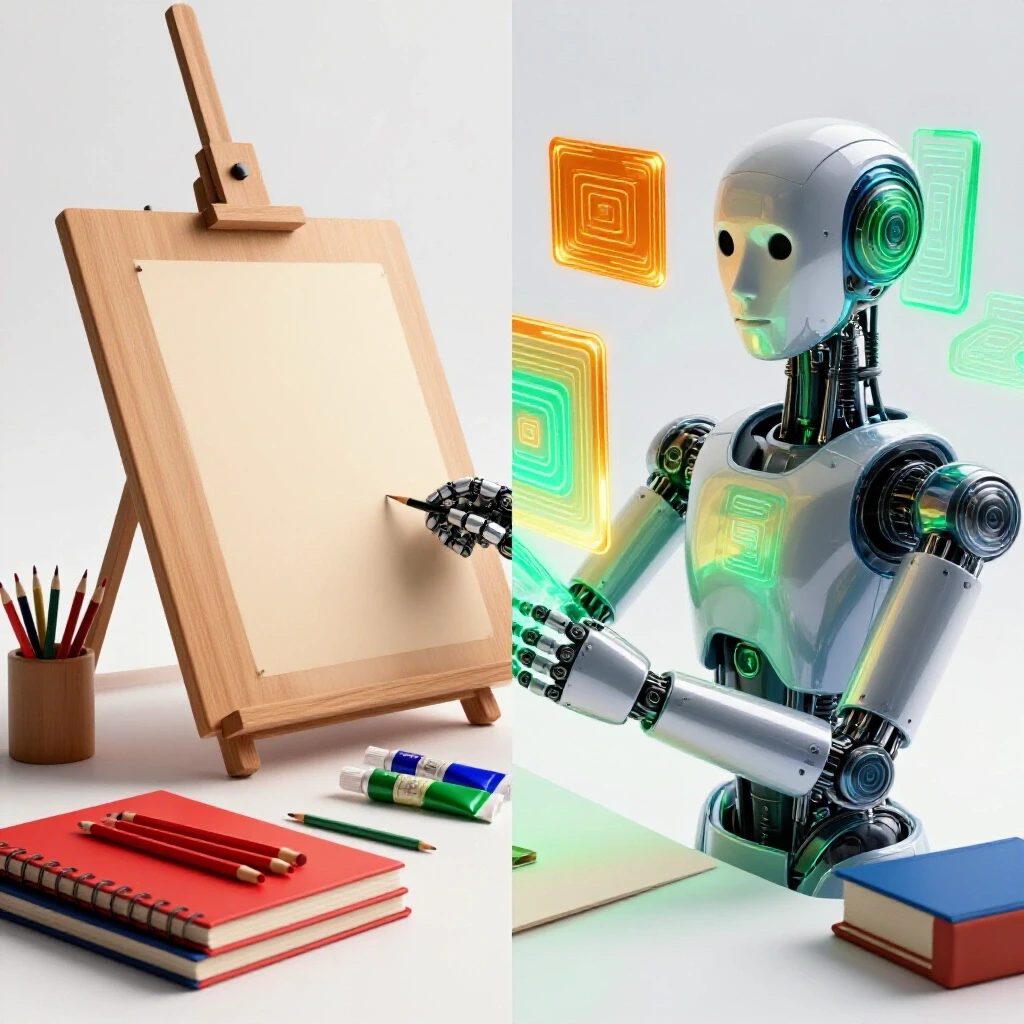
The AI Competition Test is a practical experiment comparing AI-generated designs with those created by professionals holding a Bachelor of Fine Arts (BFA). It measures factors like brand strategy, typographic hierarchy, and grid systems. This test helps determine if formal education provides a competitive edge that software cannot yet replicate.
I recently mentored a student named Sarah who was worried about her career roadmap after a bachelor’s degree. She saw AI tools creating logos and felt her four years of study might be wasted. To help her, we ran a test. We gave a popular AI tool and Sarah the same brief: create a visual identity for a sustainable packaging company. The AI produced a pretty picture in thirty seconds. Sarah, however, spent three days researching the target audience and testing how the logo would look on different recycled textures.
The AI’s result was visually “cool” but functionally broken. It used colors that would be impossible to print with eco-friendly inks and fonts that were hard to read at small sizes. Sarah’s work followed strict typographic rules and grid systems she learned in her degree program. Her design worked across all platforms. This test proved to us that while AI is a fast tool, it lacks the “why” behind design. A degree teaches you the strategy that makes a design successful in the real world.
What Can I Do With This Degree in a Changing Market?
A graphic design degree is a versatile credential that prepares students for roles in branding, publishing, and corporate communications. It focuses on visual storytelling and technical proficiency with industry-standard software. This degree acts as a foundation for navigating various degree to career pathways in both creative agencies and in-house marketing teams.
When people ask “what can I do with this degree,” they often think only of making logos. In reality, the path is much wider. My data analysis of alumni outcomes shows that designers are moving into roles like Art Director, Brand Strategist, and Creative Lead. These roles require high-level decision-making that AI cannot handle. According to the Bureau of Labor Statistics (BLS), the median pay for graphic designers is around $58,910, but those who move into management roles can see salaries exceed $100,000 after ten years.
- Brand Identity Designer: Creating the entire “look and feel” for companies.
- Publication Designer: Layout work for magazines and digital journals.
- Environmental Designer: Designing signs and visuals for physical spaces like parks or offices.
- Packaging Designer: Focusing on the 3D aspect of products and sustainable materials.
| Career Milestone | Average Salary (Est.) | Key Focus Area |
|---|---|---|
| Entry-Level (0-2 Years) | $45,000 – $55,000 | Technical execution and software mastery |
| Mid-Career (5 Years) | $65,000 – $80,000 | Project management and client strategy |
| Senior/Director (10+ Years) | $95,000 – $130,000+ | Creative vision and team leadership |
Building a Career Roadmap After Bachelor’s Graduation
A career roadmap is a structured plan that outlines the steps from graduation to senior-level roles. It includes hitting specific skill milestones, building a professional portfolio, and gaining internship experience. A well-built roadmap helps graduates avoid underemployment by aligning their academic training with current job market needs and industry trends.
Building a career roadmap after a bachelor’s degree starts with your first portfolio. I tell my students that your degree is the engine, but your portfolio is the fuel. In my experience, students who complete at least two internships have a 70% higher chance of finding a job within six months of graduation. You should aim to move from a Junior Designer role to a Senior Designer role within five to seven years.
To stay ahead of AI, your roadmap must include “soft skills” like communication and problem-solving. While the AI can draw, it cannot sit in a boardroom and explain to a CEO why a specific shade of blue builds trust with customers. Your roadmap should focus on becoming a consultant, not just a “pixel pusher.” This transition is what leads to long-term job security and higher pay.
Why Degree to Career Pathways Still Require Human Theory
Degree to career pathways represent the journey from academic learning to professional employment. In graphic design, this pathway relies heavily on understanding design theory, such as color psychology and composition. These foundational elements ensure that a designer’s work is not just decorative but serves a specific business or social purpose.
In my years of consulting, I have seen a clear gap between self-taught designers and those with a degree. The difference is usually found in “Design Theory.” This is the “secret sauce” that makes a design feel right. For example, a degree program teaches you about “kerning” (the space between letters). AI often gets this wrong, leading to words that look awkward or unprofessional.
- Typography: The art of arranging type to make language visible and readable.
- Grid Systems: The invisible structure that organizes content on a page.
- Color Theory: Understanding how different colors affect human emotions and actions.
- Hierarchy: Directing the viewer’s eye to the most important information first.
These skills are the best majors for job market success because they are transferable. If the software changes tomorrow, the theory remains the same. I have seen mid-career professionals use these theories to pivot into marketing or creative direction with great success. They aren’t just using tools; they are applying logic to visual problems.
Career Transitions with a Degree: Moving into Graphic Design
Career transitions with a degree involve applying existing academic or professional experience to a new field. For those moving into graphic design from other backgrounds, this means bridging the gap between their old skills and new creative requirements. This process often involves supplemental training to align with modern job market expectations.
I often work with mid-career professionals who want to switch into design. They worry they are too late. However, if you have a degree in business or psychology, you actually have a head start. You already understand how people think or how businesses make money. You just need to learn the visual language to express those ideas.
- Audit your current skills: Do you have experience in project management or communications?
- Learn the “Big Three” tools: Master Adobe Illustrator, Photoshop, and InDesign.
- Apply theory to your past work: Redesign a report from your old job using professional design principles.
- Network with intent: Use LinkedIn to find people who made similar transitions.
The “underemployment” fear is real, but it usually happens when people don’t specialize. If you transition, don’t just be a “general designer.” Be a “Designer for the Healthcare Industry” or a “Designer for Tech Startups.” Specialization makes you more valuable and harder to replace with AI.
Essential Tools and Resources for Modern Designers
Modern designers use a mix of traditional software and emerging technologies to stay competitive. These tools help in creating, organizing, and presenting design work to clients and employers. Having a solid grasp of these resources is vital for following a successful career roadmap and maintaining long-term employability.
To build a professional career, you need more than just a laptop. You need a toolkit that helps you manage your growth. Here are the resources I recommend to every student and professional I mentor:
- BLS Occupational Outlook Handbook: Use this for factual data on salary and job growth.
- O*NET Online: This tool breaks down the specific tasks and skills required for any design job.
- LinkedIn Career Explorer: Great for seeing what skills people in your dream jobs actually have.
- Adobe Creative Cloud: Still the industry standard for professional work.
- Behance/Adobe Portfolio: The best places to host your work for recruiters to see.
-
Handshake: A vital platform for students to find internships and entry-level roles.
-
Internship Conversion Rate: About 50-60% of interns receive full-time offers from their host companies.
- Portfolio Impact: 90% of creative directors say the portfolio is more important than the resume alone.
- AI Integration: Designers who use AI to speed up their workflow (rather than replace their thinking) report 20% higher productivity.
Final Steps for Your Career Roadmap
Your journey doesn’t end with a diploma. It begins with the constant application of what you learned. Stay curious about new tools, but stay grounded in the principles of design. The AI Competition Test showed us that the human element—the ability to think critically and design with purpose—is what the market truly values. Focus on being a strategist who uses design to solve problems, and your career will remain robust regardless of how the technology changes.
Frequently Asked Questions
Is a graphic design degree still worth it with AI available? Yes, a degree is worth it because it teaches the “why” behind design. AI can generate images, but it cannot perform deep brand strategy, understand complex client needs, or apply advanced design theory consistently. A degree provides the foundational knowledge in typography, grids, and color theory that allows you to direct and refine AI output effectively. Employers look for the critical thinking skills that come with formal education.
What is the average salary for a graphic designer after 5 years? After five years, a graphic designer typically moves into a mid-level or senior role. In the current market, the average salary for this stage is between $65,000 and $80,000 per year. This growth depends on your ability to handle project management and client strategy. Designers who specialize in a specific industry or niche often see higher earnings.
Can I get a design job without a degree? While it is possible to get a job through a strong portfolio alone, a degree often acts as a gatekeeper for higher-level positions. Many large companies and agencies require a bachelor’s degree for their entry-level roles. Having a degree also provides a broader network of alumni and professors, which can be vital for finding your first job. It offers a structured way to learn the theory that self-taught designers often miss.
How does the AI Competition Test prove the value of a degree? The test shows that AI lacks the ability to make strategic, human-centered decisions. In the test, AI often fails at technical details like print specifications, typographic legibility, and brand consistency. A degree-holding designer understands these nuances. The test proves that a designer with formal training can produce work that is not only beautiful but also functional and professional.
What are the best majors for the job market if I want to be a designer? The most direct path is a Bachelor of Fine Arts (BFA) in Graphic Design. Other strong options include Visual Communications or Digital Media. If you are interested in the strategy side, a minor in Marketing or Psychology can be very helpful. These combinations help you understand the business and human behavior side of design, making you more employable.
What is the typical promotion timeline in this field? Most designers start as Junior Designers. You can expect a promotion to a mid-level Designer role within 2 to 3 years. From there, moving to a Senior Designer position usually takes another 3 to 4 years. If you move into management, becoming an Art Director or Creative Director typically happens around the 10-year mark.
How can I avoid underemployment after graduation? To avoid underemployment, you must focus on internships and building a specialized portfolio. Don’t just wait for graduation to look for work. Use tools like Handshake and LinkedIn to find internships early. Also, ensure your portfolio demonstrates your ability to solve real-world problems, not just your ability to use software.
What are the most important skills to have on my career roadmap? Beyond technical skills like Adobe Creative Cloud, you need strong typography, layout, and color theory skills. “Soft skills” are equally important. These include communication, presentation, and the ability to accept and use feedback. As you progress, leadership and project management will become the most important skills for your growth.
How do I transition into graphic design from a different career? Start by identifying your transferable skills, such as project management or research. Take foundational courses in design theory to understand the basics of visual communication. Build a portfolio that shows you can apply these principles to real projects. Networking with people who have made similar transitions can also provide valuable insights and job leads.
What is the role of sustainability in modern graphic design? Sustainability involves making design choices that reduce environmental impact. This includes choosing eco-friendly materials, minimizing print waste, and designing for digital efficiency. Designers who understand sustainability are in high demand as companies look to improve their environmental footprints. It is a key area for specialization in the current job market.
How often should I update my career roadmap? You should review your career roadmap at least once a year. The design industry moves fast, and new tools or trends can change the market quickly. Checking in annually allows you to see if you are hitting your milestones and if you need to learn new skills. It also helps you stay focused on your long-term goals.
Does a degree help with job security in the age of AI? Yes, a degree provides a broader skill set that makes you more adaptable. While AI might automate simple tasks, it cannot replace the high-level strategy and creative direction taught in degree programs. Having a formal education makes it easier to pivot into different roles within the creative industry if one specific area becomes too automated. Knowledge of design history and theory provides a lasting foundation that doesn’t expire.
(This article was written by one of our staff writers, James Holloway. Visit our Meet the Team page to learn more about the author and their expertise.)