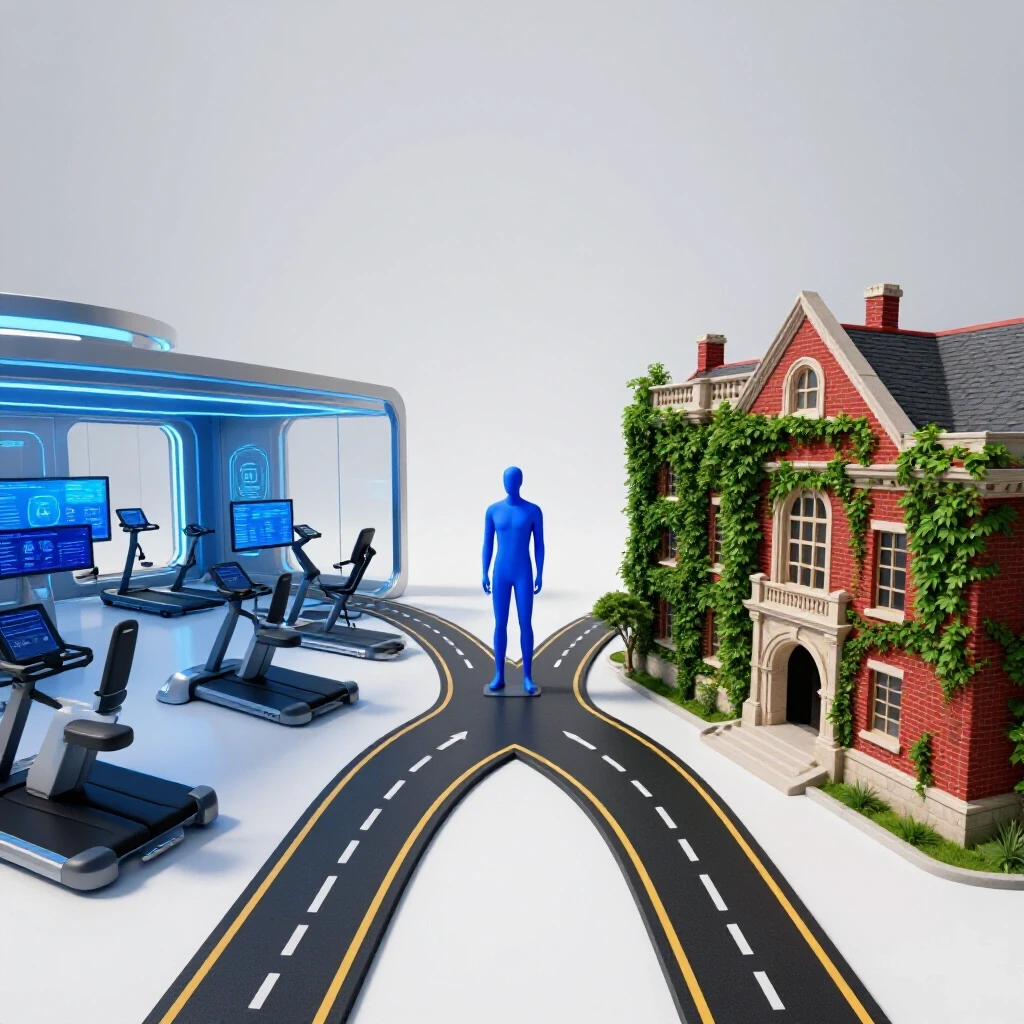
Degree on Application (HR Won’t Tell You!)
The world is changing fast, isn’t it?
We see it in the way we work, the technology we use, and even in how companies are thinking about hiring.
The old days of just needing a fancy degree to get a good job are fading.
Now, it’s more about what you can do.
That’s why I want to talk about something I call the “Degree on Application.” It’s the idea that your skills, experience, and what you can actually do are sometimes more important than that piece of paper.
And here’s the kicker: HR departments often don’t tell you this!

They might still be stuck in the old ways, focusing on degrees rather than the real value you bring.
But why is this happening?
Well, the world is becoming more aware of the impact we have on our planet.
Sustainability is no longer a buzzword; it’s a necessity.
This shift towards eco-friendly practices is transforming industries and creating new jobs that require specific skills, not just general knowledge.
Think about it: solar panel installation, sustainable agriculture, green building design… these fields need people who can do the work, not just talk about it.
So, in this article, I’m going to break down how the job market is changing, what the “Degree on Application” really means, and the skills you need to thrive in 2025.
I’ll also share some alternative ways to get an education and how HR can step up to help candidates like you understand what employers really want.
And of course, I’ll throw in some inspiring stories of people who’ve made it without the traditional route.
Ready to dive in? Let’s go!
Section 1: The Evolving Job Market
Let’s face it: the job market of today is not your parents’ job market.
Technology, remote work, and the rise of the gig economy have completely reshaped the landscape.
According to a report by McKinsey, automation and AI could displace as many as 800 million jobs globally by 2030.
(Source: https://www.mckinsey.com/featured-insights/ future-of-work/jobs-lost-jobs-gained-what-the-future-of-work-will-mean-for-jobs-skills-and-wages)
That sounds scary, but it also means new opportunities are emerging. The key is to be prepared and adaptable.
One of the biggest changes I’ve seen is the shift towards skills-based hiring.
Companies are realizing that a degree doesn’t always guarantee competence.
They’re more interested in what you can do than where you studied.
This means that practical experience, certifications, and demonstrable skills are becoming increasingly valuable.
I’ve personally seen this trend in the tech industry.
For example, a friend of mine who is a hiring manager at a software company told me they’re now using coding challenges and project portfolios to assess candidates, rather than just looking at their degrees.
“We’ve hired people with impressive degrees who couldn’t write a line of code,” he said.
“And we’ve hired people with no formal education who are rockstars.”
This shift is also evident in the increasing popularity of boot camps and online courses.
These programs offer focused, practical training in specific skills, allowing people to quickly gain the expertise they need to enter the workforce.
For example, a report by Course Report found that boot camp graduates see an average salary increase of 51% after completing their program.
(Source: https://www.coursereport.com/reports/ 2020-coding-bootcamp-market-size-research)
That’s a pretty compelling argument for skipping the traditional four-year degree, right?
But it’s not just about tech. This trend is happening across various industries.
In the healthcare sector, for example, there’s a growing demand for skilled technicians and assistants who can perform specific tasks, such as medical coding, phlebotomy, and patient care.
These roles often require certifications or vocational training, but not necessarily a four-year degree.
So, what does all this mean for you?
It means that you need to be strategic about your education and career development.
Don’t just blindly follow the traditional path.
Think about the skills you need to succeed in your chosen field and find the most efficient way to acquire them.
Section 2: Understanding the “Degree on Application” Concept
Okay, so what exactly do I mean by “Degree on Application”?
It’s simple: it’s the idea that your skills, experience, and ability to apply your knowledge are sometimes more valuable than a traditional degree.
Think of it as the difference between knowing about something and knowing how to do something.
A degree might give you the theoretical knowledge, but the “Degree on Application” gives you the practical skills.
Let’s say you want to be a marketing manager.
You could get a marketing degree, which will teach you about marketing principles, consumer behavior, and advertising strategies.
But you could also take online courses in digital marketing, social media marketing, and content creation.
You could volunteer to manage the social media accounts for a local non-profit.
You could start your own blog or YouTube channel and practice your content creation skills.
Which candidate do you think an employer would be more likely to hire?
The one with the degree and no experience, or the one with the skills and a portfolio of work?
In many cases, it’s the latter. This concept also aligns with the eco-friendly movement.
How? By promoting sustainable practices in hiring and education.
Traditional education can be resource-intensive, requiring large campuses, extensive infrastructure, and a lot of paper.
Alternative pathways, such as online courses and boot camps, are often more environmentally friendly.
They require less physical space, use less energy, and can be accessed from anywhere in the world.
Moreover, the “Degree on Application” encourages a more sustainable approach to career development.
Instead of spending years and thousands of dollars on a degree that may not be relevant to your chosen field, you can focus on acquiring the specific skills you need to succeed.
This can lead to a more fulfilling and sustainable career path.
I’ve seen this happen with many of my clients.
For example, I worked with a young woman who was passionate about environmental conservation.
She didn’t have a science degree, but she took online courses in GIS (geographic information systems) and volunteered with a local conservation organization.
She learned how to use GIS software to map and analyze environmental data.
She gained valuable field experience working on conservation projects.
She eventually landed a job as a GIS analyst with a government agency.
She’s now using her skills to help protect endangered species and manage natural resources.
Her “Degree on Application” – her skills, experience, and passion – were more valuable than a traditional degree in environmental science.
So, how can you start building your own “Degree on Application”?
Start by identifying the skills that are in demand in your chosen field.
Then, find ways to acquire those skills through online courses, boot camps, volunteer work, or personal projects.
Build a portfolio of your work to showcase your skills to potential employers.
And don’t be afraid to highlight your unique experiences and accomplishments.
Section 3: Skills That Employers Value in 2025
Okay, so we’ve established that skills are important. But which skills are most important? What are employers looking for in 2025?
Based on my research and experience, here are some key skills that will be in high demand:
Adaptability: The world is changing faster than ever.
Employers need people who can adapt to new technologies, new processes, and new challenges.According to a report by the World Economic Forum, adaptability and flexibility will be among the most important skills for the future of work.
(Source: http://www3.weforum.org/docs/WEF_Future_of_Jobs_2018.pdf) * Digital Literacy: In today’s digital world, it’s essential to be comfortable with technology.
This includes everything from using basic software applications to understanding social media and data analytics.
* Problem-Solving: Employers need people who can think critically and solve complex problems.
This includes the ability to analyze data, identify patterns, and develop creative solutions.
* Effective Communication: Communication is key in any workplace.
This includes the ability to communicate clearly and concisely, both verbally and in writing.It also includes the ability to listen actively and understand different perspectives.
* Emotional Intelligence: Emotional intelligence is the ability to understand and manage your own emotions, as well as the emotions of others.This is becoming increasingly important in the workplace, as employers recognize the value of empathy, collaboration, and teamwork.
These skills are relevant across a wide range of industries. But some industries are particularly focused on these skills.
The technology industry, for example, is always looking for people who are adaptable, digitally literate, and good at problem-solving.
The green energy industry needs people who are passionate about sustainability and can communicate effectively about environmental issues.
The healthcare industry needs people who are empathetic, emotionally intelligent, and can work well in teams.
But here’s the thing: you don’t need a degree to acquire these skills.
You can develop them through online courses, boot camps, volunteer work, personal projects, or even your current job.
The key is to be proactive and intentional about your learning and development.
For example, if you want to improve your problem-solving skills, you could take an online course in critical thinking or logic.
You could volunteer to lead a project at work that requires you to solve a complex problem.
You could even play video games that require you to think strategically and make decisions under pressure.
If you want to improve your communication skills, you could join a Toastmasters club or take a public speaking course.
You could volunteer to give presentations at work or in your community.
You could even start a blog or YouTube channel to practice your writing and speaking skills.
The possibilities are endless.
The key is to be creative and find ways to learn and grow in ways that are both effective and enjoyable.
Section 4: Alternative Pathways to Education
So, if a traditional degree isn’t always necessary, what are some alternative pathways to education?
Fortunately, there are many options available, each with its own advantages and disadvantages.
Online Courses: Online courses are a great way to learn new skills and gain knowledge in a flexible and affordable way.
There are countless online platforms that offer courses in a wide range of subjects, from coding and marketing to business and design.
* Boot Camps: Boot camps are intensive, short-term training programs that focus on specific skills, such as coding, data science, or UX/UI design.They’re a great option for people who want to quickly gain the skills they need to enter a new field.
* Vocational Training: Vocational training programs provide hands-on training in specific trades, such as welding, plumbing, or electrical work.They’re a great option for people who prefer to learn by doing and want to pursue a career in a skilled trade.
* Internships: Internships provide valuable work experience and allow you to apply your skills in a real-world setting.They’re a great way to gain experience, build your network, and learn about different industries and companies.
* Apprenticeships: Apprenticeships are structured training programs that combine on-the-job training with classroom instruction.They’re a great option for people who want to learn a trade or skill while earning a paycheck.
* Volunteer Work: Volunteer work is a great way to gain experience, develop new skills, and give back to your community.It can also be a great way to explore different career paths and network with people in your field.
Each of these pathways has its own pros and cons.
Online courses are flexible and affordable, but they require self-discipline and motivation.
Boot camps are intensive and fast-paced, but they can be expensive.
Vocational training programs provide hands-on training, but they may not be as widely recognized as traditional degrees.
Internships and apprenticeships provide valuable work experience, but they may not be paid or offer benefits.
Volunteer work is a great way to gain experience and give back, but it may not lead to a full-time job.
The best pathway for you will depend on your individual goals, learning style, and financial situation.
But the key is to be open to exploring different options and finding the pathway that works best for you.
There are also many institutions and organizations that offer innovative programs and certifications that are recognized by employers.
For example, Google offers professional certifications in data analytics, project management, and UX design.
These certifications are designed to equip people with the skills they need to succeed in high-demand fields.
They’re recognized by many employers and can be a great way to boost your resume.
Microsoft offers certifications in a variety of technologies, such as Azure, Office 365, and Dynamics 365.
These certifications demonstrate your expertise in Microsoft technologies and can help you stand out from the competition.
Cisco offers certifications in networking, security, and collaboration.
These certifications are highly valued in the IT industry and can help you advance your career.
These are just a few examples.
There are many other institutions and organizations that offer valuable programs and certifications.
The key is to do your research and find the programs that are most relevant to your career goals.
Section 5: The Role of HR in Communicating Opportunities
Okay, so we’ve talked about how the job market is changing, the “Degree on Application” concept, the skills employers value, and alternative pathways to education.
But there’s one more piece of the puzzle that we need to address: the role of HR.
Human Resources departments play a critical role in communicating opportunities to job seekers.
They’re the gatekeepers of the hiring process.
They’re responsible for attracting, recruiting, and selecting the best candidates for their organizations.
But here’s the problem: HR departments often don’t do a good job of communicating the changing landscape of hiring practices.
They may still be stuck in the old ways, focusing on degrees rather than skills.
They may not be aware of the “Degree on Application” concept or the alternative pathways to education.
This can create a gap between what candidates expect and what HR communicates regarding qualifications and job readiness.
Candidates may assume that a degree is essential for certain jobs, even when it’s not.
They may not realize that their skills and experience are more valuable than a piece of paper.
This can lead to frustration, disappointment, and a sense of being overlooked.
So, how can HR professionals bridge this gap?
How can they better inform candidates about the changing landscape of hiring practices?
Here are a few suggestions:
Update Job Descriptions: Job descriptions should clearly state the skills and experience that are required for the job, rather than just listing the required degrees.
They should also mention any alternative qualifications that are acceptable, such as certifications, boot camp training, or relevant experience.
* Revamp the Application Process: The application process should be designed to assess candidates’ skills and experience, rather than just their educational background.This could include asking candidates to complete a skills assessment, submit a portfolio of their work, or participate in a coding challenge.
* Train Recruiters: Recruiters should be trained on the changing landscape of hiring practices and the “Degree on Application” concept.They should be able to identify candidates who have the skills and experience needed for the job, even if they don’t have a traditional degree.
* Partner with Alternative Education Providers: HR departments should partner with online course providers, boot camps, and vocational training programs to identify and recruit talented candidates.
* Promote Success Stories: HR departments should share stories of individuals who have successfully navigated the job market with non-traditional educational backgrounds.This can help to change perceptions about the value of degrees and the importance of skills.
By taking these steps, HR professionals can enhance their own recruitment strategies and make their organizations more inclusive.
They can attract a wider range of candidates, including those who have been overlooked by traditional hiring practices.
They can also help to create a more diverse and skilled workforce, which can benefit their organizations in the long run.
Section 6: Real-Life Success Stories
Okay, so we’ve talked a lot about the theory behind the “Degree on Application” concept.
But what about the real world?
Are there people who have actually succeeded in the job market without a traditional degree?
Absolutely!
There are countless stories of individuals who have leveraged their skills and experiences to land positions in competitive fields.
Let me share a few inspiring examples:
The Self-Taught Coder: I know a young man who dropped out of college after a year because he wasn’t enjoying it.
He was passionate about coding, so he started teaching himself how to code using online resources.He spent hours every day learning new languages, building projects, and contributing to open-source software.
He eventually landed a job as a software engineer at a major tech company.
He’s now earning a six-figure salary and doing what he loves.
* The Marketing Maven: I worked with a woman who had a degree in English literature.
She wanted to work in marketing, but she didn’t have any formal marketing training.She started taking online courses in digital marketing, social media marketing, and content creation.
She volunteered to manage the social media accounts for a local non-profit.She built a portfolio of her work and started applying for marketing jobs.
She eventually landed a job as a marketing manager at a small business.
She’s now using her skills to help the business grow and succeed.
* The Healthcare Hero: I know a woman who didn’t have a college degree.
She worked as a certified nursing assistant (CNA) for many years.She was passionate about healthcare, so she decided to pursue a career as a registered nurse (RN).
She enrolled in an accelerated nursing program that allowed her to earn her RN license in just two years.She’s now working as a nurse in a hospital and making a difference in the lives of her patients.
These stories demonstrate that it’s possible to succeed in the job market without a traditional degree.
But what’s the impact of these stories on the perception of traditional education and the “Degree on Application” approach?
I believe that these stories are helping to change the way people think about education and career development.
They’re showing that skills and experience are often more valuable than degrees.
They’re inspiring people to pursue alternative pathways to education and to focus on acquiring the skills they need to succeed.
They’re also encouraging employers to look beyond degrees and to consider candidates based on their skills and experience.
This shift in mindset is good for everyone.
It’s good for job seekers, who have more opportunities to pursue their passions and achieve their career goals.
It’s good for employers, who can access a wider pool of talent and build a more diverse and skilled workforce.
And it’s good for society, which benefits from a more educated and productive population.
Conclusion
So, there you have it. We’ve covered a lot of ground in this article.
We’ve talked about the changing job market, the “Degree on Application” concept, the skills employers value, alternative pathways to education, the role of HR, and real-life success stories.
The key takeaway is that the job market is changing, and you need to adapt to survive and thrive.
A traditional degree is no longer a guarantee of success.
You need to focus on acquiring the skills and experience that employers are looking for.
You need to be proactive in your education and career development.
You need to be open to exploring alternative pathways to education.
And you need to shift your mindset regarding the value of traditional degrees versus applicable skills.
I know this can be a lot to take in.
But I hope that this article has inspired you to think differently about your education and career.
I hope that it has given you the tools and knowledge you need to succeed in 2025 and beyond.
Remember, the future is yours to create.
Don’t let anyone tell you that you need a degree to achieve your dreams.
Believe in yourself, focus on your skills, and go out there and make it happen!