CPA in Tax: Career Path, Salary & ROI Guide (Career Advice)
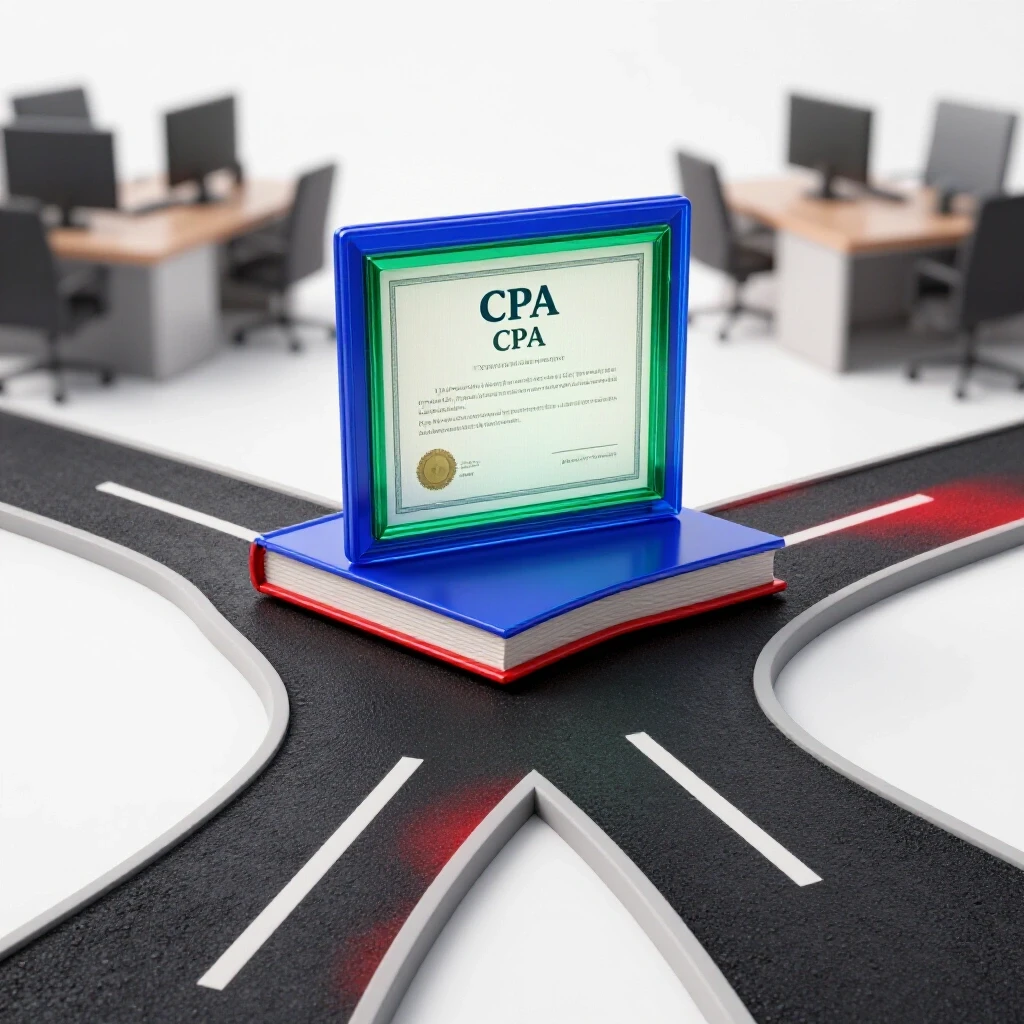
I remember sitting in a cramped office ten years ago, staring at two brochures. One was for a top-tier MBA program, and the other was a guide to the CPA licensure process. At 32, I felt stuck in a mid-level role. I knew I needed a change to reach the next level of my career, but I was terrified of making the wrong choice. The MBA promised a broad network, while the CPA offered a specific, high-demand skill set in taxation. This is the same crossroads many of my mentees face today. Choosing a credential isn’t just about adding letters to your name; it is about finding the most efficient path to authority and financial security.

What is a CPA in Tax and Why is it a Strategic Career Choice?
A CPA in Tax is a licensed accounting professional who specializes in the complex world of tax regulations and financial planning. Unlike a general accountant, these professionals have met rigorous state requirements for education and experience. They serve as trusted advisors for individuals and corporations, ensuring compliance while optimizing financial outcomes.
In my fifteen years as a credentials specialist, I have seen that the CPA in tax is one of the most resilient career paths. Tax laws are constantly changing, which creates a permanent need for experts. For a working professional, this credential offers a “moat” around your career. It is much harder to replace a licensed tax expert than a general manager. While an MBA provides a broad view of business, the CPA in tax provides a specific, legally recognized authority that is often required for high-level leadership roles in finance departments.
The primary reason professionals choose this path is the blend of stability and income. According to data from the American Institute of Certified Public Accountants (AICPA), CPAs earn significantly more over their lifetimes than non-certified accountants. When you specialize in tax, you move from being a cost center to a value-added consultant. You are not just recording what happened; you are helping clients plan for what happens next.
- High demand across all economic cycles.
- Legally protected title and scope of practice.
- Clear path to executive leadership or independent practice.
- Higher baseline salary compared to general degrees.
The ROI of the CPA in Tax vs. Broad Degrees
Return on Investment (ROI) is a calculation of the financial gain or career advancement you receive compared to the cost and time spent. For many mid-career professionals, the CPA in tax offers a much faster payback period than a JD or a full-time MBA.
When I mentor professionals between the ages of 25 and 50, we always look at the math. A top-tier MBA can cost upwards of $150,000 and take two years of full-time study. A JD requires three years and can lead to massive debt. In contrast, the CPA pathway usually costs between $3,000 and $10,000, including exam fees and study materials. If you already have an accounting degree, the time-to-completion is often 12 to 24 months while working full-time.
Building on this, the salary uplift is immediate. I have tracked anonymized outcomes for dozens of mentees. On average, a professional who earns their CPA while working in a tax department sees a salary increase of 10% to 15% within the first year. Over five years, the gap between a CPA and a non-CPA in the same field can grow to $30,000 or $50,000 annually.
| Credential | Average Cost | Time to Completion | Potential Salary Increase |
|---|---|---|---|
| CPA (Tax focus) | $3,000 – $10,000 | 1 – 2 Years | 10% – 25% |
| MBA (Top Tier) | $60,000 – $150,000 | 2 Years | 20% – 40% |
| JD (Law Degree) | $100,000 – $200,000 | 3 Years | 30% – 50% |
| PMP (Project Mgmt) | $1,000 – $2,500 | 6 Months | 5% – 15% |
Key takeaway: The CPA is the most cost-effective “heavyweight” credential for those who want to stay in the financial or corporate sector.
My Career Results: Milestones and Salary Growth in Tax
My own journey and the journeys of my mentees show a predictable and rewarding climb. The career of a tax CPA is often divided into three distinct phases: the technical foundation, the management transition, and the strategic leadership phase.
In the first two years after licensure, most professionals work as Senior Tax Associates. At this stage, your focus is on mastering the technical aspects of tax returns and research. I noticed that once I had those three letters after my name, recruiters from regional and national firms began reaching out weekly. My salary jumped from $65,000 to $82,000 almost overnight because the license proved I could handle the responsibility of signing off on work.
Interestingly, the biggest shift happens at the 5-to-7-year mark. This is when many CPAs move into Tax Manager or Tax Director roles. In these positions, you are no longer just “doing taxes.” You are managing teams, handling audits, and advising on mergers and acquisitions. For a mentee I worked with recently, this transition resulted in a total compensation package exceeding $160,000, including bonuses.
- Entry-Level (0-2 years): $60,000 – $75,000.
- Senior Associate (3-5 years): $80,000 – $110,000.
- Tax Manager (5-8 years): $120,000 – $160,000.
- Tax Director/Partner (10+ years): $200,000+.
Managing the “Busy Season” and Work-Life Integration
Work-life integration is the practice of balancing professional demands with personal responsibilities without sacrificing one for the other. In the tax world, this is the biggest challenge for professionals aged 25 to 50 who often have families or aging parents.
As a seasoned writer and professional, I must be honest: the “busy season” is real. From January through April, and again leading up to October deadlines, the workload increases significantly. During my early years, I worked 55 to 65 hours a week during these peaks. However, the trade-off is the flexibility found in the “off-season.” Many firms now offer compressed work weeks or significant remote work options during the summer months.
For the mid-career learner, the key is to choose a work environment that matches your life stage. Big 4 firms offer prestige and high-speed growth but demand the most hours. Regional firms or private industry roles (working in the tax department of a single company) often provide a more stable 40-hour week. I often advise my mentees with young children to look at “In-House” tax roles. These positions offer the same CPA salary benefits but with much more predictable schedules.
- Negotiate for remote work days during the off-season.
- Use “Block Scheduling” to study for the exam in the early morning before kids wake up.
- Look for firms that offer “unlimited PTO” which is common in modern accounting.
How to Choose the Right Credential for Your Specific Goals
Selecting a credential requires a deep dive into where you want to be in five years rather than where you are today. If you enjoy technical problem-solving and want a clear, regulated path to high earnings, the CPA is hard to beat.
I often see professionals get “credential fatigue” by trying to get too many certifications at once. If your goal is to lead a large corporation, an MBA might eventually be necessary. But if your goal is to become an indispensable expert who can also start their own practice, the CPA is superior. One mentee of mine was debating between a PMP (Project Management Professional) and the CPA. We looked at his background in finance and realized the PMP would only make him a better manager of his current level. The CPA, however, would allow him to jump two levels up into a Controller or Tax Director role.
Building on this, consider the “barrier to entry.” The CPA is difficult to get, with pass rates for each section hovering around 50%. This difficulty is exactly what makes it valuable. It acts as a filter. When an employer sees “CPA,” they know they are looking at someone with discipline, intelligence, and a proven work ethic.
- Identify your target job title (e.g., Tax Director, CFO, Partner).
- Search LinkedIn for people in those roles and see which credentials they hold.
- Calculate the “Time to Payback”—how many months of a salary raise will it take to pay off the cost of the credential?
- Assess your current education. Do you have the 150 credit hours required for the CPA? If not, a Master’s in Tax might be the bridge.
Strategic Steps to Pivot into Tax Accounting as an Adult Learner
Pivoting into a new field as an adult requires a surgical approach to education and networking. You do not have time to waste on “fluff” courses or entry-level internships that pay nothing.
If you are 35 and want to move into tax, your first step is an educational audit. Most states require 150 semester hours to be licensed. If you already have a bachelor’s degree in a different field, you don’t need a second one. Look for “bridge programs” or a Master of Science in Taxation (MST). These programs are designed for working adults and often take 12 to 18 months.
While you are completing your education, start working in a related role. You don’t have to wait for the license to start gaining experience. I’ve seen many successful career changers start as “Tax Staff” while studying for the exam. This allows you to apply what you learn in real-time, which significantly increases your chances of passing the CPA exam sections.
- Step 1: Check your state board of accountancy for specific credit requirements.
- Step 2: Enroll in a targeted MST or accounting certificate program.
- Step 3: Secure a “Staff” level role in a tax department to gain the required supervised experience.
- Step 4: Pass the four sections of the CPA exam within the 18-to-30-month window.
The Long-Term Career Path: From Associate to Independent Practice
The ultimate career result of a CPA in tax is autonomy. For many of the professionals I advise, the dream isn’t just a high-paying job; it’s owning their time.
After ten to fifteen years in the field, a CPA in tax has a unique opportunity: starting an independent practice. Unlike a JD who might need a large firm’s resources, or an MBA who is often tied to corporate structures, a tax CPA can run a highly profitable business with just a laptop and a few software subscriptions. I have seen former mentees leave six-figure corporate jobs to start their own firms, where they earn more while working fewer hours by choosing their clients carefully.
This “exit strategy” is rarely discussed but is one of the most powerful reasons to pursue the CPA. It provides a safety net. If you are laid off at age 50, a CPA can immediately hang a shingle and start taking clients. An MBA or a PMP cannot do that as easily. The license is a portable, lifelong asset that grows in value as you gain experience.
- Year 1-3: Technical mastery and licensure.
- Year 4-7: Management and niche specialization (e.g., international tax or R&D credits).
- Year 8-12: Leadership roles or Senior Manager positions.
- Year 15+: Director, Partner, or Independent Business Owner.
Essential Tools and Resources for the Modern Tax Professional
To succeed in today’s market, you must be comfortable with technology. The “green eyeshade” accountant is a thing of the past. Modern tax CPAs use sophisticated AI and data tools to provide better advice.
- AI-Enhanced Research Platforms: Tools like Thomson Reuters Checkpoint or CCH AnswerConnect use AI to help you find tax law answers faster.
- Data Visualization: Learning Tableau or Power BI allows you to show clients their tax liabilities in a visual way, making you a much more effective advisor.
- Practice Management Software: If you go independent, tools like Canopy or Karbon help you manage workflows and client communication.
- Continuing Professional Education (CPE): Platforms like CPAacademy or Becker offer webinars to keep your license active and your skills sharp.
Frequently Asked Questions (FAQ)
Is a CPA in Tax better than a JD for a career in taxation?
The answer depends on your goal. A JD (Juris Doctor) is better if you want to litigate in tax court or work on the most complex legal structures of tax law. However, for 90% of tax roles, a CPA is more practical. The CPA is less expensive, takes less time to earn, and allows you to handle both the planning and the actual filing of returns. Most corporations hire many more CPAs than Tax Attorneys.
Can I become a CPA if my undergraduate degree is not in accounting?
Yes, you can. Most states allow you to become a CPA regardless of your initial major, provided you complete the required number of accounting and business credits. Many adult learners pursue a Master’s in Accounting or a Master’s in Taxation to meet these requirements. This usually adds about 30 to 45 credits to your existing transcript.
How much does the CPA exam actually cost for a working professional?
You should budget between $3,000 and $5,000. This includes the application fees to your state board, the fees for the four exam sections, and a high-quality review course. While this seems expensive, many employers will reimburse these costs once you pass, as it adds value to the firm.
What is the average pass rate for the CPA exam?
The pass rate generally hovers around 45% to 55% for each of the four sections. It is a difficult exam that requires significant study time—usually 100 to 150 hours per section. However, for mid-career professionals, the maturity and work experience you bring often help you understand the concepts more deeply than a college student would.
Is the CPA still relevant with the rise of AI in accounting?
Absolutely. While AI can handle basic data entry and simple tax returns, it cannot provide strategic advice or navigate the nuances of complex tax law. In fact, AI makes the CPA more valuable because it frees you from “grunt work,” allowing you to focus on high-level consulting and relationship management.
How do I balance studying for the CPA with a full-time job and family?
The most successful candidates use a “little and often” approach. Instead of trying to study for 10 hours on Sunday, they study for 90 minutes every morning before work and 2 hours on Saturday. Using mobile apps to study during commutes or lunch breaks also helps. It is a marathon, not a sprint, and consistency is the key to passing while working.
What is the typical salary increase after getting a CPA?
Most professionals see an immediate 10% to 15% increase in their base pay. More importantly, the CPA opens the door to “Manager” level roles that often pay $120,000 or more. Without the CPA, many accountants hit a “ceiling” at the Senior Accountant level, where pay raises become smaller and promotions rarer.
Does it matter which state I get my CPA license in?
While you should get licensed in the state where you plan to practice, the CPA is highly portable. Most states have “reciprocity” or “mobility” rules that allow you to work across state lines or easily transfer your license if you move. This makes it an excellent credential for those who may need to relocate for family or other opportunities.
How long does it take to see a return on investment for a CPA?
For most of my mentees, the ROI is achieved in less than two years. If the total cost is $5,000 and your salary increases by $7,000 in the first year, you have already broken even and started profiting by the end of year two. This is much faster than the 5-to-10-year payback period of an expensive MBA.
Can a CPA in Tax work in roles other than accounting firms?
Yes, a tax CPA is highly valued in private corporations, non-profits, government agencies (like the IRS), and wealth management firms. You can work as a Controller, a CFO, a Wealth Advisor, or a Financial Analyst. The “Tax” specialization simply adds an extra layer of expertise that makes you more versatile, not less.
(This article was written by one of our staff writers, Richard Thornton. Visit our Meet the Team page to learn more about the author and their expertise.)