Clinical Placement Requirements & Definition Explained (Guide 2026)
The best option for any student entering the healthcare field is to treat their clinical placement not just as a course requirement, but as their first true professional audition. When you prepare for this milestone early, you turn a potentially stressful list of chores into a smooth transition toward your career. I have spent nearly two decades helping students navigate the maze of higher education, and I have seen how a clear understanding of these terms can be the difference between a confident start and a frantic scramble.
In my years as an advisor, I once worked with a student named Maya. She was a brilliant nursing student who excelled in her lectures. However, she almost missed her first hospital rotation because she did not realize that a “clinical placement” was different from a standard lab class. She thought she could just show up on the first day. By the time we cleared her paperwork, she was two weeks behind. My goal today is to make sure that never happens to you.
What is a Clinical Placement?
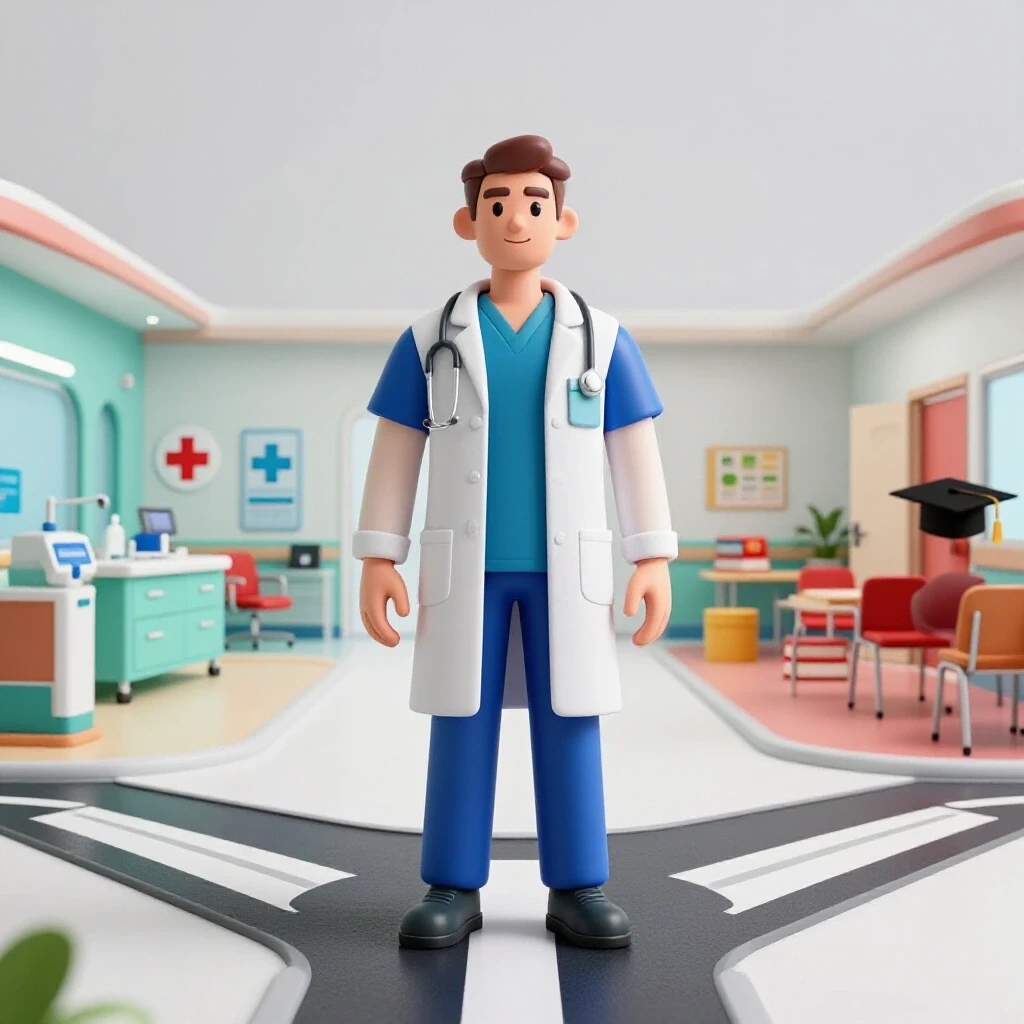
A clinical placement is a mandatory, supervised hands-on learning experience integrated into healthcare education programs. It is designed to move you out of the classroom and into a real-world setting where you provide actual care to patients. Think of it as the bridge between knowing how a heart works from a textbook and actually listening to a patient’s heartbeat in a hospital room.
I like to use the analogy of a flight simulator. Your classroom lectures and lab practices are the simulator. They are safe places to make mistakes. The clinical placement is the first time you are actually in the cockpit of a real plane. You are still supervised by an expert pilot, but the environment is real, the stakes are real, and the learning is much faster.
Why are Clinical Placements Required?
These placements are required because healthcare is a practice-based profession that demands both head knowledge and physical skill. Accrediting bodies and state boards require these hours to ensure that every graduate is safe to practice. You cannot learn the “soft skills” of patient communication or the “muscle memory” of medical procedures through a screen or a book alone.
Most programs require a specific number of hours to graduate. For example, a nursing student might need to complete 500 to 1,000 clinical hours depending on their state and degree level. These hours are usually unpaid because they are part of your academic credit. You are paying tuition for the instruction and supervision you receive while working in these facilities.
Essential Requirements for Clinical Placement Success
These are the mandatory health, legal, and educational standards students must meet before they can step foot in a healthcare facility. These requirements exist to protect you, the patients, and the university. If you do not meet every single one of these items, the hospital or clinic will not allow you to enter, regardless of your grades.
In my experience, the “paperwork phase” is where most students feel overwhelmed. It helps to view these requirements as a checklist for your professional license. You are proving that you are healthy, safe, and prepared.
Health and Immunization Clearances
Health clearances are official documents proving you have been vaccinated against common diseases or have tested negative for certain conditions. Because you will be around vulnerable patients, hospitals must ensure you do not bring infectious diseases into the building.
The most common health requirements include:
- Tuberculosis (TB) Screening: Often a skin test or a blood test. You may need two of these within a specific timeframe.
- Hepatitis B: A series of three shots. This can take six months to complete, so start early!
- MMR (Measles, Mumps, Rubella): Proof of two doses or a blood test showing immunity.
- Varicella (Chickenpox): Proof of vaccination or a blood test.
- Flu Vaccine: Usually required annually during the winter months.
- COVID-19 Vaccination: Many facilities now require this as a standard safety measure.
Background Checks and Drug Screenings
A background check is a formal review of your criminal record, while a drug screening is a lab test to ensure you are not using illegal substances. These are non-negotiable because healthcare workers have access to sensitive patient data and controlled medications.
I once advised a student who was worried about a minor traffic ticket. Usually, small things like that do not matter, but major offenses can prevent you from being placed. Most background checks cost between $50 and $150, and you are typically responsible for this cost. It is a standard part of the “onboarding” process for the medical profession.
Professional Certifications: BLS and CPR
Basic Life Support (BLS) and Cardiopulmonary Resuscitation (CPR) certifications are credentials that prove you know how to respond in a life-threatening emergency. Most programs require the “Healthcare Provider” version of these courses, usually through the American Heart Association.
Do not make the mistake of taking a “community” CPR class at a local gym. It must be the specific version required by your clinical site. These certifications usually last for two years. I recommend keeping a digital copy of your card on your phone at all times.
Comparing Clinical Placements to Other Terms
It is easy to get “internships,” “practicums,” and “clinicals” mixed up. While they all involve learning outside the classroom, they have different structures and goals.
| Feature | Clinical Placement | Practicum | Internship |
|---|---|---|---|
| Primary Goal | Direct patient care skills | Observing and limited practice | General work experience |
| Supervision | Very high (Preceptor/Instructor) | Moderate | Varies |
| Paid or Unpaid | Almost always unpaid | Usually unpaid | Can be paid or unpaid |
| Academic Credit | Mandatory for graduation | Usually mandatory | Often optional |
| Common Fields | Nursing, Med, Respiratory Therapy | Education, Social Work | Business, Tech, Arts |
Navigating the Compliance Timeline
The compliance timeline is the schedule you must follow to finish all your requirements before your first day of clinicals. Many students fail to realize that some vaccines or background checks take weeks or even months to process.
I suggest starting your checklist at least one full semester before your clinicals begin. If you are an international student, this is even more important. You may need to gather records from your home country or undergo additional screenings that take longer to verify.
HIPAA and OSHA Training
These are short training modules that teach you about legal and safety standards. HIPAA (Health Insurance Portability and Accountability Act) is all about patient privacy. It teaches you that you cannot share a patient’s name or photo on social media. OSHA (Occupational Safety and Health Administration) focuses on your safety, such as how to handle needles or hazardous chemicals.
Most schools provide these modules online. They might take two to four hours to complete. Once you finish, you will get a certificate. Save this! You will likely need to show it to every hospital you visit throughout your education.
Practical Tips for International Students
If you are an international student, you are navigating two systems at once. I have worked with many students from around the world who were confused by the U.S. healthcare requirements. Here are three things to keep in mind:
- Translate Your Records: If your immunization records are not in English, you will need a certified translation.
- Check Your Visa: Ensure your F-1 or J-1 visa allows for “Curricular Practical Training” (CPT) if the clinical is off-campus. Your international advisor is your best friend here.
- Titers vs. Records: If you cannot find your childhood vaccine records, you can ask a doctor for a “titer” test. This is a blood test that proves you are immune to a disease. It is often easier than tracking down old paperwork.
Advice for Parents and New Academic Advisors
For parents, the best way to support your student is to help them stay organized. This process feels like a part-time job. Encourage them to create a “Clinical Binder” (physical or digital) to hold all their certificates and health records.
For new advisors, I recommend creating a “First-Year Roadmap.” Many students don’t look at clinical requirements until their second or third year. By then, they might find out they have a health condition or a paperwork delay that sets their graduation back by a year. Mention “clinicals” in every meeting starting in week one.
Common Pitfalls to Avoid
- Waiting until the last minute: Some blood tests take five days for results. Some vaccine series take six months.
- Using an expired ID: Your driver’s license or passport must be valid to pass a background check.
- Losing paperwork: Facilities lose files. Always have your own copies ready to resubmit.
- Ignoring emails: Your clinical coordinator will send vital updates via your school email. Check it daily.
Tools and Resources for Success
- Castlebranch or American DataBank: These are common online portals where schools ask you to upload your documents.
- CDC Vaccine Schedules: Use this to understand what vaccines are standard in the U.S.
- School Clinical Handbook: This is your “bible” for specific program rules.
- Campus Health Center: Often the cheapest place to get your shots and titers.
- Notes App or Google Drive: Use these to scan and store every document you receive.
Actionable Metrics to Track
- Total Hours Needed: Know the exact number of hours required for your degree (e.g., 640 hours).
- Cost of Compliance: Budget $200-$400 for background checks, drug screens, and vaccinations.
- Credit Value: Most clinicals are worth 3 to 6 credit hours per semester.
- Shift Length: Expect to work 8 to 12 hours per shift, just like a regular employee.
Frequently Asked Questions (FAQ)
What is a clinical placement exactly? A clinical placement is a part of your college program where you work in a real healthcare setting. You are supervised by a professional (called a preceptor or instructor) and perform the tasks you have learned in class. It is a required step to earn your degree and license in fields like nursing or physical therapy.
Do I get paid for clinical placements? No, in almost all cases, clinical placements are unpaid. This is because they are considered a class for which you are earning academic credit. You are there to learn, and the staff at the facility are spending time teaching and supervising you.
How long does a clinical placement last? The length varies by program. Some last for a few weeks, while others last an entire semester. You might go to the hospital one or two days a week for 8 to 12 hours at a time. Total hours for a degree can range from 400 to over 1,000.
What happens if I fail my clinical placement? If you do not meet the clinical standards or fail to complete your hours, you usually cannot pass the course. Because clinicals are often “prerequisites” for the next set of classes, failing one can delay your graduation. Most schools allow you to retake the clinical, but you should speak with your advisor immediately.
Can I choose where I go for my clinical placement? Usually, the school assigns you to a location based on their partnerships with local hospitals. While you might be able to state a preference for a specific specialty (like pediatrics or the ER), the final decision is made by the clinical coordinator to ensure every student gets a spot.
What is a “preceptor”? A preceptor is an experienced healthcare professional (like a registered nurse or a doctor) who works at the facility and supervises you one-on-one. They teach you how to apply your skills, answer your questions, and give feedback to your school about your performance.
What should I wear to my clinical placement? Most programs require a specific uniform, known as “scrubs,” often in a specific color with the school’s logo. You will also need comfortable, closed-toe shoes (often white or black) and your school ID badge. Professionalism in your appearance is a major part of your grade.
What if I have a criminal record? It depends on the nature of the offense and the laws in your state. You should be honest with your advisor early on. Some facilities may deny you placement for certain crimes, which could prevent you from finishing your degree. It is better to find this out before you spend years in school.
Is a clinical placement the same as a residency? No. A clinical placement happens while you are still a student in your initial degree program. A residency typically happens after you have graduated and earned your degree (common for doctors and some advanced practice nurses) and is a form of paid, post-graduate training.
How do I document my hours? Most schools use a digital tracking system or a paper “clinical log.” You will record the date, the number of hours worked, and the skills you practiced. Your preceptor or instructor will then sign off to verify that you were actually there and did the work.
What is the best way to prepare for my first day? Review your basic skills (like taking blood pressure), pack your stethoscope and a notebook, and make sure you know exactly where to park. Arriving 15 minutes early and having a positive, “ready to help” attitude is the best way to impress your preceptor.
Why do I need a drug screen if I have a prescription? Hospitals must ensure safety for all patients. If you have a legal prescription for a medication that shows up on a drug screen, you will typically need to provide documentation from your doctor to a Medical Review Officer (MRO) who will verify it is a legitimate medical use.
(This article was written by one of our staff writers, Alan Westbrook. Visit our Meet the Team page to learn more about the author and their expertise.)