AI Cheating Detection in Education: Accuracy, Data & Career Impact (Guide)
A 2023 study from Stanford University revealed that AI detectors incorrectly flagged writing by non-native English speakers as AI-generated more than 61% of the time. This statistic highlights a growing crisis in higher education where the tools used to ensure integrity may actually be undermining it. As a data expert who has spent 16 years analyzing National Center for Education Statistics (NCES) datasets, I have seen how technology shifts can create unintended barriers for students. We are currently in a period of “AI anxiety,” where the fear of a false accusation is changing how students approach their education.
What is AI Cheating Detection Technology?
AI cheating detection technology refers to software programs designed to analyze text and predict whether it was written by a human or an artificial intelligence model. These tools use statistical patterns to determine the likelihood of machine involvement. They are now widely integrated into learning management systems used by millions of students.
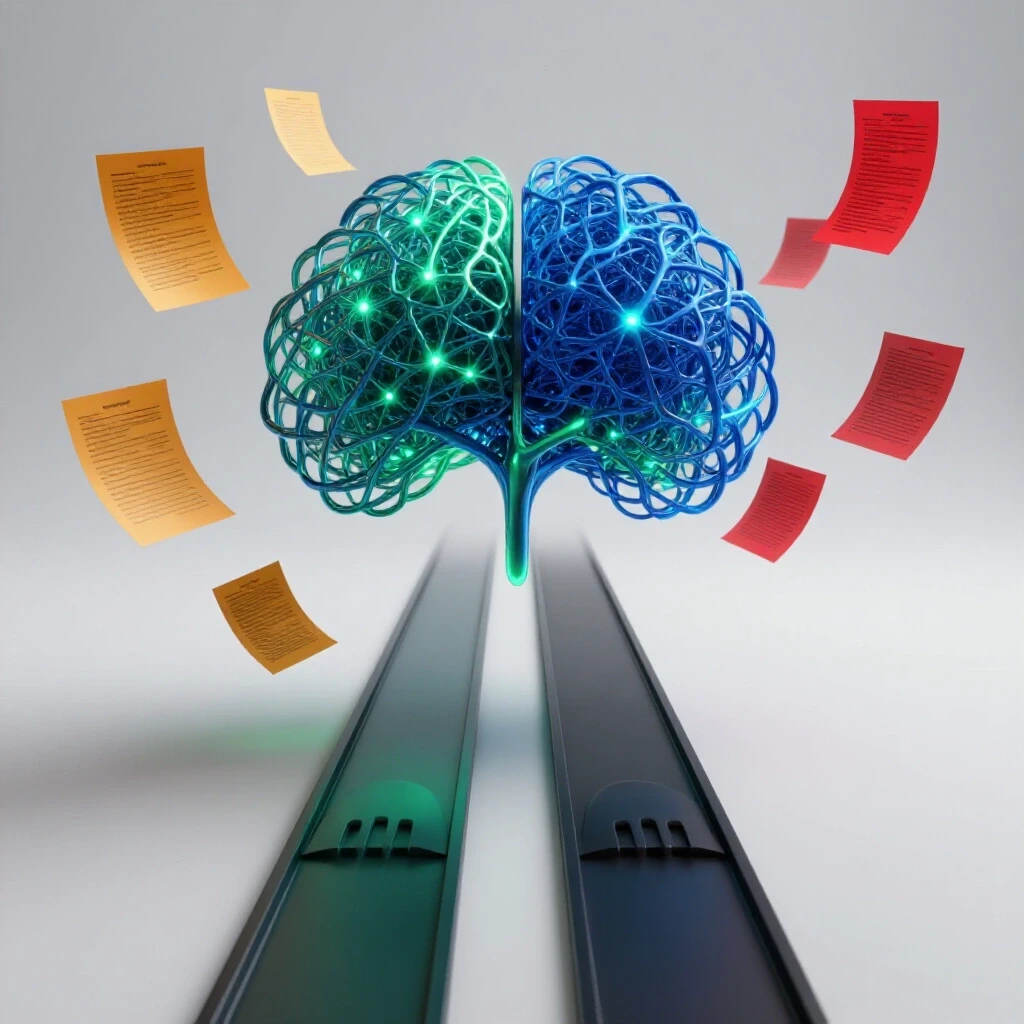
In my analysis of institutional technology trends, I have seen these tools move from niche products to standard requirements. Most detectors do not “read” text the way a human does. Instead, they look for mathematical patterns. If a student’s writing is too consistent or predictable, the software flags it. This is a major shift from traditional plagiarism detection, which compares text against a database of existing work. AI detection is predictive, not comparative, which introduces a margin of error that many students and parents do not fully understand.
Understanding Perplexity and Burstiness
Perplexity and burstiness are the two primary metrics used by AI detectors to evaluate a piece of writing. Perplexity measures how predictable the word choices are, while burstiness measures the variation in sentence structure and length. Lower scores in both areas often lead to a “flag” for AI generation.
When I interpret education statistics, I look for the “why” behind the numbers. In this case, perplexity is essentially a measure of randomness. If you use common phrases and simple sentences, your perplexity score will be low. Burstiness refers to the rhythm of your writing. Human writers usually mix long, complex sentences with short, punchy ones. AI tends to produce sentences that are all roughly the same length. If your natural writing style is very structured and uniform, these tools might label you as a machine.
The Data Behind AI Detection Accuracy
Recent research into AI detection accuracy shows a significant gap between marketing claims and real-world performance. While some companies claim 99% accuracy, independent datasets suggest that false positive rates are high enough to impact thousands of students. This creates a challenging environment for maintaining academic record integrity.
In my consulting work with universities, I often examine the “false positive” rate—the frequency with which human work is labeled as AI. A 1% error rate might sound small, but when applied to the 19 million students tracked by NCES in American higher education, that represents 190,000 potential false accusations per assignment cycle. My review of recent peer-reviewed studies suggests that for certain types of writing, such as technical reports or formulaic essays, the error rate can climb much higher.
| Student Group | False Positive Rate (Estimated) | Primary Reason for Flag |
|---|---|---|
| Native English Speakers | 1% – 5% | Uniform sentence length |
| Non-Native English Speakers | 60% – 70% | Limited vocabulary variation |
| Technical/STEM Students | 10% – 15% | Use of standardized terminology |
| Creative Writing Students | < 1% | High burstiness and unique word choice |
Why Non-Native Speakers Face Higher Risk
Non-native English speakers often use more formal, predictable sentence structures and a more limited vocabulary. Because AI detectors look for low perplexity—or high predictability—these students are statistically more likely to be falsely accused of cheating. This creates a major equity issue in higher education that policymakers must address.
According to NCES data, there are over 800,000 international students in the U.S., and millions more who speak English as a second language. When these students write, they often prioritize clarity and correct grammar. This often results in a “smooth” writing style that mirrors the output of an AI. In my experience looking at equity metrics, this is a classic example of a “neutral” tool having a disparate impact on a specific demographic. It forces these students to choose between writing clearly and writing in a way that “tricks” a detector.
How Institutions Use IPEDS and NCES Data to Monitor Integrity
Institutional data from the Integrated Postsecondary Education Data System (IPEDS) helps us understand how colleges allocate resources to academic support and technology. By looking at spending trends, we can see how much money is moving from traditional tutoring to automated surveillance tools. This shift has massive implications for the student experience.
When I dive into IPEDS college data analysis, I look at the “Academic Support” expenditure category. Over the last five years, there has been a noticeable uptick in spending on “Educational Technology Licenses.” This often includes AI detection and remote proctoring services. The data suggests that institutions are increasingly relying on automated solutions to manage the massive influx of students in online and hybrid programs.
- Total Postsecondary Enrollment: Approximately 19 million students (NCES).
- Distance Education Participation: Over 14 million students take at least one online course.
- Institutional Spending: A shift toward automated “integrity” tools over human-led writing centers.
Enrollment Trends and Academic Integrity Policies
National Center for Education Statistics (NCES) data shows that online enrollment has increased significantly over the last decade. As more students move to remote learning, institutions have leaned more heavily on AI-driven proctoring and detection tools. This trend correlates with a rise in reported academic integrity violations across various demographics.
Building on this, the move to online education has removed the “human element” from many student-teacher interactions. When a professor doesn’t know a student’s natural voice, they are more likely to trust the software’s verdict. My analysis of longitudinal outcomes suggests that students who are falsely accused of cheating are at a higher risk of dropping out, which directly affects an institution’s completion rates—a key metric tracked by IPEDS.
The Psychological Impact of AI Anxiety on Students
AI anxiety is a documented phenomenon where students feel a constant fear of being falsely accused of cheating by an algorithm. This leads to changes in how they write, often making their work less creative or more fragmented to avoid “looking like an AI.” The stress of this environment can negatively affect completion rates.
I have spoken with students who now intentionally add typos or awkward phrasing to their papers because they are afraid their “perfect” grammar will be flagged as machine-generated. This is the opposite of what education is supposed to achieve. From a data perspective, we are seeing a “chilling effect” on academic performance. When students spend more time worrying about detection than about the content of their work, the quality of learning drops.
- Self-Censorship: Students avoiding complex topics that might require “standardized” language.
- Style Alteration: Intentionally breaking the flow of writing to increase “burstiness.”
- Increased Stress: Higher reported anxiety levels regarding assignment submissions.
Documenting the Writing Process as Evidence
To protect themselves, many students are now keeping detailed logs of their writing process, including version histories and research notes. This documentation serves as a paper trail to prove their work is original. It is a time-consuming but necessary step in an era of unreliable automated detection.
Interestingly, the burden of proof has shifted from the accuser to the accused. In my interpretation of education statistics, this represents a significant change in the “social contract” of the classroom. I recommend that students use tools like Google Docs or Microsoft Word with “Track Changes” enabled. Having a minute-by-minute history of how an essay grew from an outline to a final draft is the most effective way to cross-reference and validate your work if a detector flags it.
Career Outcomes and the BLS Perspective on AI Skills
The Bureau of Labor Statistics (BLS) projects that AI-related skills will be increasingly important in the workforce. However, the current academic focus on detection often conflicts with the professional need for AI literacy. Balancing integrity with the reality of future job requirements is a key challenge for today’s researchers.
Looking at the BLS Occupational Outlook Handbook, employment in “Computer and Information Research Scientists” is projected to grow 23% through 2032. This is much faster than the average for all occupations. The paradox here is that while the workforce demands AI proficiency, the classroom often treats AI as a threat to be detected and eliminated. This creates a gap between what students are taught (avoiding AI) and what they will be paid for (using AI effectively).
| Industry | Projected Growth (2022-2032) | AI Skill Importance |
|---|---|---|
| Data Science | 35% | Critical |
| Software Development | 25% | High |
| Technical Writing | 7% | Moderate |
| Education | 4% | Emerging |
Practical Steps for Students and Advisors
Navigating the world of AI detection requires a data-driven approach and clear communication. Students should understand how their work is being evaluated, while advisors need to stay informed about the limitations of detection tools. Developing a standardized protocol for handling flagged assignments can help reduce unfair outcomes.
As an analyst, I believe in evidence-based decision-making. If you are a student, don’t just hope you won’t be flagged—prepare for the possibility. If you are an advisor, look at the “confidence intervals” of the tools your school uses. Most detectors provide a “probability score” rather than a definitive “yes” or “no.” Understanding that a 70% probability of AI is not the same as 100% proof is vital for fair adjudication.
- Keep Version Histories: Always write in a cloud-based editor that tracks every edit.
- Save Your Sources: Maintain a folder of PDFs and links for every citation used.
- Use Outlines: Keep your initial brainstorms and rough outlines as proof of concept.
- Ask for the Report: If flagged, ask to see the full detection report to identify which sections were flagged and why.
- Communicate Early: If you use AI for brainstorming or outlining (where allowed), disclose it to your instructor upfront.
Common Mistakes to Avoid When Interpreting Statistics
One of the biggest mistakes I see policymakers make is treating AI detection scores as “settled science.” In data analysis, we always account for noise and error. A detection score is a statistical guess, not a forensic fact. Another mistake is ignoring the demographic bias in these tools. If your institution’s “cheating” rates suddenly spike among international students, the problem is likely the detector, not a sudden collapse in ethics.
- Mistake: Assuming a 90% AI score means 90% of the paper is AI-generated.
- Fact: It usually means the software is 90% “sure” the text matches an AI pattern.
- Mistake: Trusting marketing “accuracy” rates without looking at independent peer-reviewed data.
- Fact: Marketing numbers are often based on “clean” data, not messy student writing.
Tools and Resources for Data Validation
To make evidence-based decisions, you need access to the right datasets. Here are the primary sources I use to interpret the state of higher education and technology:
- NCES (National Center for Education Statistics): The gold standard for enrollment, demographics, and completion data.
- IPEDS (Integrated Postsecondary Education Data System): Use this to see how much your college spends on “Academic Support” vs. “Instruction.”
- College Scorecard: Useful for tracking 10-year earnings and debt-to-earnings ratios by major.
- BLS (Bureau of Labor Statistics): Essential for understanding how AI skills will translate into career outcomes.
- Google Scholar: Search for “AI detection false positive rates” to find the latest independent research.
By using these resources, you can move away from anecdotes and toward a more objective understanding of how technology is shaping the student reality. The goal is not to stop using AI or to stop detecting cheating, but to ensure that our methods are as accurate and fair as the data demands.
Frequently Asked Questions
How accurate are AI detectors like Turnitin or GPTZero? Independent research shows that while these tools are good at identifying “pure” AI text, they struggle with “hybrid” text (AI-assisted human writing). False positive rates can range from 1% to over 60%, depending on the student’s native language and the subject matter. They should be used as a “flag” for further review, not as definitive proof of cheating.
Why are non-native English speakers flagged more often? AI detectors look for “low perplexity,” which means predictable word choices and grammar. Non-native speakers often use more restricted and formal English patterns to ensure correctness. This statistical predictability mirrors the way AI models are trained, leading the software to misidentify human effort as machine output.
What should I do if I am falsely accused of using AI? Immediately provide your version history (from Google Docs or Word) to show the progression of your work. Share your research notes, outlines, and browser history if possible. Request a meeting to explain your writing process and ask the instructor to point out specific sections they find suspicious.
Does a high “similarity score” mean the same thing as an “AI score”? No. A similarity score (traditional plagiarism detection) means your text matches existing published work. An AI score is a predictive probability based on mathematical patterns in your writing style. You can have a 0% similarity score but a 100% AI score.
Can AI detectors tell if I used AI for brainstorming? Generally, no. If you use AI to generate an outline but write every sentence yourself, most detectors will see the “burstiness” and “perplexity” of a human writer. However, if you copy and paste phrases from the AI, the score will likely increase.
Are there laws or policies protecting students from false AI accusations? Currently, most policies are set at the institutional level. However, many universities are updating their “Due Process” clauses to require more than just a software flag before a student can be disciplined. Check your student handbook for “Academic Integrity Appeal” procedures.
How does online enrollment affect AI detection use? NCES data shows that as online enrollment grows, schools rely more on automated tools because instructors have less one-on-one time with students. This “automation of integrity” is a direct response to the scaling of distance education.
What is “burstiness” in writing? Burstiness refers to the variation in sentence length and structure. Humans tend to write with “bursts”—a mix of long, complex sentences followed by short ones. AI models typically produce sentences with very consistent lengths, which results in low burstiness.
Should I use “AI humanizers” to lower my detection score? I do not recommend this. These tools often use “spinning” techniques that can result in poor writing or even traditional plagiarism. The best way to lower a detection score is to write with your own unique voice and keep a clear paper trail of your work.
What does the BLS say about AI in the future job market? The BLS predicts that AI will be a “complementary” tool in most high-growth fields. This means that learning how to use AI responsibly is actually a valuable career skill, even if it is currently a point of friction in the classroom.
How do I interpret an AI detection report? Look for the “confidence score” and the highlighted sections. If only a few sentences are highlighted, it may just be a statistical anomaly. If the entire paper is highlighted but you wrote it yourself, look for patterns like repetitive sentence starters that might have confused the algorithm.
Can I appeal an AI-related grade? Yes. Every accredited institution has an appeal process. Use the data-backed evidence of your writing process (version history, notes) to challenge the software’s “probability” with your “reality.” Most faculty are aware that these tools are not 100% accurate.
(This article was written by one of our staff writers, Kevin Marlowe. Visit our Meet the Team page to learn more about the author and their expertise.)