Cambridge Master’s: Is it Worth it? (Top Tier ROI?)
You’re not alone.
The world’s changing, and so is the job market.
More and more, employers are looking for candidates with advanced degrees from top-tier universities.
But let’s be real: these degrees come with a hefty price tag.
Is a Cambridge master’s a golden ticket, or just a really expensive piece of paper?
That’s exactly what I’m going to help you figure out.
We’ll dive deep into the costs, the potential earnings, and the intangible benefits of a Cambridge master’s, all to help you decide if it’s the right move for your future.
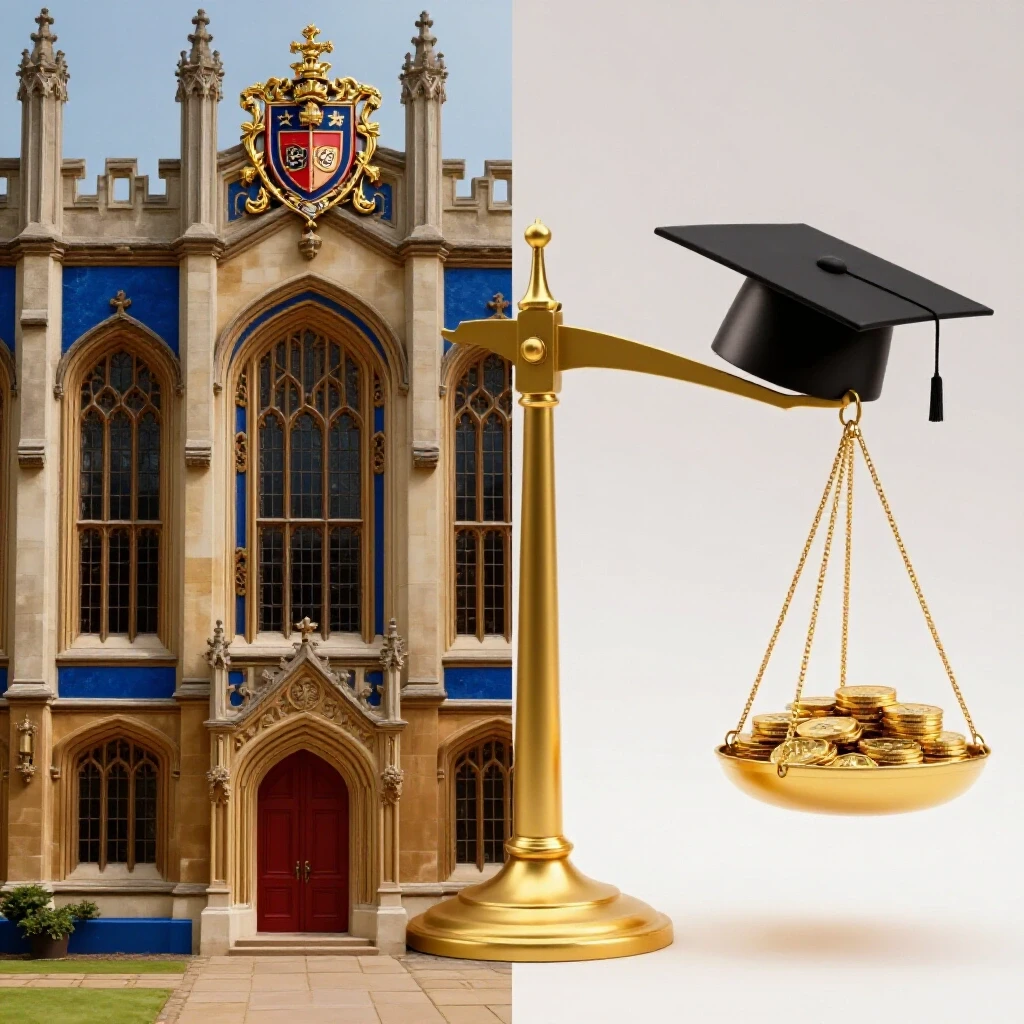
Section 1: Overview of the Cambridge Master’s Programs
Cambridge University, steeped in history and tradition, offers a diverse array of master’s programs across various disciplines.
From the sciences and engineering to the humanities and social sciences, there’s something for almost everyone.
What sets these programs apart?
Well, for starters, Cambridge has a stellar reputation. It consistently ranks among the top universities globally.
Think Nobel laureates, groundbreaking research, and a legacy of shaping world leaders.
Some of the most popular master’s programs include:
- Master of Business Administration (MBA): A globally recognized program for aspiring business leaders.
- Master of Finance (MFin): Designed for those seeking a deep understanding of financial markets and investment strategies.
- Master of Law (LLM): A prestigious program for legal professionals seeking advanced knowledge in specialized areas of law.
- Master of Engineering (MEng): Offers various specializations, preparing graduates for careers in cutting-edge engineering fields.
- Master of Philosophy (MPhil): A research-oriented degree that serves as a stepping stone to a PhD.
Cambridge’s influence on global thought and industry leaders is undeniable.
Think about names like Isaac Newton, Charles Darwin, and Stephen Hawking – all Cambridge alumni!
The university’s commitment to academic excellence and its rigorous selection process ensure that only the brightest minds are admitted.
This creates a stimulating learning environment where students are challenged to push their boundaries and achieve their full potential.
Section 2: The Financial Investment of a Cambridge Master’s
Okay, let’s talk money. A Cambridge master’s isn’t cheap.
You need to factor in tuition fees, living expenses, and other costs like study materials and travel.
Here’s a rough breakdown:
- Tuition Fees: These vary depending on the program and your nationality.
For international students, tuition fees can range from £25,000 to £45,000 per year (approximately $31,000 to $56,000 USD). - Living Expenses: Cambridge is an expensive city.
Expect to spend around £1,200 to £1,500 per month (approximately $1,500 to $1,900 USD) on accommodation, food, and other essentials. - Additional Costs: Books, software, travel, and social activities can add up. Budget an extra £2,000 to £3,000 per year.
So, all in all, you’re looking at a total investment of £40,000 to £60,000 (approximately $50,000 to $75,000 USD) for a one-year master’s program.
How does this compare to other top universities?
Well, programs at institutions like Harvard, Stanford, and Oxford have similar price tags.
However, Cambridge does offer some unique funding opportunities.
For example, the Cambridge Trust provides scholarships to international students based on academic merit and financial need.
You can also explore external funding options like the Chevening Scholarships for international students from specific countries.
It’s crucial to research and apply for these scholarships to help ease the financial burden.
Section 3: Potential Earnings and Career Opportunities Post-Graduation
Now for the good news! A Cambridge master’s can significantly boost your earning potential.
According to a recent report by the Higher Education Statistics Agency (HESA), graduates with postgraduate degrees earn, on average, 16% more than those with only a bachelor’s degree.
But a Cambridge degree? It can be even higher.
Starting salaries for Cambridge master’s graduates vary depending on the industry and role.
However, many graduates land jobs with starting salaries ranging from £30,000 to £60,000 (approximately $37,000 to $75,000 USD).
Mid-career salaries can easily exceed £100,000 (approximately $125,000 USD) for those in high-demand fields like finance, technology, and consulting.
Cambridge alumni are highly sought after by employers across various industries.
Here are some common career paths:
- Finance: Investment banking, asset management, private equity.
- Consulting: Management consulting, strategy consulting, financial advisory.
- Technology: Software engineering, data science, artificial intelligence.
- Engineering: Research and development, design, project management.
- Academia: Research positions, teaching roles.
I’ve spoken with several Cambridge alumni who’ve shared their success stories.
One graduate, who earned a Master of Finance, landed a job at a top investment bank in London and saw his salary double within five years.
Another, with a Master of Engineering, now leads a team of engineers at a cutting-edge technology company.
These are just a few examples of how a Cambridge master’s can open doors to lucrative and fulfilling careers.
Section 4: The Value of the Cambridge Brand
Beyond the financial benefits, there’s the intangible value of the Cambridge brand.
Earning a degree from Cambridge carries significant prestige and recognition worldwide.
It signals to employers that you’re intelligent, driven, and capable of handling challenging academic work.
The university’s reputation opens doors to networking opportunities that might otherwise be inaccessible.
You’ll have access to a global alumni network of influential professionals who can provide mentorship, career advice, and even job opportunities.
I remember interviewing an HR director at a major consulting firm, and she told me that a Cambridge degree on a resume instantly catches her eye.
“It shows us that the candidate has the intellectual horsepower and the work ethic to succeed in our demanding environment,” she said.
The Cambridge network is a powerful asset.
You’ll connect with classmates from diverse backgrounds, attend exclusive events, and build relationships that can last a lifetime.
These connections can be invaluable as you navigate your career and seek new opportunities.
Section 5: Return on Investment (ROI) Analysis
Let’s get down to the nitty-gritty: the ROI.
To calculate the ROI of a Cambridge master’s, we need to weigh the financial costs against the potential earnings and career advancements.
Let’s take the example of a Master of Finance (MFin) graduate.
- Cost: £50,000 (tuition and living expenses)
- Starting Salary: £50,000
- Salary Growth: Assume a 10% annual salary increase for the first five years.
Based on these assumptions, the graduate would recoup their investment in approximately 5-7 years.
After that, the increased earning potential translates into a significant return on investment over the course of their career.
Of course, this is just one example.
The ROI will vary depending on the program, industry, and individual career trajectory.
However, studies have consistently shown that postgraduate degrees, especially from prestigious institutions like Cambridge, offer a strong return on investment.
A report by the Sutton Trust found that graduates from Russell Group universities (including Cambridge) earn, on average, £10,000 more per year than graduates from other universities.
When compared to national averages for master’s degree holders, Cambridge graduates often outperform their peers in terms of earning potential and career advancement.
Section 6: Student Experience and Academic Rigor
The Cambridge experience is about more than just academics.
It’s about immersing yourself in a vibrant intellectual community, engaging in cutting-edge research, and developing lifelong friendships.
The academic environment is rigorous and demanding, but also incredibly rewarding.
You’ll be taught by world-renowned professors, participate in stimulating seminars, and have access to state-of-the-art research facilities.
Student support services are also excellent.
The university offers a range of resources to help students succeed, including academic advisors, career counselors, and mental health services.
Beyond academics, Cambridge offers a rich cultural and social life.
You can join student societies, attend concerts and plays, and explore the historic city.
The collegiate system provides a close-knit community where you can connect with students from different disciplines and backgrounds.
I’ve heard from many students that the Cambridge experience is transformative.
It challenges them to think critically, broaden their perspectives, and develop the skills and knowledge they need to make a difference in the world.
Section 7: The Future of Graduate Education at Cambridge
The landscape of graduate education is constantly evolving.
Cambridge is adapting to meet future demands by offering more online learning options, interdisciplinary programs, and partnerships with industries.
The university recognizes the importance of providing students with the skills and knowledge they need to thrive in a rapidly changing job market.
I believe that the ROI for Cambridge master’s graduates will remain strong in 2025 and beyond.
Despite economic fluctuations and shifts in the job market, the demand for highly skilled and educated professionals will continue to grow.
Cambridge’s reputation for academic excellence and its commitment to innovation will ensure that its graduates remain highly sought after by employers.
The university is also investing in new initiatives to support its graduates’ career development, such as career coaching, networking events, and entrepreneurship programs.
These efforts will further enhance the value of a Cambridge degree and ensure that graduates are well-prepared to succeed in their chosen fields.
Conclusion
So, is a Cambridge master’s worth it?
The answer, as you might expect, is complex.
It depends on your individual circumstances, career goals, and financial situation.
However, based on my analysis, I believe that a Cambridge master’s can be a valuable investment for those who are seeking a challenging academic experience, access to a global network, and enhanced career opportunities.
The financial costs are significant, but the potential returns, both financial and experiential, can be substantial.
Ultimately, the decision of whether to pursue a Cambridge master’s is a personal one.
But I hope this article has provided you with the information you need to make an informed choice.
Elite education plays a crucial role in shaping future leaders and innovators.
Investing in yourself and your education can be one of the most rewarding decisions you ever make.
Now, it’s your turn to reflect:
How does this investment align with your career aspirations and future goals?