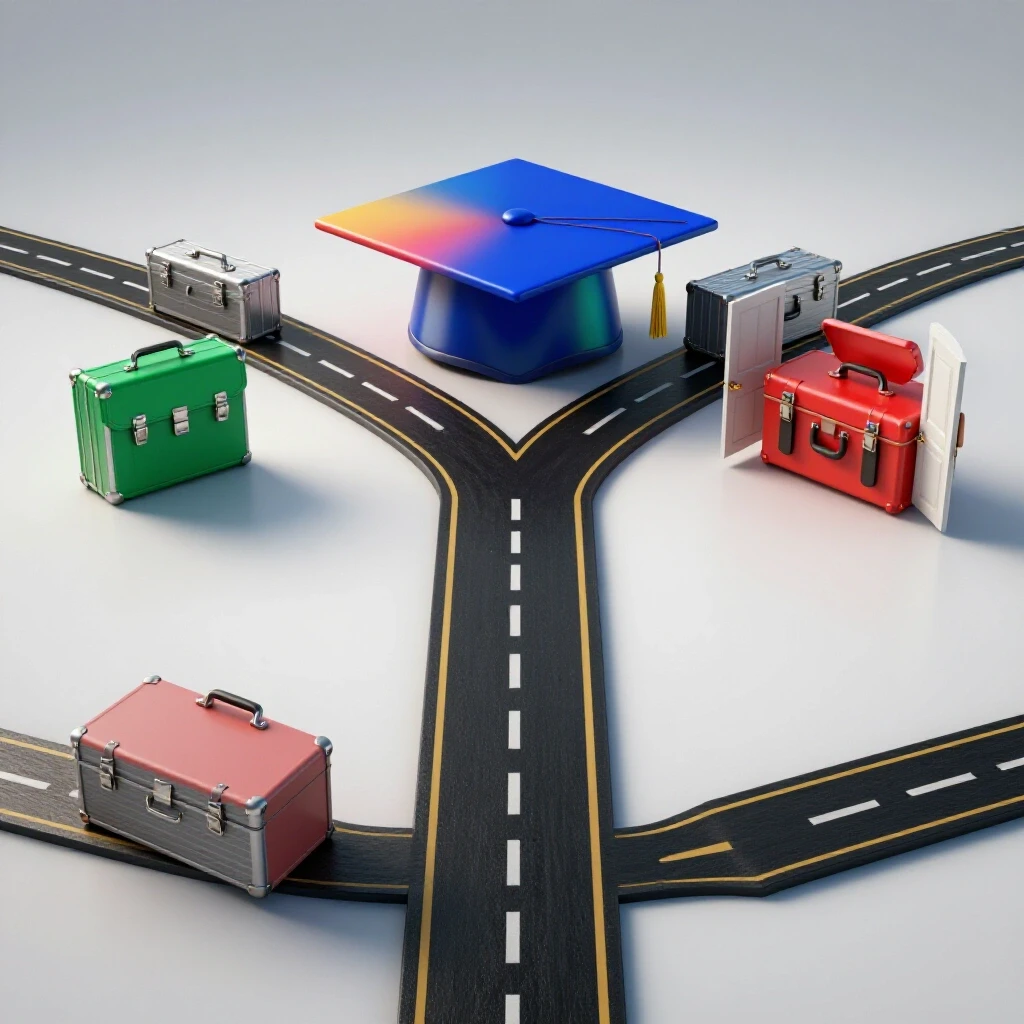
BS Degree: Unlock Career Paths Now! (Skills Gap Alert)
Here’s the article:
I’m here to tell you, it absolutely can be!
Let’s dive into why a BS degree is still a powerhouse, especially with the skills gap looming large.
Think of a BS degree as your career’s “resale value.” It’s not just about the piece of paper; it’s about what that paper gets you: job opportunities, a solid salary, and long-term career stability.
But things are changing fast.
Education and employment are evolving, and there’s a skills gap – a mismatch between what employers need and what graduates know.

So, is a BS degree still the golden ticket it used to be?
For many professions in 2025, the answer is a resounding “YES!” Let’s find out why.
The Value of a BS Degree in 2025
Alright, let’s get down to brass tacks.
What’s the real deal with a BS degree in the job market of 2025?
First off, the job market is dynamic.
We’re talking automation, AI, and new industries popping up all the time.
But even with all this change, a BS degree remains a solid foundation.
Which sectors are booming? Think tech, healthcare, and renewable energy.
These fields are hungry for talent, and a BS degree is often the entry ticket.
Consider data science. According to the U.S.
Bureau of Labor Statistics, employment in computer and information occupations is projected to grow 15 percent from 2022 to 2032, much faster than the average for all occupations.
(Source: https://www.bls.gov/ooh/computer-and-information-technology/home.htm)
A BS in computer science, statistics, or a related field can set you up for a lucrative career in this high-demand area.
What about the money? Well, data speaks volumes. According to the U.S.
Census Bureau, individuals with a bachelor’s degree earn significantly more than those with only a high school diploma.
In fact, over a lifetime, the difference can be hundreds of thousands of dollars!
(Source: U.S. Bureau of Labor Statistics, 2023)
Let me tell you about Sarah. She got her BS in Environmental Science. At first, she was unsure about her career path.
But after a few internships and networking, she landed a job as a sustainability consultant.
Now, she’s helping companies reduce their environmental impact, and she’s loving it!
Her BS degree opened doors she didn’t even know existed.
Understanding the Skills Gap
Okay, so a BS degree is valuable, but there’s a catch: the skills gap.
What is it, and why should you care?
The skills gap is the difference between the skills employers need and the skills job seekers possess.
It’s like trying to fit a square peg into a round hole.
Industries like manufacturing, tech, and healthcare are feeling the pinch the most.
They need workers with specific technical skills, but also soft skills like problem-solving and communication.
Think about cybersecurity. There’s a huge demand for cybersecurity professionals, but not enough qualified candidates.
According to Cybercrime Magazine, there will be 3.5 million unfilled cybersecurity jobs globally by 2025. (Source: https://cybersecurityventures.com/cybersecurity-jobs-report-2023/)
Why is this happening?
Well, sometimes what’s taught in BS degree programs doesn’t quite match what employers are looking for.
A study by McKinsey found that only 37% of employers believe that graduates have the skills they need for entry- level positions.
Employers are concerned about things like:
- Technical Skills: Proficiency in specific software, programming languages, or equipment.
- Soft Skills: Communication, teamwork, problem- solving, and critical thinking.
- Industry Knowledge: Understanding the specific challenges and opportunities in their field.
The Role of a BS Degree in Bridging
the Skills Gap
So, how can a BS degree help bridge this gap? Thankfully, many universities are stepping up their game.
They’re updating their curricula, partnering with industries, and offering more experiential learning opportunities.
For example, some universities are incorporating more hands- on projects, internships, and simulations into their programs.
They’re also inviting industry experts to guest lecture and provide feedback on curriculum development.
Take Northeastern University, for instance.
They’re known for their co-op program, which allows students to gain real-world work experience while earning their degree.
This gives students a leg up when they graduate because they’ve already had a taste of what it’s like to work in their field.
It’s not just about technical skills, though. Soft skills are just as important.
Many BS programs are now incorporating courses or workshops on communication, leadership, and teamwork.
These skills are crucial for success in any career, and employers are actively seeking candidates who possess them.
Career Paths Opened by a BS Degree
Now for the exciting part: what career paths can a BS degree unlock in 2025?
The possibilities are endless, but here are a few emerging fields to keep an eye on:
- Data Science: Analyzing and interpreting complex data to help organizations make better decisions.
- Cybersecurity: Protecting computer systems and networks from cyber threats.
- Renewable Energy: Developing and implementing sustainable energy solutions.
- Healthcare Technology: Using technology to improve healthcare delivery and patient outcomes.
Let’s break down some of the specific skills you’ll need for these careers:
- Data Science: Programming (Python, R), statistical analysis, data visualization.
- Cybersecurity: Network security, ethical hacking, incident response.
- Renewable Energy: Engineering principles, energy storage, policy and regulation.
- Healthcare Technology: Software development, data analysis, healthcare informatics.
I spoke with John, a cybersecurity expert at a major tech company.
He told me that the demand for cybersecurity professionals is only going to increase in the coming years.
“Companies are realizing that cybersecurity is not just an IT issue, it’s a business issue,” he said.
“They need people who can protect their data and systems from cyber attacks.”
The Future of Education and Employment
What does the future hold for BS degrees and higher education in general?
Well, things are likely to continue evolving rapidly.
We may see the rise of alternative education pathways, like boot camps and online certifications.
These programs can offer a more focused and accelerated path to specific skills.
However, they may not provide the same breadth of knowledge and critical thinking skills as a traditional BS degree.
Technology will also play a major role in the future of education.
Online learning platforms, virtual reality, and artificial intelligence can enhance learning outcomes and make education more accessible.
Imagine learning about anatomy through a virtual reality simulation or getting personalized feedback on your writing from an AI-powered tutor.
These technologies have the potential to transform education and better prepare graduates for the workforce.
Conclusion
So, there you have it!
A BS degree is still a valuable asset in today’s job market, but it’s important to be aware of the skills gap and take steps to bridge it.
Universities need to continue adapting their programs to meet the demands of the job market, and students need to be proactive in developing the skills that employers are seeking.
If you’re considering pursuing a BS degree, I encourage you to do your research and choose a program that aligns with your career goals.
Think about internships, networking, and other experiential learning opportunities. And don’t forget to develop those all-important soft skills!
A BS degree can open doors to a wide range of exciting and rewarding careers.
With the right skills and preparation, you can shape your future and make a real difference in the world.
So, what are you waiting for? The future is yours to create!