bachelors degree definition
Alright, let’s dive into this.
The world of higher education is constantly changing, and a bachelor’s degree in 2025 is way more than just a piece of paper.
It’s about personal growth, career opportunities, and adapting to a rapidly evolving world.
The Evolving Definition of a Bachelor’s Degree in 2025: More than Just a Piece of Paper
Introduction: Hobbies, Education, and You
Think about your hobbies for a second.
What do you love to do in your free time?
Maybe it’s coding, painting, writing, playing music, or even building intricate models.
These passions aren’t just fun; they can actually shape your career and education.
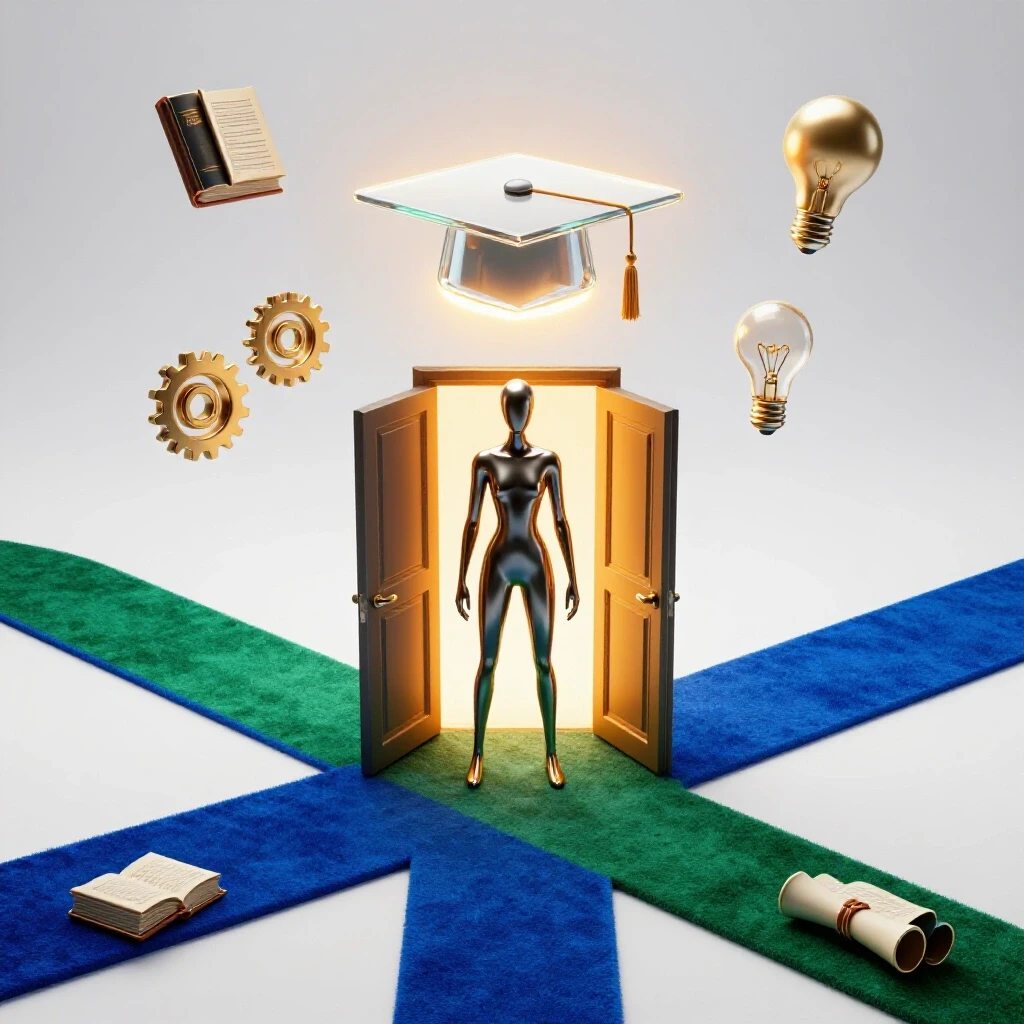
I’ve seen countless students turn their hobbies into full-blown careers, and a bachelor’s degree can be the bridge that makes it happen.
A bachelor’s degree isn’t just about academics; it’s a catalyst for personal and professional growth.
It’s about unlocking your potential and setting yourself up for success in a world that demands more than just rote memorization.
Section 1: Understanding the Bachelor’s Degree
So, what is a bachelor’s degree, exactly?
Defining the Basics
A bachelor’s degree is an undergraduate academic degree typically awarded by colleges and universities after three to seven years of study.
The duration and structure vary depending on the country, institution, and field of study.
In the US, it usually takes four years to complete.
The curriculum is usually a mix of core courses (like math, science, and humanities) and specialized courses related to your major.
A Little History Lesson
Bachelor’s degrees have been around for centuries.
The first universities in Europe, like the University of Bologna and the University of Oxford, started offering them in the 12th and 13th centuries.
The significance of a bachelor’s degree has evolved dramatically.
It used to be a mark of elite education, but now it’s almost a prerequisite for many professional careers.
BA vs. BS vs. BFA: Decoding the Alphabet Soup
You’ve probably seen these abbreviations: BA, BS, and BFA. What do they mean?
- BA (Bachelor of Arts): Generally focuses on humanities, social sciences, and liberal arts. Think literature, history, sociology, and political science.
- BS (Bachelor of Science): Emphasizes scientific and technical fields. Examples include biology, chemistry, computer science, and engineering.
- BFA (Bachelor of Fine Arts): Specifically designed for students pursuing careers in the arts. This includes visual arts, performing arts, and creative writing.
The best choice depends on your interests and career goals.
A BS might be better if you’re aiming for a career in STEM, while a BA could be ideal if you’re passionate about the humanities.
Section 2: The Current Landscape of Higher Education (2025)
Let’s take a snapshot of higher education in 2025. What’s changed? What’s stayed the same?
By the Numbers
In 2025, higher education is more accessible but also more competitive.
According to the National Center for Education Statistics (NCES), college enrollment has seen shifts due to various factors, including economic conditions and changing demographics.
While specific 2025 data is speculative, trends suggest continued growth in certain areas, like online learning, and increased diversity among college students.
Graduation rates remain a key metric.
“According to the National Student Clearinghouse Research Center, the six-year completion rate at four-year institutions was around 62% for students who started in 2015” (this data may show a slight increase by 2025 due to interventions and support programs).
Demographic shifts are also significant.
We’re seeing more non-traditional students (older, working adults) and a greater representation of minority groups in colleges and universities.
Tech Transformation
Technology has revolutionized education. Online learning has become mainstream, offering flexibility and accessibility.
Hybrid models, which combine in-person and online instruction, are also gaining popularity.
Micro-credentials, such as badges and certificates, are on the rise.
They allow students to gain specific skills quickly and demonstrate their competence to employers.
Platforms like Coursera, edX, and Khan Academy have democratized access to education, providing courses from top universities around the world.
Interdisciplinary is Key
The job market is demanding more interdisciplinary skills. Traditional silos between academic disciplines are breaking down.
Programs that combine different fields, like bioengineering (biology + engineering) or digital humanities (humanities + technology), are becoming increasingly popular.
These interdisciplinary programs equip students with a broader skill set, making them more adaptable and competitive in the job market.
Section 3: The Value of a Bachelor’s Degree in Today’s Job Market
Does a bachelor’s degree still hold its value in 2025? Let’s look at the job market trends.
Job Market Realities
In 2025, the job market is driven by technology, data, and innovation.
Industries like healthcare, technology, and renewable energy are experiencing significant growth.
A bachelor’s degree is often a minimum requirement for many professional roles in these fields.
Employers are looking for candidates with critical thinking skills, problem-solving abilities, and adaptability.
According to the Bureau of Labor Statistics, occupations that typically require a bachelor’s degree are projected to grow faster than the average for all occupations.
Show Me the Money
Let’s talk about earning potential.
Individuals with bachelor’s degrees generally earn significantly more than those with only high school diplomas or associate degrees.
“According to the U.S.
Bureau of Labor Statistics, the median annual wage for bachelor’s degree holders was $67,860 in May 2020, which is considerably higher than the $40,630 for those with only a high school diploma.” This gap is expected to persist and possibly widen in 2025.
The return on investment (ROI) of a bachelor’s degree is still substantial, despite rising tuition costs.
Over a lifetime, the earnings difference can be hundreds of thousands of dollars.
Employer Expectations
Employers value a bachelor’s degree for several reasons. It signals that a candidate has:
- Critical thinking skills: The ability to analyze information and solve problems.
- Communication skills: The ability to express ideas clearly and effectively.
- Adaptability: The willingness to learn new things and adapt to changing circumstances.
However, employers are also looking for practical skills and experience. Internships, co-ops, and project-based learning experiences are highly valued.
Section 4: The Role of Hobbies and Personal Interests in Education
This is where things get interesting. How do your hobbies fit into your education and career?
Hobbies as Career Launchpads
Your hobbies can complement your academic learning and lead to unexpected career opportunities.
For example, if you love coding as a hobby, you could pursue a degree in computer science or software engineering.
If you’re passionate about writing, you might consider a degree in journalism, creative writing, or marketing.
I’ve seen students turn their love of photography into careers as professional photographers, videographers, or social media content creators.
Real-Life Examples
Let me share a few stories:
- Sarah: A student who loved gaming turned her passion into a career as a game developer.
She earned a degree in computer science and now works for a major gaming company. - David: A student who enjoyed writing poetry started a blog and built a following.
He landed a job as a content writer for a marketing agency. - Emily: A student who was fascinated by astronomy volunteered at a local observatory.
She went on to earn a degree in astrophysics and now works as a researcher.
These are just a few examples of how hobbies can shape your educational path and career trajectory.
Blending Hobbies and Academics
Some schools are starting to recognize the importance of integrating hobbies with academic pursuits.
They’re offering programs and initiatives that encourage students to explore their interests and develop their talents.
For example, some schools have maker spaces where students can work on creative projects.
Others offer mentorship programs that connect students with professionals in their fields of interest.
Section 5: Challenges and Criticisms of Traditional Bachelor’s Programs
Let’s be real. Bachelor’s programs aren’t perfect. There are some valid criticisms.
The Dark Side
One of the biggest concerns is student debt.
Tuition costs have been rising faster than inflation, leaving many students with significant debt burdens.
Accessibility is another issue.
Not everyone has equal access to higher education, due to factors like socioeconomic status, geographic location, and disability.
The relevance of curriculum is also questioned.
Some argue that traditional bachelor’s programs don’t always prepare students for the realities of the job market.
Alternative Paths
There are alternative educational paths that can provide practical skills without requiring a four-year degree.
Vocational training programs offer hands-on training in specific trades, like plumbing, electrical work, and automotive repair.
Apprenticeships combine on-the-job training with classroom instruction, allowing students to earn while they learn.
Lifelong Learning
In a rapidly changing job landscape, lifelong learning is essential. A bachelor’s degree is just the beginning.
Continuous education, whether through online courses, workshops, or professional development programs, is crucial for staying relevant and competitive.
The concept of “upskilling” and “reskilling” has become increasingly important, as workers need to adapt to new technologies and changing job requirements.
Section 6: Future Trends and Innovations in Bachelor’s Degree Programs
What will bachelor’s degrees look like in the future? Let’s speculate.
Crystal Ball Gazing
I predict that bachelor’s degrees will become more personalized and flexible.
Curriculum will be tailored to individual student interests and career goals.
Delivery methods will continue to evolve.
Online learning will become even more sophisticated, with interactive simulations and virtual reality experiences.
Accreditation standards may also change to reflect the growing importance of skills-based learning and micro-credentials.
Tech Takeover
Artificial intelligence (AI) and virtual reality (VR) will play a bigger role in education.
AI-powered tutoring systems can provide personalized feedback and support to students.
VR simulations can create immersive learning experiences, allowing students to practice skills in a safe and realistic environment.
Imagine learning surgery in a virtual operating room or exploring ancient civilizations through a VR time machine.
Pandemic Impact
The COVID-19 pandemic has reshaped perceptions of education.
It has highlighted the importance of online learning and the need for flexible and adaptable educational systems.
It has also raised questions about the necessity of a traditional four-year degree.
Some argue that shorter, more focused programs may be more effective in preparing students for the job market.
Section 7: Conclusion
Wow, we’ve covered a lot! Let’s wrap things up.
The New Definition
The definition of a bachelor’s degree in 2025 is evolving.
It’s no longer just about academic knowledge; it’s about skills, experience, and adaptability.
It’s about integrating your personal passions with your academic and career aspirations.
It’s about creating a holistic educational experience that prepares you for a rapidly changing world.
Your Journey
I encourage you to think about how your hobbies and interests can shape your educational path.
Don’t be afraid to explore unconventional options and create your own unique learning experience.
The Future is Bright
The future of bachelor’s degrees is full of potential.
By embracing innovation and adapting to the needs of future generations, we can ensure that education remains a powerful force for positive change in society.
Let’s keep the conversation going. What are your thoughts on the future of education?