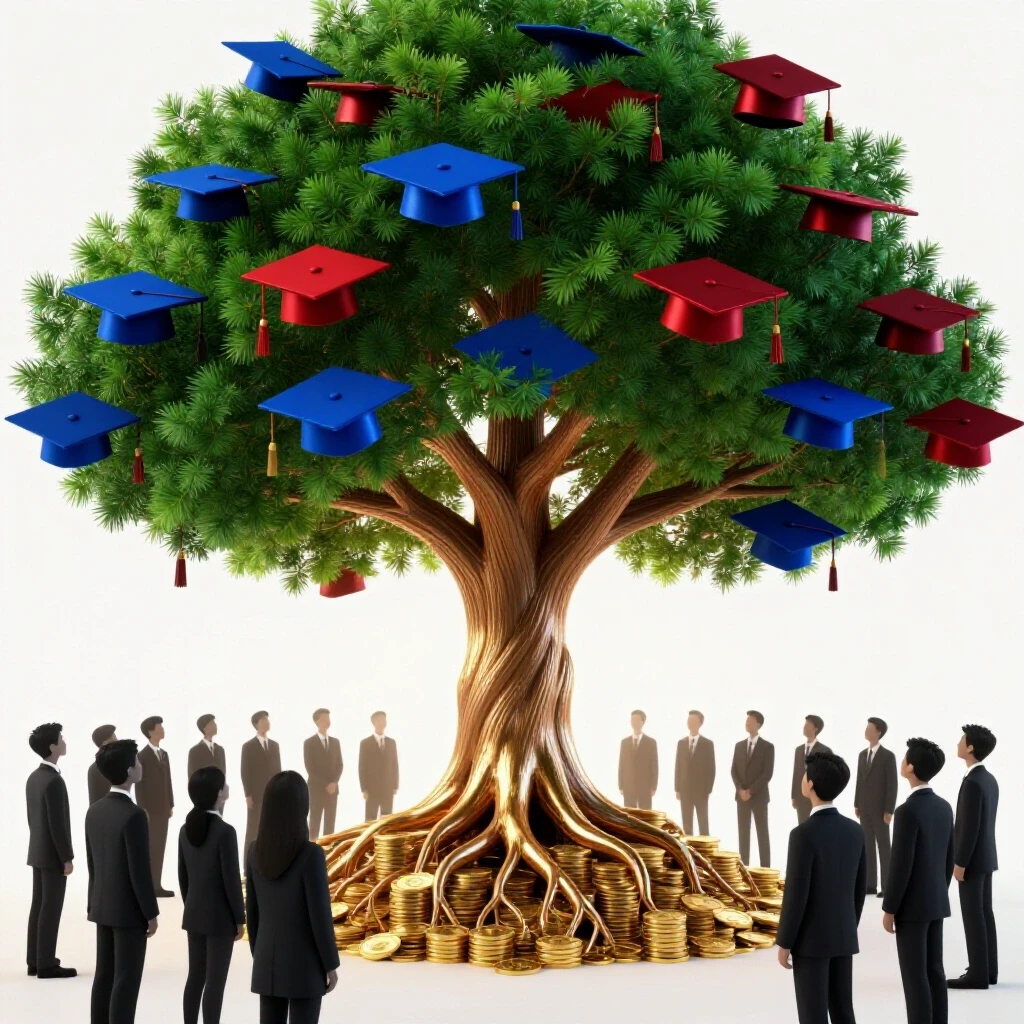
Associate Degree Equivalent? (Indonesia Focus!)
It might sound weird, but a well-educated workforce is key to finding new ways to be energy efficient and create sustainable practices.
Especially in a place like Indonesia, where we face some unique energy challenges.
So, what’s an associate degree, and how does it fit into the Indonesian education system?
Let’s dive in and see what the future holds for education in Indonesia!
Section 1: Understanding Associate Degrees
Okay, so what is an associate degree?
Basically, it’s a degree you can earn after about two years of full-time study.
Think of it as a stepping stone between a high school diploma and a bachelor’s degree.

It’s designed to give you specific skills and knowledge, either for a particular job or to prepare you to transfer to a four-year university.
Globally, associate degrees are seen as a valuable qualification, but they have their pros and cons.
On the one hand, they’re quicker and cheaper than a bachelor’s degree, making them accessible to more people.
There are typically two main types of associate degrees:
- Vocational: These focus on practical skills for specific jobs, like being a technician, a medical assistant, or a computer programmer.
- Academic: These are designed to prepare you for further study, allowing you to transfer credits to a bachelor’s degree program.
Section 2: The Current State of Higher Education in Indonesia
Alright, let’s zoom in on Indonesia. What’s the higher education scene like here?
As of 2023, Indonesia has a pretty diverse higher education system.
We’ve got universities, polytechnics, vocational schools, and academies. Each plays a unique role in educating the next generation.
According to data from the Ministry of Education, Culture, Research, and Technology (Kemendikbudristek), enrollment rates in higher education have been steadily increasing.
I’ve seen figures that show a rise from around 20% in 2010 to over 30% in recent years.
That’s great news! It means more people are getting access to higher education.
The government and the private sector both play crucial roles in supporting education.
The government provides funding, sets standards, and oversees the quality of education.
Private institutions, on the other hand, often offer specialized programs and cater to specific industries.
But it’s not all smooth sailing.
We face challenges like ensuring equal access to quality education across the archipelago, improving the relevance of curricula to the job market, and tackling issues of affordability.
Section 3: The Concept of Equivalency in Education
Now, let’s talk about equivalency. What does it even mean?
Educational equivalency is all about recognizing that different qualifications can represent similar levels of knowledge and skills, even if they’re earned through different pathways.
Why does it matter?
Well, it helps people move between different education systems, get their qualifications recognized internationally, and access job opportunities that might otherwise be out of reach.
Think of it like this: if you have a qualification from one country, equivalency frameworks help employers and educational institutions in another country understand what that qualification is worth.
Internationally, there are frameworks like the Bologna Process in Europe, which aims to create a more standardized and comparable higher education system across participating countries.
While Indonesia isn’t directly part of the Bologna Process, we can learn from its principles and adapt them to our own context.
Domestically, equivalency is crucial for ensuring that qualifications from different institutions are recognized and valued equally.
This helps students transfer credits, employers assess candidates, and the government plan for workforce development.
Section 4: Associate Degree Equivalency in Indonesia
So, where do associate degrees fit into all of this in Indonesia?
The truth is, the concept of a direct “associate degree equivalent” isn’t as clearly defined as it might be in, say, the United States.
However, we do have programs that serve a similar purpose.
Think of Diploma III (D3) programs offered at polytechnics and vocational schools.
These programs typically last for three years and focus on practical skills and vocational training.
In terms of recognition and equivalency, the National Accreditation Agency for Higher Education (BAN-PT) plays a vital role.
BAN-PT accredits higher education institutions and programs, ensuring that they meet certain quality standards.
Accreditation by BAN-PT is crucial for ensuring that a D3 qualification is recognized by employers and other educational institutions.
In certain fields, D3 qualifications are particularly relevant.
For example, in technology, healthcare, and environmental management, D3 graduates can find employment as technicians, assistants, and specialists.
I’ve seen data suggesting that demand for skilled technicians in these fields is growing, driven by Indonesia’s economic development and increasing focus on sustainability.
Section 5: Future Trends and Predictions for 2025
Okay, let’s put on our futurist hats and think about what the landscape might look like in 2025.
Based on current trends, I predict that the demand for skilled workers with practical training will continue to grow.
This means that D3 programs, or whatever equivalent form they may take, will become even more important.
Technological advancements will also play a significant role.
As industries become more automated and digitized, the need for technicians and specialists who can operate and maintain complex systems will increase.
I also think we’ll see more partnerships between educational institutions and industries.
These partnerships can help ensure that curricula are relevant to the needs of the job market and that students have opportunities for internships and apprenticeships.
Maybe we’ll even see the rise of “micro-credentials” or “nano-degrees” that focus on specific skills and competencies.
These could be a valuable addition to the educational landscape, allowing people to upskill and reskill quickly and efficiently.
Section 6: Case Studies and Success Stories
Let’s get real for a moment. Do these programs actually work?
I’ve seen some inspiring examples of successful D3 programs in Indonesia.
For instance, there are polytechnics that offer specialized programs in renewable energy technology.
These programs train students to become technicians who can install, maintain, and repair solar panels, wind turbines, and other renewable energy systems.
And I’ve heard stories of individuals who have transformed their lives by earning a D3 qualification.
One example that sticks with me is a young woman who graduated from a D3 program in environmental engineering.
She went on to work for a company that specializes in waste management and is now helping to develop innovative solutions for reducing pollution and promoting recycling.
These success stories show that D3 qualifications can be a pathway to meaningful employment and a better future, especially in sectors that are crucial for Indonesia’s sustainable development.
Conclusion
Alright, we’ve covered a lot of ground!
We’ve explored the concept of associate degrees, looked at the state of higher education in Indonesia, discussed the importance of educational equivalency, and made some predictions about the future.
The key takeaway is that understanding and enhancing the status of D3 programs (or whatever equivalent form they may take) is crucial for Indonesia’s future.
Especially when we think about the need for a skilled workforce that can drive innovation in energy efficiency and sustainability.
Education is not just about getting a piece of paper.
It’s about empowering people to create a better future for themselves and for their country.
And as Indonesia continues to develop and face new challenges, the role of education will only become more important.
So, let’s invest in education, support our students, and work together to build a brighter, more sustainable future for Indonesia!