Ag Jobs Without a Degree? (Hidden Opportunities!)
What if you could step into a thriving career within the agricultural industry without the burden of student debt?
What if the fields of opportunity stretched far beyond traditional paths, unveiling hidden roles that not only sustain our food systems but also offer fulfilling careers?
As we approach 2025, the landscape of agriculture is evolving, presenting unique job prospects that don’t necessarily require a college degree.
Let’s explore what these roles entail and how you can seize these opportunities.
The Evolving Face of Agriculture
The agricultural sector is undergoing a massive transformation, and it’s exciting to see!
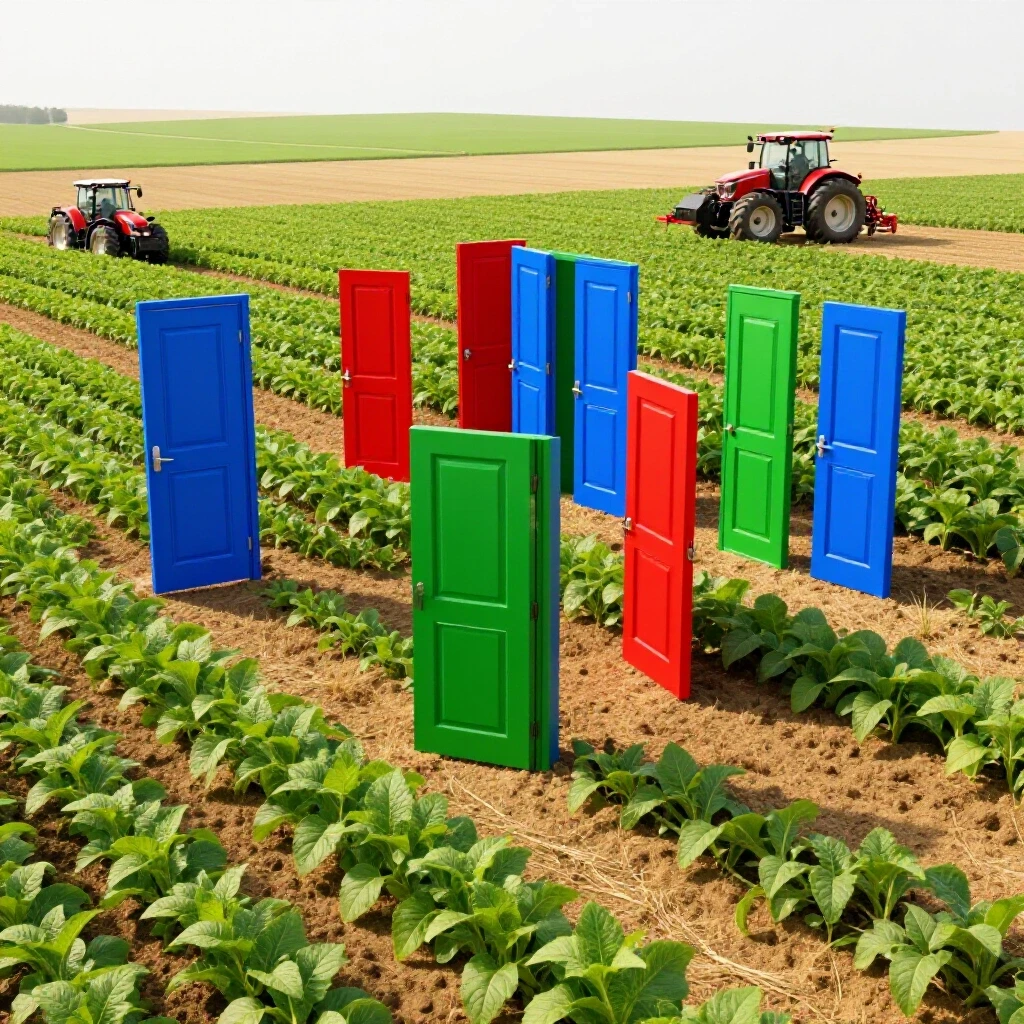
Technology and innovation are at the forefront, reshaping how we grow food and manage resources.
Think about it: we’re moving away from the image of solely relying on traditional farming methods.
Automation is becoming increasingly prevalent.
We’re seeing the use of drones for crop monitoring, robotic harvesters, and precision planting equipment.
These advancements are not just about increasing efficiency; they’re also about making agriculture more sustainable and resilient.
Sustainable practices are also gaining traction.
Farmers are adopting methods like cover cropping, no-till farming, and integrated pest management to minimize their environmental impact.
Climate change is a major driver here, pushing the industry to find ways to adapt and mitigate its effects.
Now, let’s talk about “Agriculture 4.0.”
This concept refers to the integration of digital technologies into every aspect of farming.
We are talking about the Internet of Things (IoT), big data analytics, and artificial intelligence (AI).
These technologies are creating new jobs and transforming existing ones.
According to a report by McKinsey, digital agriculture could add $500 billion to the global GDP by 2030.
That’s a huge number, and it signifies a shift in the types of skills and expertise needed in the industry.
The interesting thing is that many of these roles don’t necessarily require a four-year degree.
Instead, they emphasize practical skills and technical know-how, which can be acquired through vocational training, apprenticeships, and on-the- job experience.
The Value of Hands-On Experience
I’ve always believed that practical skills and hands-on experience are incredibly valuable, especially in agriculture.
While a degree can provide a solid foundation of theoretical knowledge, it’s the real-world experience that truly sets you apart.
Think about it: can a textbook really prepare you for the challenges of operating a combine harvester or troubleshooting a malfunctioning irrigation system?
I’ve seen many individuals who have found immense success in agriculture without a degree.
They started from the ground up, learning the ropes through internships, apprenticeships, or simply by working on a farm.
One example that comes to mind is a friend of mine, let’s call him John.
John didn’t go to college, but he started working on his family’s farm at a young age.
He learned everything from planting and harvesting to equipment maintenance and livestock management.
Over time, he became an expert in his field, and now he manages a large-scale farming operation.
His success is a testament to the power of hands-on experience and a strong work ethic.
Internships, apprenticeships, and on-the-job training are invaluable opportunities to gain practical skills and build your network.
These experiences allow you to apply your knowledge in a real-world setting, learn from experienced professionals, and develop the confidence and competence needed to succeed in agriculture.
According to the U.S.
Department of Labor, apprenticeships offer a proven pathway to skilled jobs, with 92% of apprentices finding employment after completing their programs.
Identifying Hidden Opportunities in Agriculture
Okay, let’s dive into some specific job roles within agriculture that don’t necessarily require a degree.
These are the “hidden opportunities” I mentioned earlier, and they’re definitely worth exploring.
Farm Equipment Operators
These professionals are responsible for operating and maintaining a variety of farm equipment, such as tractors, combines, and sprayers.
They need to be skilled in equipment operation,
maintenance, and repair.
A high school diploma or equivalent, along with
on-the-job training, is typically sufficient
for this role.
According to the Bureau of Labor Statistics,
the median annual wage for agricultural
equipment operators was $37,770 in May 2022.
* Agricultural Technicians:
Agricultural technicians assist farmers and agricultural scientists in a variety of tasks, such as conducting research, collecting data, and providing technical support.
They need to have a strong understanding of agricultural practices and be able to use various tools and technologies.
An associate’s degree or vocational training may be preferred, but hands-on experience can often compensate for formal education.
* Crop Scout:
Crop scouts are responsible for monitoring crops for pests, diseases, and nutrient deficiencies.They need to have a keen eye for detail and a strong understanding of plant health.A high school diploma or equivalent, along with on-the-job training, is typically sufficient for this role.
Crop scouting is becoming increasingly important as farmers strive to optimize their yields and minimize their environmental impact.
* Sustainable Farming Consultants:
Sustainable farming consultants advise farmers on how to adopt sustainable agricultural practices.
They need to have a strong understanding of environmental science, agronomy, and economics.
While a bachelor’s degree in a related field may be helpful, practical experience and certifications in sustainable agriculture can also be valuable.
* Agricultural sales representatives:
Agricultural sales representatives sell agricultural products and services to farmers and other agricultural businesses.
They need to have strong sales skills and a thorough understanding of the agricultural industry.
A bachelor’s degree in agriculture or business may be preferred, but sales experience and a strong network of contacts can also be valuable.
According to the Bureau of Labor Statistics, the median annual wage for sales
representatives of agricultural products was $74,490 in May 2022.
These are just a few examples of the many job roles within agriculture that don’t necessarily require a degree.
The key is to identify your interests and skills, and then seek out opportunities to gain practical experience and build your network.
The Rise of Alternative Education Paths
Let’s talk about alternative education paths.
A traditional four-year degree isn’t the only way to acquire the skills and knowledge needed to succeed in agriculture.
Vocational training programs, online courses, and certifications can also be valuable options.
Vocational training programs offer hands-on training in specific agricultural skills, such as equipment operation, welding, and irrigation.
These programs are typically shorter and more focused than traditional degree programs, and they can provide you with the skills you need to enter the workforce quickly.
Online courses are another great option for acquiring knowledge and skills in agriculture.
Many universities and organizations offer online courses in a variety of agricultural topics, such as agronomy, horticulture, and animal science.
These courses can be a convenient and affordable way to learn new skills or deepen your knowledge of a particular subject.
Certifications can also be valuable for demonstrating your expertise in a particular area of agriculture.
There are certifications available in a variety of fields, such as organic farming, precision agriculture, and livestock management.
Organizations like the Future Farmers of America (FFA) and 4-H offer various training and certification programs that can boost your resume.
One of the biggest advantages of pursuing alternative education over a traditional degree is the cost savings.
Vocational training programs and online courses are typically much less expensive than a four-year degree.
This can be a significant advantage for individuals who are looking to start their careers without accumulating a lot of student debt.
Networking and Building a Career in Agriculture
Networking is crucial in any industry, but it’s especially important in agriculture.
The agricultural community is relatively small and tight-knit, and building relationships with industry professionals can open doors to new opportunities.
One of the best ways to network is to attend agricultural fairs and conferences.
These events bring together farmers, researchers, and other industry professionals from around the world.
They provide a great opportunity to learn about the latest trends and technologies in agriculture, and to meet new people.
Joining relevant associations, such as the Farm Bureau or the National Farmers Union, can also be a great way to network.
These associations offer a variety of resources and networking opportunities for their members.
Don’t underestimate the power of social media.
Platforms like LinkedIn, Twitter, and Facebook can be valuable tools for connecting with industry professionals and staying up-to-date on the latest news and trends in agriculture.
Share your thoughts and insights on agricultural topics, and engage with other professionals in the field.
Building a strong network takes time and effort, but it’s well worth the investment.
Your network can provide you with valuable advice, support, and opportunities throughout your career.
Future Trends in Agriculture Employment
Let’s peer into the crystal ball and analyze projected trends in agricultural jobs by 2025.
Several emerging fields are poised to drive employment growth in the coming years.
Precision agriculture is one of the most promising areas.
This approach involves using technology to optimize crop yields and minimize resource use.
It requires professionals who can analyze data, operate drones, and maintain sophisticated equipment.
Urban farming is another growing trend.
As cities become more crowded, there’s a growing demand for locally grown food.
Urban farms are popping up on rooftops, in warehouses, and in vacant lots.
These farms need skilled workers who can manage crops, maintain equipment, and market their products.
Organic agriculture is also experiencing a surge in popularity.
Consumers are increasingly demanding organic food, which is driving demand for organic farmers and agricultural professionals.
According to the USDA, the number of certified organic farms in the United States increased by 6% between 2019 and 2021.
This trend is expected to continue in the coming years.
Sustainability is becoming a core value in the agricultural industry.
Consumers, governments, and businesses are all demanding more sustainable agricultural practices.
This is creating a growing demand for sustainability-minded professionals who can help farmers reduce their environmental impact and improve their resource efficiency.
Success Stories of Individuals in Ag Jobs
I want to share a couple of success stories of individuals who have thrived in agricultural careers without a degree.
These stories are inspiring and demonstrate that it’s possible to achieve your goals in agriculture without a traditional education.
Let’s start with Sarah, who grew up on a small family farm.
She didn’t go to college, but she learned everything about farming from her parents.
She started by helping with chores around the farm, and eventually she took on more responsibility.
Now, she manages the entire farming operation.
She’s an expert in crop production, livestock management, and marketing.
She’s also a strong advocate for sustainable agriculture.
Her journey wasn’t always easy.
She faced challenges along the way, such as dealing with unpredictable weather and fluctuating market prices.
But she persevered, and now she’s a successful farmer and a respected member of her community.
Next, we have David, who started his career as a farm equipment mechanic.
He didn’t have a college degree, but he had a knack for fixing things.
He started by working in a small repair shop, and eventually he opened his own business.
Now, he’s one of the most sought-after farm equipment mechanics in his region.
He’s known for his expertise, his reliability, and his commitment to customer service.
His success is a testament to the power of hard work, dedication, and a passion for what you do.
Conclusion: Embracing the Future of Agricultural Careers
We’ve covered a lot of ground in this article, and I hope you’ve gained a better understanding of the promising opportunities available in agriculture for those without a degree.
We’ve discussed the evolving face of agriculture, the value of hands-on experience, and the rise of alternative education paths.
We’ve also explored specific job roles that don’t necessarily require a degree, such as farm equipment operator, agricultural technician, crop scout, sustainable farming consultant, and agricultural sales representative.
I want to reiterate that a degree is not always necessary to succeed in agriculture.
Practical skills, hands-on experience, and a strong work ethic can be just as valuable.
I encourage you to explore these hidden opportunities and consider a career in agriculture as a viable and rewarding path.
The agricultural industry is facing many challenges, but it’s also full of opportunities.
By embracing innovation, adopting sustainable practices, and building strong networks, you can make a real difference in the world and create a fulfilling career for yourself.
So, what are you waiting for?
The fields are calling!