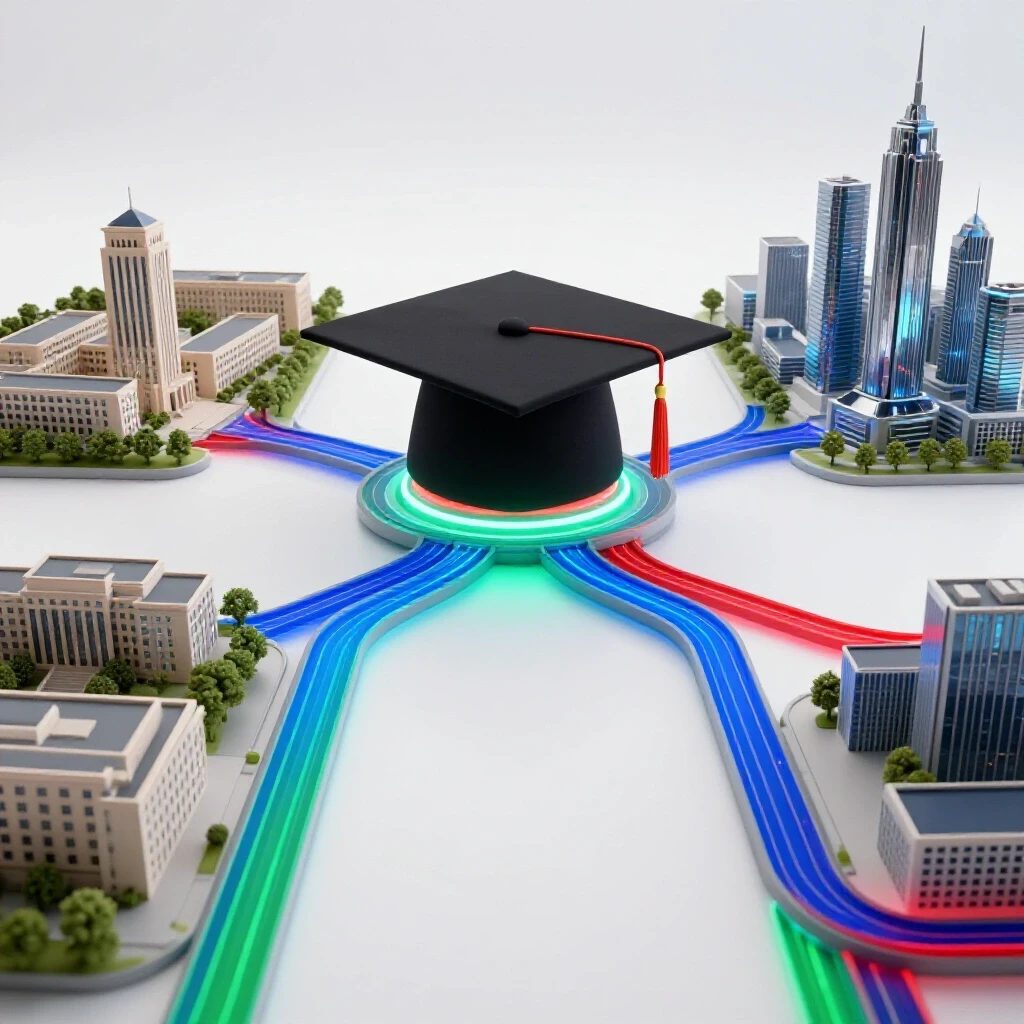
Accelerated Bachelor’s (Time to Degree?)
Crafting the Future of Education by 2025
Ever thought about what it really means to make something?I’m not just talking about assembling furniture or baking a cake.
Think about the dedication, precision, and creativity involved in true craftsmanship—like a master woodworker carefully shaping a piece of wood into a beautiful sculpture.
It’s an art form, right?
Well, I believe education, especially accelerated bachelor’s degrees, is a similar kind of craftsmanship.
It’s about shaping knowledge and skills with a commitment to excellence, and adapting to the ever-changing world.
Let’s dive into how these programs are transforming the landscape of higher education.

Section 1: The Evolution of
Higher Education
Okay, let’s rewind a bit.
Higher education in the US, and globally, has a rich history.
Initially, it was primarily for the elite, focused on classical studies and theology. Think of those old, ivy-covered universities.
But things started changing.
The traditional four-year bachelor’s degree became the standard, structured around semesters, core courses, and electives.
It’s been the go-to for, well, forever.
Then came the curveball: accelerated bachelor’s degrees.
These programs emerged as a response to societal and economic shifts. People needed quicker pathways to relevant skills and careers.
Think about it: the world is moving faster, and education needs to keep up.
And what really fueled this evolution?
Technology and online learning platforms. Suddenly, education wasn’t confined to a physical classroom.
Online courses, hybrid models—they all opened doors to flexible, accelerated learning.
According to a 2023 study by Inside Higher Ed, the number of students enrolled in fully online programs has increased by over 30% in the last five years.
That’s huge!
Section 2: Understanding
Accelerated Bachelor’s Programs
So, what exactly is an accelerated bachelor’s degree?
Simply put, it’s a program that allows students to complete their bachelor’s degree in a shorter amount of time than the traditional four years.
We’re talking about intense courses, compressed semesters, and a whole lot of dedication.
Think of it like this: you’re packing all the essential learning into a tighter timeframe.
How does it compare to the traditional route?
Well, the course load is heavier, the time commitment is significant, and the pace is relentless.
But the learning outcomes are often the same—you’re still earning that bachelor’s degree.
The big difference is the speed.
Now, these programs come in various flavors.
You’ve got fully online options, hybrid models (a mix of online and in-person), and intensive in-person programs.
The format depends on the institution and the field of study.
Speaking of fields, where are accelerated programs most common?
Nursing, business, and education tend to lead the pack.
These are fields where there’s a high demand for professionals, and a faster path to qualification can be a game-changer.
For example, many nursing programs offer accelerated options for individuals with a bachelor’s degree in another field.
They can earn their BSN in as little as 12-18 months.
Section 3: Motivations Behind
Choosing an Accelerated Degree
Why do students opt for the fast lane?
Several factors come into play.
First, there’s the desire for a quicker entry into the workforce.
Let’s face it: time is money.
The sooner you graduate, the sooner you can start earning.
Financial considerations are also a big motivator.
While accelerated programs might have higher tuition costs per semester, you’re potentially saving money on living expenses and lost wages by graduating sooner.
Plus, the job market is constantly evolving.
There’s an increasing demand for skilled professionals who can hit the ground running.
An accelerated degree can provide that competitive edge.
I’ve seen a lot of demographic shifts in the student population choosing this path.
It’s not just recent high school graduates anymore.
Adult learners, career changers, and individuals looking to upskill are all drawn to accelerated programs.
They often have prior experience or credits that can be transferred, making the accelerated route even more appealing.
According to a 2022 report by the National Center for Education Statistics (NCES), the average age of students enrolled in accelerated programs is 28, compared to 22 for traditional programs.
Section 4: The Challenges of
Accelerated Learning
Okay, let’s be real. It’s not all sunshine and rainbows.
Accelerated programs are rigorous.
They demand serious time management skills, a high tolerance for stress, and the ability to thrive in a fast-paced learning environment.
Imagine cramming a semester’s worth of material into a few weeks. It’s intense!
One of the biggest challenges is maintaining a healthy work-life-study balance.
It can be tough to juggle responsibilities when you’re constantly under pressure.
What about student retention and success rates?
Well, studies have shown that students in accelerated programs may face a higher risk of dropping out compared to those in traditional programs.
The pace can be overwhelming, and some students may struggle to keep up.
That’s why support systems are crucial.
Unfortunately, there can be gaps in academic advising, mental health resources, and peer support for students in these programs.
It’s essential for institutions to provide adequate resources to help students succeed.
I’ve heard from students who felt isolated and unsupported during their accelerated programs.
They wished they had more access to mentors, counselors, and study groups.
Section 5: Future Outlook: Accelerated
Bachelor’s Degrees in 2025
Now, let’s gaze into our crystal ball.
What might accelerated bachelor’s programs look like by 2025?
I believe we’ll see even more integration of technology, particularly artificial intelligence (AI).
AI could personalize learning experiences, provide instant feedback, and offer tailored support to students.
Imagine AI tutors that adapt to your learning style and help you master challenging concepts.
Course delivery will likely become even more flexible and interactive, with virtual reality (VR) and augmented reality (AR) elements enhancing student engagement.
Think about learning anatomy through a VR simulation or exploring historical sites through an AR app.
Societal perceptions of accelerated degrees may also shift.
As more people recognize the value of these programs, they could become more widely accepted by employers and academic institutions.
I predict that employers will increasingly focus on skills and competencies rather than just the length of time spent in school.
This could lead to greater recognition and appreciation for accelerated degrees.
According to a recent report by Deloitte, 68% of executives believe that traditional degrees are not adequately preparing students for the workforce.
This suggests a growing openness to alternative educational pathways, such as accelerated programs.
Section 6: Case Studies and
Success Stories
Let’s get practical.
I want to share some examples of institutions that have successfully implemented accelerated bachelor’s programs.
One standout is Northeastern University, which offers a variety of accelerated programs designed to meet the needs of working professionals.
Their programs emphasize experiential learning, allowing students to apply their knowledge in real-world settings.
Another example is Western Governors University (WGU), which pioneered competency-based education.
WGU allows students to progress at their own pace, earning credit for what they already know.
This approach can significantly accelerate the time it takes to earn a degree.
But what about the graduates?
I’ve had the pleasure of speaking with many individuals who have reaped significant benefits from accelerated programs.
One story that stands out is that of Sarah, a former marketing professional who decided to pursue a career in nursing.
She enrolled in an accelerated BSN program and completed her degree in just 18 months.
Today, she’s a registered nurse working in a busy hospital, making a real difference in people’s lives.
Another inspiring story is that of David, a veteran who used his military experience to excel in an accelerated business program.
He leveraged his leadership skills and discipline to complete his degree quickly and landed a management position shortly after graduation.
These success stories demonstrate the transformative potential of accelerated programs.
They can open doors to new careers, enhance skills, and empower individuals to achieve their goals.
Conclusion
So, we’ve come full circle.
Let’s revisit the concept of craftsmanship.
Just as a skilled artisan carefully shapes raw materials into a finished product, accelerated bachelor’s programs shape knowledge and skills to meet the demands of a rapidly changing world.
These programs represent a modern adaptation of educational craftsmanship, offering a faster, more flexible path to career success.
I believe that accelerated bachelor’s degrees will continue to play an increasingly important role in the future of education.
They offer a valuable option for students who are motivated, disciplined, and eager to make a difference.
As we move towards 2025 and beyond, I’m excited to see how these programs evolve and continue to shape the workforce of tomorrow.
What are your thoughts? Are you ready to craft your own future with an accelerated degree?