2+2 Program Explained: How It Works & Benefits (Guide 2026)
Planning for college often feels like trying to solve a puzzle while the pieces are still being printed. You want a degree that leads to a great career, but you also need to manage your budget, maintain a social life, and perhaps stay close to home. In my eighteen years as an academic researcher and advisor, I have seen many students struggle with the high cost of tuition and the confusing language of university catalogs. This is where the 2+2 program becomes a game-changer for your lifestyle and your future.
What is a 2+2 Program?
A 2+2 program is a structured higher education pathway established through formal agreements between a two-year community college and a four-year university. You spend your first two years at the community college earning an associate degree and then transfer to the university for your final two years to complete a bachelor’s degree.
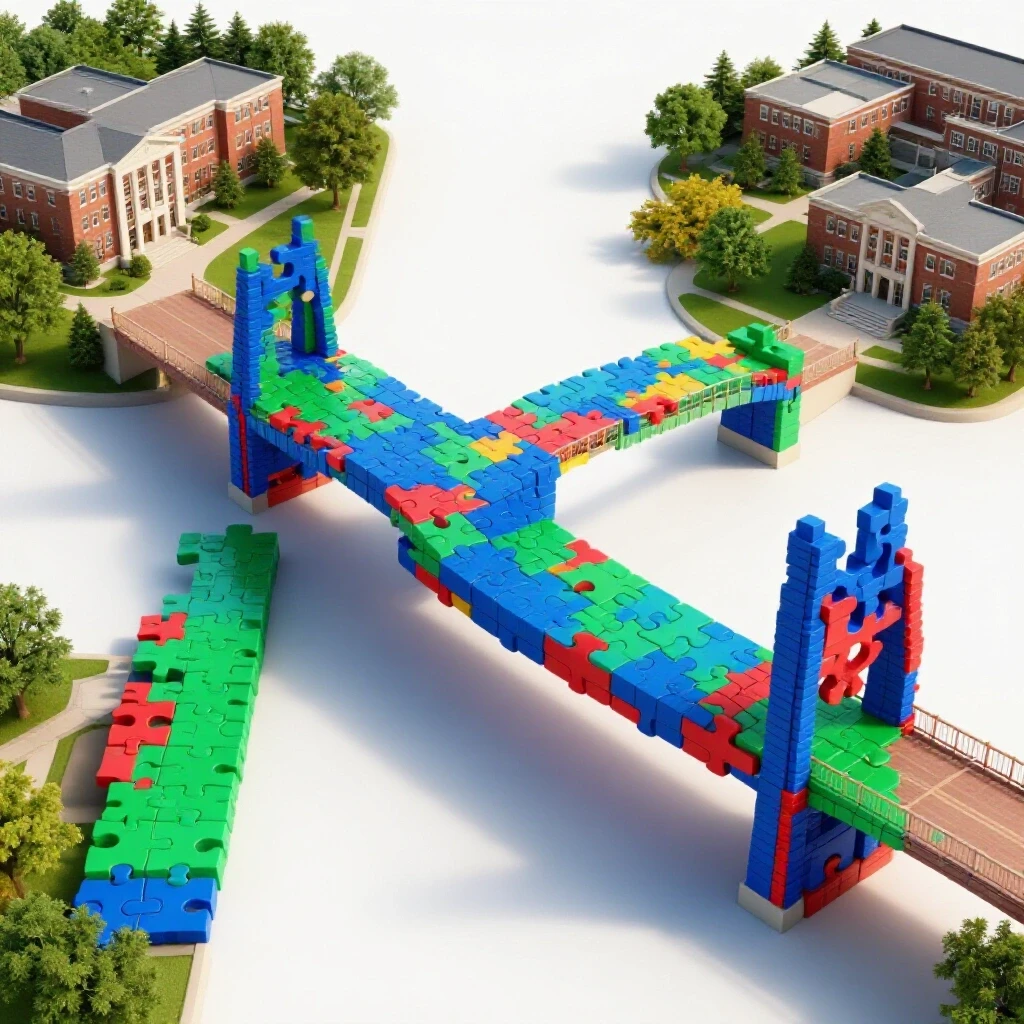
Think of a 2+2 program like a relay race. The community college runs the first two laps, and then they hand the baton to the university to finish the race. Even though you attend two different schools, you graduate with one four-year degree from the university. I remember a student named Marcus who felt he wasn’t ready for a big university right after high school. By choosing a 2+2 pathway, he saved over $20,000 in tuition and had a much smoother transition into his junior year because he had already mastered his foundational classes.
Understanding the Articulation Agreement
An articulation agreement is a formal, legal contract between two institutions that maps out exactly which courses will transfer from one to the other. It serves as a guarantee that if you follow the specific plan, the university will accept every credit you earned at the community college toward your major.
Without an articulation agreement, transferring can feel like a gamble. You might take a “Psychology 101” class that the university decides doesn’t meet their specific standards. I have spent many hours in advising sessions helping students navigate “transfer credit explained” documents. When an agreement is in place, that guesswork disappears. It provides a clear, step-by-step checklist. If the agreement says “Math 120” at the community college equals “Statistics 200” at the university, the school must honor that.
How the Credit Hour System Works
A credit hour is a unit of measure that represents roughly one hour of instruction per week over a 15-week semester. To earn a standard bachelor’s degree in the United States, you typically need to complete 120 credit hours, which breaks down into 60 hours at each stage of a 2+2 program.
In a typical semester, a full-time student takes 15 credits, which usually means five classes. In a 2+2 model, your goal is to finish 60 credits at the community college. These 60 credits usually cover your “General Education” requirements—the basic math, English, science, and history classes everyone needs.
- 15 credits per semester = 30 credits per year.
- 60 credits total = Associate Degree (End of Year 2).
- 120 credits total = Bachelor’s Degree (End of Year 4).
Major vs. Concentration in a 2+2 Pathway
Your major is your primary field of study, such as Business, Engineering, or Sociology. A concentration is a specialized focus within that major, like “International Business” or “Software Engineering,” which you typically begin focusing on during your final two years at the university.
During your first two years at a community college, you focus on the broad “major” requirements. Interestingly, you often don’t declare a specific concentration until you transfer to the university. This gives you more time to explore what you really enjoy. I once advised a student who thought she wanted a Business major. After taking two introductory classes at her community college, she realized she loved Marketing specifically. She used her 2+2 transfer to move into a university program with a strong Marketing concentration.
Comparison of Degree Components
| Component | Focus Area | Typical Timing | Credit Count |
|---|---|---|---|
| General Education | Basics like English, Math, Arts | Years 1 and 2 | 30-45 Credits |
| Major Prerequisites | Intro classes for your field | Years 1 and 2 | 15-20 Credits |
| The Major | Core classes in your field | Years 3 and 4 | 30-40 Credits |
| Concentration | Specialized niche within major | Year 4 | 12-15 Credits |
Why Accreditation Matters for Transferring
Accreditation is a quality-control process where independent agencies review a school to ensure it meets high academic standards. For a 2+2 program to work, both the community college and the university must be “regionally accredited,” which is the gold standard for credit transferability.
If you attend a school that is not properly accredited, your credits might be worthless when you try to transfer. This is a common pitfall I see with international students or those lured by flashy advertisements from unverified trade schools. Always check the school’s status on the U.S. Department of Education website. Accreditation also impacts your financial aid; you cannot receive federal student loans or Pell Grants if your school lacks proper accreditation.
The Financial Benefits of the 2+2 Model
The 2+2 pathway is one of the most effective ways to reduce the total cost of a college education. Community college tuition is often 50% to 70% cheaper than university tuition, allowing you to complete the first half of your degree at a fraction of the price.
Let’s look at the numbers. If a university costs $15,000 per year and a community college costs $4,000 per year, a student doing all four years at the university pays $60,000. A 2+2 student pays $8,000 for the first two years and $30,000 for the last two, totaling $38,000. That is a savings of $22,000 for the exact same diploma. As an advisor, I call this the “smart student discount.”
- Average cost per credit (Community College): $150 – $300.
- Average cost per credit (Public University): $450 – $1,000.
- Potential Savings: $15,000 to $40,000 over four years.
Common Mistakes to Avoid in a 2+2 Program
The biggest mistake students make is “self-advising” or taking classes that are not part of the articulation agreement. Even one or two “wrong” classes can delay your graduation by a full semester and cost you thousands of dollars in extra tuition.
Another common error is ignoring the GPA (Grade Point Average) requirement. Many 2+2 programs offer “guaranteed admission,” but that guarantee usually requires you to maintain a specific GPA, such as a 2.5 or 3.0. If your grades slip, the university is not obligated to accept you. Finally, keep an eye on deadlines. You still have to apply to transfer to the university, usually six to nine months before you plan to start there.
- Missing Deadlines: Transfer applications are often due in February for a September start.
- Ignoring Prerequisites: Some university majors require specific math or science classes before you can transfer.
- Losing Contact: Not meeting with an advisor at least once a semester.
Step-by-Step Guide to Navigating the 2+2 Path
To successfully navigate a 2+2 program, you must be proactive from your very first week of college. It starts with identifying your goal university and working backward to ensure every class you take at the community college serves a specific purpose toward your future bachelor’s degree.
- Identify the Partner Schools: Look for community colleges that have “dual enrollment” or “guaranteed transfer” agreements with universities you like.
- Meet Your Advisor Early: Tell them, “I want to do a 2+2 program for [Your Major].” Ask for the specific articulation map.
- Monitor Your Transfer Equivalency: Use online tools like “Transferology” or the university’s own transfer database to see how your current classes match up.
- Apply for Graduation: You must officially earn your Associate degree at the community college before the “2+2” transfer is finalized.
- Submit the Transfer Application: Even with a 2+2 agreement, you must submit transcripts and an application to the university to “matriculate” (officially enroll).
Essential Tools for Degree Planning
Navigating higher education is much easier when you use the right digital tools. These resources help you verify accreditation, compare costs, and track how your credits will move from one school to another without losing time or money.
- College Scorecard: A tool by the U.S. Department of Education to compare costs, graduation rates, and average post-college salaries.
- NCES College Navigator: Great for checking the accreditation status of any school in the country.
- Transferology: A nationwide network that shows you how specific courses transfer between thousands of different colleges.
- FAFSA Guide: The official site for federal student aid, which is essential for funding both halves of your 2+2 journey.
- Advising Appointment Planner: A simple calendar or app to ensure you meet with your counselor before registering for any new semester.
Frequently Asked Questions
What is the difference between a 2+2 program and just transferring?
A 2+2 program is a formal, pre-planned pathway with a written agreement (articulation agreement) that guarantees your credits will count toward a specific major. Regular transferring is more “ad-hoc,” where you move to a new school and hope they accept your previous credits. The 2+2 model offers much more security and a clearer timeline.
Will my diploma say “Community College” on it?
No. When you complete a 2+2 program, your bachelor’s degree is issued by the four-year university. It looks exactly the same as the diploma received by a student who spent all four years at that university. Employers generally only look at where you earned your final degree.
Can international students participate in 2+2 programs?
Yes, international students studying in the U.S. on an F-1 visa can use the 2+2 pathway. It is a very popular option because it helps manage the high cost of international tuition. However, international students must work closely with their Designated School Official (DSO) to ensure their visa paperwork is updated when they move from the community college to the university.
What happens if I change my major halfway through?
If you change your major, some of the credits you took might no longer apply to your new degree requirements. This is why the 2+2 program is most effective if you have a general idea of your field (like “Science” or “Arts”) early on. If you change from Art to Engineering, you will likely need to take extra classes.
Do 2+2 programs take longer than four years?
If you follow the articulation agreement exactly and take 15 credits per semester, you will finish in exactly four years. It only takes longer if you take fewer classes per semester, fail a class, or take courses that are not on the approved transfer list.
Is the quality of education lower at a community college?
In my experience, no. In fact, community colleges often have smaller class sizes (20-30 students) compared to large university lecture halls (200-300 students). This means you get more direct time with your professors during those critical first two years of foundational learning.
Can I do a 2+2 program if I want to go to a private university?
Yes, many private universities have articulation agreements with local community colleges. While 2+2 programs are most common between public institutions, many prestigious private schools participate to diversify their student body and attract talented transfer students.
What is “Matriculation”?
Matriculation is a fancy academic term that simply means “officially enrolling in a degree program at a college or university.” In a 2+2 program, you matriculate twice: first at the community college and then again at the university when you transfer.
Do I need to take the SAT or ACT to transfer?
Most 2+2 programs focus on your college GPA rather than your high school test scores. If you have completed 60 credits with a good GPA, most universities will waive the requirement for SAT or ACT scores, which is a huge relief for many students.
What if the university I want doesn’t have a 2+2 agreement?
You can still transfer, but it is “unstructured.” You will need to work much harder with advisors at both schools to manually check each class. It is always safer to choose a university that has a formal agreement with your community college if you want to ensure a four-year graduation timeline.
(This article was written by one of our staff writers, Alan Westbrook. Visit our Meet the Team page to learn more about the author and their expertise.)